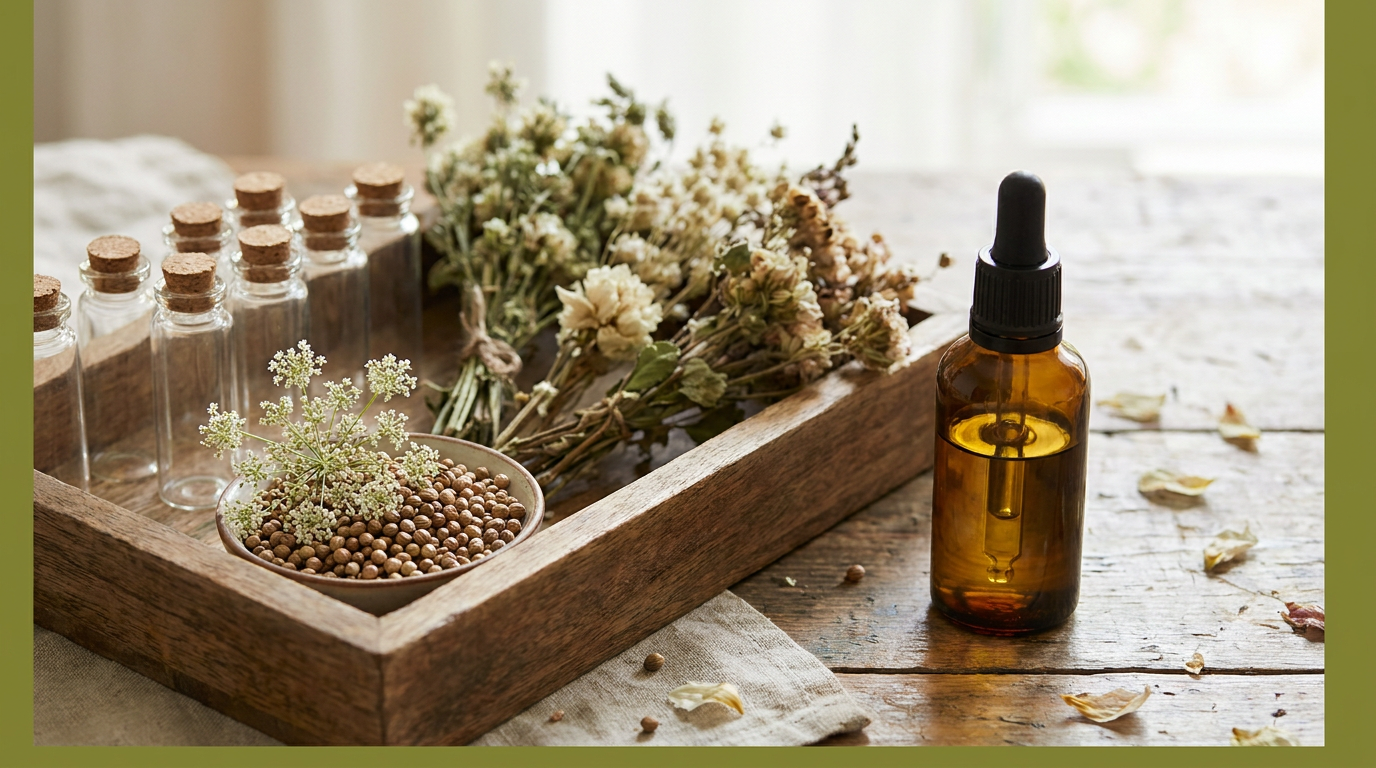
Why Coriander Essential Oil Is Showing Up in Fall Spice Blends This Year
Walk into any home goods shop this September and you'll notice a pattern in the diffuser blend displays: cinnamon, clove, cardamom, and, more and more often, coriander. Coriander oil has spent years as the quiet supporting player in citrus and floral blends. This fall, it's stepping into the warm spice lineup that used to belong almost entirely to the usual suspects. If you've seen "coriander" pop up in seasonal blend names on shelves or in your social feed, you're not imagining it. It's a real shift, and it's worth understanding before you build your own autumn rotation.
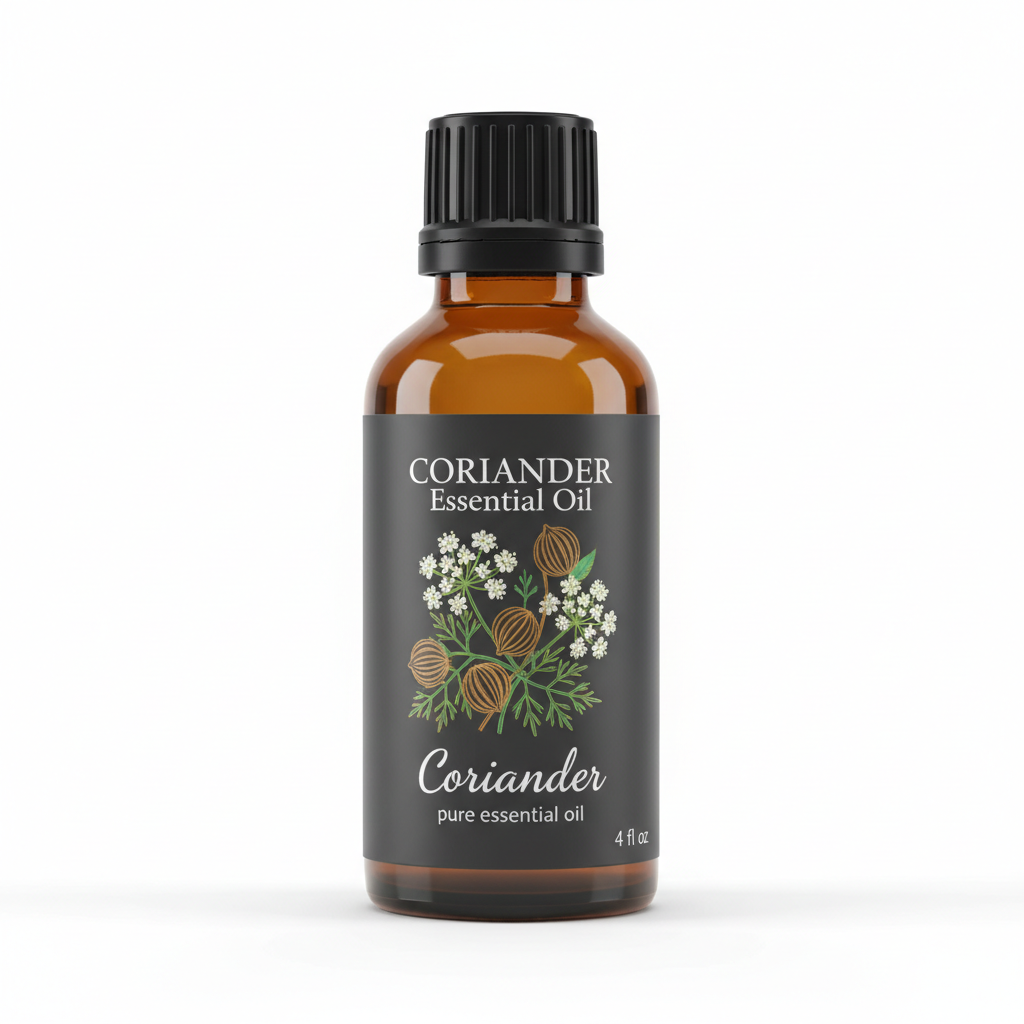
Coriander Essential Oil
Our own Coriander Essential Oil, in sizes from 0.5 oz to bulk.
From $10.99
Shop Now →Why This Trend Is Catching On Now
Part of the coriander oil fall trend traces back to how the oil actually smells, which surprises people who only know coriander as a cooking spice. Steam-distilled from the seed rather than the leaf, the oil carries almost none of the soapy, herbal note associated with fresh cilantro. Instead it's warm, slightly sweet, a little woody, with a citrusy lift that keeps it from feeling heavy. That profile happens to sit right at the intersection of two things blenders want in autumn: the cozy weight of a spice note and enough brightness that a room doesn't end up smelling like a candle aisle.
There's also a practical angle. Clove and cinnamon oils, longtime fall staples, are strong enough that a little goes a long way and an overdose reads as "holiday candle" fast. Coriander is gentler. Blenders looking for trending fall essential oils in 2026 have been reaching for it specifically because it stretches a blend without taking it over, letting cinnamon or clove stay in a supporting role instead of dominating the whole room.
Search interest tends to confirm what's showing up in blend recipes shared online: coriander essential oil seasonal use is climbing every September as people start swapping out their late-summer citrus blends for something with more depth. It's a seasonal rhythm as predictable as pulling out sweaters, just newer to include coriander by name instead of leaving it as an uncredited background note.
What Coriander Actually Brings to a Blend
If you've only used coriander oil in citrus-forward summer blends, its role in a fall lineup might not be obvious. A few characteristics explain why blenders keep reaching for it once the weather turns:
- A rounding effect. Coriander tends to soften sharper spice notes like clove bud, so a blend feels warm rather than sharp or medicinal.
- Low overpowering risk. Its scent is present without being loud, which makes it forgiving for anyone still learning proportions.
- A subtle citrus thread. That faint brightness keeps heavier blends from feeling flat or one-note, especially once orange or bergamot has faded out for the season.
- Versatility across the season. It works as easily in an early-October blend that still leans a bit bright as it does in a deep-December blend built around clove and fir.
Building a Warm Spice Diffuser Blend With Coriander
Warm spice diffuser blends for autumn generally follow a simple structure: a spice note for warmth, a wood or resin note for depth, and something bright to keep it from turning flat. Coriander can sit in either the spice or the bright slot depending on what you pair it with. A few starting points, all written as total drops for a standard diffuser (adjust down for a smaller unit, following your diffuser's own capacity guidelines):
Early Autumn Blend
- 3 drops coriander
- 2 drops sweet orange
- 1 drop clove bud
This one leans on coriander's citrus edge and works well for the stretch when the weather is cooling but pumpkin-everything hasn't fully taken over yet.
Deep Fall Blend
- 2 drops coriander
- 2 drops cinnamon bark
- 2 drops cedarwood
Here coriander steps back into a rounding role, taking the edge off the cinnamon while the cedarwood adds weight.
Cozy Evening Blend
- 3 drops coriander
- 2 drops frankincense
- 1 drop clove bud
A slower, quieter combination that people often reach for once the evenings get genuinely dark and short.
Seasonal Variations Worth Trying
One reason coriander has found a place in the fall spice conversation is how easily it shifts across the season. Early on, when the weather is only just turning, a coriander and citrus combination keeps things feeling transitional rather than jumping straight to full holiday mode. By mid-autumn, once the leaves are down and the air has a real bite to it, pairing coriander with heavier notes like cinnamon, clove, or cardamom lets it recede into a supporting role while those spices carry the room. Around the darker weeks of late November and into December, coriander tends to work best in smaller amounts, more of a background hum under fir, frankincense, or resin blends than a lead note.
Regional climate matters too. In places where fall stays mild well into November, a lighter coriander and orange combination can carry the whole season. In colder climates where the heat comes on early, leaning toward the heavier cinnamon and cedarwood pairing from the start tends to feel more in step with the weather outside.
A Few Practical Notes on Using Coriander Oil This Season
Coriander oil is versatile, but a few basics keep the experience a good one regardless of how you're using it:
- Start light. Even in a diffuser, adding oils gradually and adjusting to taste beats dumping in a full recipe at once, especially in a smaller room.
- Ventilate. Crack a window occasionally when running a diffuser for extended stretches, particularly with multiple spice oils layered together.
- Patch test before skin contact. If you're incorporating coriander oil into a personal fragrance roll-on or massage oil rather than a diffuser, dilute it properly in a carrier oil first (a common general guideline is around 1 to 2 percent for everyday use, roughly 5 to 10 drops per ounce of carrier) and apply a small amount to your inner forearm, waiting 24 hours before wider use.
- Keep it away from children and pets. Store bottles securely and keep diffusers out of rooms where pets spend unsupervised time, since sensitivities vary by species.
- Check with a healthcare provider if you're pregnant, nursing, or managing a medical condition before adding any new essential oil to your routine, and consult a qualified provider with any specific questions about your situation.
Sourcing Quality Coriander Oil for Fall Blending
Not all coriander oil smells the way it should. Because the trend is new enough that supply hasn't fully caught up with demand, it's worth being a little more careful than usual about sourcing this season. A few things to check before buying:
- Look for the botanical name. The bottle should specify Coriandrum sativum, seed-distilled, not a vague "coriander fragrance" blend.
- Ask about the harvest. Reputable sellers can usually tell you roughly where and when the seed was sourced. Vague or evasive answers are a signal to look elsewhere.
- Trust your nose, within reason. Good coriander oil should smell warm and slightly sweet with a light citrus note, not sharp, soapy, or overwhelmingly herbal. A batch that smells strongly like fresh cilantro leaf usually points to a different extraction method or a lower-quality distillation.
- Check for testing documentation. A GC/MS report or similar batch testing isn't required by law, but sellers who provide it are generally more transparent about what's actually in the bottle.
Where Coriander Fits Alongside Your Other Fall Favorites
None of this means retiring the classics. Cinnamon, clove, and nutmeg aren't going anywhere, and for good reason: they're the backbone of what most people picture when they think "fall scent." Coriander's rise this year is less about replacing those notes and more about rounding them out. If your usual autumn blend has started to feel a little one-dimensional, or a bit too sharp after a few years of the same three oils, coriander is an easy note to fold in without starting from scratch. Try swapping it into a familiar recipe in place of one spice note at a time and see how the balance shifts.
For more on building your own blends, sourcing quality oils, and using coriander oil safely throughout the year, take a look at our guide to coriander oil diffuser blends for every season and our breakdown of how to choose a quality coriander essential oil. If you're curious how coriander compares to the other spices filling up your diffuser shelf this year, our piece on coriander oil versus cardamom oil is a good next stop.
Trends in the essential oil world tend to move slower than fashion but faster than people expect. Coriander's move from background note to featured fall ingredient didn't happen overnight, but it's clearly here for the season. Whether it sticks around as a permanent fixture in warm spice blends or fades back into a supporting role next year, right now it's worth having a bottle on hand while the weather, and everyone else's diffuser, leans into it.