Sunlit Spice: A Signature Coriander Diffuser Blend for Bright Rooms
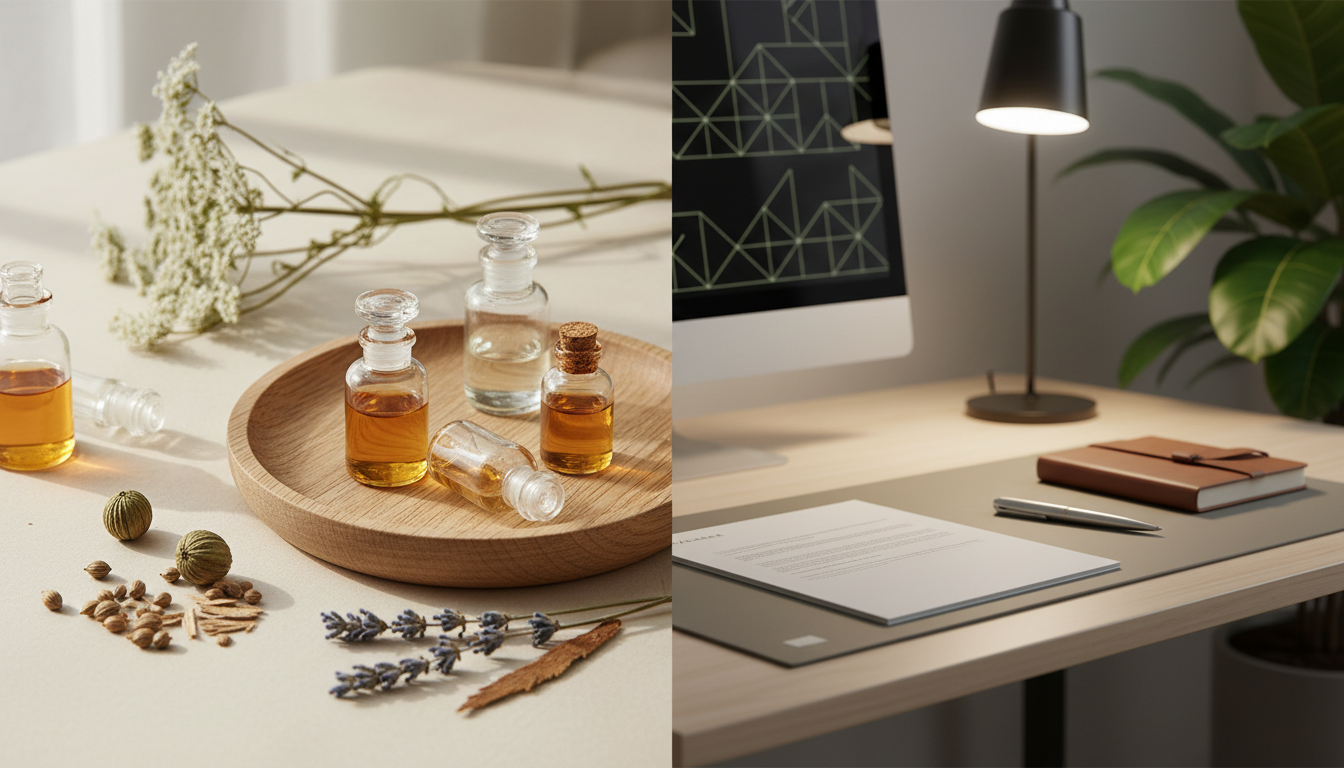
Some rooms just want to smell like afternoon. Not heavy, not sweet, not borrowed from a candle catalog. Just warm, gently spiced, and quietly alive. This coriander diffuser blend was built for exactly that kind of space: a sunlit kitchen, a reading corner with good light, a home office that needs a little lift without becoming a distraction.
The blend pairs coriander seed essential oil with Boswellia carterii frankincense, layering a bright citrus-spice character over a clean, softly resinous base. The result is a coriander room fragrance that feels both grounded and energized, neither too sharp nor too sleepy. It works well in the morning and holds its character through midday, which is harder to achieve than it sounds.
Before diving into the recipe, it helps to understand why these two oils belong together. And that starts with carterii.
Why Frankincense Carterii? The Case for This Particular Variety
Frankincense is not a single oil. The genus Boswellia contains multiple species, each with its own resin character, growing region, and aromatic personality. Frankincense carterii is harvested primarily from the dry woodlands of Somalia and Ethiopia, where Boswellia carterii trees grow in rocky, semi-arid terrain. The resin is traditionally collected through a tapping process called wounding, which encourages the tree to produce hardened tears of gum resin over successive harvests.
What makes carterii worth choosing for this blend is its brightness. Many frankincense varieties skew heavily toward wood, smoke, or deep earth. Carterii has those qualities in the base notes, but the top of the oil opens with something almost citrus-like: a crisp, slightly green, lightly terpenic lift that is more approachable than the deeper resins. Some describe it as a cleaned-up pine, or a resin with a window left open.
That brightness is precisely why it works with coriander. Coriander seed essential oil carries its own delicate citrus-spice signature: a warm, slightly floral, gently woody character that sits in an unusual middle ground between a spice oil and a soft citrus. Carterii frankincense does not crowd that character. Instead, it extends the warmth underneath while keeping the overall blend from feeling heavy or oppressive.
If you are curious about the full aromatic personality of coriander before blending, the complete guide to coriander essential oil uses covers its character, history, and aromatic range in detail.
The Sunlit Spice Blend: Full Recipe
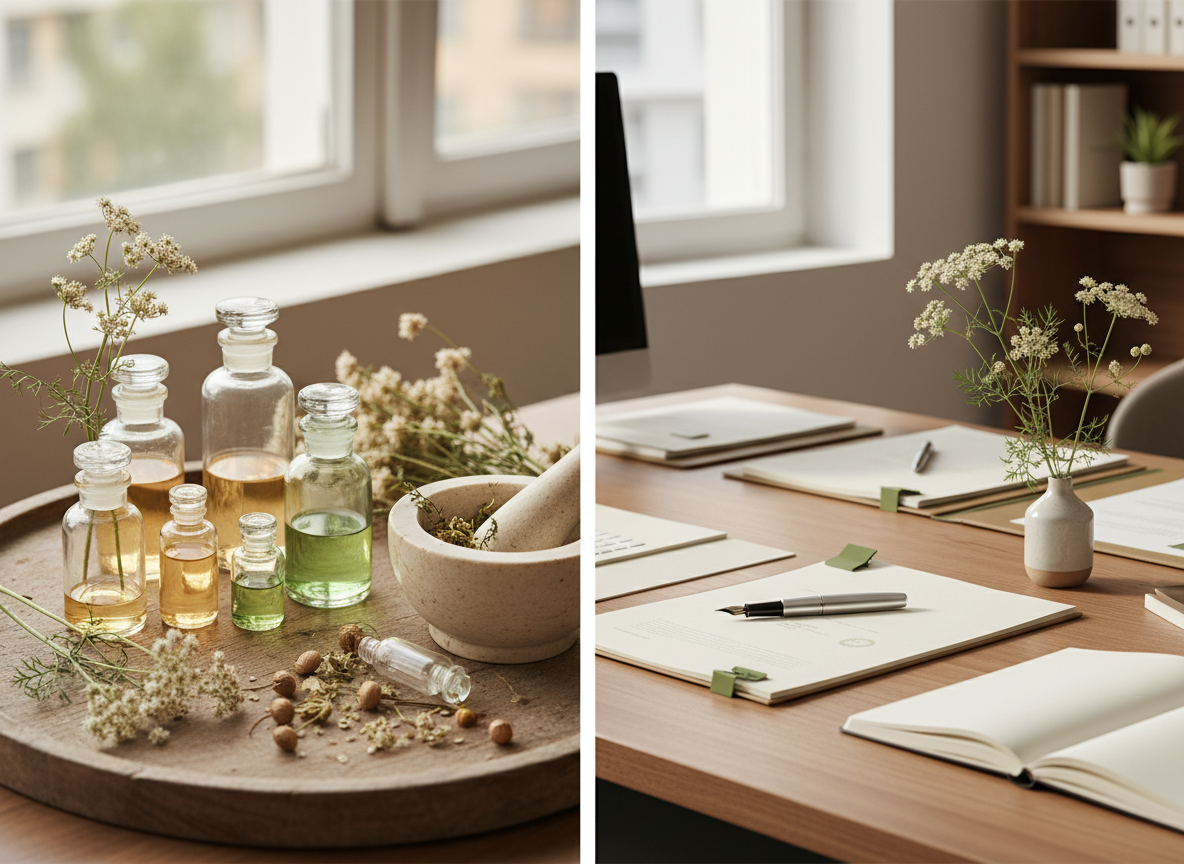
This recipe is sized for a standard 100 ml ultrasonic diffuser. Adjust proportionally for smaller or larger units. Measurements are given in both drops and milliliters for precision, though for diffuser use, drops are the practical standard.
Ingredients
| Oil | Drops | Approx. Milliliters | Role in the Blend |
|---|---|---|---|
| Coriander seed (Coriandrum sativum) | 5 | 0.25 ml | Heart: warm spice, soft citrus, floral character |
| Frankincense carterii (Boswellia carterii) | 3 | 0.15 ml | Base: clean resin, citrus lift, grounding depth |
| Sweet orange (Citrus sinensis) | 4 | 0.20 ml | Top: bright, round, slightly sweet citrus |
| Black pepper (Piper nigrum) | 2 | 0.10 ml | Accent: dry warmth, subtle edge, prevents flatness |
Total for one diffuser session: 14 drops / approximately 0.70 ml
Step-by-Step Blending Instructions
- Prepare a clean small glass bottle or a dark amber 5 ml vial if you want to pre-mix a concentrate. Pre-mixing is optional but saves time if you diffuse this blend regularly.
- Add the frankincense carterii first. It is the heaviest note and benefits from a moment to settle before the other oils are layered on top.
- Add black pepper next. Two drops is enough. Black pepper oil is assertive, and the goal here is a dry warmth accent, not a dominant spice.
- Add coriander seed. This is the heart of the blend. You should begin to notice the characteristic soft-spice lift the moment it hits the carterii base.
- Add sweet orange last. The citrus top note is volatile and will begin dispersing quickly, so add it close to the time you intend to diffuse.
- Swirl gently if blending in a vial. Do not shake vigorously, which can introduce air and affect the top notes.
- Add the blend to your diffuser's water reservoir according to your diffuser manufacturer's instructions. Most 100 ml units work well with 8 to 15 drops per session.
Diffuser Use Notes
Run the diffuser for 30 to 60 minutes at a time, then allow the room to rest for at least 30 minutes before the next session. Continuous diffusion is not necessary for good room fragrance, and shorter, intentional sessions often create a more pleasant atmosphere than background noise diffusion.
For larger rooms, do not simply multiply the drops. Instead, run a second session or move the diffuser to the center of the space. Overloading the water with oil does not scale the scent proportionally and can leave an oily residue in the diffuser basin.
Safety Notes and Dilution Guidance
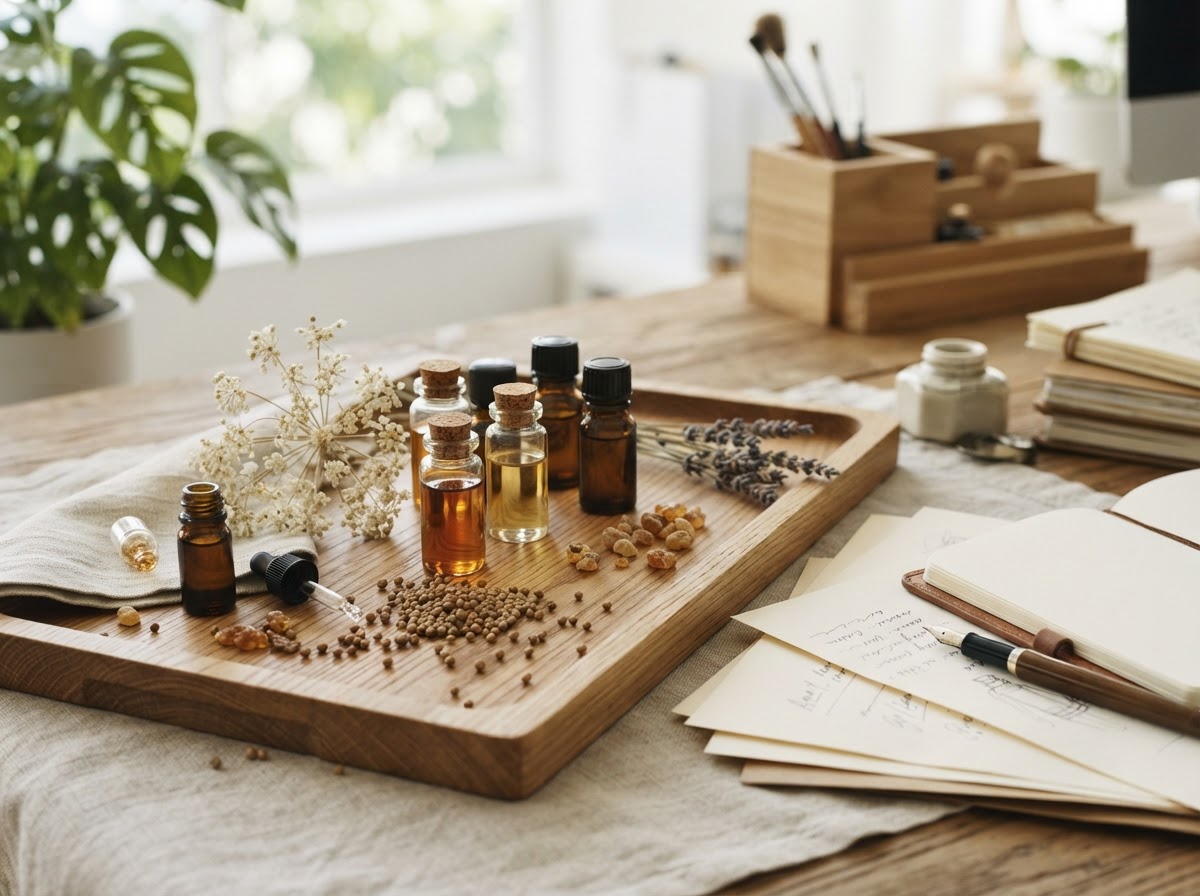
This blend is formulated for aromatic diffuser use only. It is not intended for direct skin application at this concentration. If you want to adapt any element of this recipe for a topical application such as a room spray, roll-on, or body oil, the dilution requirements are different and must be followed carefully.
- For topical use: Essential oils must be diluted in a suitable carrier oil. A 1% dilution (roughly 6 drops per 30 ml of carrier) is a conservative starting point for most adults. For facial applications, some formulators prefer 0.5% or lower.
- Patch testing: Apply a small amount of any diluted blend to the inner forearm and wait 24 hours before broader use. Discontinue if any irritation or sensitivity occurs.
- Citrus and photosensitivity: Sweet orange essential oil is generally considered non-phototoxic, but if you adapt this recipe to include expressed citrus peel oils rather than steam-distilled versions, check the specific oil's phototoxicity status before applying to skin that will be exposed to sunlight.
- Black pepper oil: Use conservatively. It can be a sensitizer at higher concentrations, particularly for individuals with sensitive skin.
- Pregnancy and nursing: Consult a qualified healthcare provider before using any essential oil blend during pregnancy, while nursing, or around young children or pets.
- Ventilation: Always diffuse in a well-ventilated space. Step out of the room periodically, especially if diffusing for extended periods.
If you are new to blending coriander with other oils and want a broader picture of what partners well with it, this article on what blends well with coriander essential oil is a practical starting point.
Storage and Shelf Life
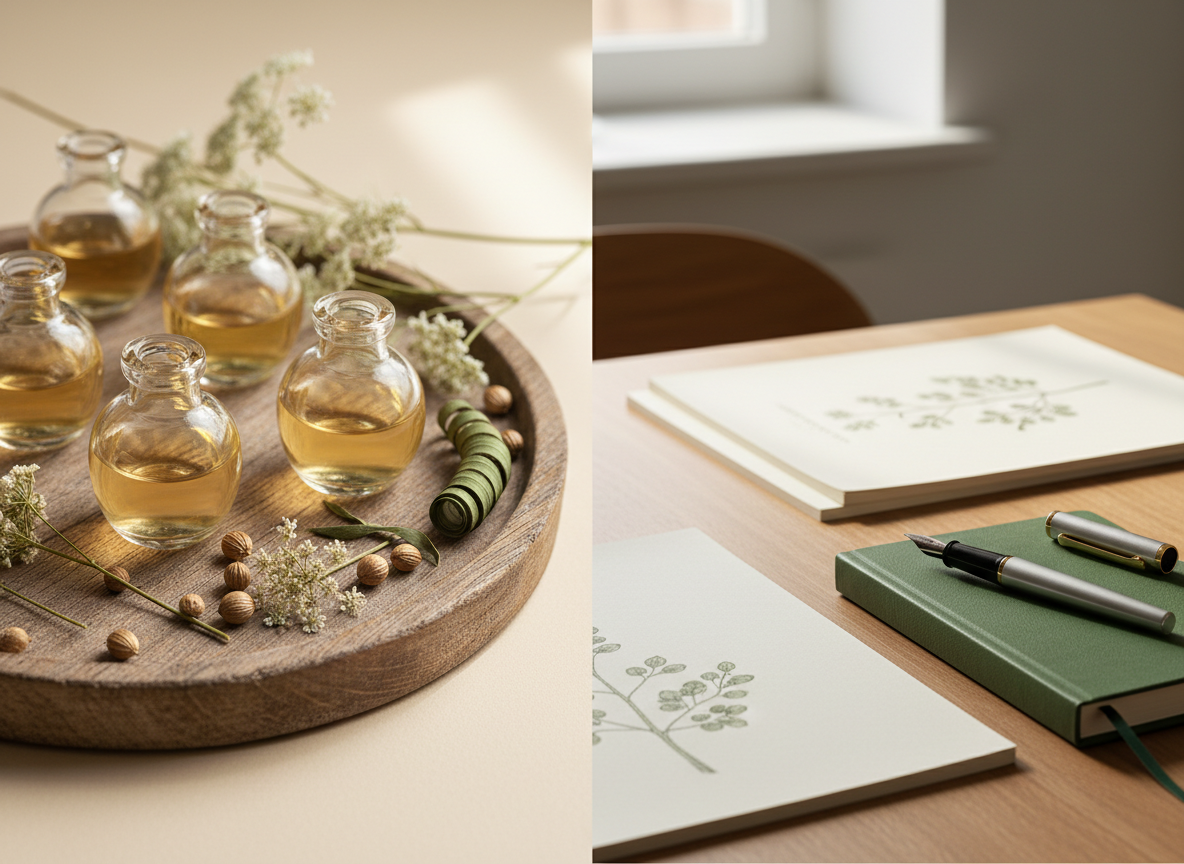
Storing a pre-mixed concentrate extends the convenience of this blend considerably. A few simple steps will keep the blend performing well for several months.
- Container: Use dark amber or cobalt glass. Clear glass accelerates oxidation from light exposure.
- Temperature: Store away from heat sources and direct sunlight. A cool drawer or a dedicated oil storage box works well.
- Cap tightly: Citrus top notes are among the most volatile components in any blend. Loose caps allow them to off-gas, shifting the scent balance over time.
- Shelf life: A well-stored concentrate of this blend should remain aromatically stable for 6 to 12 months. Coriander seed oil itself is generally considered stable for 3 to 5 years when stored correctly, but the sweet orange component is the limiting factor here. If the orange note fades or the blend develops a slightly sharp, metallic edge, the citrus has likely oxidized and the blend is past its best for diffusion.
Variations on the Sunlit Spice Theme
Once you have made the base blend a few times, it becomes a canvas. These three variations shift the character while keeping the coriander-carterii core intact.
Variation 1: Cooler Mornings
Replace sweet orange with bergamot (Citrus bergamia, steam-distilled). Bergamot adds a more complex, slightly green citrus note that pairs with coriander in a particularly interesting way. The blend reads as slightly more sophisticated and less obviously warm, which suits overcast mornings or spaces with cooler light. For more on how coriander and bergamot interact aromatically, the article on coriander and bergamot blending goes into the detail.
Substitute: Replace 4 drops sweet orange with 4 drops bergamot (steam-distilled or furocoumarin-free for any topical adaptation).
Variation 2: Deeper Afternoon
For rooms that shift into evening use, add 2 drops of sandalwood (Santalum album or Santalum spicatum) and reduce the sweet orange to 2 drops. The sandalwood deepens the base, slows the evaporation curve of the blend, and gives the carterii frankincense more room to express its resinous character. This variation still works as a warm spice diffuser recipe, but it leans toward a quieter, more contemplative atmosphere suitable for late afternoon light.
Variation 3: A Greener Edge
Add 2 drops of cardamom (Elettaria cardamomum) to the original recipe, and reduce the black pepper to 1 drop. Cardamom shares some aromatic compounds with coriander, which creates a kind of internal harmony in the blend. The overall character becomes slightly more herbal and complex, less overtly warm, and more suited to spaces where you want an interesting background note rather than an immediate sensory impression.
Choosing Quality Oils for This Blend
A blend is only as good as its components. For coriander seed oil specifically, look for oil distilled from the seed rather than the leaf or stem. Leaf-distilled coriander oil has a markedly different character, closer to a soapy green note than the warm, slightly sweet spice quality this blend depends on. The Latin name on the label should read Coriandrum sativum, and the plant part should be specified as seed.
For frankincense carterii, sourcing matters more than it might for some other oils. The frankincense market has long included adulterated and mislabeled products. Look for suppliers who list the botanical name, country of origin (Somalia or Ethiopia for true carterii), extraction method (steam distillation), and ideally a batch-specific GC/MS report. The aroma itself is a reasonable guide: carterii should smell clean, bright, and slightly citrusy on first opening, deepening to a warmer, slightly smoky resin as it dries on a test strip.
A well-sourced carterii makes this blend noticeably better. The top note that makes it work, that crisp lift that keeps the spice from becoming heavy, comes from the quality of the resin at the source.
Setting the Scene
The Sunlit Spice blend was designed for rooms with natural light, but it adapts well to any space where you want warmth without weight. It is well-suited to morning routines, midday focus sessions, or late afternoon wind-downs where the quality of a room's atmosphere matters as much as anything happening in it.
Start with 14 drops in a 100 ml diffuser. Give the room 20 minutes. Then decide whether it wants more citrus, more depth, or more spice. Blending is always a conversation, and coriander is a generous conversationalist.