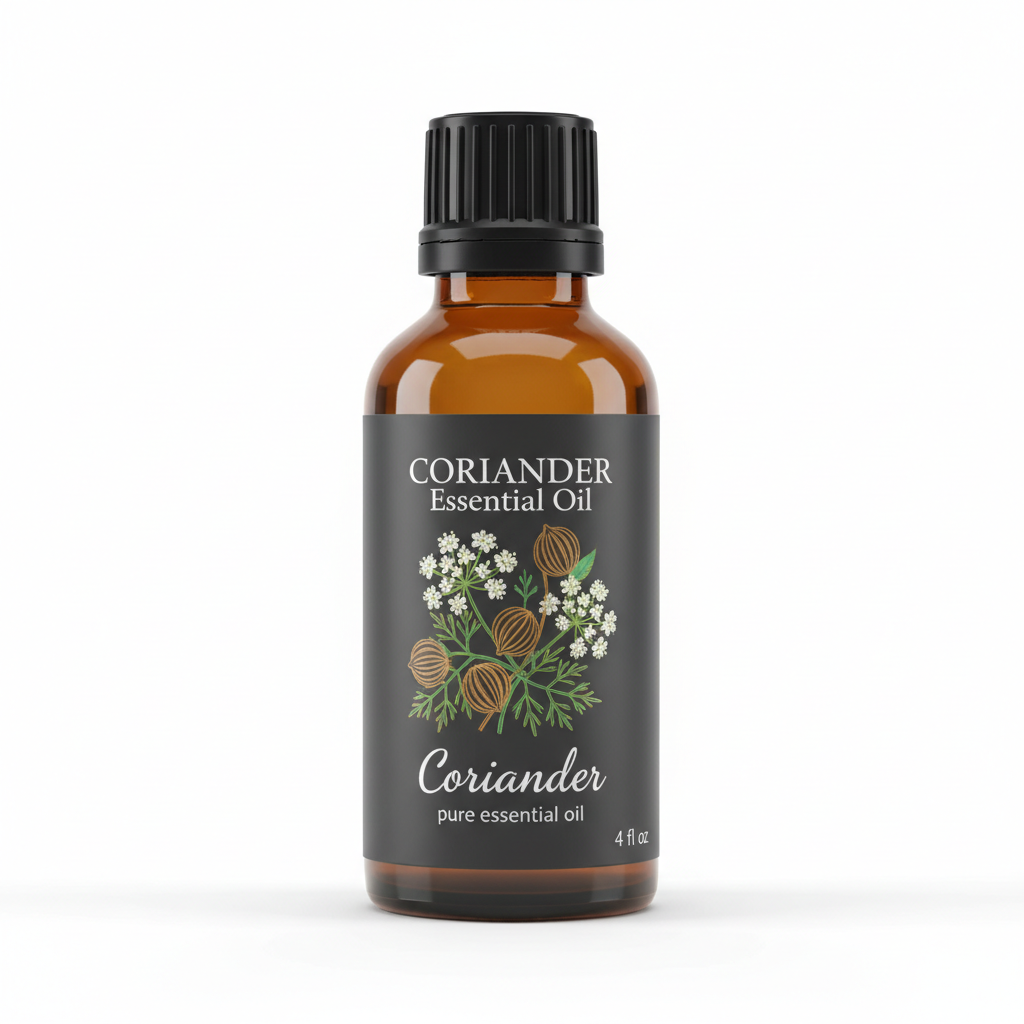
One plant gives two oils that share nothing but a species name. This is the seed: round, warm and linalool-led, and nothing like the leaf.
Coriandrum sativum is the only plant we distil twice, and the two results could hardly be less alike.
Take the young leafy tops and you get a vividly green, pungent oil dominated by aldehydes, the one people either love or cannot bear. Take the ripe seed and you get something entirely different: warm, softly spicy, gently floral, and carried by linalool, the same aromatic that makes lavender smell like lavender.
Because both are honestly labelled Coriandrum sativum, a bottle with nothing but the Latin name on it tells you nothing useful. We sell them as two products because that is what they are, and our cilantro leaf oil makes the same argument from the other side.
Every lot goes to an independent laboratory, and the first thing it settles is which half of the plant the oil came from.
Dominant in seed oil and the reason this material behaves the way it does in a blend.
Decanal and its relatives belong to the leaf oil. Finding them here would mean leaf material in the charge.
Confirms a single-species seed distillate at full strength, with no linalool added from a cheaper source.
Quote your lot and the analysis follows, or write to us through the contact page.
Coriander seed is harvested when it has ripened and dried on the plant, which is when the linalool has developed and the green aldehydes of the leaf stage have gone.
We buy to a stated screen size and a moisture ceiling for every material, and refuse anything split, damaged, immature or off in colour. Screen size acts as a maturity proxy, and immature seed gives both a lower yield and a flatter aroma.
The seed then sits whole and dry until it is wanted. That is the reason we can carry a material across a season without it fading: an unbroken seed coat is doing the preserving, not us.
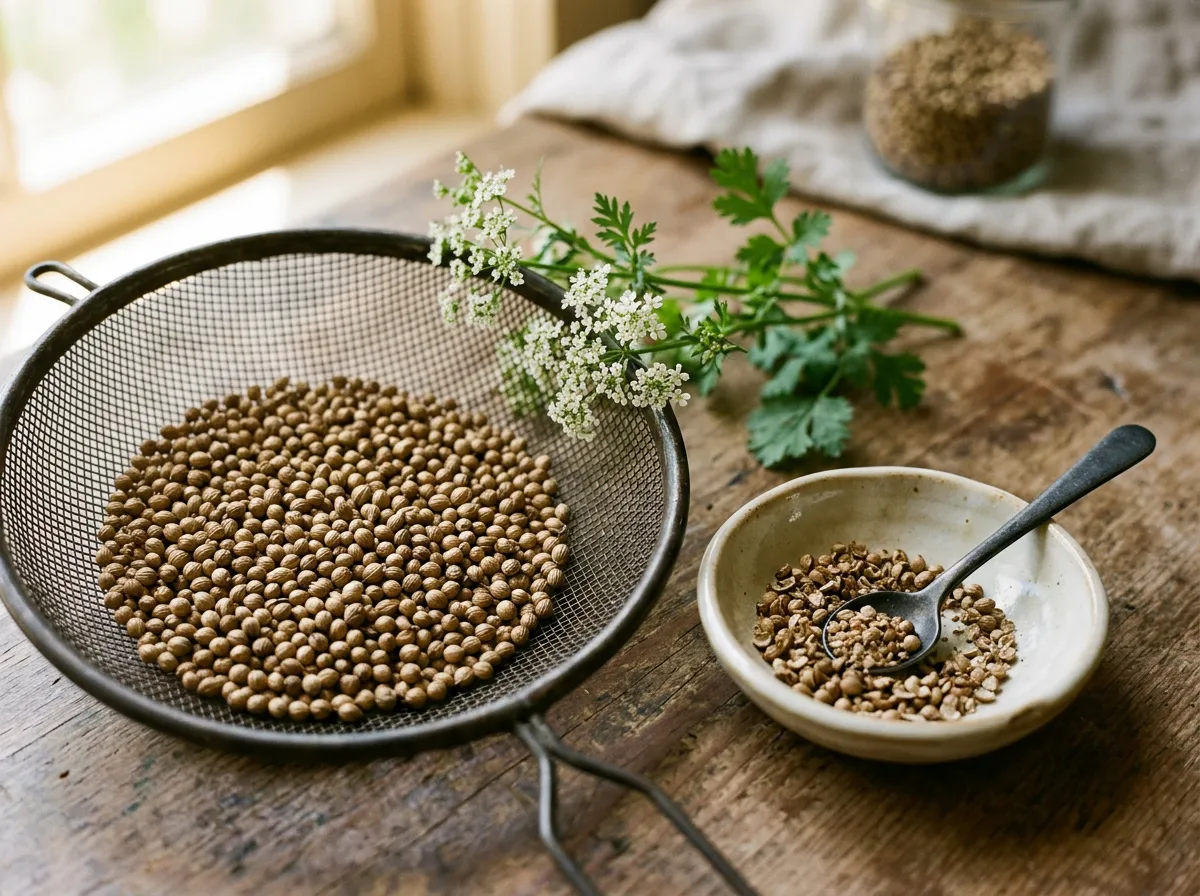
Cracking a seed starts a countdown. The top notes begin to evaporate, oxygen reaches the oil, and the seed's own enzymes start altering what is left. Seed bought pre-ground has been through weeks of that before it arrives anywhere.
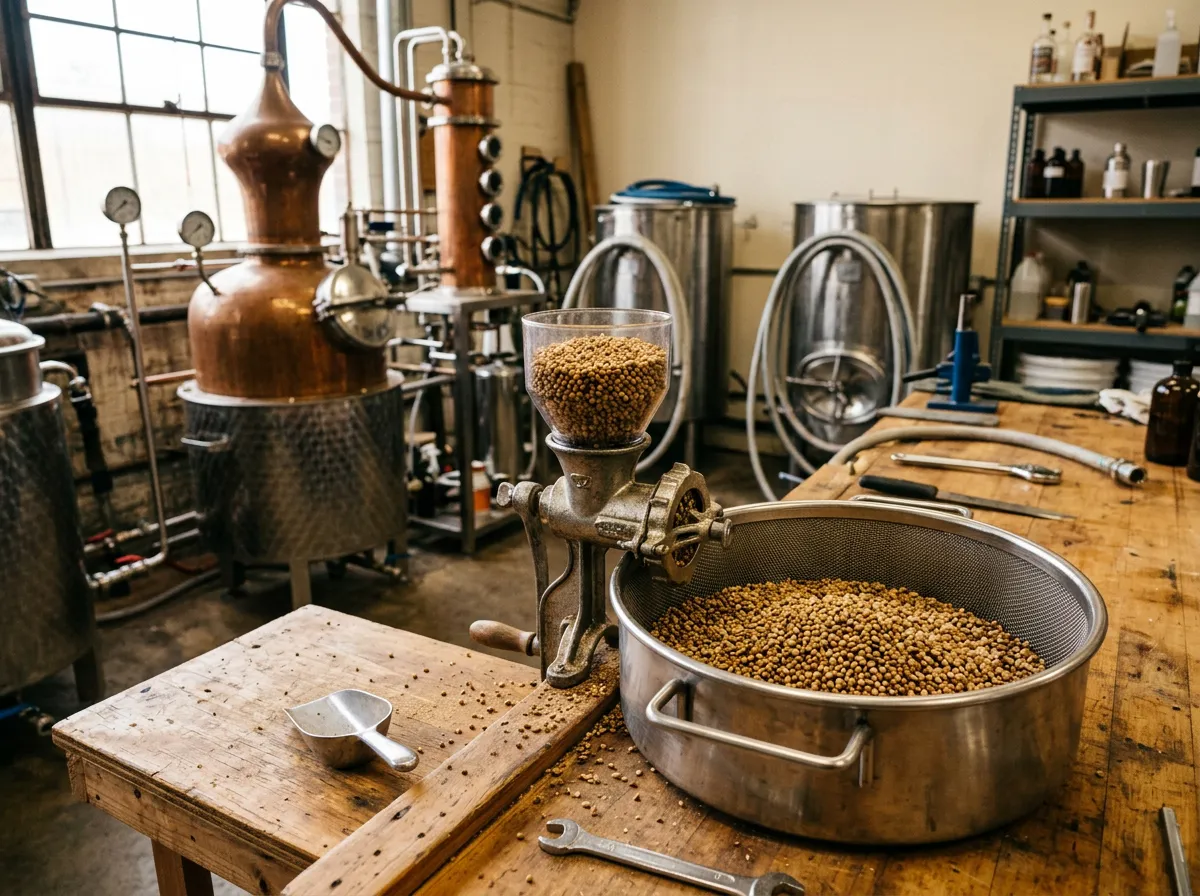
Ours is milled here, typically within the hour of the charge going in, and only to a coarse crack. Milled to a flour it beds down and steam slips around the outside of the charge instead of through it, which gives an uneven run and scorching low down.
Steam then passes through until the seed is spent, and the lot goes out for analysis before anything is bottled.
Both stay attached to the lot, and the still date goes on the bottle.
Every size in amber, from the smallest bottle upward.
Pure coriander seed distillate, undiluted, with no leaf oil and no isolated linalool blended in.
No medical claims from us. Coriander seed oil is a warm, versatile middle note and that is the case we will make.
Dilute into a carrier before skin use and trial a small area first. It is among the gentler spice oils, which makes it easy to over-pour rather than genuinely risk-free.
If you were expecting the smell of fresh coriander leaf, this is not it, and no amount of it will get you there. That oil exists and we sell it separately. When a lot does not analyse correctly, we run out instead of bottling it.
Six things that apply to every coriander lot.
Harvested dry and mature, when the linalool has actually developed.
A stated screen size and moisture limit, with split or immature seed refused.
Cracked coarse on site, an hour or so before the still is charged.
Independent analysis proving seed rather than leaf origin.
Isolated linalool is cheap. None of it goes into this bottle.
All sizes filled from one distillation.
Ripe Coriandrum sativum seed bought to spec, cracked coarse on site, distilled here, with linalool confirmed and leaf aldehydes ruled out.
Try both and compare.
Shop Coriander Oil