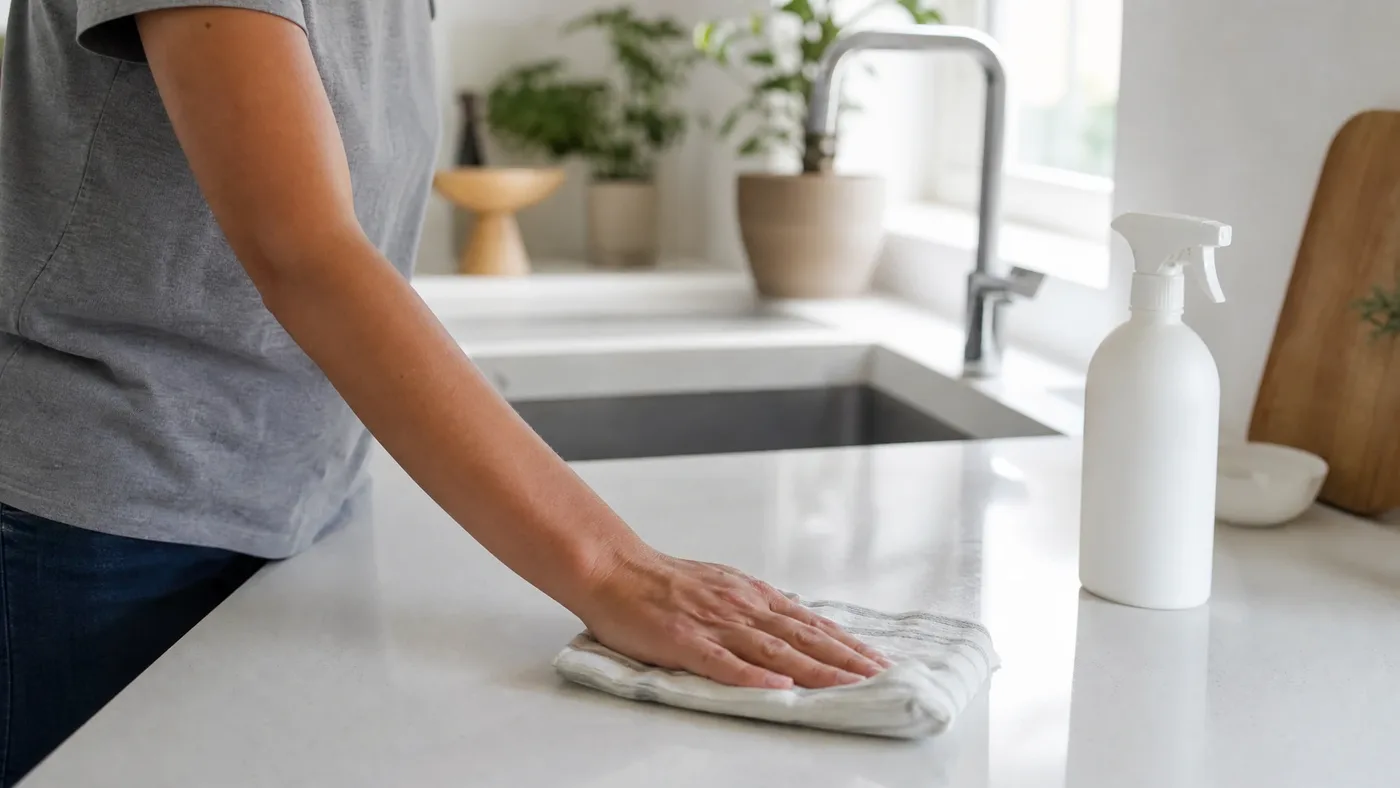
Coriander Oil Cleaning Recipes: Scented Spray, Not Sanitizer
Coriander seed oil can scent a household cleaner, and that is all it should be asked to do. A spray with coriander oil in it is a scented cleaner, not a disinfectant, and the moment a label or a post says otherwise it becomes a regulatory question. This page gives the arithmetic for a 500 ml spray bottle, explains three mistakes that matter more than the oil (vinegar plus soap, vinegar on stone, oil that will not mix), and says what we would leave off any claim. We have not made or tested any recipe here.
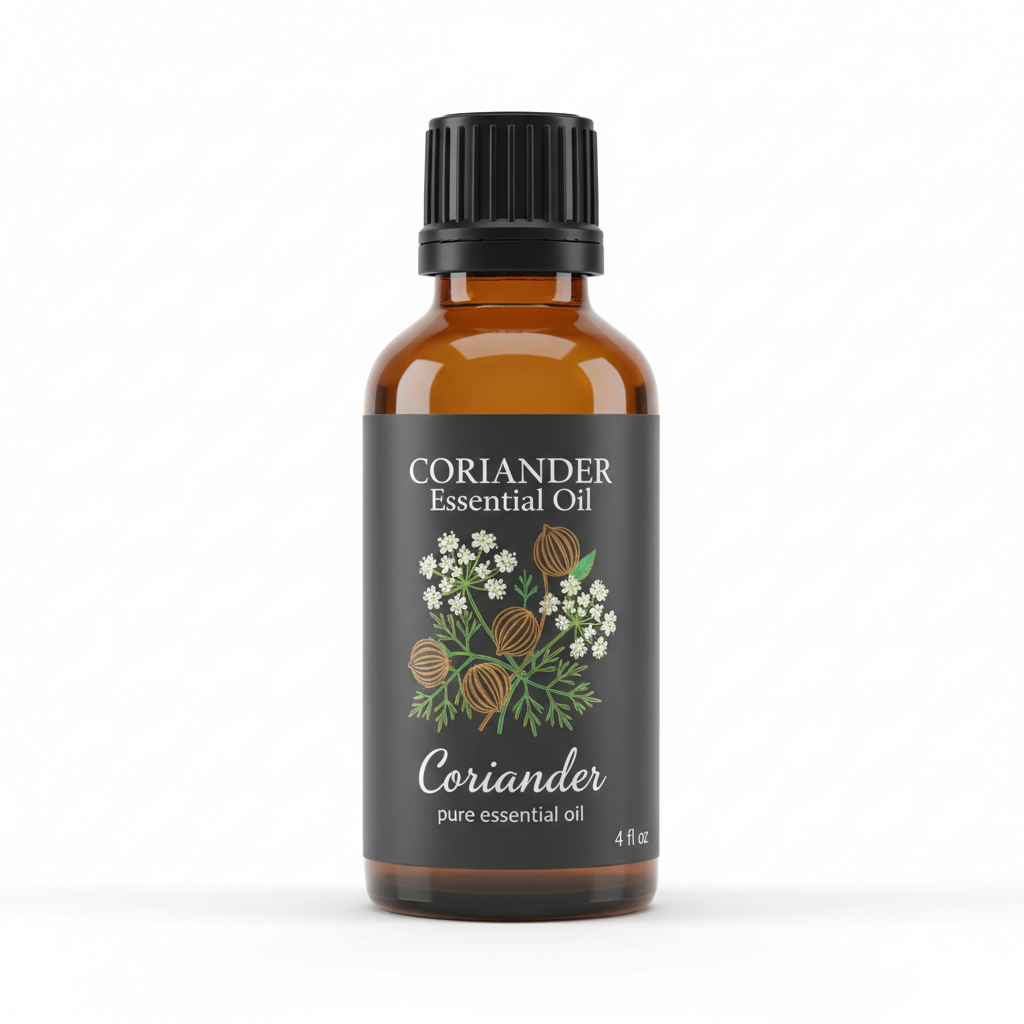
Coriander Essential Oil
Our own Coriander Essential Oil, in sizes from 0.5 oz to bulk.
From $12.99
Shop Now →What a claim does to a cleaner
EPA's page on when a cleaning product is a pesticide under FIFRA draws the line by claim, not by ingredient. Claims it lists as pesticidal include that a product sanitizes or disinfects, that it controls bacteria or other pests that cause odors, and removing allergens without qualification. Claims it treats as generally not pesticidal include deodorizing, removing soap scum, removing stains, and removing dirt or non-living allergen sources such as pet dander, provided none is tied to a pest. A non-pesticidal claim becomes pesticidal if it is paired with a pest-related claim or implies pest control.
The second layer is the ingredient. 40 CFR 152.25(f) exempts "minimum risk" products from registration, but only if every active ingredient is on its list. We read Table 1 of that section as it stood on 2026-10-23. The oils listed are castor, cedarwood, cinnamon, citronella, clove, corn, cornmint, cottonseed, garlic, geranium, lemongrass, linseed, peppermint, rosemary, sesame, soybean, spearmint and thyme. Coriander is not among them. Even for a listed oil, the section bars a label from claiming to control microorganisms that threaten human health. Reasoning from both, the consequence is simple: coriander oil here is fragrance. Any "natural disinfectant" or germ-control wording would make the product something we would not know how to defend, and it would need a regulatory adviser, not a recipe. States regulate minimum-risk products too, per EPA's minimum-risk page, which we did not read past its summary.
Our own copy matches that posture: our antimicrobial research post is the place for what laboratory studies report, and none of it licenses a cleaning claim. The oil is sold for aromatic and cosmetic use.
Mistake one: vinegar and soap in the same bottle
The most common "natural cleaner" recipe pairs vinegar with castile soap. Lisa Bronner, writing for the Dr. Bronner's castile soap brand (first posted 2011), explains that vinegar is an acid and castile soap an alkali, and that the acid breaks the soap back into fatty acids, leaving a whitish, curdled, oily mixture with no cleaning ability, whatever the order of mixing or the shaking. Her recommendation is to use them one after the other, never together. Note the source: a soap maker has a commercial reason to say so, and this is the only source we read for the chemistry, though the account (a weak acid freeing the fatty acids from the soap) is consistent with basic soap chemistry. The practical consequence for a coriander recipe is to pick a side. Water plus a little soap or dish detergent is one cleaner. Water plus vinegar is a different one. A third bottle that mixes both and then adds oil is the one we would not make.
Mistake two: vinegar on stone
The Natural Stone Institute care page states that products containing lemon, vinegar or other acids may dull or etch calcareous stones, which it describes as calcium carbonate and sensitive to acidic solutions. For general cleaning it recommends a neutral cleaner, stone soap, or a mild liquid dishwashing detergent and warm water. It does not name marble or limestone on that page; if you have a stone counter, ask the stone supplier which type you have. Reasoning from this, a vinegar-based coriander spray on a stone countertop is a worse bet than a dish-detergent-based one. Etching is not a stain; it is damage to the surface, and the page directs you to a professional stone restorer for areas you cannot remove.
Mistake three: oil and water do not mix
Essential oil floats on water. Shaking disperses it for seconds, and the first sprays can then be a concentrated mist and the last mostly water. A detergent or soap base is one way to hold droplets, and it is why the recipe below uses a mild liquid dish detergent. We have not tested whether the oil stays dispersed at these ratios, so shake the bottle before every use, and do not use a cleaner where undissolved oil has pooled on the surface. We also do not sell a solubiliser, and we have no figure for one.
A scented spray, worked out for 500 ml
This is a formulation from ordinary arithmetic. The skin dilution range on our shop page (0.5% to 2%) was written for body use, not cleaners; we have no cleaner guidance from a source, so the percentages below are our own picks to keep the fragrance low, with the reason that hands touch the product often.
| Fragrance level | Oil in 500 ml | Drops at 20 per ml | Drops at 30 per ml |
|---|---|---|---|
| 0.25% | 1.25 ml | 25 | 38 |
| 0.5% | 2.5 ml | 50 | 75 |
| 1% | 5 ml | 100 | 150 |
A starting recipe: about 495 ml of warm water, 1 teaspoon (5 ml) of mild liquid dish detergent, and 1.25 ml of coriander seed oil. Add the oil to the detergent first, mix, then add the water; use a glass or sturdy plastic bottle that is not used for food. Spray on the cloth, not the room. The drop counts differ by half between the two conventions (see the roller post for where the 20 to 40 range comes from), so measure by millilitre if you can.
Linalool, children and pets
Our oil is linalool-rich seed oil, and Audrain et al., British Journal of Dermatology, 2014 patch tested 4,731 patients at 13 UK dermatology departments and found 5.9% reacted to linalool hydroperoxides (1% in petrolatum), the oxidation product, against 0.2% reacting to the stabilised terpenes alone. They were clinic patients and the test material was oxidised linalool, so applying it to a cleaner is an inference. The practical points: an open bottle of cleaner with oil in it sits in air for weeks, so mix a small bottle and use it up; wear gloves if you are sensitive; and if you have a diagnosed fragrance allergy, ask your dermatologist or allergist before scenting a cleaner.
Our shop copy says to keep the oil away from children and pets. For a home with a cat, dog, bird or small child, we do not claim any level is acceptable, and we cannot say what residue on a floor means. Ask your veterinarian about the pet and your pediatrician about the child; our pets post reports what the authorities say.
The oil is for aromatic and cosmetic use, so a scented cleaner is a use at the edge of that. If you want the ordinary home uses, the everyday uses list covers them. A cleaner works because of the detergent. The coriander only decides how the kitchen smells afterwards.
Coriander Essential Oil
Coriander Essential Oil from our own shop, in sizes from 0.5 oz to bulk.
From $12.99
Shop Now →Sources & Further Reading
- US EPA. Determining if a cleaning product is a pesticide under FIFRA. epa.gov/pesticide-registration
- US EPA. Minimum risk pesticides. epa.gov/minimum-risk-pesticides
- eCFR. 40 CFR 152.25, Exemptions for pesticides of a character not requiring FIFRA regulation. ecfr.gov/section-152.25
- Bronner L. Why vinegar and castile soap don't mix well. lisabronner.com
- Natural Stone Institute. Learn about cleaning products for natural stone. naturalstoneinstitute.org/consumers/care
- Audrain H et al., 2014. Allergy to oxidized limonene and linalool is frequent in the U.K. Br J Dermatol. pubmed.ncbi.nlm.nih.gov/24702129