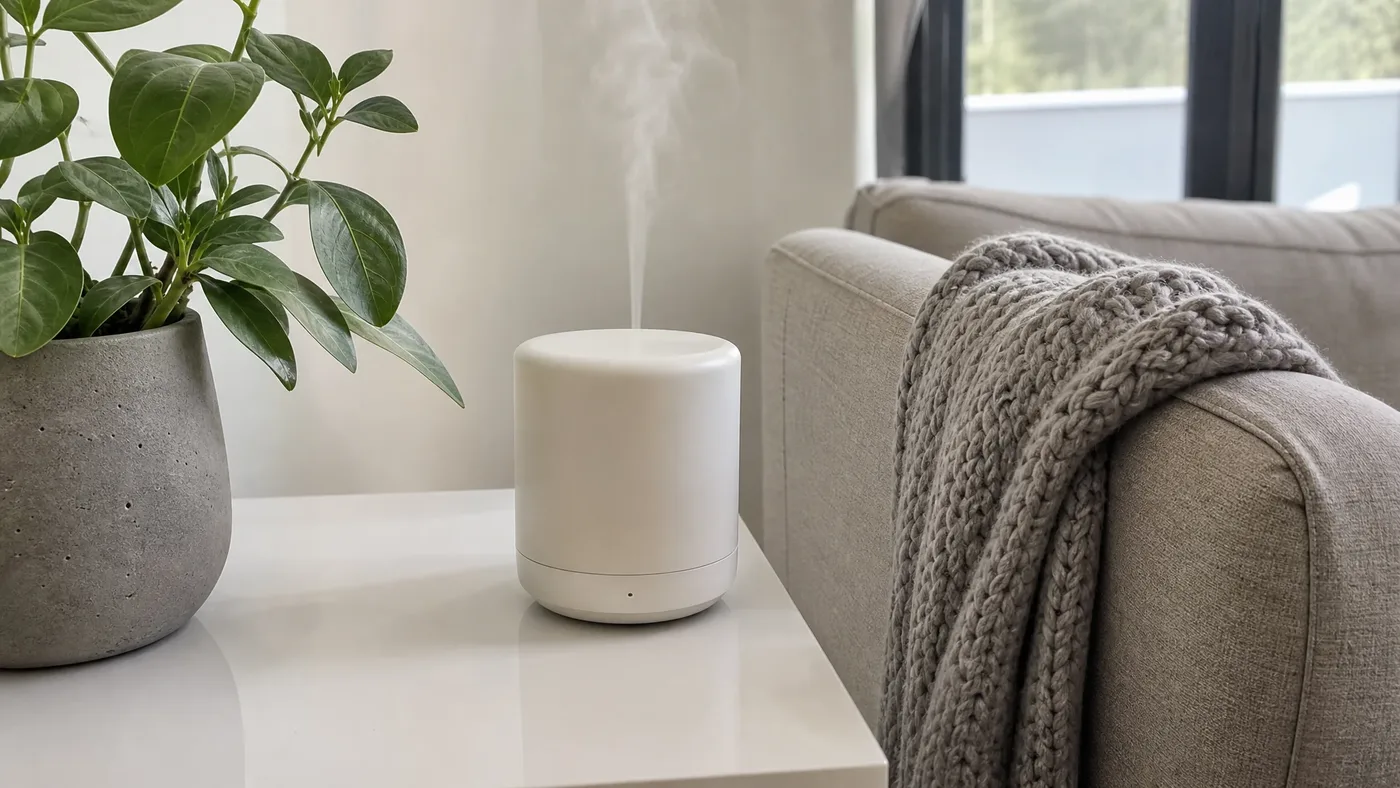
How to Diffuse Coriander Oil: Amounts, Timing, Safety
Before you diffuse coriander oil, settle whether the room should have a diffuser in it at all, because the answer is no for some households. If it is yes, the method is simple: the smallest amount that gives a light scent, on a timer, with a window you can open. We sell the oil only (no diffusers, no carrier oils), so this article stays on how to use ours well and where the published guidance stops.
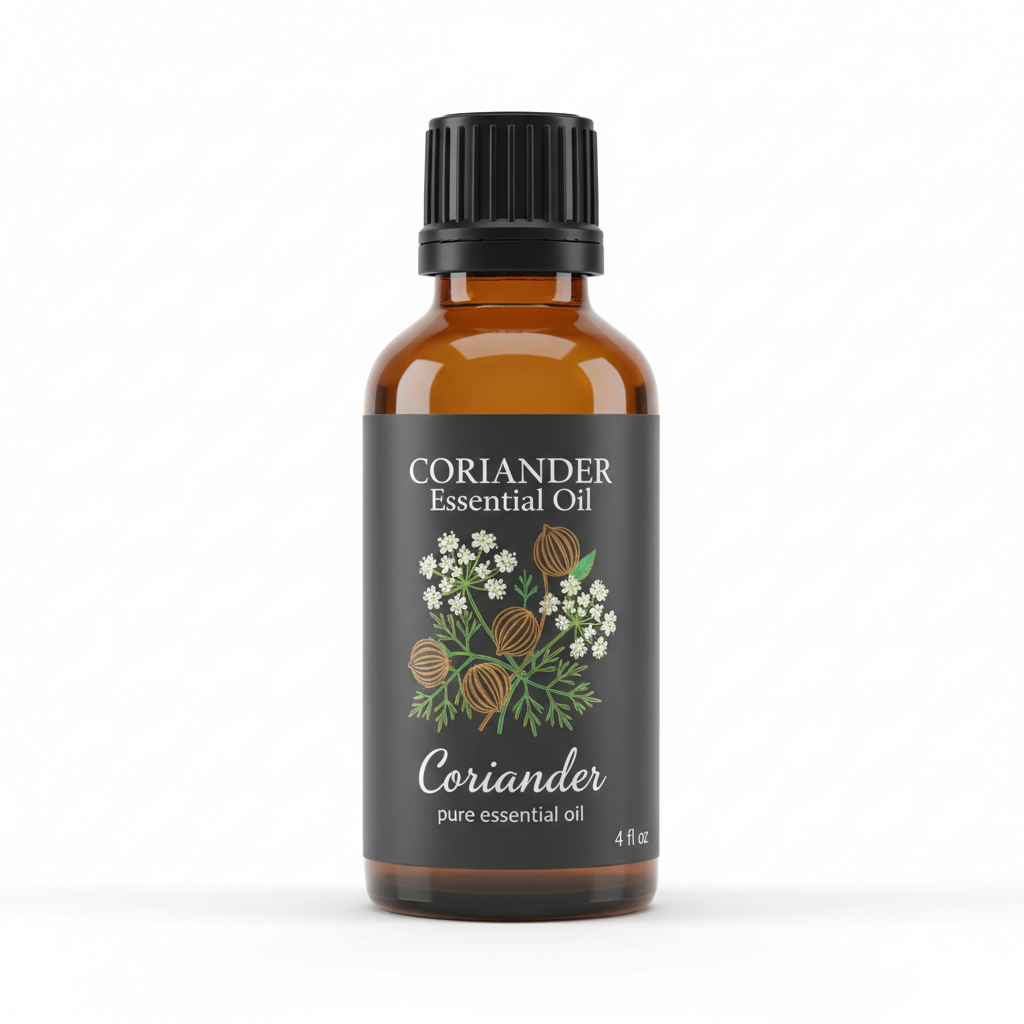
Coriander Essential Oil
Our own Coriander Essential Oil, in sizes from 0.5 oz to bulk.
From $12.99
Shop Now →Step 1: decide whether to diffuse here
Run through these before you buy a device.
- Asthma or COPD in the home. The American Lung Association's article on essential oils (published January 2024, updated October 2025) says people with asthma or COPD may be particularly susceptible, that strong odours may trigger bronchoconstriction, coughing or shortness of breath, and that adding anything to the air you breathe, essential oils included, is not recommended. It advises talking to a healthcare professional first. If that is your household, ask that professional before you diffuse, not after.
- Babies, small children and pets. Our shop copy says to keep the oil away from children and pets. We are not veterinarians or pediatricians, so for the specifics see our pieces on children and pets and ask your pediatrician or veterinarian before running any diffuser around them.
- Shared spaces. The Tisserand Institute's inhalation guide notes that safety matters most in places where people spend long periods, such as schools and spas, and asks you to consider other people and pets that use the area. If someone else lives in or uses the room, they get a vote.
Step 2: pick the device type and know what it does to the oil
| Type | How it works | What the sources say |
|---|---|---|
| Ultrasonic | Water tank plus a few drops; ultrasound makes a mist | Tisserand: water means possible microbial contamination, so clean the tank and change the water; use one with a timer; mist can add humidity and mark furniture |
| Nebulizing | Neat oil in a bottle, atomised without water | Tisserand: intense, uses up a fair amount of oil, suited to short sessions; the more intense the diffusion, the shorter it should run |
| Heat (candle or plug-in) | Warms oil in a little water | Tisserand: two main risks, an open flame and the dish drying out so the oil forms a resin; plug-in types avoid the flame |
The same Tisserand guide says heating oils for a short time does not degrade their properties. We have no measurement of our oil in a heat diffuser, so we do not claim either way. Reasoning from the chemistry below, a method without heat removes the question; that is a preference, not a finding.
Step 3: the arithmetic for the amount
Drop counts come from the device maker, and they vary. The manuals for two models from one ultrasonic diffuser line, which we opened, say to fill the tank to a 150 ml line and add 3 to 5 drops of essential oil for every 100 ml of water. One of them also describes an interval mode of 20 seconds on and 10 off. We could only read that one maker's manuals in full, so treat the 3 to 5 as one manufacturer's number, not a standard, and use your own device's manual if it differs.
Working from that: a 150 ml tank is 1.5 times 100 ml, so the manual's rule gives 4.5 to 7.5 drops per fill. Our shop page says a little goes a long way in a diffuser, so the formulation worked out here is to start at 3 drops for a 150 ml fill, which sits below the manual's lower bound, and add one drop at a time on a later run if you cannot smell it. We have not run this in a diffuser panel; it is ordinary arithmetic on the manual's rule, scaled down on purpose because concentrated oil is easier to add than to remove. For a nebulizing diffuser there is no water to dilute into, so the lever is session length, not drops.
The 0.5% to 2% on our shop page is a skin dilution in a carrier oil, roughly 3 to 12 drops per ounce. It does not apply to a diffuser, where the oil is dispersed into room air. Do not carry the skin figure over to a diffuser.
Step 4: schedule and air
The Tisserand Institute's safety guidelines recommend diffusing intermittently, about 30 to 60 minutes on and then 30 to 60 minutes off, with some fresh-air exchange whenever oils are in use. Its inhalation guide adds that low-level diffusion is fine for several hours but that you should be able to air the room quickly. A timer does this for you. The American Lung Association says to follow the manufacturer's instructions and keep the space well ventilated, and cites a 2022 study of 200 people in which those who inhaled essential oils for an hour or more daily had higher heart rate and blood pressure and lower lung function; we did not read that study, so this is the ALA's summary of it, not our finding.
A simple order of operations: open a window, run the first session for 30 minutes, leave the room and come back. If the smell is already strong, you used too much. If you get a headache, cough, or itchy eyes, stop and ventilate.
Step 5: the oxidation point, and what it does and does not mean
Coriander seed oil is linalool-led. A multicentre study by Bråred Christensson and colleagues (Contact Dermatitis, 2012) found that linalool is a weak allergen in pure form but autoxidizes on air exposure, and that oxidized linalool at 6.0% in petrolatum gave positive patch tests in 6.9% of 2,900 dermatitis patients across six countries. That study tested skin, not inhalation, and did not test coriander oil or diffusers. Reasoning from it, the practical consequence for a diffuser user is about the bottle: oxidized oil is a worse thing to put on skin or leave in a reservoir. Our shop gives a typical shelf life of 2 to 3 years kept cool, dark and tightly capped, so recap the bottle after each use rather than leaving it open beside the device. If you are sensitive to fragrance, see a dermatologist or allergist; do not guess the cause from a smell.
Step 6: cleaning and what to pair it with
For ultrasonic devices, empty the tank after each use and wipe it dry; the manuals we read say parts may be wiped with a soft damp cloth and dried, and one adds to unplug before cleaning and not to leave children unattended with the unit. If you want a blend rather than a single oil, we already cover pairings in what blends well with coriander and one worked diffuser blend in Sunlit Spice, so this piece does not repeat them. For other ways to use the oil around the home, the everyday uses list is the place to start.
One last limit: nothing here is a statement that diffusing coriander oil does anything for the air, the mind or the body. Published guidance is about how to reduce risk, not about benefit, and for a respiratory condition the person to ask is your physician.
Coriander Essential Oil
Coriander Essential Oil from our own shop, in sizes from 0.5 oz to bulk.
From $12.99
Shop Now →Sources & Further Reading
- American Lung Association, 2024 (updated 2025). Essential Oils: More Harmful Than Helpful? lung.org/blog/essential-oils-harmful-or-helpful
- Tisserand Institute. Safety Guidelines (inhalation and diffusion). tisserandinstitute.org/safety-guidelines
- Tisserand H. The Ultimate Guide to Essential Oil Inhalation, Tisserand Institute. tisserandinstitute.org/essential-oil-inhalation
- Ultrasonic aroma diffuser instruction manual (Element model), manufacturer PDF, instructions on essential-oil amount, interval mode and cleaning. cdn.shopify.com/Element-Diffuser-Manual.pdf
- Ultrasonic aroma diffuser instruction manual (Tranquility model), manufacturer PDF, safety and cleaning notes. cdn.shopify.com/Tranquility-Diffuser-Manual.pdf
- Bråred Christensson J, Andersen KE, Bruze M, et al., 2012. Air-oxidized linalool: a frequent cause of fragrance contact allergy. Contact Dermatitis. pubmed.ncbi.nlm.nih.gov/22906042