Coriander Massage Oil: Exact Amounts for 3 Batch Sizes
Making a coriander body or massage oil takes one oil from us and a few things from elsewhere: a carrier oil, a bottle and a little patience with the measuring. The arithmetic is the part most recipes skimp on, so here it is, laid out for three common batch sizes.
Coriander Essential Oil
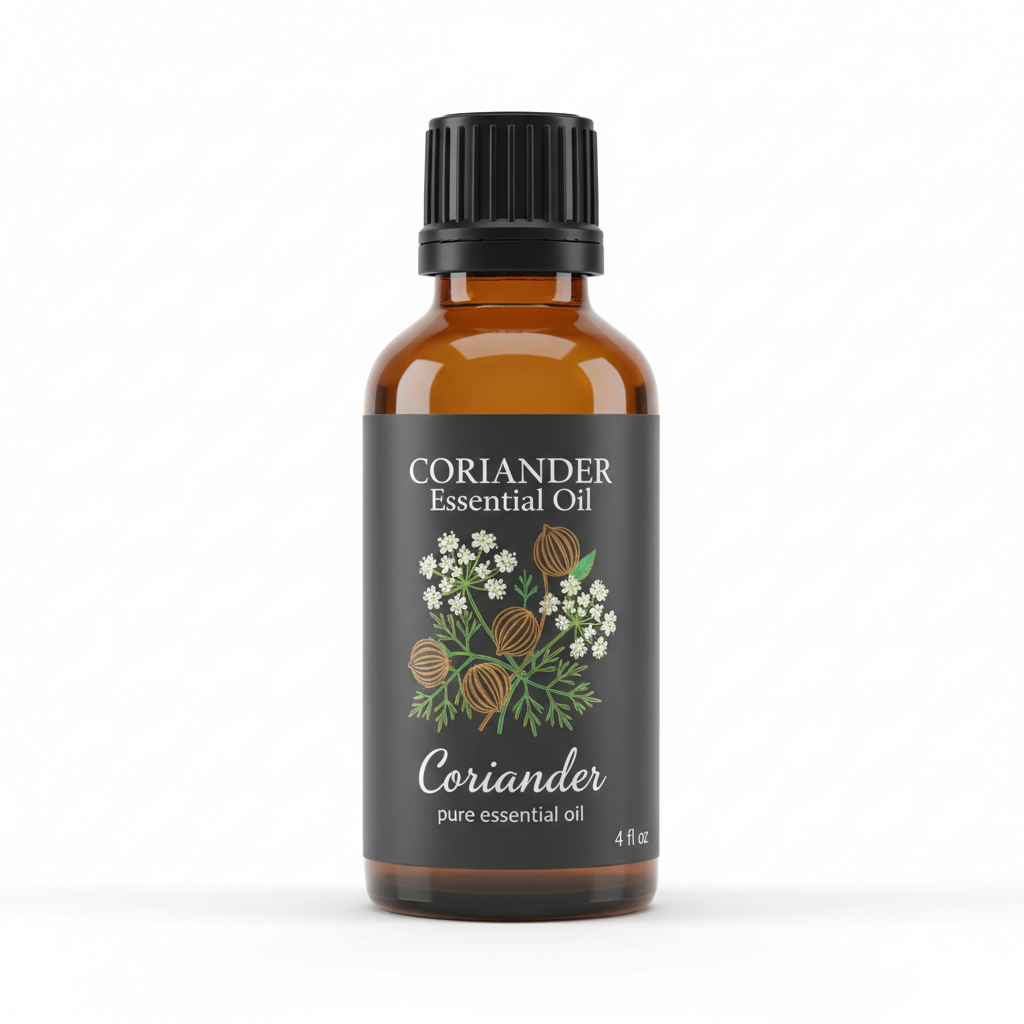
Our own Coriander Essential Oil, in sizes from 0.5 oz to bulk.
From $12.99
Shop Now →Work in millilitres, not drops
Drops are a rough unit. The Tisserand Institute reviewed studies of drop size and found roughly 20 to 40 drops to the millilitre, which is why its own charts assume 30. For a 120 ml batch at 2 percent, that is the difference between about 48 drops and 72. Our guidance of roughly 3 to 12 drops per ounce of carrier works out at about 20 drops a millilitre. A 1 ml oral syringe or graduated pipette from a pharmacy or craft supplier removes the guesswork, and we do not sell one, so look there.
| Carrier | 0.5% | 1% | 2% |
|---|---|---|---|
| 30 ml | 0.15 ml | 0.30 ml | 0.60 ml |
| 60 ml | 0.30 ml | 0.60 ml | 1.2 ml |
| 120 ml | 0.60 ml | 1.2 ml | 2.4 ml |
These are the millilitres of coriander oil to add. The oil takes up a sliver of room in the bottle, but not enough to matter at these amounts.
Picking your strength
We recommend diluting coriander oil to 0.5% to 2% in a carrier and patch testing first, starting at the low end for scented body oils. The Tisserand Institute lists 1% to 3% for body oils and lotions and 0.2% to 1% for sensitive or reactive skin. The two overlap at 1% to 2%, and we would stay within our range. A massage oil covers a bigger area than a roller and is often reapplied, so total exposure builds over a session. The scent is quite carrying, so 1% is usually plenty.
There is also a reason to like freshness. Linalool, the lead compound in coriander oil, can oxidise as it ages in air, and oxidised linalool is the form that causes patch-test reactions: in one study of 3,418 dermatitis patients, positive reactions rose from 0.83 percent at 2 percent concentration to 7.2 percent at 11 percent. Those patients already had dermatitis, so this shows the hazard and not a rate for most people, but it explains why small, fresh batches make sense.
Three starting batches
- The trial batch: 30 ml at 1 percent. Add 0.3 ml of coriander oil. A good way to decide whether you like both the scent and the feel.
- Back and shoulders: 60 ml at 1 percent. Add 0.6 ml.
- Full body: 120 ml at 1.5 percent. Add 1.8 ml. If it seems faint, raise the strength a notch in the next batch rather than pouring more on skin.
If you add a second essential oil, the percentages add. A 60 ml batch with 0.6 ml of coriander and 0.6 ml of another oil is 2 percent total. For a citrus partner, see our bergamot pairing and read the grade notes there.
What it feels like on the hands
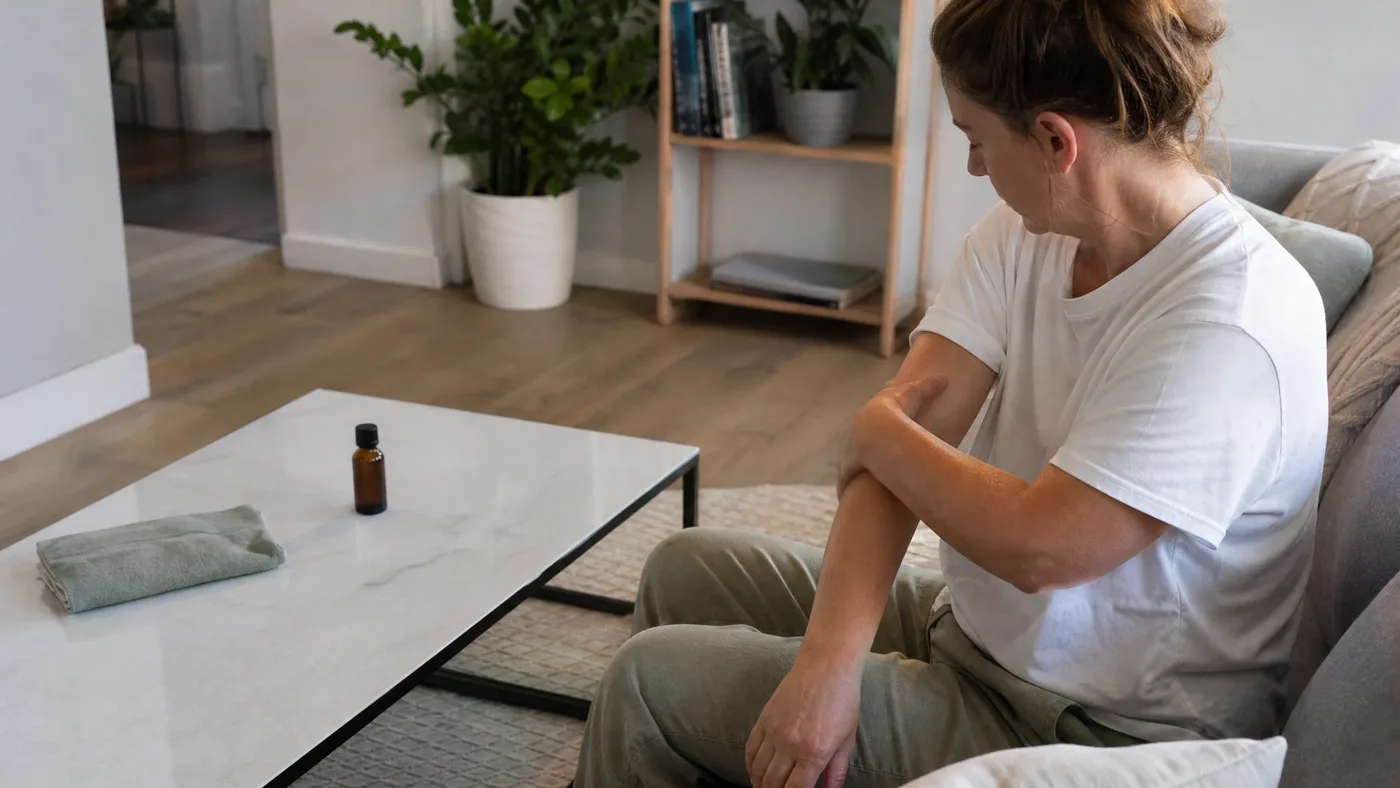
A body oil lives or dies on how it feels, and that comes mostly from the carrier, so give it a moment before you commit to a big bottle. Rub a little of your plain carrier between your palms and notice how quickly it sinks in, how much slip it leaves, and whether your hands feel pleasantly coated or greasy ten minutes later. A thinner oil glides and disappears; a richer one stays on the surface and suits slow, unhurried strokes. Neither is wrong, but a back massage and a quick after-shower rub want different things.
Then add the coriander and notice the scent in two stages. Warm the oil between your hands first, since warmth lifts the aroma, and you'll notice the soft spice arrive before the sweeter, floral edge. If the first breath already feels strong, that is useful information: a bottle that smells loud in your palm will smell louder across a whole back.
Making the batch
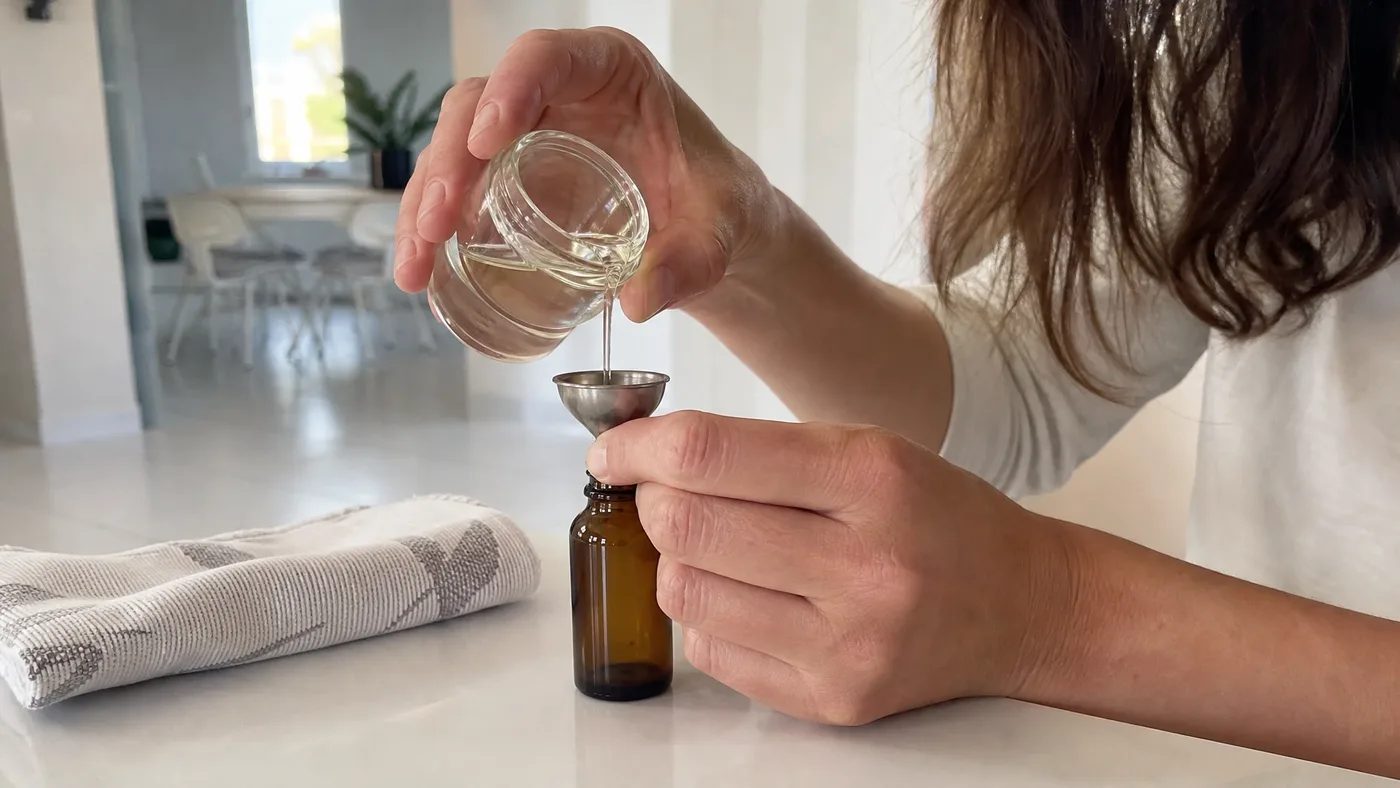
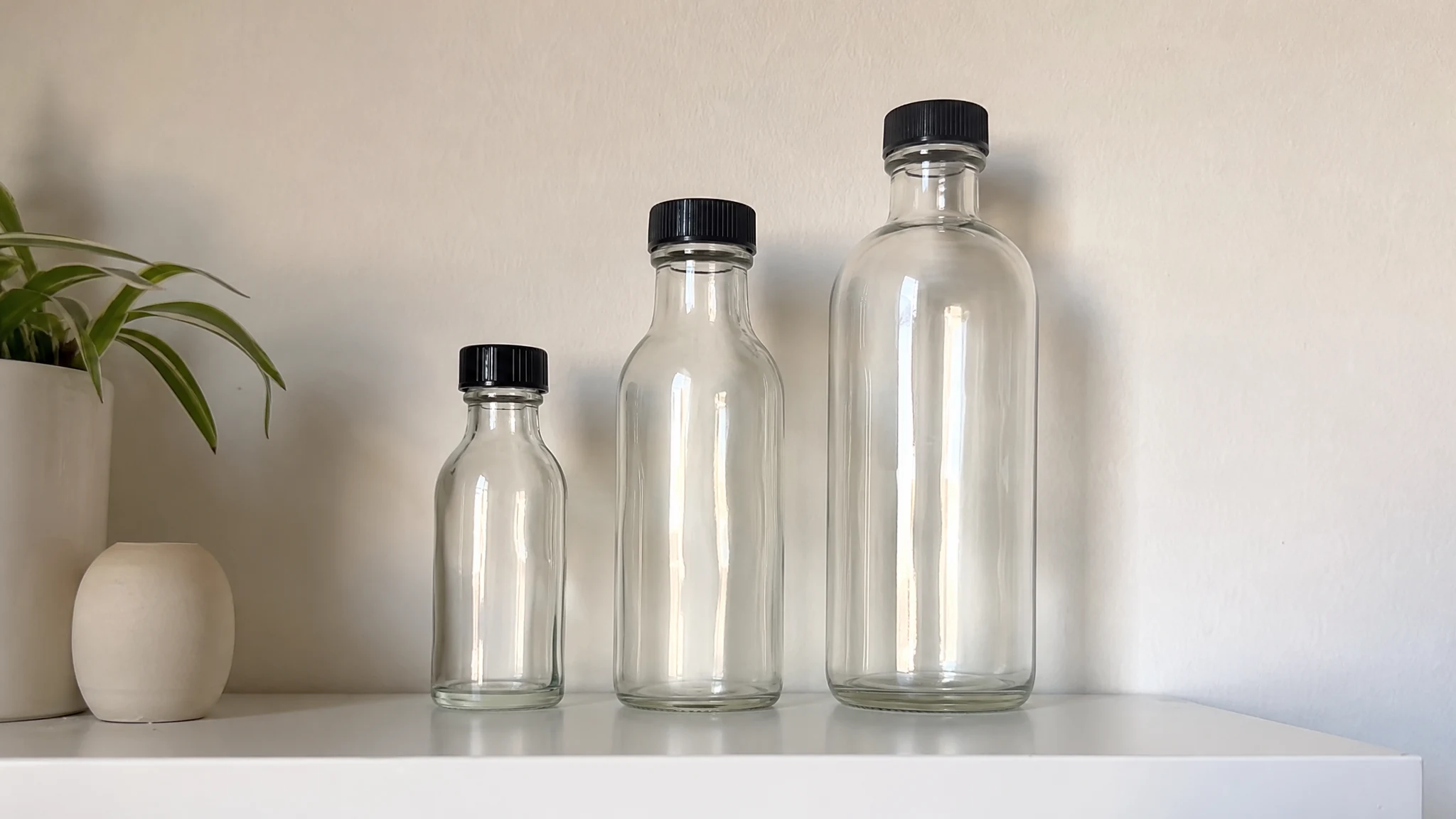
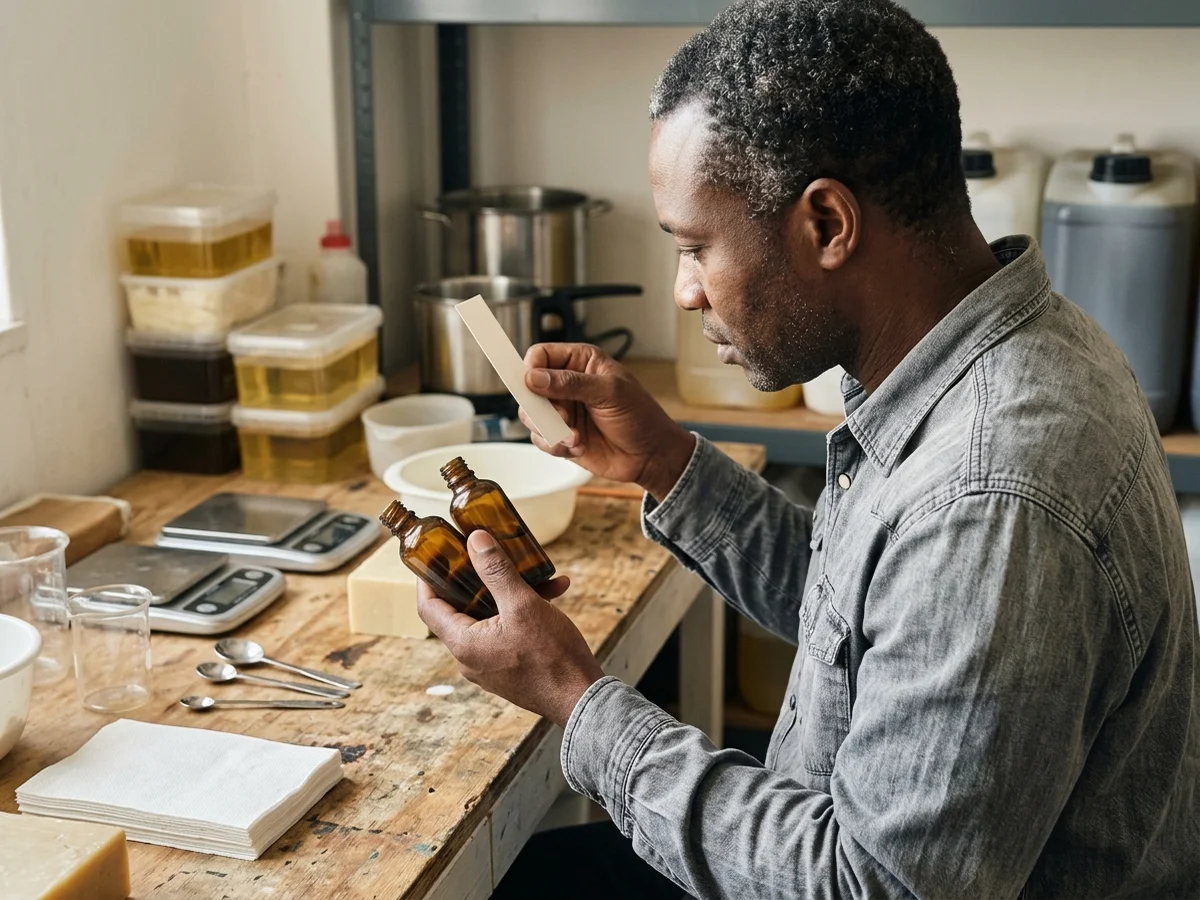
Measure the carrier into a clean, dry bottle, since water speeds spoilage. Add the coriander oil, cap, and turn the bottle end over end for a minute. Label it with the date and the percentage. Keep it cool and out of the light, and make a new batch before it turns stale. Our carrier oil guide helps with choosing one.
Small habits that make batches easier
- Write the recipe on the label itself: carrier, percentage, millilitres of coriander and the date. Next month you will not remember.
- Make the first batch in a bottle you can see through, then move to amber glass or a dark cupboard once you know you like it.
- Use a clean, dry syringe or pipette every time, and wash it between oils so scents do not carry over.
- Keep one old towel for massage evenings. Oils and cotton sheets do not get along.
Choosing the moment
Body oil works best on slightly damp skin after a shower, when it spreads easily and a little goes a long way. Apply it where you want the scent, avoid broken skin, and give it a minute before dressing. Keep a spare small bottle in your bag for travel instead of decanting from the big one, and you will always have the same oil at the same strength.
This is a scent-led body oil, nothing more. If you want therapeutic bodywork, a licensed massage therapist is the person to ask, and a physician for any health concern. Keep the oil away from eyes, and from children and pets.
Measure once, write it down, and every future batch smells the same.
Coriander Essential Oil
Coriander Essential Oil from our own shop, in sizes from 0.5 oz to bulk.
From $12.99
Shop Now →Sources & Further Reading
- Tisserand Institute, drop size. Tisserand Institute
- Tisserand Institute, dilution guidance. Tisserand Institute
- Bared Christensson et al., 2010, oxidized linalool patch testing. PubMed