Can You Scent a Cleaning Spray With Coriander Oil?
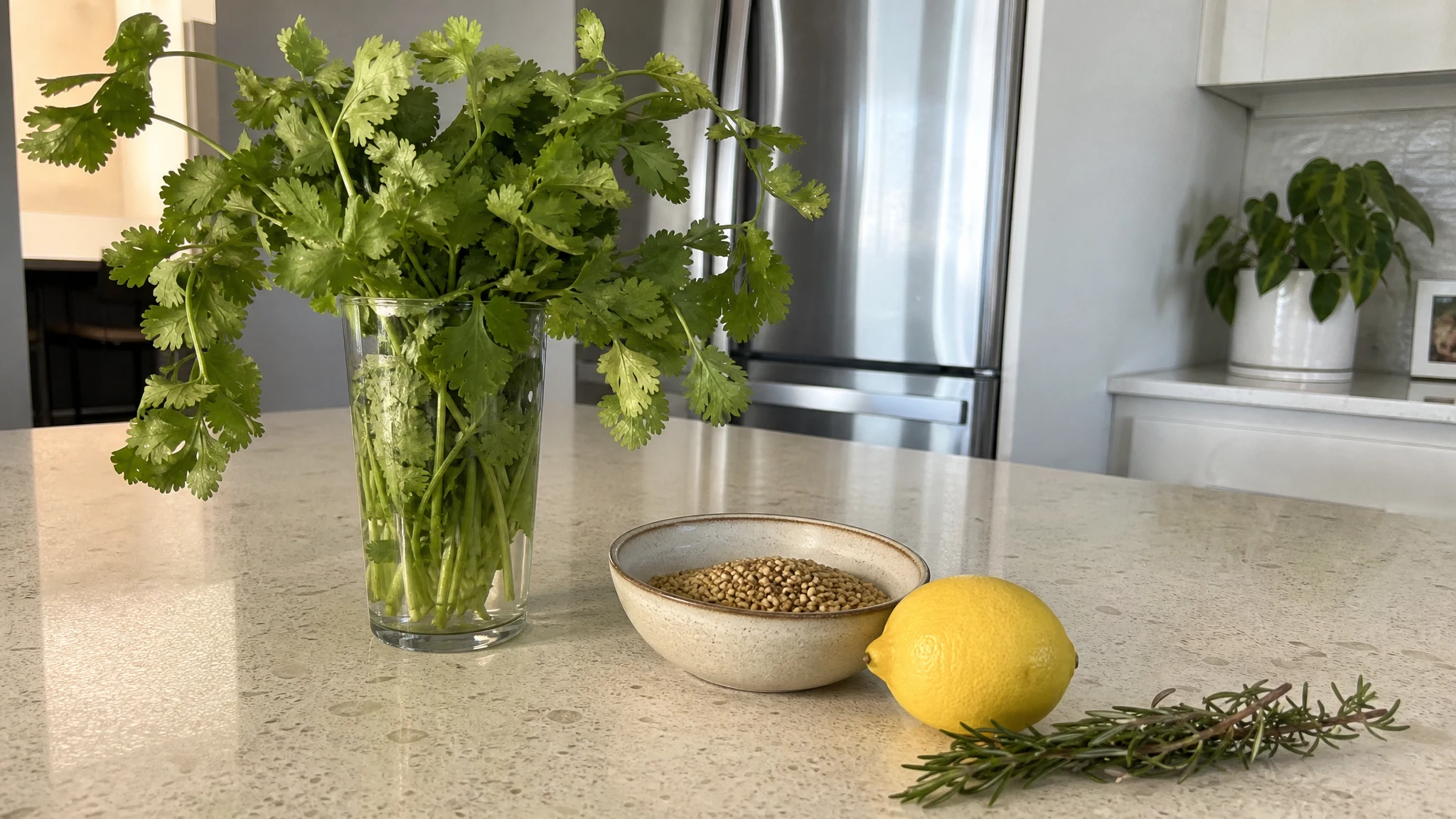
A few drops of coriander seed oil can turn a plain homemade spray into something you actually look forward to using. Its warm, citrus-tinged spice smells like a tidy kitchen. Keep it as what it is, a fragrance, and the whole thing stays simple.
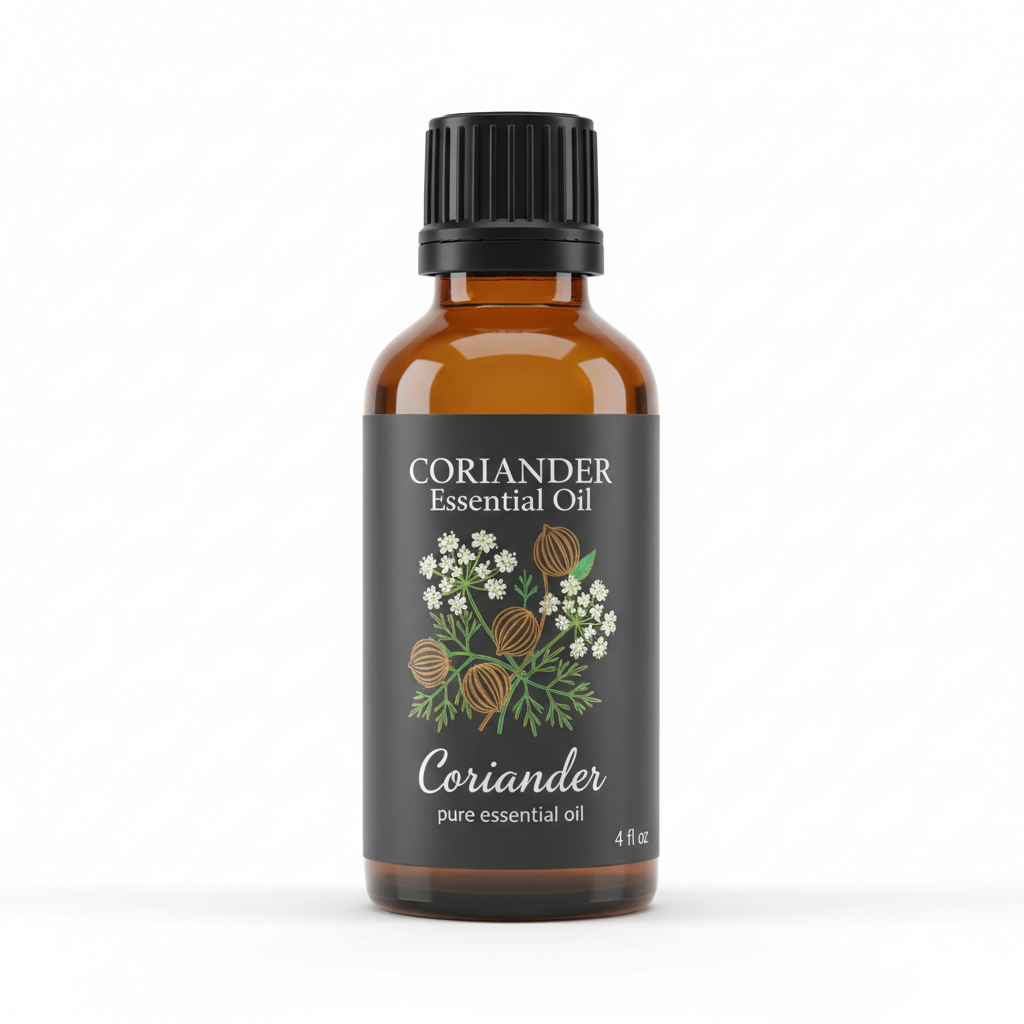
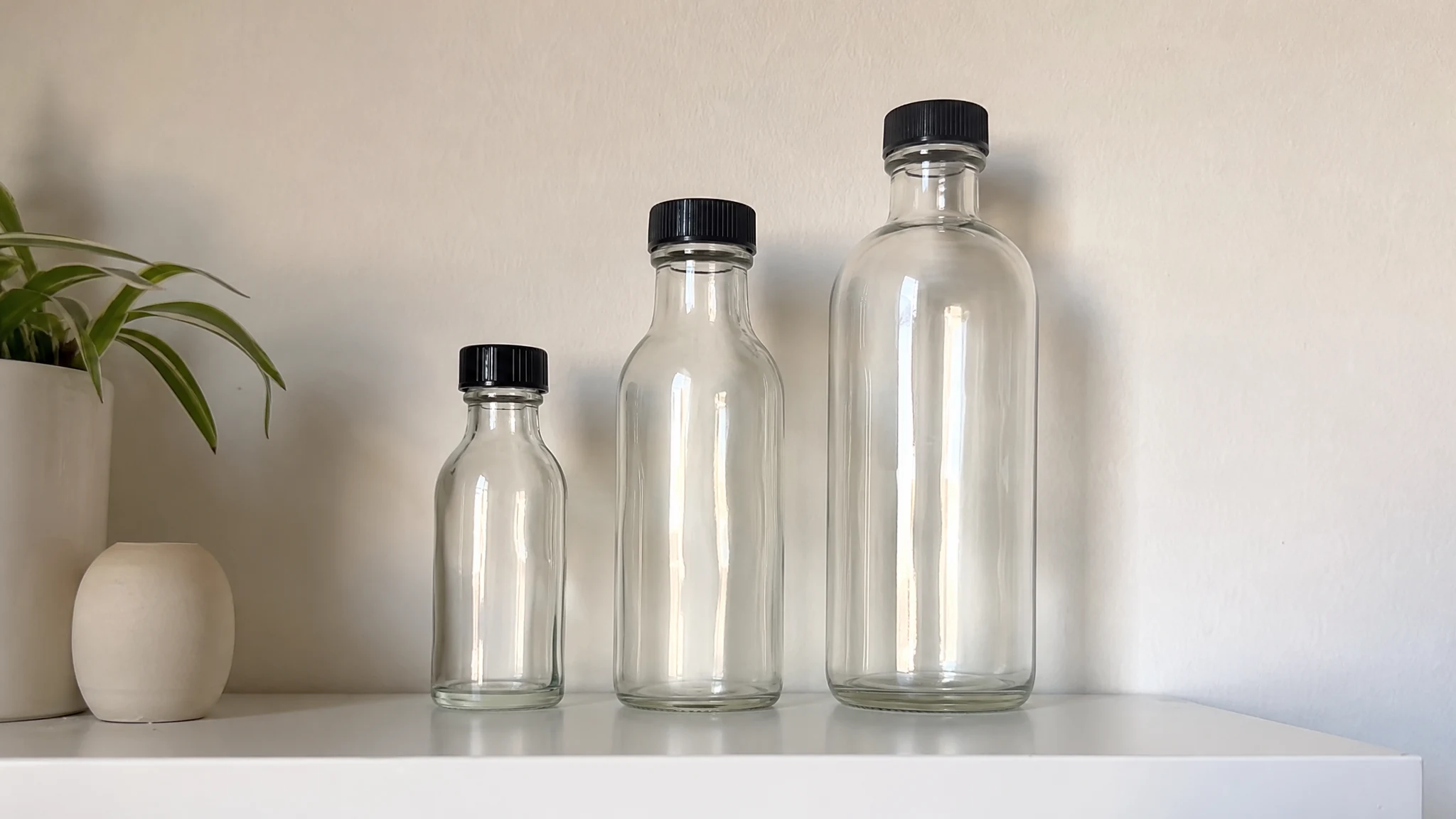
Coriander Essential Oil
Our own Coriander Essential Oil, in sizes from 0.5 oz to bulk.
From $12.99
Shop Now →Fragrance, not germ-killing
In the United States, EPA decides whether a cleaner counts as a pesticide by the claims on the label, not the ingredients. Claims such as sanitizing, disinfecting or controlling odor-causing bacteria make a product likely pesticidal, while deodorizing, removing stains and dirt, or removing soap scum generally do not. So the safe route for a coriander spray is to describe it as a scented cleaner. Our oil is sold for aromatic and cosmetic use, and we make no germ-related claim for it. If you plan to sell a spray, ask a regulatory adviser to look at your label.
How much oil
For a 500 ml bottle, we suggest a scent level of about 0.25% to 0.5%, which is 1.25 to 2.5 ml of oil. That is our suggestion for fragrance only, and it is deliberately below the 0.5% to 2% we give for skin because a spray is meant to scent a surface. Oil and water do not mix on their own, so the oil will float and you should shake before every spray. A little dish detergent in the base helps disperse it, and a spray bottle with a tight cap keeps it fresh. We would spray onto a cloth rather than into the air, and keep it away from eyes, children and pets.
What a scented spray is really for
Most people who make their own sprays want the kitchen to feel pleasant when the work is done. That is a lovely goal, and coriander suits it. The scent is warm and softly spiced, with a faint citrus peel in the background, so it reads as clean without turning sharp. It will not smell like a lemon cleaner from the supermarket, and that is part of its charm.
Mistake one: vinegar and soap together
Lisa Bronner of Dr. Bronner's explains that mixing vinegar with castile soap sets off an acid-base reaction that leaves a whitish, curdled, oily mixture that does not clean, whatever the order or amount of shaking. She recommends using them one after the other, never together. A soap maker has a commercial stake in saying so, but it is consistent with ordinary soap chemistry. For your coriander spray, pick a side: soap and water, or vinegar and water.
Mistake two: vinegar on stone
The Natural Stone Institute says products with lemon, vinegar or other acids can dull or etch calcareous stones, and recommends a neutral cleaner, stone soap or a mild dish detergent in warm water. Marble and limestone are the common examples, though the page does not list them, so if you have a stone counter, ask your supplier which type it is. For stone, a detergent-based spray is the safer base.
Little habits that make it nicer
- Label the bottle. Write the contents and the date, so no one mistakes it for something else.
- Make small amounts. A 500 ml bottle is plenty, and a fresh batch always smells better than one that has sat for months.
- Keep it out of the sun. A cupboard is better than a windowsill.
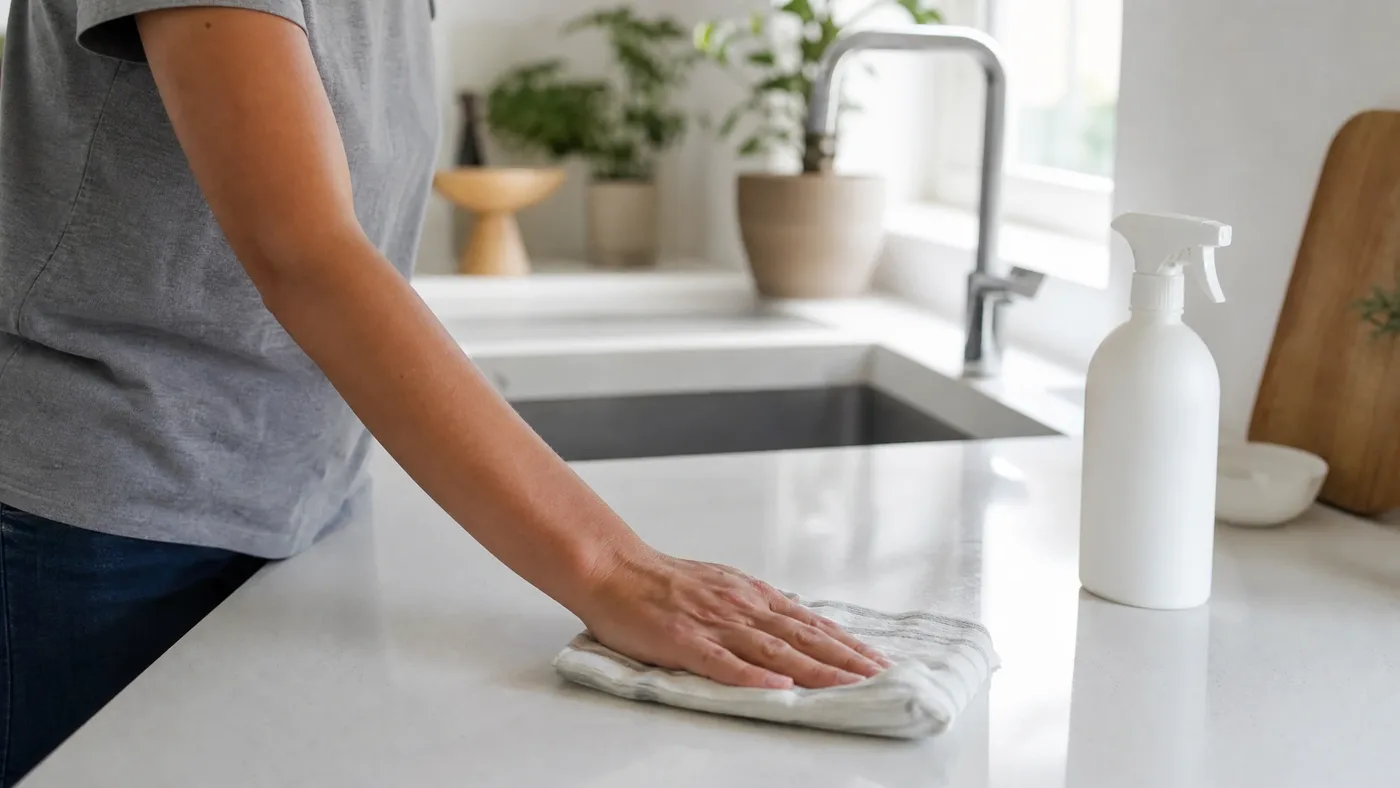
- Spray the cloth, then wipe. You get the scent where you want it, and less of it in the air.
Pick your moments
A scented spray is at its happiest in places where a little fragrance is welcome: the kitchen counter, the bathroom sink, the table after supper. Skip rooms where someone is sensitive to scent, and ventilate the room while you work. If you share the house with children or pets, store the bottle out of reach and wipe surfaces dry afterwards.
It is also worth testing the scent on one small area before you spray the whole kitchen. Wait an hour, then come back and see if the room smells the way you pictured. A warm, gentle spice is often just right, and if it is more than you want, mix the next bottle a touch lighter.
A simple base
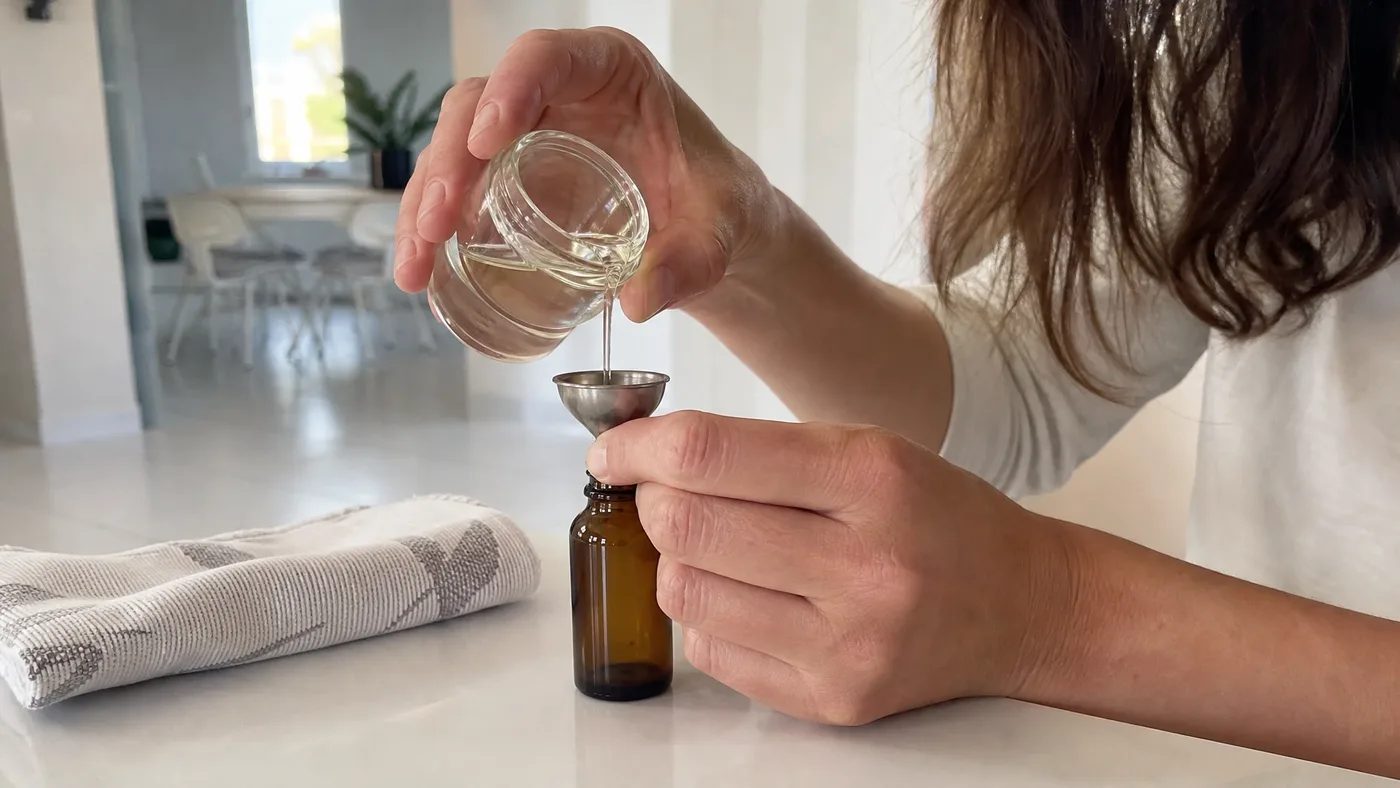
For most hard surfaces: 500 ml of warm water, a small squirt of dish detergent, and 1.25 ml of coriander oil. Shake, and test on a hidden spot first. It will smell warm and gently spiced, and when you want more citrus, a different seller's orange or lemon oil can sit beside it. For what researchers have reported about coriander oil in the lab, which does not translate into a cleaning claim, see our antibacterial research article. For other ways to use the bottle, our guide to uses is a good start.
When you open the cupboard a week later, you will notice how much of the scent has faded into the background. That is a good sign for a cleaning spray, since it should leave a room smelling tidy and not perfumed.
Keep the claims modest and the scent generous, and it will be a very pleasant little cleaning ritual.
Coriander Essential Oil
Coriander Essential Oil from our own shop, in sizes from 0.5 oz to bulk.
From $12.99
Shop Now →Sources & Further Reading
- US EPA, determining if a cleaning product is a pesticide under FIFRA. EPA
- Lisa Bronner, a word of caution about vinegar and castile soap. Dr. Bronner's
- Natural Stone Institute, consumer care. Natural Stone Institute