Choosing a Coriander Essential Oil: What to Ask First
Two bottles labelled "coriander oil" can be very different things. One may smell warm and softly spicy, the other green and sharp, and the label may never tell you why. A few simple questions sort it out, and they are the same ones we would ask ourselves.
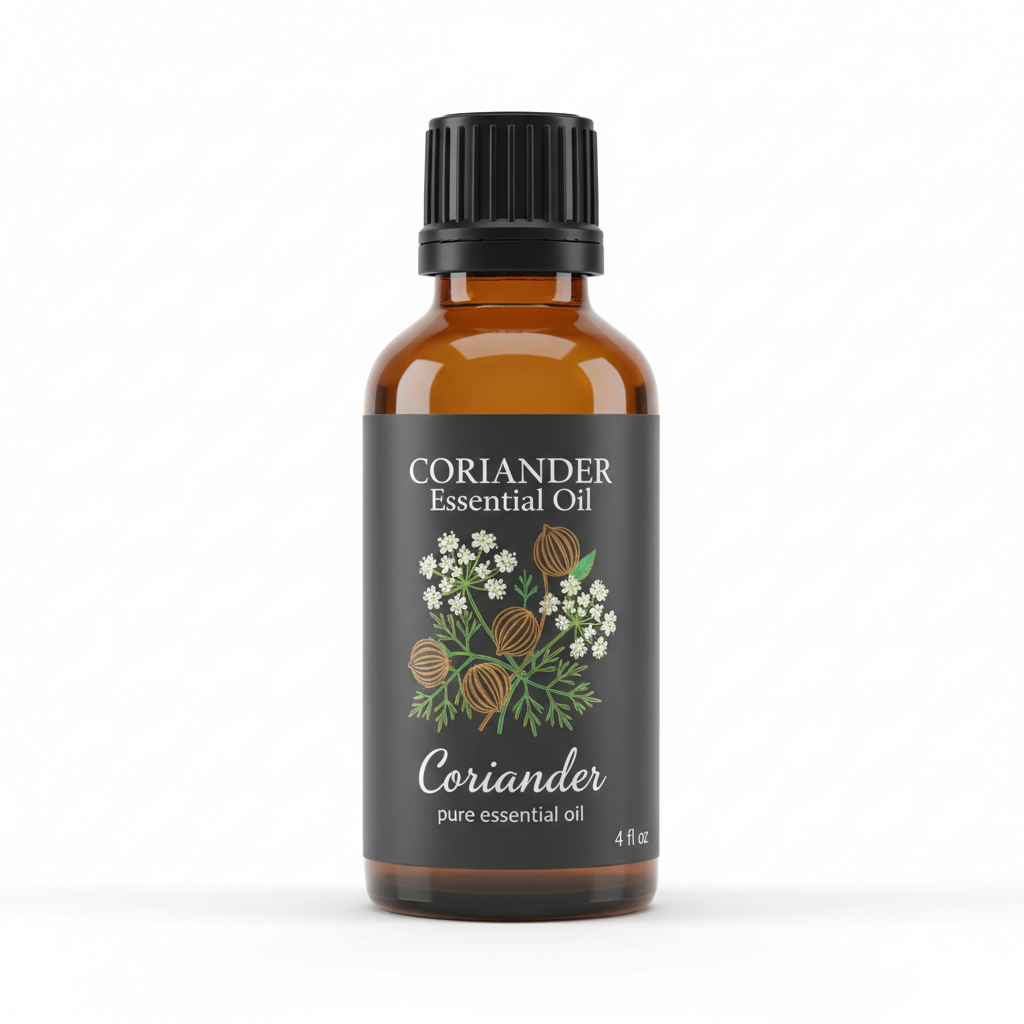
Coriander Essential Oil
Our own Coriander Essential Oil, in sizes from 0.5 oz to bulk.
From $12.99
Shop Now →Start with the plant part
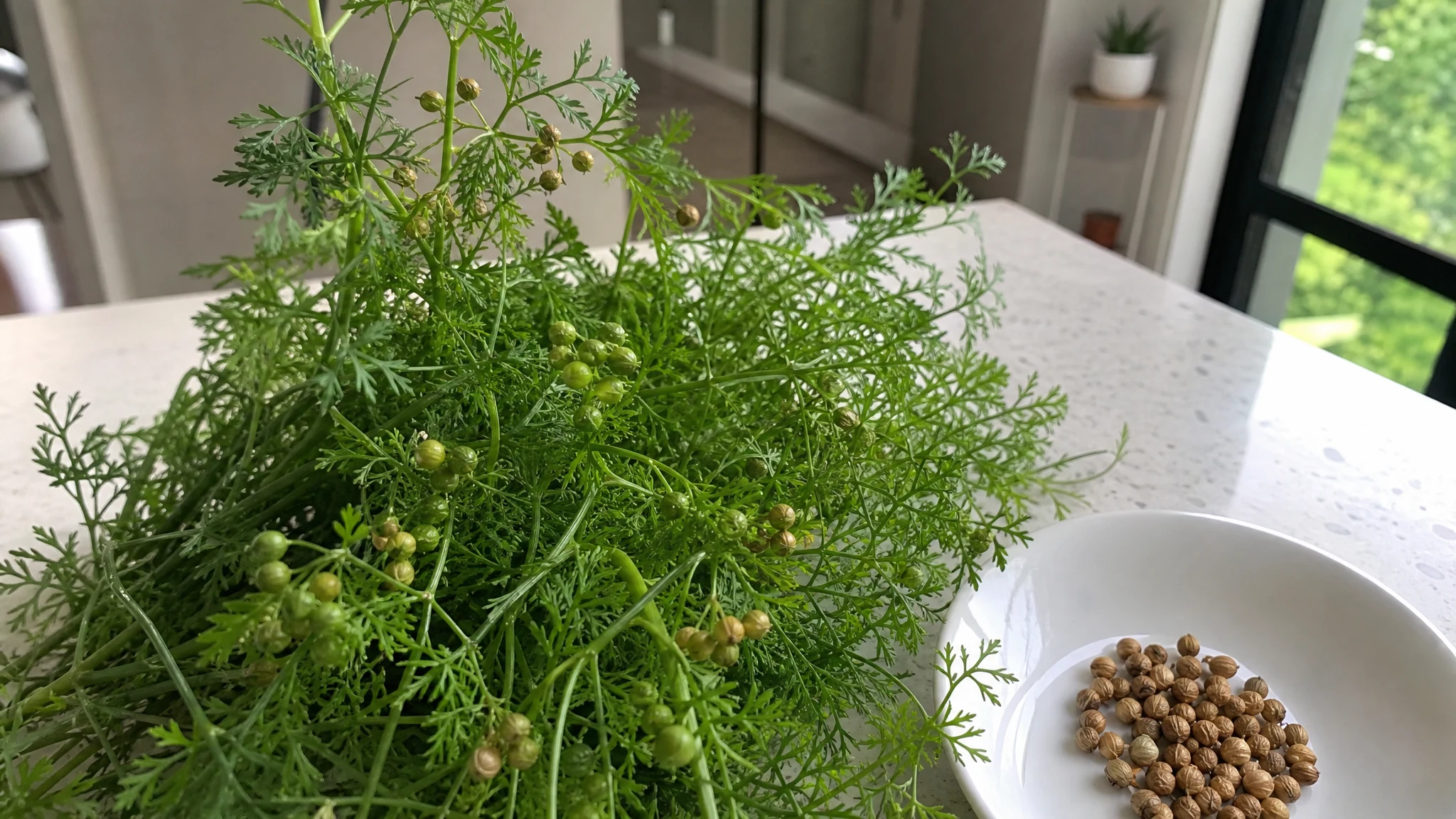
Coriander gives three different materials. The oil distilled from the dried fruit, called the seed, is the one we sell. The leafy parts, cilantro, give an oil built from different compounds: in a Portuguese study of eleven samples, the fruit oils were 60 to 73 percent linalool, while the leaf oils were mostly 2-trans-decenal and n-decanal. And the seed itself also holds a fixed oil that steam distillation does not collect. If a listing does not say which one it is, ask before anything else. Our seed and leaf comparison shows what you are choosing between.
Know what you want it for
If you plan to scent a room, you need very little from any seller beyond an oil that smells the way you hoped. Our scent profile will tell you whether this is it. If you plan to put it on skin, think about freshness and dilution: we recommend 0.5% to 2% in a carrier oil, a patch test first, and a bottle you will finish while it still smells right. If you are making a product to sell, you will want more paperwork, which is the next section.
What a certificate can and cannot tell you
The certificate of analysis we publish covers one batch. It lists the botanical name (Coriandrum sativum), the part used (seed), appearance, smell, a relative density of 0.857 and a refractive index of 1.464, each checked against a stated range. Those are useful identity checks, the kind that quickly show a bottle is in the right neighbourhood. They are not a full chemical profile, and a certificate like this does not list individual compounds. If you need a GC/MS report, write to us through the contact page before you order and we will tell you what is available.
When you do see a GC/MS report from any seller, remember that the number depends on the method. For the same five batches of coriander oil, European regulators recorded a mean linalool of 71.7 percent by flame ionisation detection and 58.72 percent by mass spectrometry. Same oil, a thirteen-point gap, entirely from the instrument. Our GC/MS checklist goes through what to look at.
If you sell products with it
Linalool is one of the 26 fragrance substances that must be named individually on cosmetic labels in the EU, above 0.001 percent in leave-on products and 0.01 percent in rinse-off ones. Since coriander oil is mostly linalool, a finished product containing a meaningful amount of it will likely need that declaration. Your regulatory adviser is the right person to confirm. For samples and larger quantities, our wholesale page and bulk page explain the options, and our bulk buying guide has a checklist you can borrow.
Let your nose have a say
All the paperwork in the world cannot tell you whether you will enjoy living with a smell. We describe this oil as warm, woody and softly spicy, with a rounded sweetness and a light floral edge, and that is the picture to hold in your head. Open the bottle, wave it a hand's width below your nose, and ask yourself a simple question: would I like this in my kitchen on a quiet afternoon? If you hoped for the green, sharp smell of fresh cilantro leaf, this is not it, and it is far better to find that out on a paper strip than halfway through a project.
Match the oil to the day
It helps to picture the first thing you will actually do with it. If it is a drop on a paper strip and a light session in the diffuser, a small bottle is plenty and the choice is easy. If you plan to scent a batch of soap or a roller, take a moment to jot the amounts you need and add a little margin. People often over-buy for an imagined project and then forget the bottle in a cupboard. A clear plan on the back of an envelope keeps the whole thing pleasant and the bottle fresh.
Choosing a size
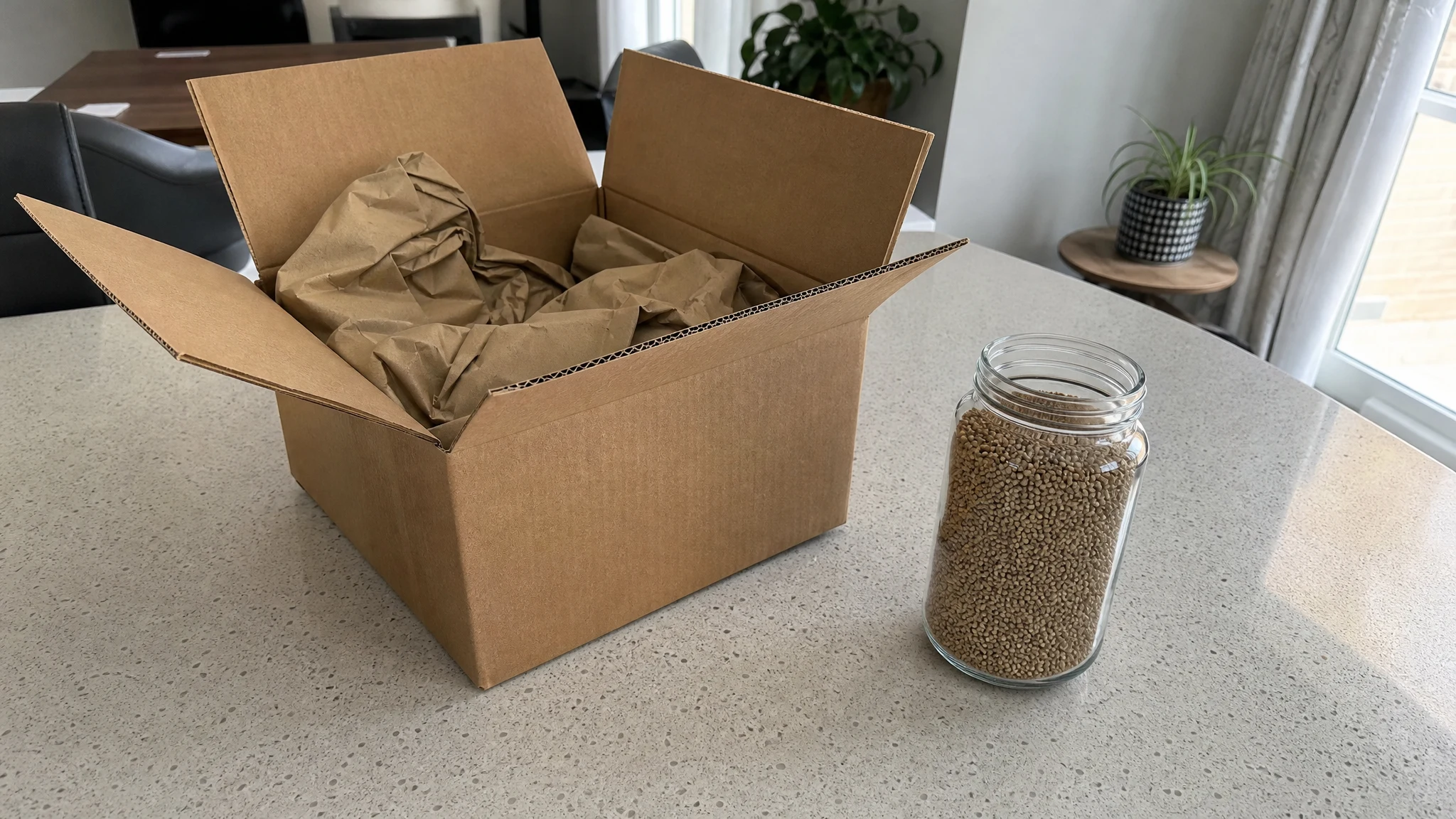
We offer it in nine sizes from 0.5 oz to 400 lb. A half-ounce bottle holds roughly 15 ml, which is enough for about fifteen 100 ml body oils at 1%. For most first orders, that is more than you will use while the bottle is at its best. Our size guide helps you scale from there.
A small word on patience
Choosing well is not a race. If a question about plant part, lot or method is still hanging in the air, hold off and ask it. Our contact page exists for exactly this, and an answer in writing is worth the wait. A project is easier to love when you started it knowing what is in the bottle.
Keep it well
Linalool slowly oxidises in air, and oxidised linalool is the form that matters most for skin sensitivity. Tight cap, cool and dark place, and a bottle you finish. We say typically two to three years stored that way, and if the scent changes, retire the bottle.
Choose for the job in front of you, ask the questions that matter, and you will end up with a coriander oil that does exactly what you hoped.
Coriander Essential Oil
Coriander Essential Oil from our own shop, in sizes from 0.5 oz to bulk.
From $12.99
Shop Now →