Does Coriander Oil Go Bad? Signs to Check Before You Use It
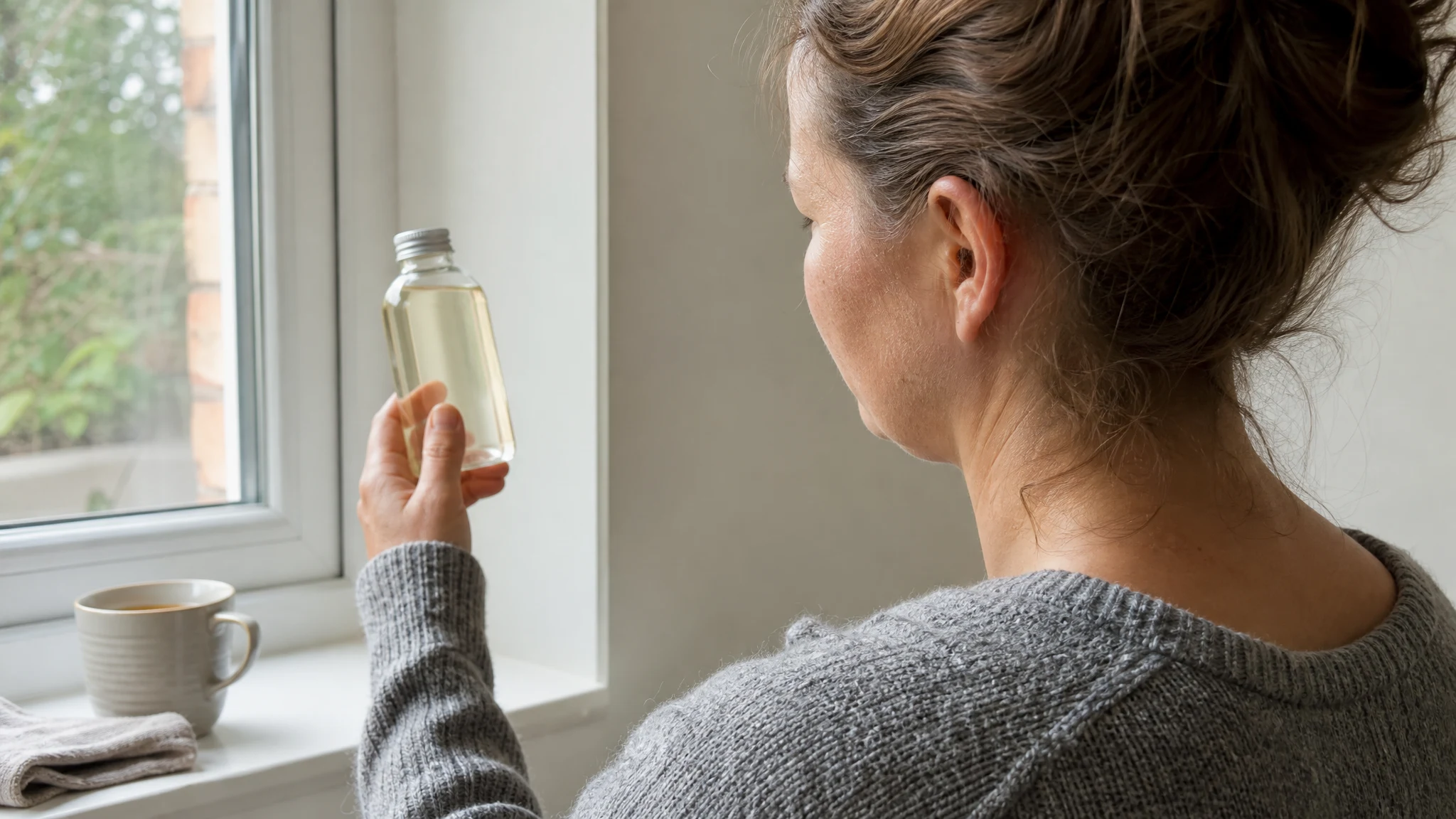
Open a bottle of coriander oil and you will notice a warm, rounded spice with a floral edge. Open the same bottle a few years later, left on a sunny shelf with the cap loose, and that picture can blur. Essential oils do not spoil the way milk does, but they do change, and the change is worth understanding before you put a drop on skin.
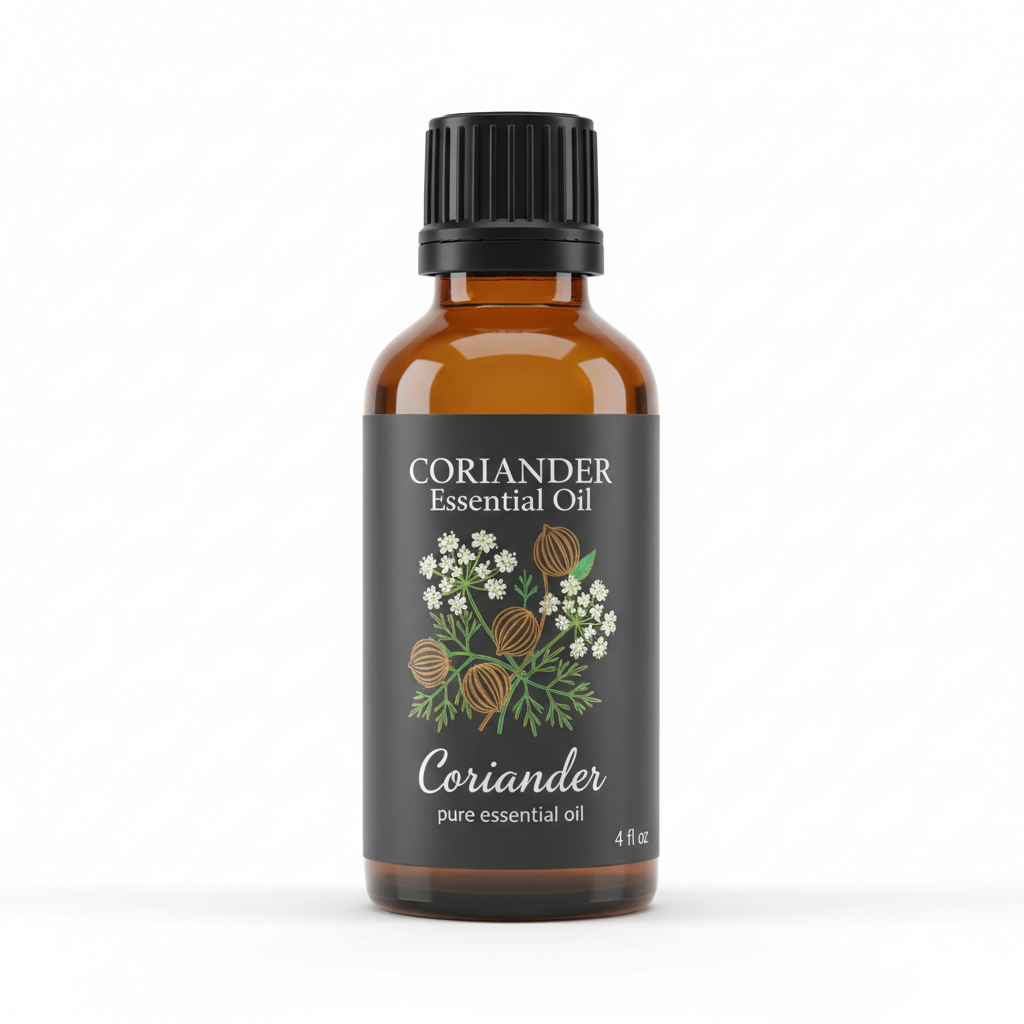
Coriander Essential Oil
Our own Coriander Essential Oil, in sizes from 0.5 oz to bulk.
From $12.99
Shop Now →What is actually happening in the bottle
Coriander seed oil is built mostly around linalool, a terpene alcohol. Published analyses of seed oils vary a good deal, but linalool commonly makes up more than half of the oil (60 to 73% in one set of Portuguese samples, for example). Terpenes react with oxygen over time, and light and heat speed that up. Linalool exposed to air turns into hydroperoxides and related compounds, and those are the ones dermatologists worry about, not linalool itself.
That distinction matters. In a study of 3,418 dermatitis patients, oxidised linalool produced positive patch tests in 0.83% of people at a 2% test concentration, rising to 7.2% at 11%. The authors also reported that linalool that had not been exposed to air was weakly allergenic or not at all. The Tisserand Institute makes the same general point: oxidation products slightly raise the risk of adverse skin reactions. So the question "does it go bad" is really "has it picked up enough oxygen that I should stop putting it on my skin."
How to tell
There is no single test, and a bottle rarely announces itself. These are the changes worth watching for:
- The smell. The brightness fades, and the oil can turn flat, sharper, or faintly sour. Because the change is gradual, it is easiest to notice by comparing with a fresh bottle.
- The feel. A drop on a clean fingertip that feels thicker or tackier than before has changed. Very old oils can become viscous, though the Tisserand Institute notes this takes many years.
- The look. The batch on our published certificate of analysis complies with a colourless-to-yellow appearance standard, so a clear shift toward a deeper colour, or a sticky ring around the cap, is a prompt to be cautious.
If you are unsure, trust your nose and err on the side of retiring the bottle. It is a small cost compared with a skin reaction.
Why a half-empty bottle ages faster
Here is some arithmetic that surprises people. In a 30 ml bottle holding 5 ml of oil, the air above the oil holds enough oxygen to oxidise at most roughly 1.3% of the linalool, assuming an oil that is about 60% linalool. When only 1 ml is left in that same bottle, the same air could in principle reach about 7.5%. That is our own back-of-envelope calculation, not a measurement on any particular bottle, but it explains the standard advice: as an oil level drops, move it to a smaller amber bottle so there is less air to react with.
What a long run of storage looks like
Turek and Stintzing stored lavender, pine, rosemary and thyme oils for up to 72 weeks in the dark, in light, at 23 and 38 degrees C, and exposed to air. Each oil changed in its own way, and in one case a key component of rosemary oil fell below 10% within three weeks at 38 degrees C under light. We can reasonably take from that two lessons: heat and light are not minor factors, and no one figure fits all oils.
We say the oil typically keeps for 2 to 3 years when tightly capped in a cool, dark place away from heat and light. Read that as a ceiling for a bottle that is treated well, not a promise for one that lived on a windowsill. The Tisserand Institute's general guidance for most essential oils is at least one to two years before oxidation takes effect, and it says refrigeration roughly doubles the useful life of an oil.
Keeping a bottle fresh
- Keep it capped tightly the moment you finish pouring, and keep the bottle upright.
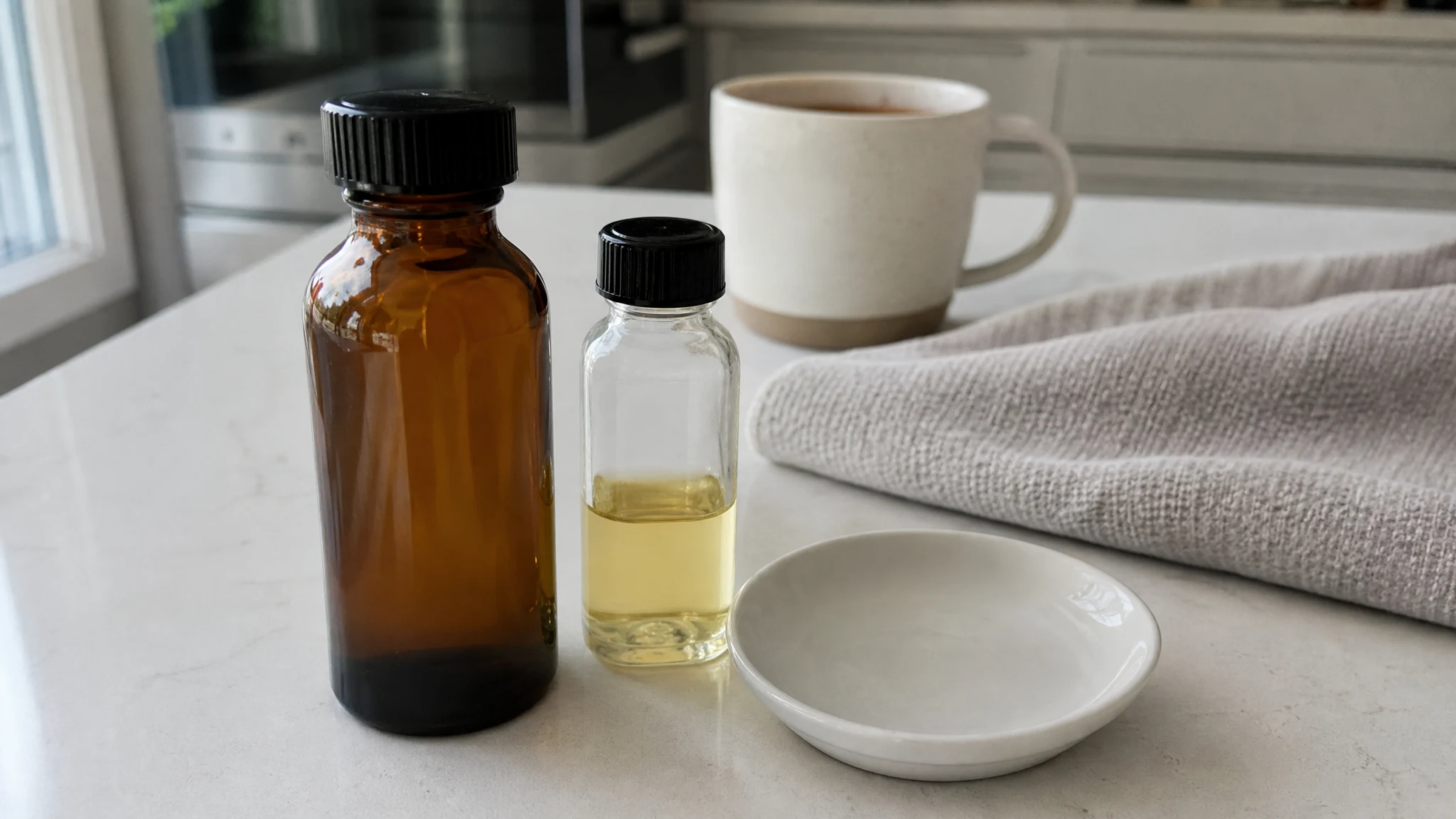
- Store it in a cool, dark cupboard, away from the stove, a radiator or a sunny sill. Amber glass helps because it filters light; our storage guide has more.
- Note the date you open it. Tracking the age of a bottle is the simplest habit that helps, and the Tisserand Institute suggests it too.
- Buy a size you will use up. Our size guide walks through that choice.
If an oil has gone off, retire it rather than using it on skin. A blend you made earlier has its own clock too, because the carrier oil can go rancid on its own timetable. And if you do see a reaction, our note on fresh oil and side effects explains why freshness is the first thing to look at.
A bottle of coriander oil rewards a little care. Keep it dark, capped and cool, and it will smell like the spice you bought it for.
Coriander Essential Oil
Coriander Essential Oil from our own shop, in sizes from 0.5 oz to bulk.
From $12.99
Shop Now →Sources & Further Reading
- Tisserand Institute, Is my bottle of essential oil oxidized or no longer good to use?
- Bared Christensson J, et al., Linalool, a significant contact sensitizer after air exposure, Contact Dermatitis, 2010.
- Turek C, Stintzing FC, Impact of different storage conditions on the quality of selected essential oils, Food Research International, 2012.
- Machado et al., Chemical Variability of the Essential Oils from Two Portuguese Apiaceae: Coriandrum sativum L. and Foeniculum vulgare Mill., Plants, 2023.