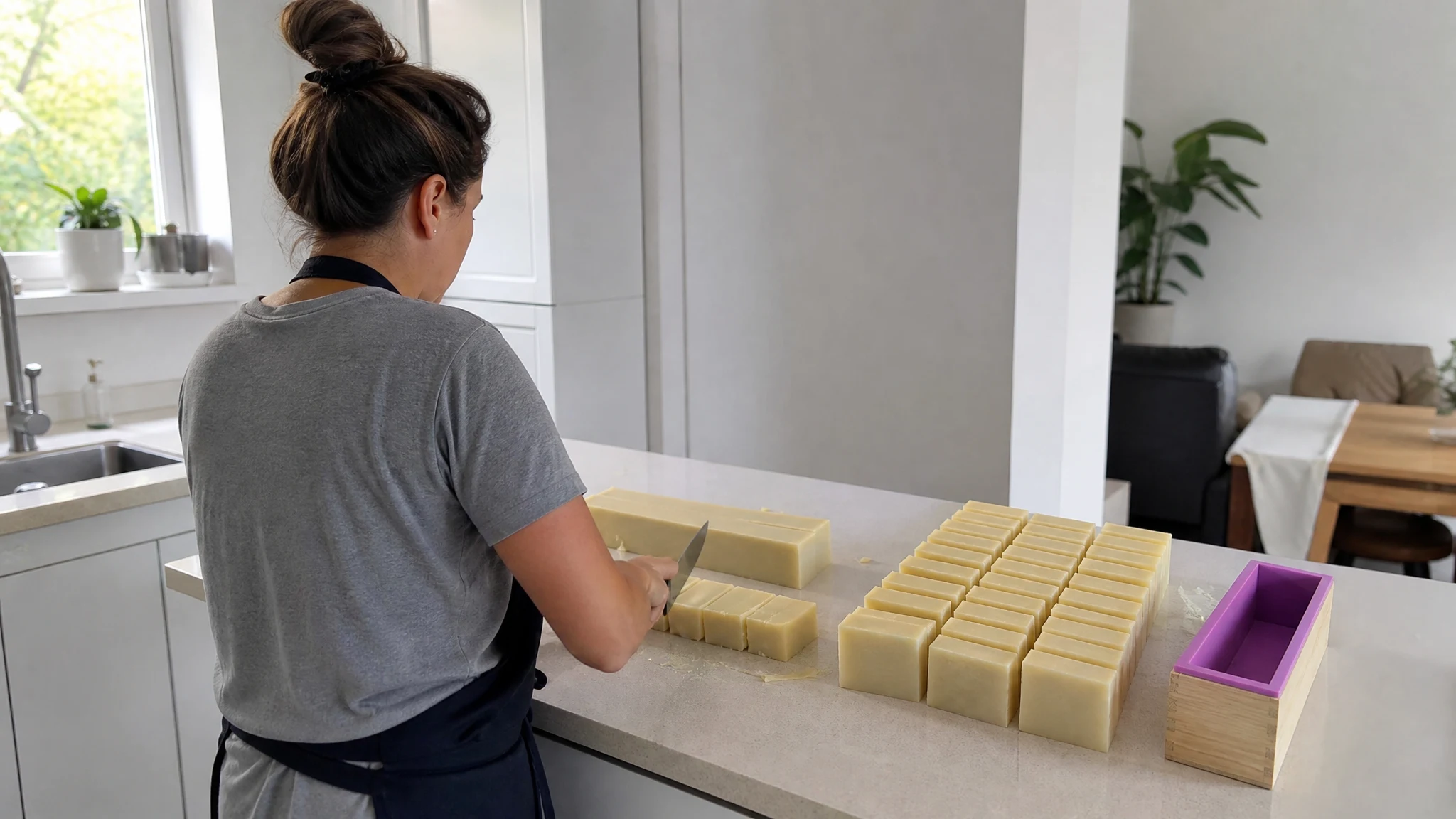
Coriander Oil in Cold-Process Soap: How Much to Use
Most soap-making advice hands you one number, an essential oil rate per pound of oils, and treats every oil alike. Coriander seed oil rewards a slightly different approach. Because it is mostly linalool, a fragrance compound that regulators single out, it helps to start from how much a rinse-off product should carry and work toward your batch from there.
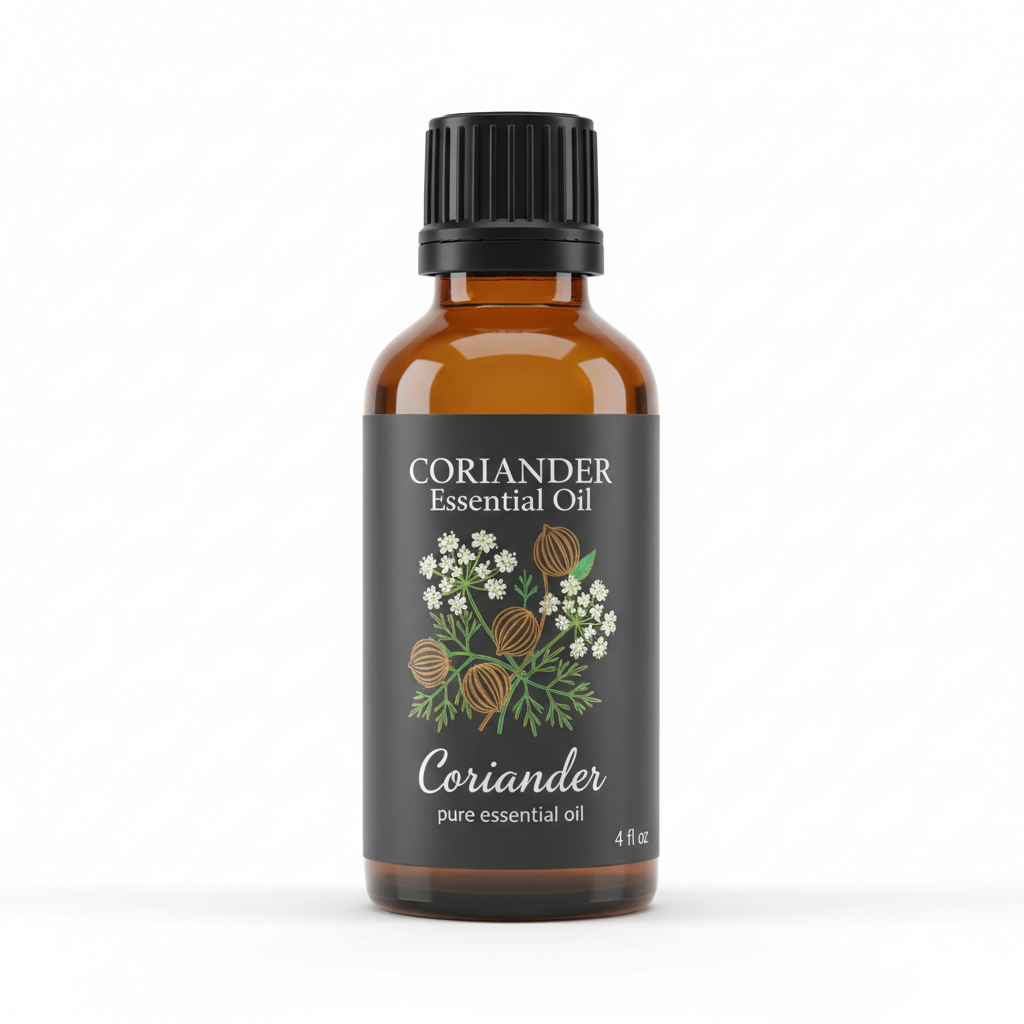
Coriander Essential Oil
Our own Coriander Essential Oil, in sizes from 0.5 oz to bulk.
From $12.99
Shop Now →Start with the ceiling, then the scent
We recommend diluting this oil to 0.5% to 2% in a carrier for general skin use, and soap making is one of the projects we suggest it for. A bar is washed off, so the sensible range is higher. The Tisserand Institute's dilution guide gives roughly 2% to 4% for wash-off products, compared with 1% to 3% for body oils and lotions and 0.5% to 1.2% for the face (Tisserand Institute, dilution). It calls these guidelines, not rules.
Our advice for a first batch is to aim near the bottom of that wash-off band. Soap cannot be diluted once it has set, a bar gets used daily for months, and coriander's charm is a soft, warm, lightly floral spice, which does not need a heavy hand to be noticed. You can always scent the next batch a little more.
From a percentage to grams
Here is the arithmetic, using the density of the batch on the Certificate of Analysis we publish (0.857, so 1 ml weighs about 0.857 g). It treats the percentage as a share of the whole batch weight, which is how we read the Tisserand ranges. Many soap makers quote a rate on the oils only, which gives a different number, so convert before you compare.
| Batch weight | 2% coriander oil | 3% | 4% |
|---|---|---|---|
| 500 g | 10 g (11.7 ml) | 15 g (17.5 ml) | 20 g (23.3 ml) |
| 1,000 g | 20 g (23.3 ml) | 30 g (35.0 ml) | 40 g (46.7 ml) |
Weigh the oil on a gram scale; drops are too imprecise at this size. Your batch weight comes from your own lye calculator and recipe.
What linalool means for your label
Published coriander seed oils run from about 40% to 80% linalool (Nejad Ebrahimi et al., 2010). Our certificate lists density and refractive index but no linalool figure, so treat that range as an assumption. At 2% in 500 g of soap, the 10 g of oil would bring roughly 6 to 7 g of linalool, around 1.2% to 1.5% of the bar.
That matters because the EU requires 26 fragrance substances, linalool among them, to be named on cosmetic labels once they pass 0.001% in leave-on products or 0.01% in rinse-off ones (European Commission, perfume allergies explainer). For a 500 g bar, 0.01% is 0.05 g of linalool, about 0.07 to 0.08 g of oil, which is a couple of drops. In practice, any coriander rate you would actually choose puts linalool on an EU ingredient list. In the US, FDA notes that fragrance formulas are often treated as trade secrets and can be listed simply as "Fragrance" (FDA, Fragrances in Cosmetics). Whether your bar is legally soap or a cosmetic where you sell is a question for your own regulatory adviser.
Keeping the bar gentle
Linalool on its own is a weak allergen; its air-oxidised form is the one that shows up in patch-test clinics. In 3,418 dermatitis patients, oxidised linalool produced positive reactions in 0.83% at a 2% test concentration (Bared Christensson et al., 2010). Those were people who already had dermatitis, tested with deliberately oxidised material, so read it as a reason for good habits, not a forecast for your bar. The habits are simple: use fresh oil that has been kept cool, dark and capped (our storage article covers it), make small first batches, and try a cured bar on a small patch of your own skin before you give any away.
Soap for children, for someone pregnant, or for skin that is already irritated is a conversation for a pediatrician, OB/GYN or dermatologist. Our articles on kids and pregnancy report what the guidance says.
The scent of a fresh bar and a cured one
Scent in soap is shy at first. A bar that has just been cut can smell different from the same bar after a few weeks on the curing rack, so resist the urge to judge, or to add more oil to the next batch, too soon. Smell a bar when it is cut, again at one week and again when it has cured, and write what you notice on the batch sheet. With coriander you can expect the sweet, floral, softly spicy character to read as gentle and warm instead of loud, which is the reason we suggest starting low.
Pairing and supplies
We sell the coriander oil only, so oils, lye, butters and molds come from a soap-supply shop. For a partner scent, we suggest bergamot, black pepper, cypress, jasmine or lavender in perfumery terms, but each has its own rate ceiling in soap, so work those out separately from their own sources. Our carrier oils article helps if you also make leave-on products, and the bergamot pairing shows how that duo behaves.
A note on soap day
Keep your oils measured and labelled before the lye comes out, and weigh the coriander in its own small cup. Add it at the stage your recipe says, stir in well and move on to the mould. Everything feels easier when the scent is the easy part of a busy afternoon at the stove.
A bar also loses water as it cures, so the oil makes up a slightly larger share of the finished bar than of the wet batch. It is one more reason to start low and to base your label figures on the finished weight.
Coriander Essential Oil
Coriander Essential Oil from our own shop, in sizes from 0.5 oz to bulk.
From $12.99
Shop Now →