How to Store Coriander Oil So It Stays Fresh
A bottle of coriander oil sitting on a shelf is quietly in conversation with the air around it. The main compound, linalool, slowly reacts with oxygen, and the products of that reaction are the part that skin does not love. So storage is not only about keeping the scent bright. It is also about keeping the oil the way you bought it.
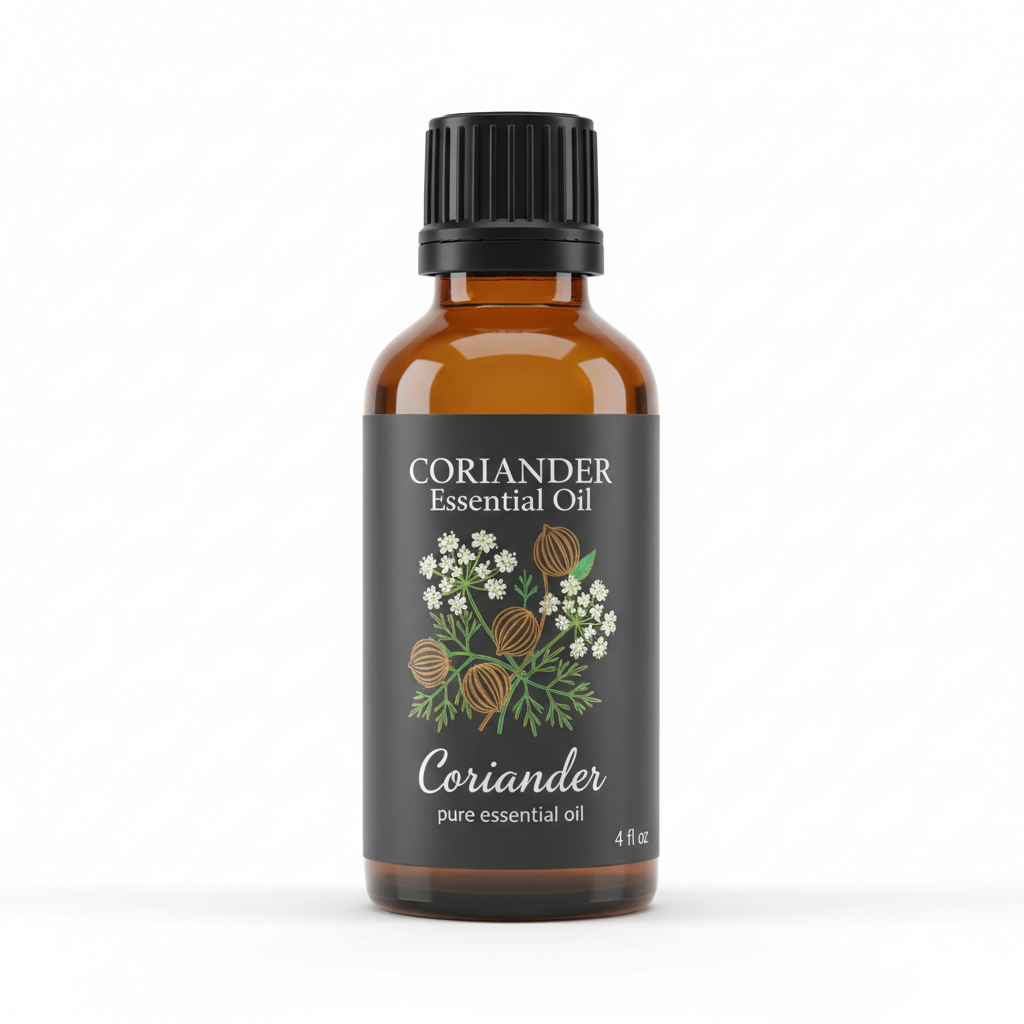
Coriander Essential Oil
Our own Coriander Essential Oil, in sizes from 0.5 oz to bulk.
From $12.99
Shop Now →We think of storage as the least glamorous and most useful habit in the whole business of working with oils. It costs nothing, takes seconds, and keeps the scent the way you first fell for it.
How long it keeps
Our guidance is that the oil typically lasts 2 to 3 years when kept tightly capped in a cool, dark place away from heat and light. That is a typical figure and not a guarantee, because every bottle has its own history. A bottle that lived in a hot car or on a sunny sill has aged faster than one that stayed in a cupboard.
The closest hard evidence is from other oils. Turek and Stintzing stored lavender, pine, rosemary and thyme oils for up to 72 weeks in the dark, in light, at 23 C and at 38 C, and with air exposure. Each oil changed in its own way, and heat, light and air all mattered (Turek and Stintzing, Food Research International, 2012). Coriander was not in that study, so applying it is reasoning: since conditions shaped how every oil aged, controlling them is the best thing you can do for yours. When a feed-additive applicant described a coriander oil to EFSA, it gave a shelf life of at least 12 months under the same cool, dry, dark conditions (EFSA FEEDAP Panel, 2023). If you want a cautious yardstick for a bottle you use for skin, that is one.
Why linalool is worth protecting
On its own, linalool is a weak allergen. After exposure to air it forms oxidation products that can cause contact allergy, which is why dermatologists test with oxidised linalool (Bared Christensson et al., 2010). Published coriander seed oils run from about 40% to 80% linalool (Nejad Ebrahimi et al., 2010), so this oil is a good example of why a tight cap matters. Our linalool article has more on the chemistry, and the side effects article covers dilution.
A setup that works
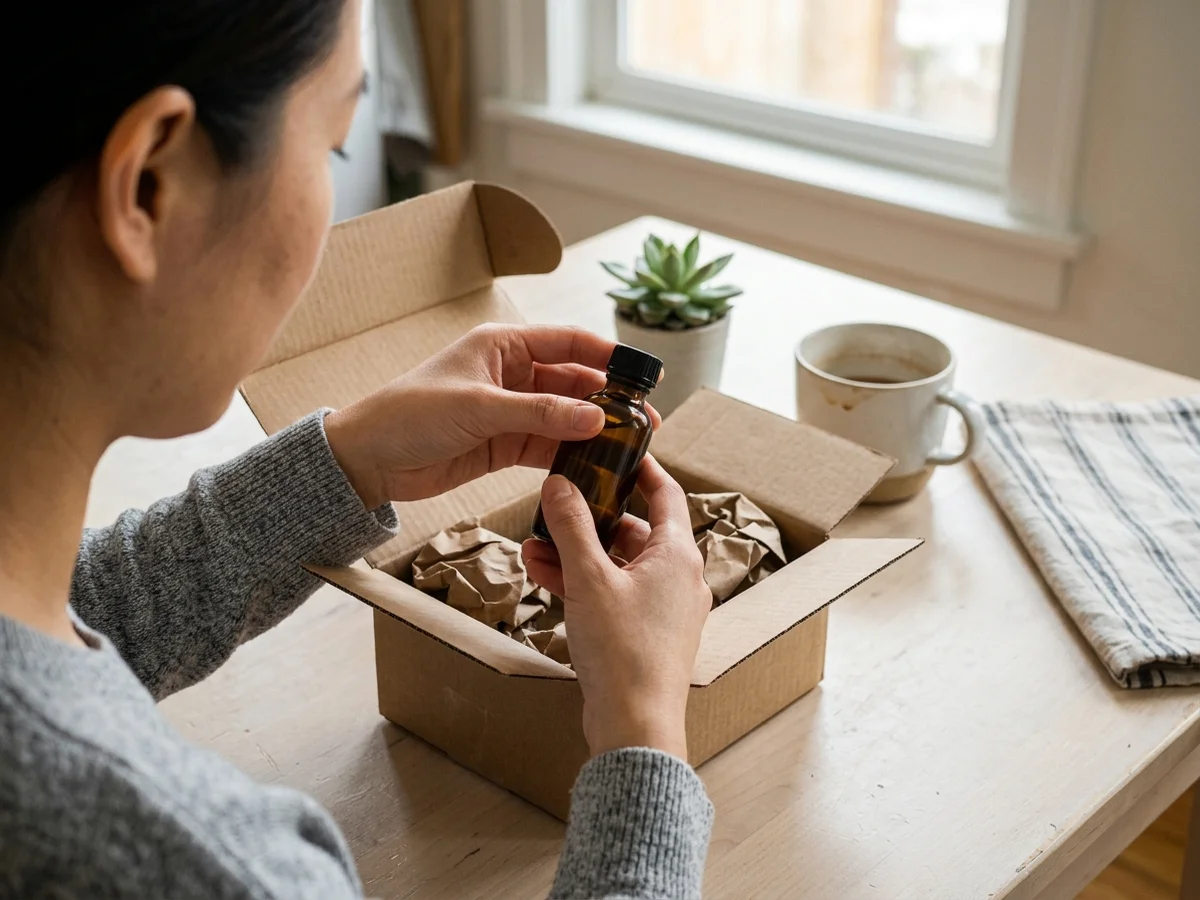
- Amber glass, capped tightly. We bottle every size in amber, which blocks light. Only the cap keeps air out.
- Somewhere cool. A cupboard away from the stove, the radiator and the window is ideal.
- Open it as briefly as you can. Measure what you need, pour once and close it.
- Write the date you opened it on the label. You control the age after opening, and a dated bottle is easy to judge.
- Move to a smaller bottle as it empties. The arithmetic makes the case. Take 5 ml of oil (density 0.857 on our published batch) with an assumed 60% linalool in a 30 ml bottle. The oxygen in the air above it could react with at most about 1.3% of the linalool. With 1 ml left in the same bottle, that rises to roughly 7.5%. For bulk, decant working amounts into smaller airtight bottles and keep the rest in its sealed original container.
Where to put the bottle
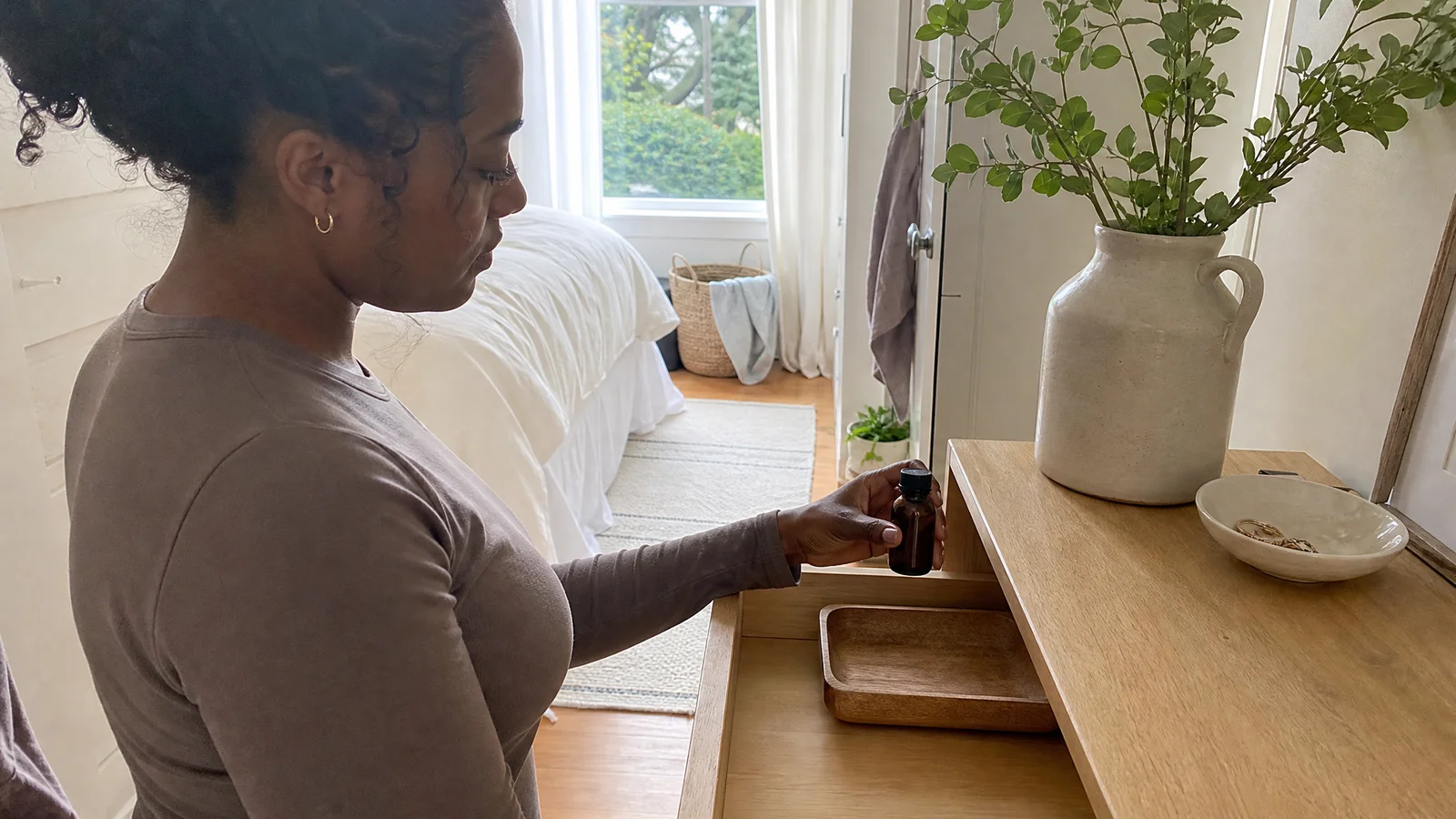
Walk around your home and think like the oil. The kitchen counter beside the stove is warm. The bathroom shelf gets steam and temperature swings. A windowsill gets light and heat. The back of a bedroom closet or a drawer in a hallway cabinet is usually the winner: cool, dark, quiet and out of reach. Put the bottle in a small box or a pouch with the label facing out, and it will be easy to find.
A little routine
Every few months, take out your bottles and give each one a quick check. Is the cap tight? Is the label still readable? Is there any residue around the neck? Wipe the threads with a clean cloth so the cap seals properly, and put the oldest bottle at the front so you use it first. It takes two minutes and makes the whole collection easier to enjoy.
Handling the dropper
If you use a separate pipette, keep it clean and dry, and never put it back into the bottle after it has touched a carrier oil or your skin. That small habit keeps the contents of the bottle exactly what they were when you opened it.
Is this bottle still good?
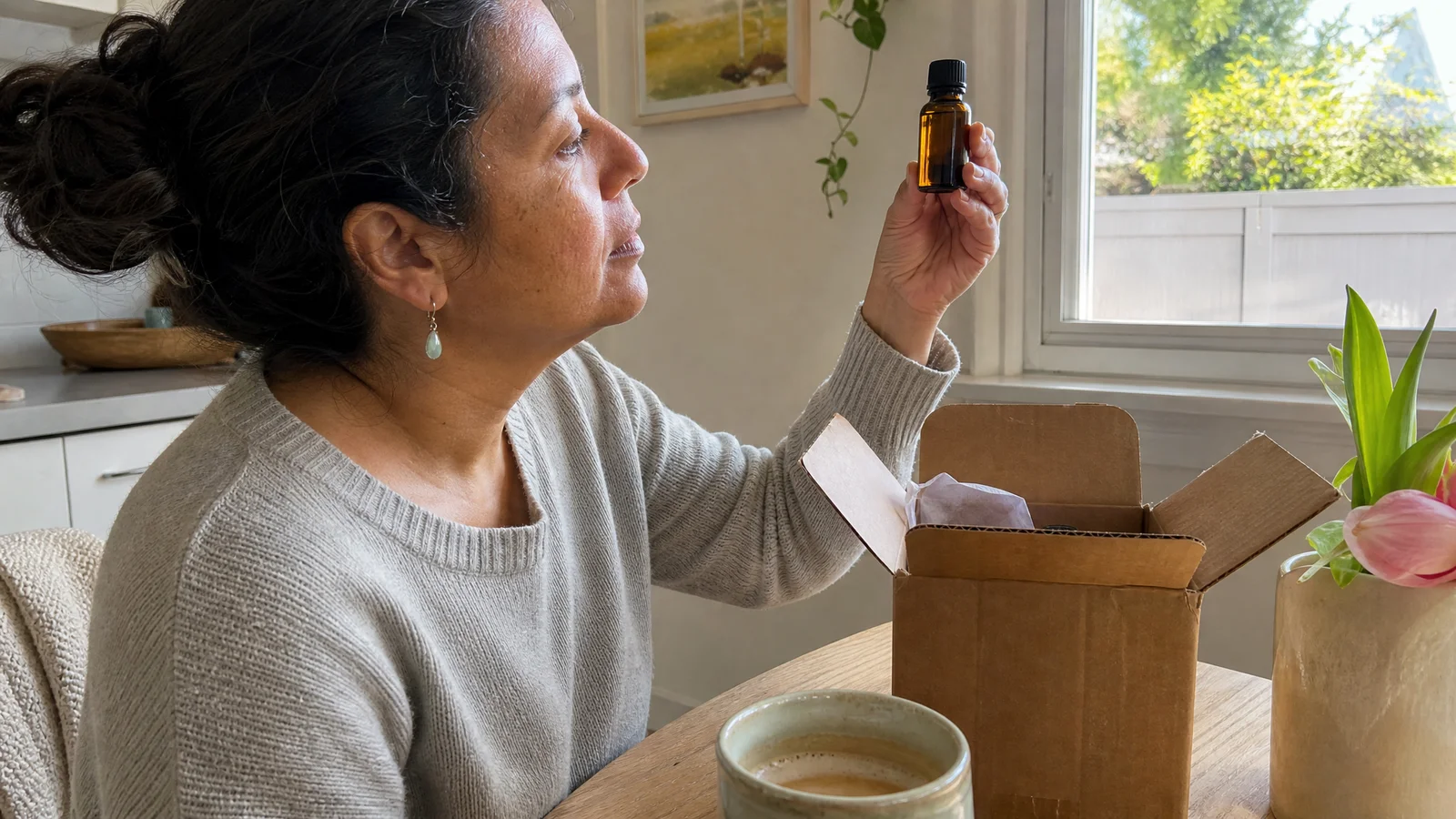
There is no lab in your kitchen, but you do have a nose and eyes. Ask yourself whether you know when it was opened, whether it has stayed cool and dark, whether it still smells warm, woody and softly spicy with that light floral edge, and whether it looks and pours the way it did. If the scent has turned flat or sharp, or the oil has become thicker or sticky, it is better kept for something that never touches skin, or retired. Smell cannot measure oxidation, so for anything you put on your skin, fresher is better.
Gifts and samples
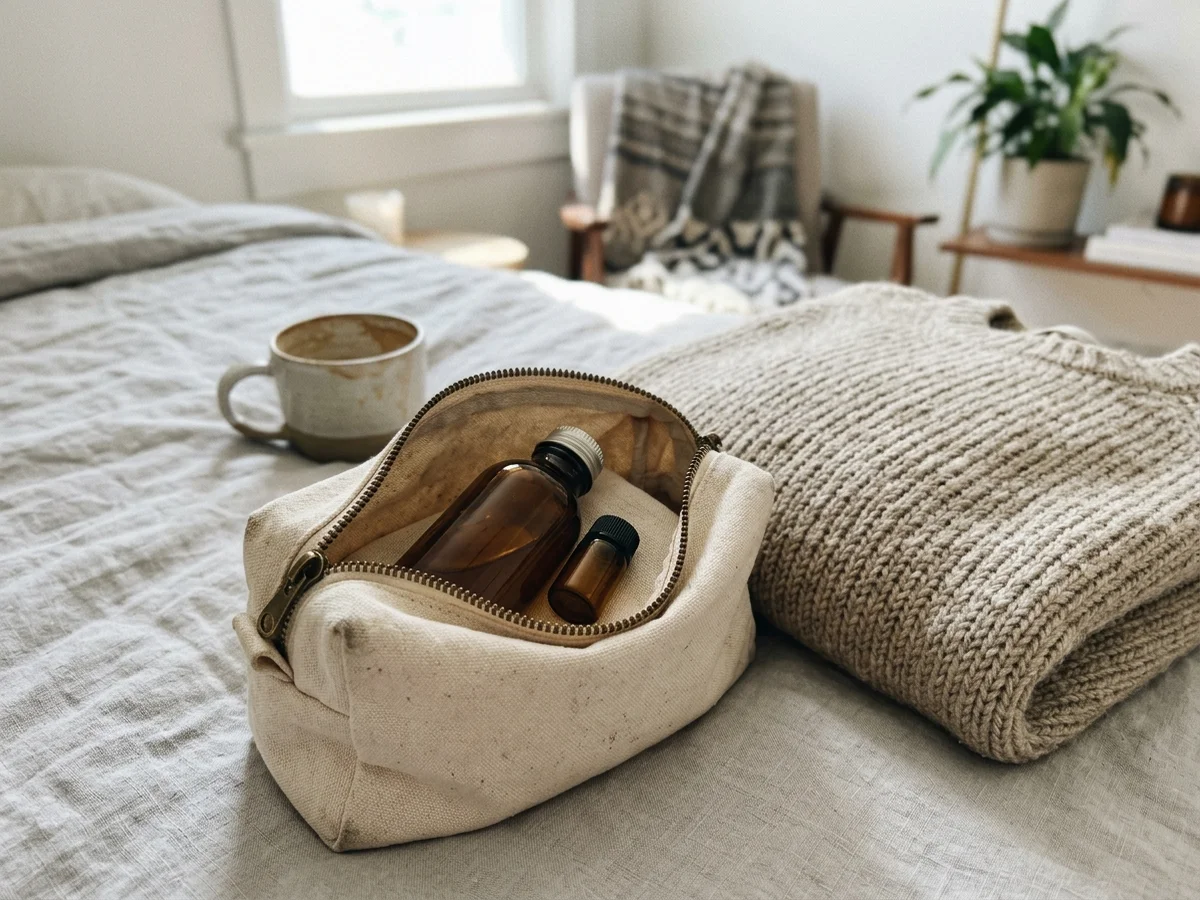
If you ever decant a little into a smaller bottle for a friend, use a clean, dry amber bottle with a tight cap, and write the oil name and date on the label. Smaller vessels with less air inside are kind to the oil, and a clear label means nobody has to guess what is in the bottle a year from now.
Treated kindly, a bottle of coriander oil is a long companion. Small habits, mostly just closing the cap, do most of the work.
Coriander Essential Oil
Coriander Essential Oil from our own shop, in sizes from 0.5 oz to bulk.
From $12.99
Shop Now →