Coriander Oil and Bacteria: What Lab Studies Really Show
Search for coriander oil and bacteria and you will find real papers showing that it slows bacterial growth in a laboratory dish. It is an interesting bit of plant chemistry. It is also a long way from saying what a bottle of aroma oil does on skin or on a countertop, and we sell a cosmetic oil, so we keep to what the studies measured.
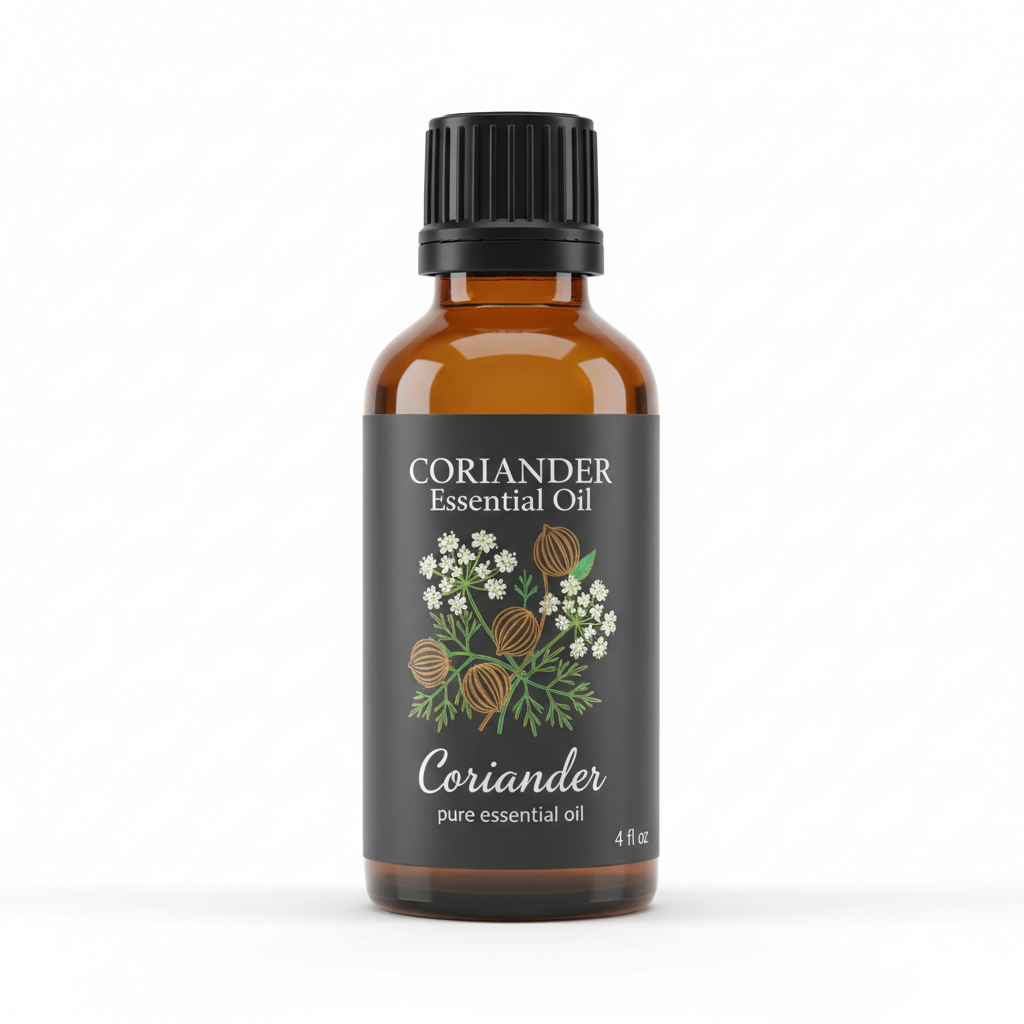
Coriander Essential Oil
Our own Coriander Essential Oil, in sizes from 0.5 oz to bulk.
From $12.99
Shop Now →What a plate result actually is
In these experiments, researchers put oil into broth or onto a paper disc or agar well, add bacteria, and record either a clear ring where nothing grows or the lowest concentration that stops growth. It all happens in a controlled lab medium, often with the oil dissolved in a solvent, against a single species. Skin has oils, sweat and a living community of microbes, and a counter has crumbs and dried residue. None of that is in the well, which is why a plate result is a starting point for questions and not an answer about real life.
What the coriander papers found
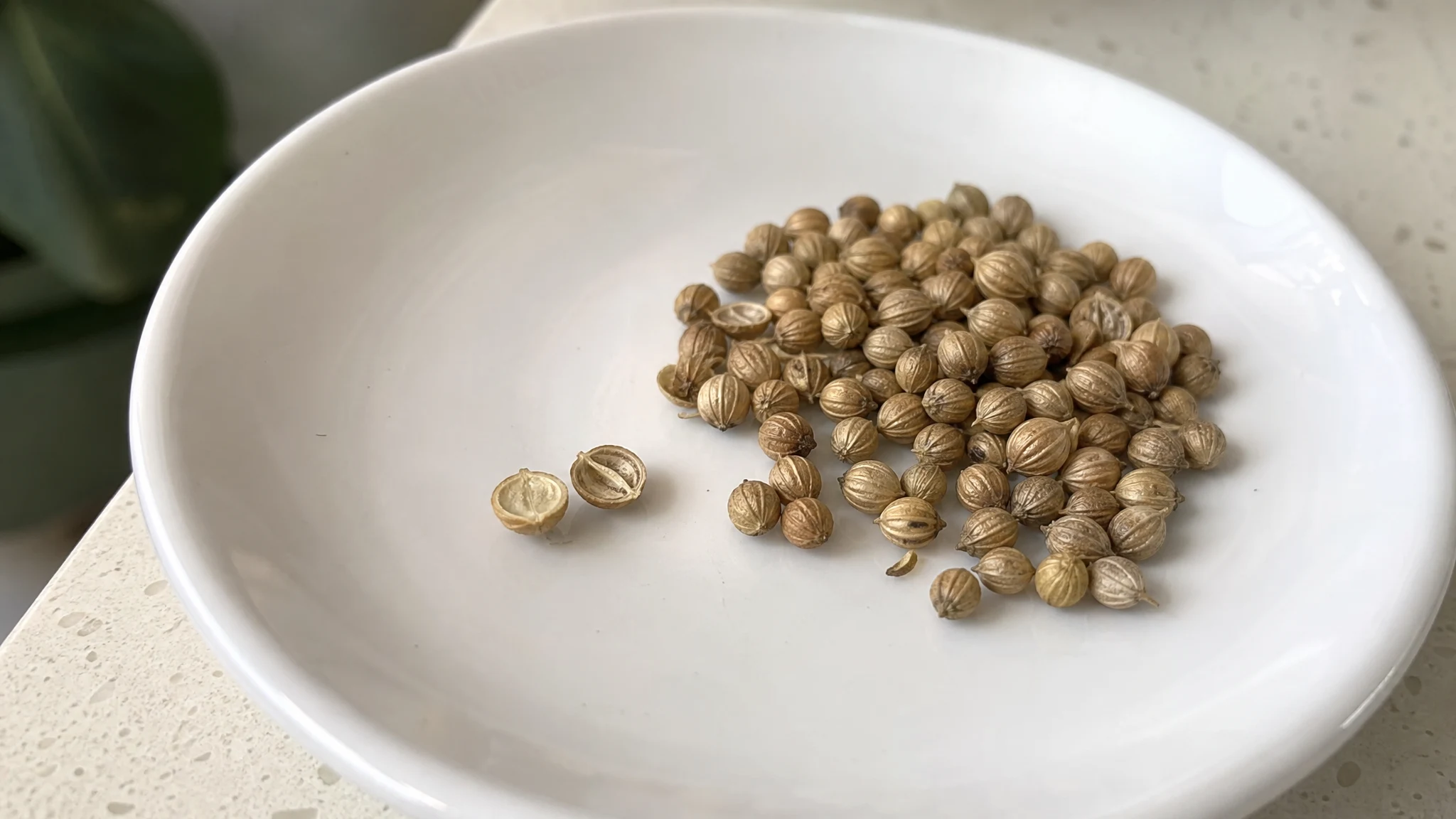
A 2024 study distilled oil from the seeds of seven cultivated Apiaceae plants and tested them against four bacteria. Coriander was almost entirely oxygenated monoterpenes, with linalool predominant, and its oil, like those of cumin and dill, showed an inhibitory effect against every strain tested except Pseudomonas aeruginosa (Onder et al., 2024). That last detail is a good reminder that even a promising oil does not cover everything.
Earlier work asked how such an oil works. Using flow cytometry, Silva and colleagues found coriander oil active against all the bacteria they tested and suggested the main mechanism is damage to the cell membrane (Silva et al., 2011). That is mechanism evidence about cells in suspension, a fascinating glimpse of what linalool-rich oils can do to a bacterium in a tube.
A 2015 paper reported activity of steam-distilled coriander oil against five food-borne bacteria, with values between 2.5 and 320 micrograms per mL, but it pooled leaf and seed oil, so the seed oil's own figures are not separable from the abstract (Rezaei et al., 2015).
Seed and leaf are different chemistries
Canadian researchers separated the oils of dill, coriander seed, cilantro leaf and eucalyptus into fractions and tested them. Cilantro leaf oil stood out against Listeria monocytogenes, which the authors linked to its long-chain alcohols and aldehydes, and the fractions often outperformed the whole oil (Delaquis et al., 2002). The takeaway for a seed oil enthusiast is that the plant part matters. Our oil is made from the seed, and the leaf's standout compounds belong mostly to a different oil. Our seed versus leaf article shows how differently the two smell too.
Not every oil in the same family tops the leaderboard, either. In a panel of seven spice-seed oils against eight bacteria, the authors highlighted the oil of Carum capticum, with cumin and dill giving similar results (Singh et al., 2002). Coriander was not among the three they named.
From the dish to the real world
Plates measure one thing. Several steps lie between that and a household claim: concentration, since lab oil concentrations are often far higher than a skin dilution (we recommend 0.5% to 2% in a carrier), the difference between a lab strain and a mixed community, the safety of those concentrations for human cells, and the fact that none of these papers measured infection, odour or any outcome in people.
There is a regulatory side too. Some natural oils may be sold as "minimum risk" pesticides under the US EPA exemption at 40 CFR 152.25(f), which names specific ingredients, and coriander oil is not on that published list. Products under the exemption also may not claim to control microorganisms that threaten human health (40 CFR 152.25). So our position is simple: ours is an aroma and cosmetic oil, and we do not describe it as a disinfectant. For a surface or skin product that makes germ claims, choose one labelled and registered for that purpose (our cleaning recipes article is about scented sprays only, and our side effects article covers skin care), and for any infection, see a physician or dermatologist.
What this means at home
For day-to-day life, the useful conclusion is a modest one. A kitchen counter is made clean with warm water, a good detergent and a cloth, and a fresh scent is a pleasant extra rather than the cleaning itself. If you love the smell of coriander seed oil, enjoy it as a scent, and let the soap and water do the job they have always done.
It is also a good reason to be a little wary of any label that wants a plate result to carry a promise. When a product page quotes a lab number, ask what was measured, in what, and at what strength. A good seller will not mind the question, and neither will we. A paper that says "inhibited growth in a dish" is a lovely thing to read on a rainy afternoon, and it is exactly that, nothing more.
And if you simply enjoy plant chemistry, this is a rewarding corner of it. The same linalool that gives the seed oil its warm, floral character shows up again and again in these papers, a nice reminder that a scent and a molecule are often the same story told two ways.
Coriander oil is worth enjoying for what it is, a warm, floral spice aroma with a fascinating chemistry. The lab results are part of why people find it interesting to read about.
Coriander Essential Oil
Coriander Essential Oil from our own shop, in sizes from 0.5 oz to bulk.
From $12.99
Shop Now →Sources & Further Reading
- Onder et al., 2024, essential oils of seven cultivated Apiaceae species
- Silva et al., 2011, coriander oil antibacterial activity and mode of action
- Rezaei et al., 2015, coriander leaf and seed oil and food-borne pathogens
- Delaquis et al., 2002, dill, cilantro, coriander and eucalyptus oil fractions
- Singh et al., 2002, antibacterial activity of spice volatile oils
- 40 CFR 152.25, minimum risk pesticides