Can You Swallow Coriander Oil? Why We Say No
Short answer: no. Please do not swallow the coriander seed oil we sell, or any essential oil from a bottle made for aroma. It is labelled for aromatic and cosmetic use, not internal use. The longer answer is a fun bit of arithmetic about how much plant is packed into a single drop.
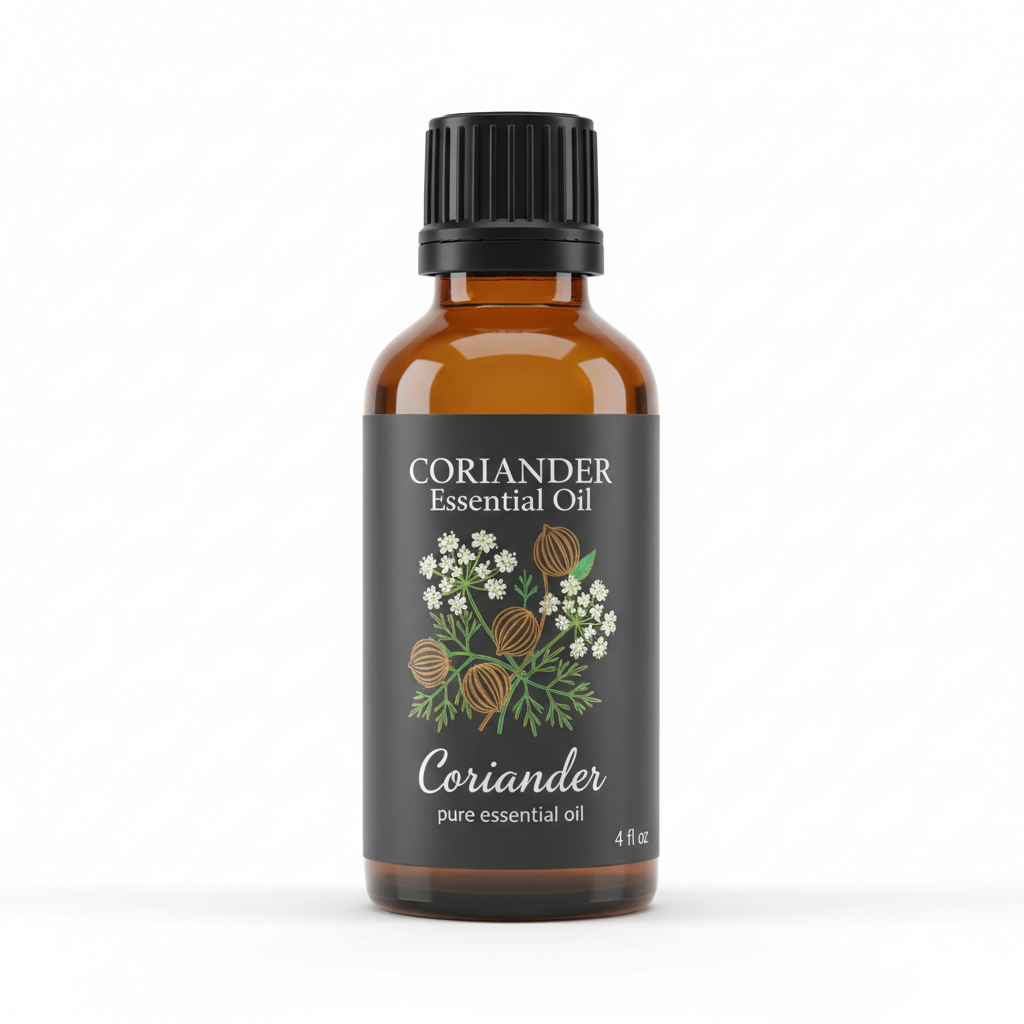
Coriander Essential Oil
Our own Coriander Essential Oil, in sizes from 0.5 oz to bulk.
From $12.99
Shop Now →We get why people ask. Coriander is a kitchen spice, the bottle smells wonderful, and it is natural to wonder whether a drop might go into a recipe. Our answer is a friendly but firm no, and we would like to explain it in plain terms.
What is in one drop
Our guidance of 0.5% to 2% in a carrier works out to roughly 3 to 12 drops per ounce, which implies a drop of about 0.05 ml. With the relative density of 0.857 on the batch certificate we publish, that is a drop of roughly 43 mg.
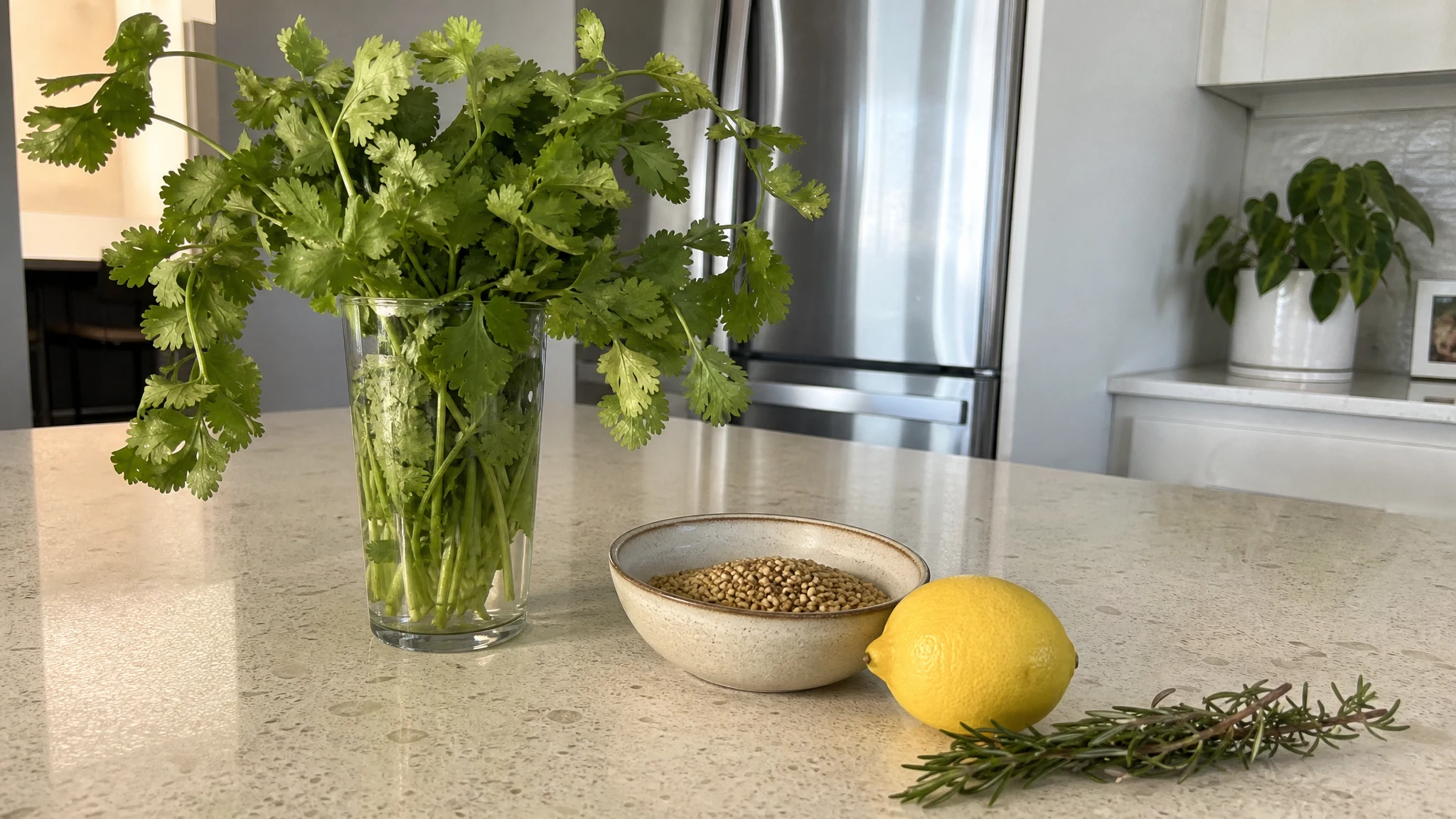
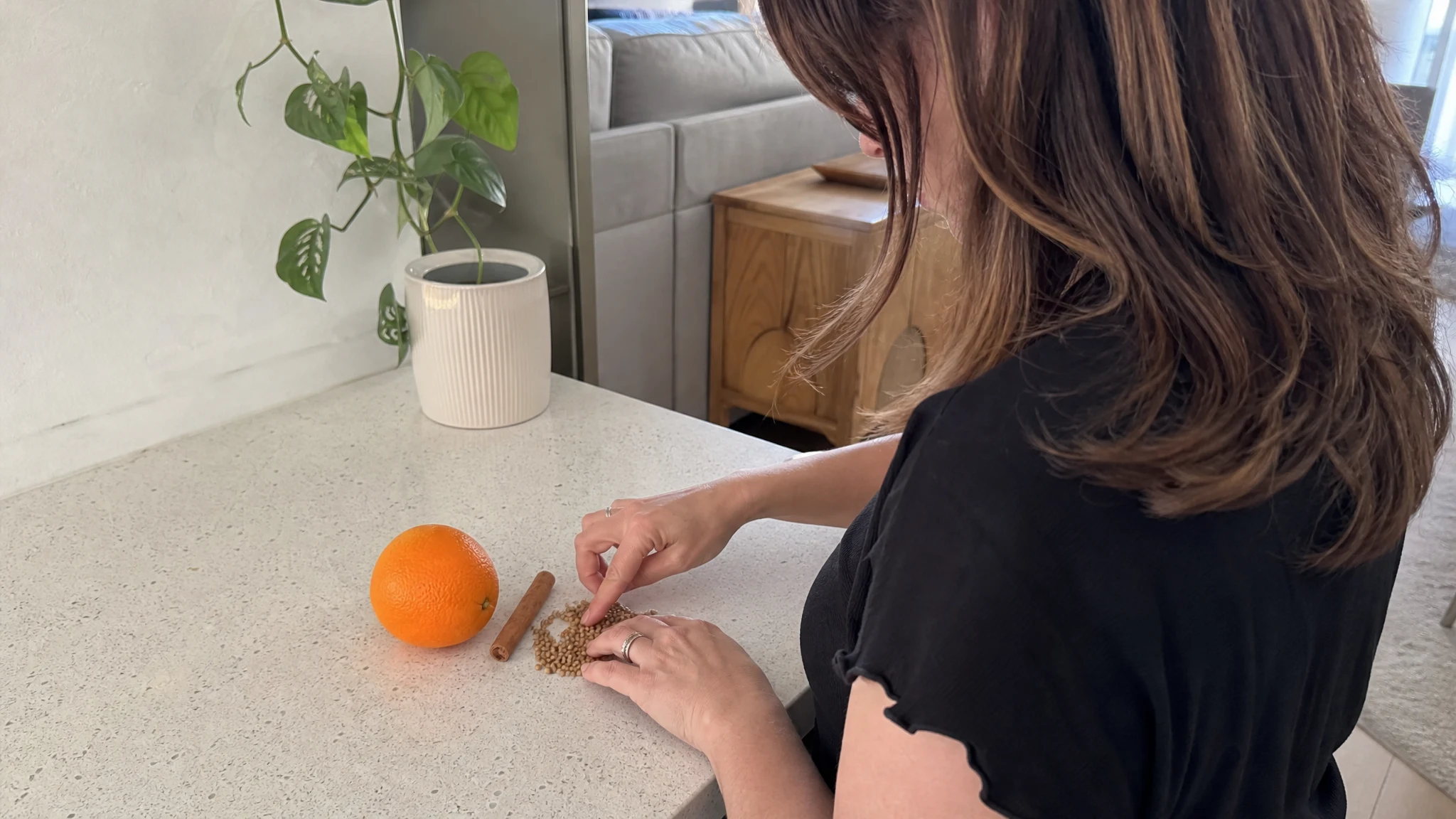
Now the seed. Dried Iranian coriander seed gave 0.1 to 0.36% essential oil (Nejad Ebrahimi et al., 2010). Taking those as weight percentages, a 43 mg drop needs about 12 to 43 g of seed. A pinch of ground coriander in a curry is a gram or so of seed, with its aroma spread through a whole pot. A drop of the oil is the volatile part of a small handful of seed, with all the bulk taken away. They share a plant, not a dose. Our gin and kitchen article sorts out the three things people call coriander oil.
One more comparison. EFSA's assessment of coriander oil quotes a food-flavouring intake estimate of 0.049 mg per kg of body weight per day, taken from Fenaroli's handbook (EFSA FEEDAP Panel, 2023). For a 70 kg adult that is about 3.4 mg, so a single drop is more than ten times the estimate. That is our arithmetic, and the estimate describes background dietary exposure, not a dose anyone has set for a bottle.
What the food entry means
You may have read that the FDA lists coriander as generally recognised as safe. It does: Coriandrum sativum L. appears in 21 CFR 182.20 for essential oils, oleoresins and natural extractives, and in 182.10 for spices (21 CFR 182.20). The entry is about food-grade flavourings used as intended in food. A bottle sold for aroma is a different product with a different label, and the listing is not a dosage for it.
What the safety authorities say
US Poison Control says misuse of essential oils can cause serious poisoning, that children may be more susceptible because of thin skin and immature livers, and that oil breathed into the lungs, for instance when someone chokes while swallowing, can cause pneumonia (Poison Control). The Tisserand Institute advises against ingesting essential oils unless a qualified, licensed practitioner recommends it (Tisserand Institute, safety guidelines). We are not that practitioner, and we sell a cosmetic oil.
Why a label matters more than a smell
A bottle that smells like food is not necessarily made for food. Our oil is labelled for aromatic, external use, and that label is the thing that tells you what the maker intended. Read it the way you would read the instructions on any product you bring home. If it does not say it is for eating, it is not for eating, no matter how appetising it smells.
Keeping bottles safe at home
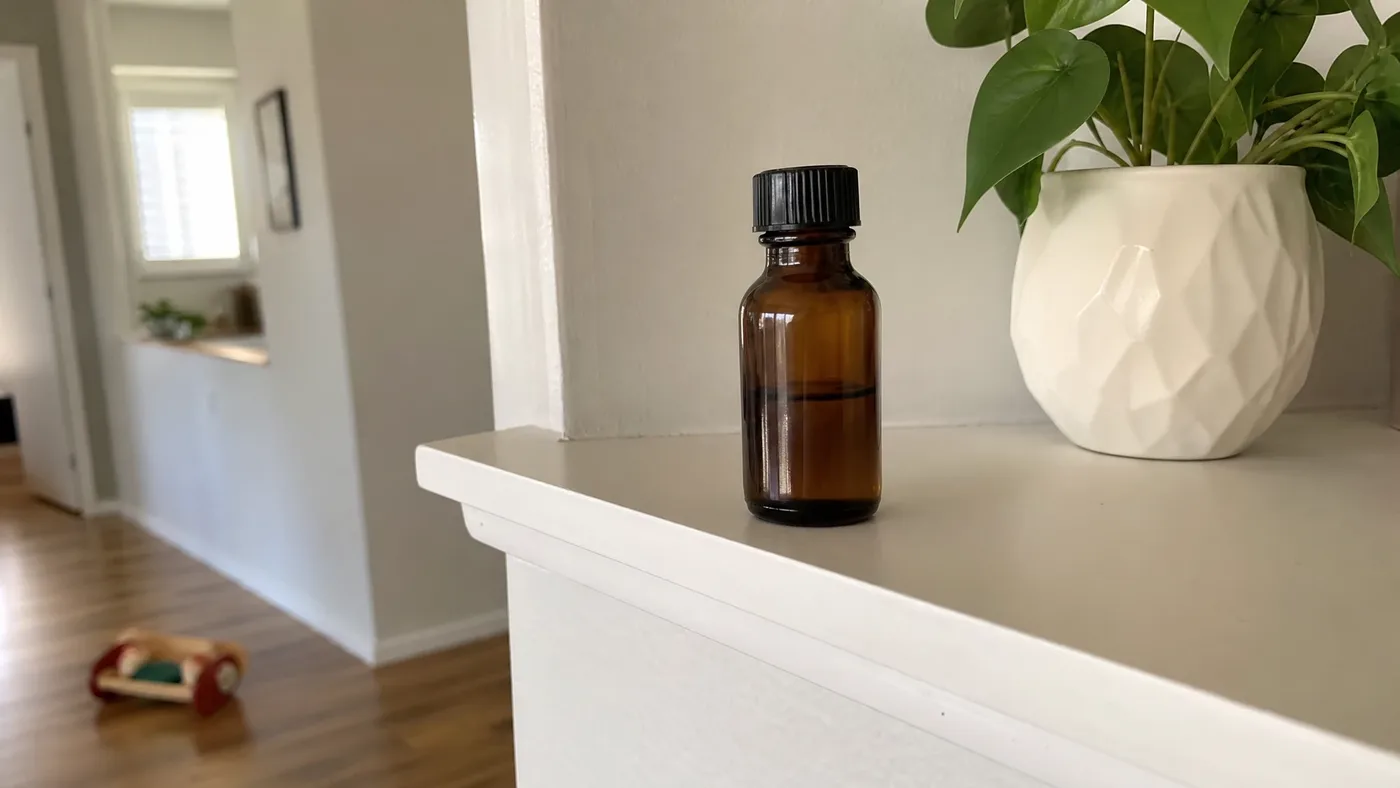
If you have small children, curious pets or visitors, make a habit of putting bottles away after each use. A high shelf or a closed cupboard is better than a counter, and a bag or box that you zip shut is better still. Keep the cap on, keep the bottle upright, and keep the label facing out so anyone who picks it up can read it.
It is also worth deciding where the oil lives, so you never have to look for it. Many people keep it with their craft supplies or fragrance projects, and away from the kitchen, so it does not end up next to the olive oil and the vinegar.
If it happens anyway
In the US, Poison Control is free, confidential and open around the clock at 1-800-222-1222, with an online tool at the same site. Call before symptoms appear, and call 911 if someone collapses, has a seizure, struggles to breathe or cannot be woken. Keep the bottle with you so you can read the label to them.
Getting coriander the right way
- For flavour, use seed or a flavouring sold specifically as food, from a grocer or food supplier.
- For the scent, use our oil as the aroma material it is, diluted for skin; our uses guide and side effects article cover the practical side.
- If a product promises an oral dose of coriander oil, ask who made it and what it is licensed for; a pharmacist can help you read the label.
If you want the flavour of coriander
The honest answer is the simplest one: use the seed. Toast whole seeds in a dry pan for a minute until they smell warm and nutty, then crush them just before using. Nothing in a bottle of aromatic oil can match that fresh-crushed smell in a pot, and the whole seed keeps well in a jar in the cupboard for a long time.
Keep the bottle where children and pets cannot reach it, enjoy the aroma, and leave the cooking to the seed.
Coriander Essential Oil
Coriander Essential Oil from our own shop, in sizes from 0.5 oz to bulk.
From $12.99
Shop Now →Sources & Further Reading
- Nejad Ebrahimi S et al., 2010. Essential oil compositions of different accessions of Coriandrum sativum L. from Iran. pubmed.ncbi.nlm.nih.gov/20803372
- EFSA FEEDAP Panel, 2023. Safety and efficacy of an essential oil from the fruit of Coriandrum sativum L. PMC10613936
- US eCFR. 21 CFR 182.20. ecfr.gov
- Poison Control. Essential oils. poison.org/articles/essential-oils
- Tisserand Institute. Safety guidelines. tisserandinstitute.org/safety/safety-guidelines