Is Coriander Oil Organic? What the Label Covers
Organic is one of the most trusted words in shopping, and one of the most loosely understood. On a bottle of coriander oil it answers a specific question about how the seed was grown and handled. It does not answer the questions about what is actually in the bottle. Knowing the difference helps you decide whether a certificate is worth paying for. We do not sell our coriander oil as organic, and we would rather you understand what the word covers than guess.
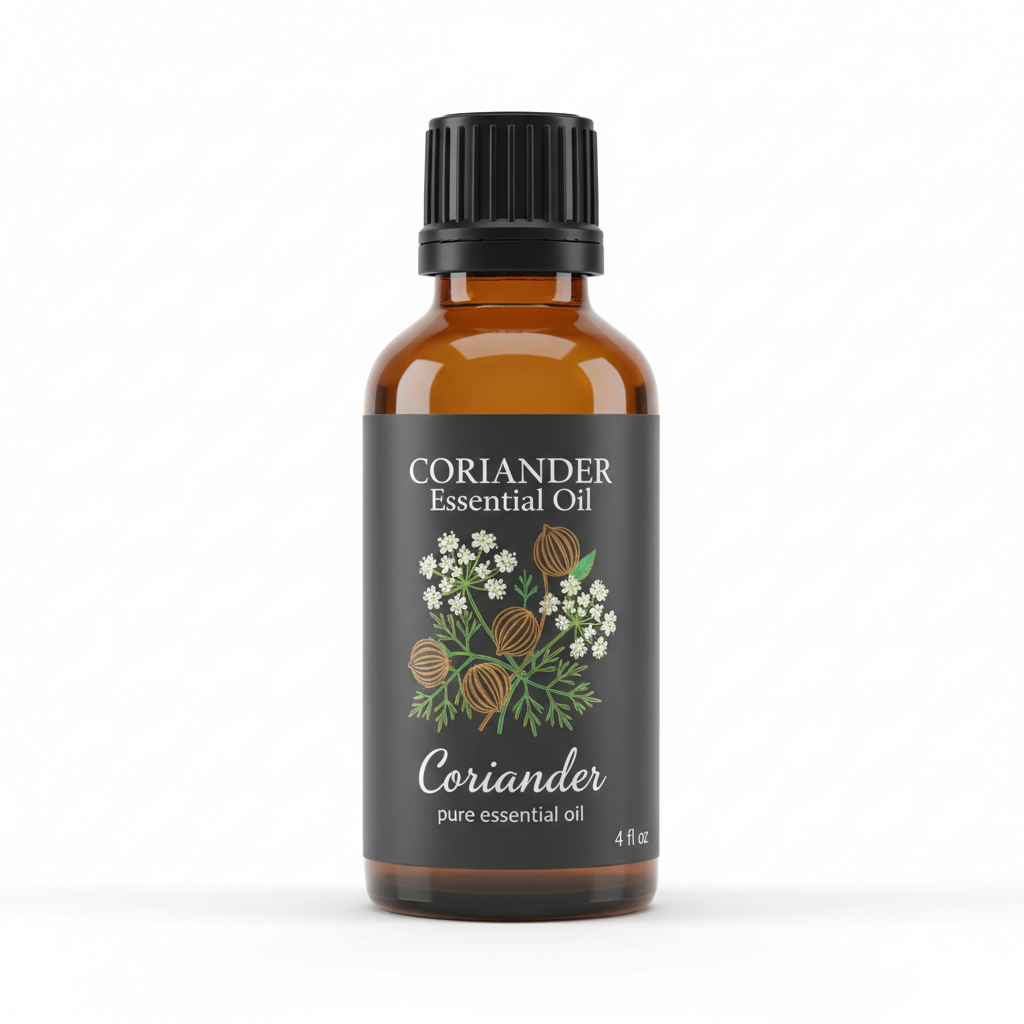
Coriander Essential Oil
Our own Coriander Essential Oil, in sizes from 0.5 oz to bulk.
From $12.99
Shop Now →What the label means
Under the USDA National Organic Program, an operation that produces or handles agricultural products to be sold as organic must be certified, apart from the exempt operations described in a separate section (7 CFR 205.100). That exemption covers operations with gross agricultural income from organic sales of five thousand dollars or less a year. They need no certification but must still meet the production, handling and labelling rules and keep records for at least three years showing the product was organically produced and handled (7 CFR 205.101). That is why a certificate, not just the word, is the thing to ask for.
Cosmetics add a wrinkle. The FDA says it has no regulations defining "natural" or "organic" for cosmetics (FDA, aromatherapy), so whether the USDA rule applies to a given bottle depends on how it is sold and labelled. A reasonable approach is to ask the seller directly and ask for the certificate.
It is easy to feel that organic is a simple good-or-bad switch, and we understand why. The word is warm and reassuring. But a label is only as useful as the question it answers, and a good habit is to ask yourself what you really want to know before you let a word decide for you.
What organic does not measure
Nothing in the rule sets a minimum linalool level, checks whether anything synthetic was added, or looks at oxidation. A family-medicine review puts it plainly: USDA Organic labels ensure the plant constituents come from organic farming but do not attest to quality (Shah et al., Journal of Family Practice, 2023). For composition, you want a gas chromatography report, which our GC/MS checklist teaches you to read. For the wider question of telling a genuine seed oil from a stretched one, see how to check a coriander oil.
Residues: the real reason many people go organic
Most people choose organic oil to avoid pesticide residues. Distillation collects the volatile, fat-soluble part of the seed, so reasoning from that, a residue with similar properties could in principle travel with the oil. How much depends on the specific chemical, and we have no residue data to point you to, so the practical step is to ask for a residue screen on the oil itself if residues are your concern.
Reading a bottle like a shopper
When you pick up any bottle of oil, look at it as you would a food label. Is the plant named? Is the plant part named? Is there a batch or lot number? Is there a date? Is there a way to contact the seller? A bottle that answers all of those is easier to trust than one with a big word on the front and little else.
It also helps to be curious rather than suspicious. Most sellers are happy to answer a polite question, and the way a seller answers tells you a good deal. A quick, clear reply is a good sign. A vague one is a reason to keep looking.
Questions worth asking any seller
- Who issued the certificate, and to which operation? A certified farm does not make an uncertified bottler organic.
- Does it cover this product and this lot? Certificates list their scope.
- Is there a composition report for this lot? Organic status does not replace one.
- Is there a residue report, if residues are your reason? It is a separate analysis from composition.
If we had to rank the paperwork for a buyer choosing one document, we would put a composition report first, a residue screen second when residues are the worry, and an organic certificate third, as a statement about farming and handling. That order is our reasoning, not a rule from any standard.
What we would tell a friend
If a friend asked us how to choose, we would say: start with what you plan to do with the oil. If it will go into a scented body oil, a diffuser or a candle, think about the paperwork that matters for that use. Write down your questions before you contact the seller, and keep the answers with the bottle. A little organisation at the beginning saves a lot of second-guessing later.
Organic is one word on one document. It can be a perfectly good reason to choose a product, as long as you know what it covers and what it leaves out.
We sell a single coriander oil, from the seed. The Certificate of Analysis we publish covers one batch and lists density, refractive index, appearance and smell. If a certificate or lot report matters to your purchase, ask us in writing through the contact page before you order.
Keep it simple
You do not have to settle every question at once. Decide what matters most for your purpose, ask for that document first, and add the others as your project grows. A short list of three questions you actually asked is worth more than a long list you never sent.
Whatever you choose, let the documents lead and the label follow.
Coriander Essential Oil
Coriander Essential Oil from our own shop, in sizes from 0.5 oz to bulk.
From $12.99
Shop Now →