How to Read a Coriander Oil GC/MS Report
Here is a fact that surprises most people who read their first chromatography report: the same five batches of one coriander oil came out at 71.7% linalool on one instrument and 58.72% on another. Nothing was wrong with the oil. The method was different. Once you know that, a GC/MS report stops being a wall of numbers and becomes something you can read with confidence.
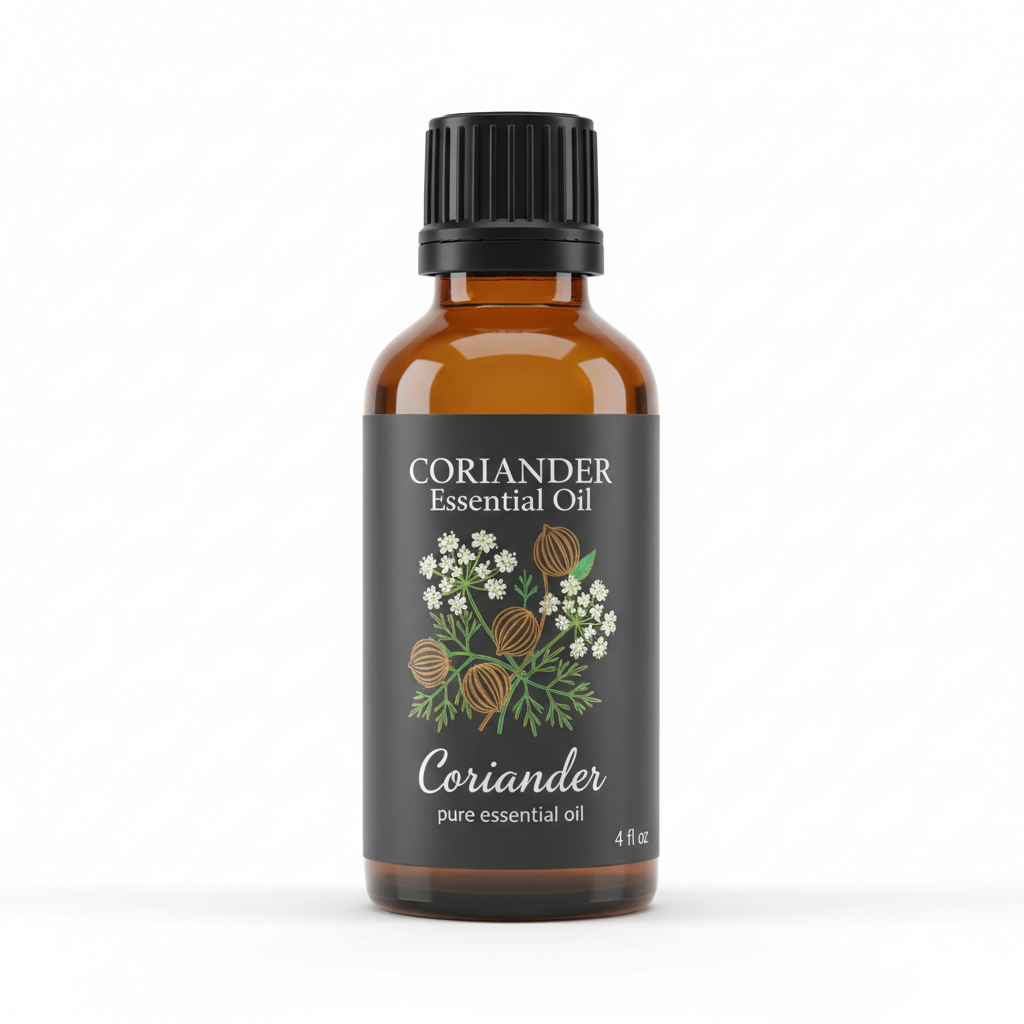
Coriander Essential Oil
Our own Coriander Essential Oil, in sizes from 0.5 oz to bulk.
From $12.99
Shop Now →Start at the top, before the numbers
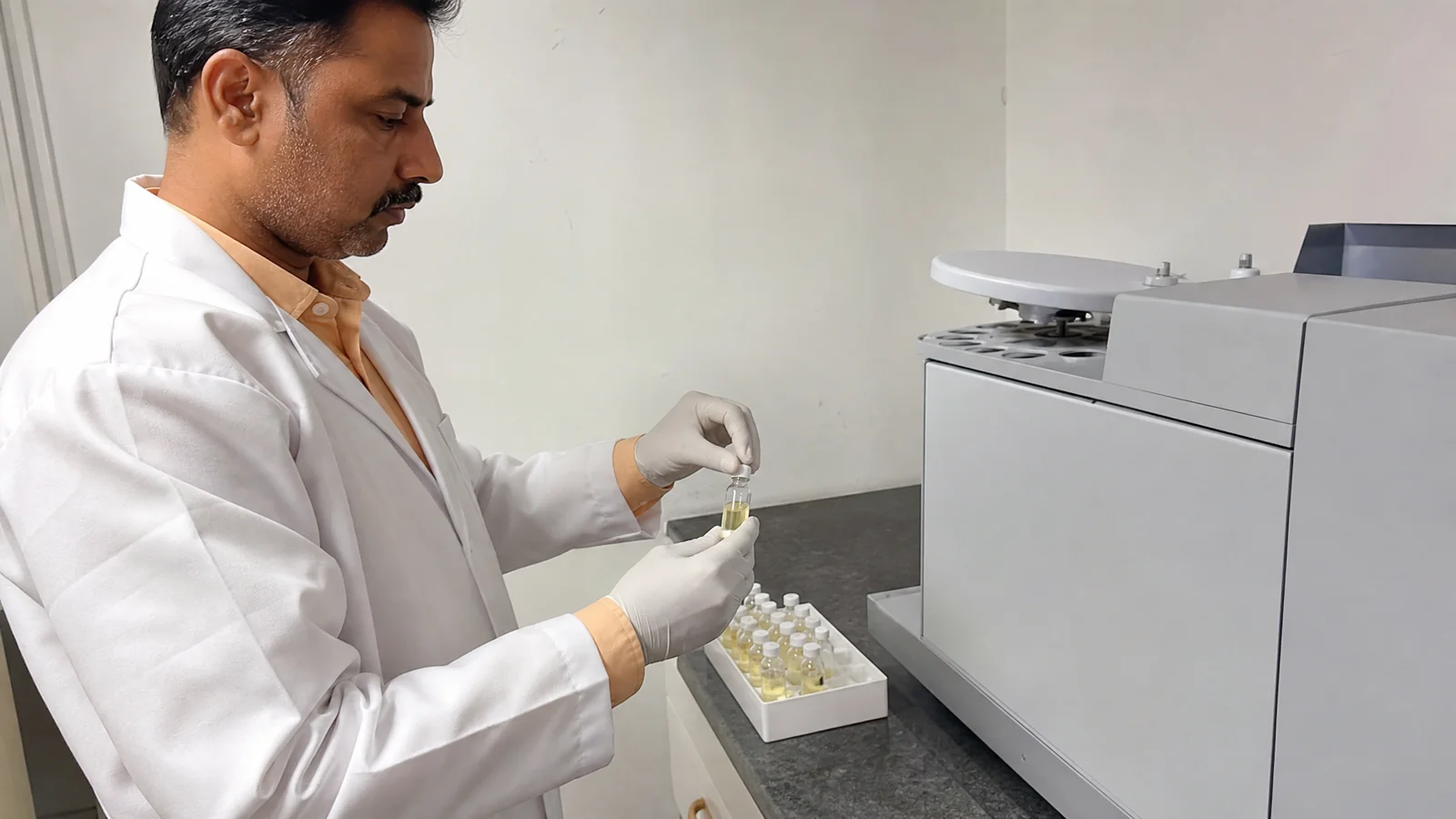
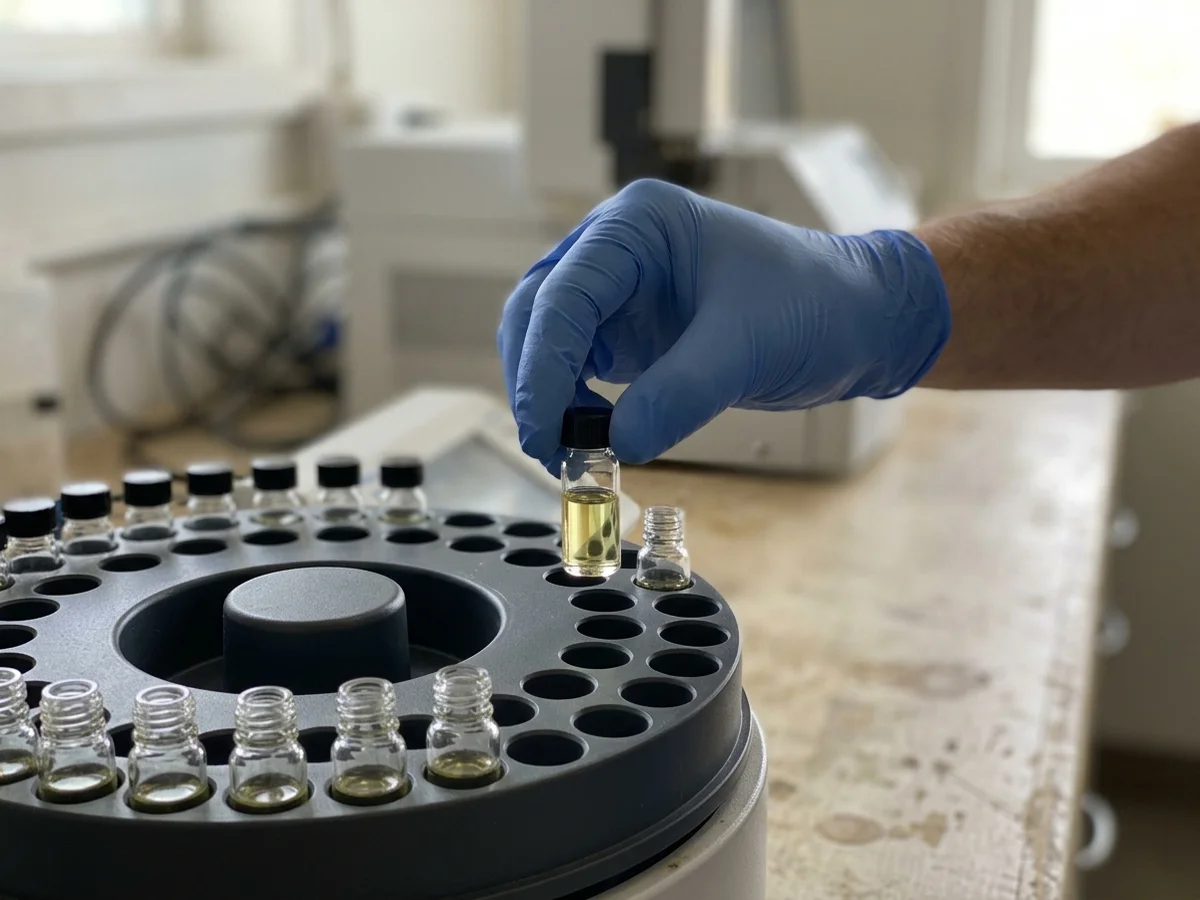
A useful report names the sample or batch, a date, the laboratory and the method. Without those it is a table about an unknown oil. Then find the detector. Alex St-Gelais of the Tisserand Institute describes GC and MS as "two separate pieces of equipment, each with its own purpose": the GC separates the compounds and the detector measures them. For relative quantities, he notes, experts and the ISO norm favour a flame ionisation detector, since mass spectrometers saturate sooner and are harder to standardise between labs (St-Gelais, Tisserand Institute). The 71.7% versus 58.72% example comes from the European Food Safety Authority's coriander opinion (EFSA FEEDAP Panel, 2023). The practical rule: compare detector to detector.
The peak list
The heart of the report is a list of compounds with percentages. Three things make it easier to read. First, names are library matches, and the mass spectrum alone can mislead; St-Gelais gives linalool matching linalyl anthranilate as an example. Reports that include retention indices show their work. Second, the percentages are each peak's share of the total signal, which St-Gelais calls "a practical, commonly accepted approximation, but an approximation nonetheless." Third, look at how much of the signal was identified. Naming 99% says more than naming 85%.
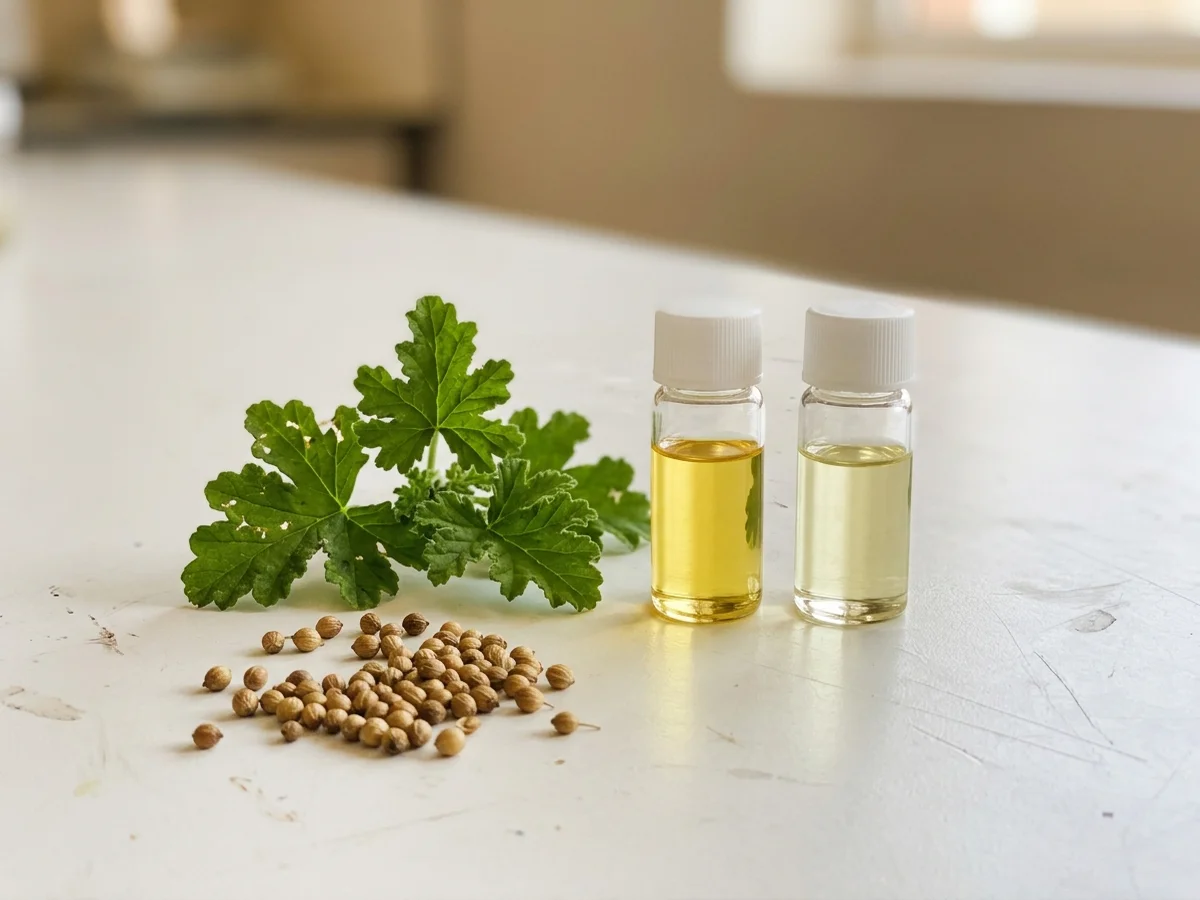
What coriander seed oil usually looks like
In EFSA's assessment, the linalool specification was 65% to 78%, with the five measured batches averaging 71.7%. Alongside it come modest amounts of alpha-pinene, gamma-terpinene, camphor and geranyl acetate, each in the low single digits. A study of Iranian seed accessions found linalool anywhere from 40.9% to 79.9% (Nejad Ebrahimi et al., 2010), so the normal band is wide and depends on the lot. Our linalool article covers the main molecule.
A worked walk through a report
Here is the order we would follow with a report in hand. First the header: who made it, when, and with which detector. Second, the plant: does it name Coriandrum sativum and the part used? Third, the tallest peak: for a seed oil it should be linalool, comfortably the biggest, with a cluster of small ones behind it. Fourth, the total: how much of the oil did the lab actually name? Last, look at whatever is unusual and write down a question.
It helps to have a pen and a printout. Circle the numbers you do not recognise, put a tick beside the ones that match what you were told, and take the rest to the seller. A good report invites that kind of conversation.
What should make you ask a question
- Aldehydes on top. Oils from the leafy parts in a Portuguese study were led by 2-trans-decenal and n-decanal (Machado et al., 2023). A seed oil report with those at the top points to the wrong plant part; see seed versus leaf.
- Linalool well above the usual band. It is a prompt for a question, not proof of anything, since method, variety or rounding can explain it.
- No lab, no date, no detector. A paperwork gap rather than a chemistry one.
Keep in mind what any report cannot do. GC sees only compounds that vaporise, and a standard profile cannot on its own exclude synthetic additions; our guide on checking a coriander oil covers the extra tests that can.
Questions for the sender
- Which lot was analysed, and is it the lot in my bottle?
- Which detector produced the percentages?
- Can you share the retention indices or the full peak list?
- Is there anything the report did not measure that I should know about?
Short, specific questions get short, specific answers. If you want to ask us about a lot, the contact page is the place.
Do not skip the plain words
Many reports include lines at the bottom that read like small print: notes on method, the sample as received, the limits of what was measured. They are worth the extra minute. A report that tells you what it did not measure is more honest than one that hints at more than it covers. If something is missing, send the question in writing and keep the reply with the report.
And remember that a chart is not a smell. After you have studied the numbers, put a drop on a paper strip and sniff it. The report tells you what is in the oil, and your nose tells you whether you like it.
What we can tell you
We sell one coriander oil, from the seed. The Certificate of Analysis we publish is for one batch and lists density, refractive index, appearance and smell, along with the botanical name and plant part. If you need GC/MS for a lot, ask us in writing through the contact page before ordering.
Read the header first, the peaks second, and the headline linalool number last, and a report will tell you a good deal.
Coriander Essential Oil
Coriander Essential Oil from our own shop, in sizes from 0.5 oz to bulk.
From $12.99
Shop Now →