Coriander Oil in Autumn Spice Blends: Pairing Ideas
Autumn scent blends tend to get described with one word: spice. But spice covers a lot of ground, from the bite of pepper to the sweetness of orange peel, and coriander seed oil lives in a different corner than most people expect. It is the oil that connects the others.
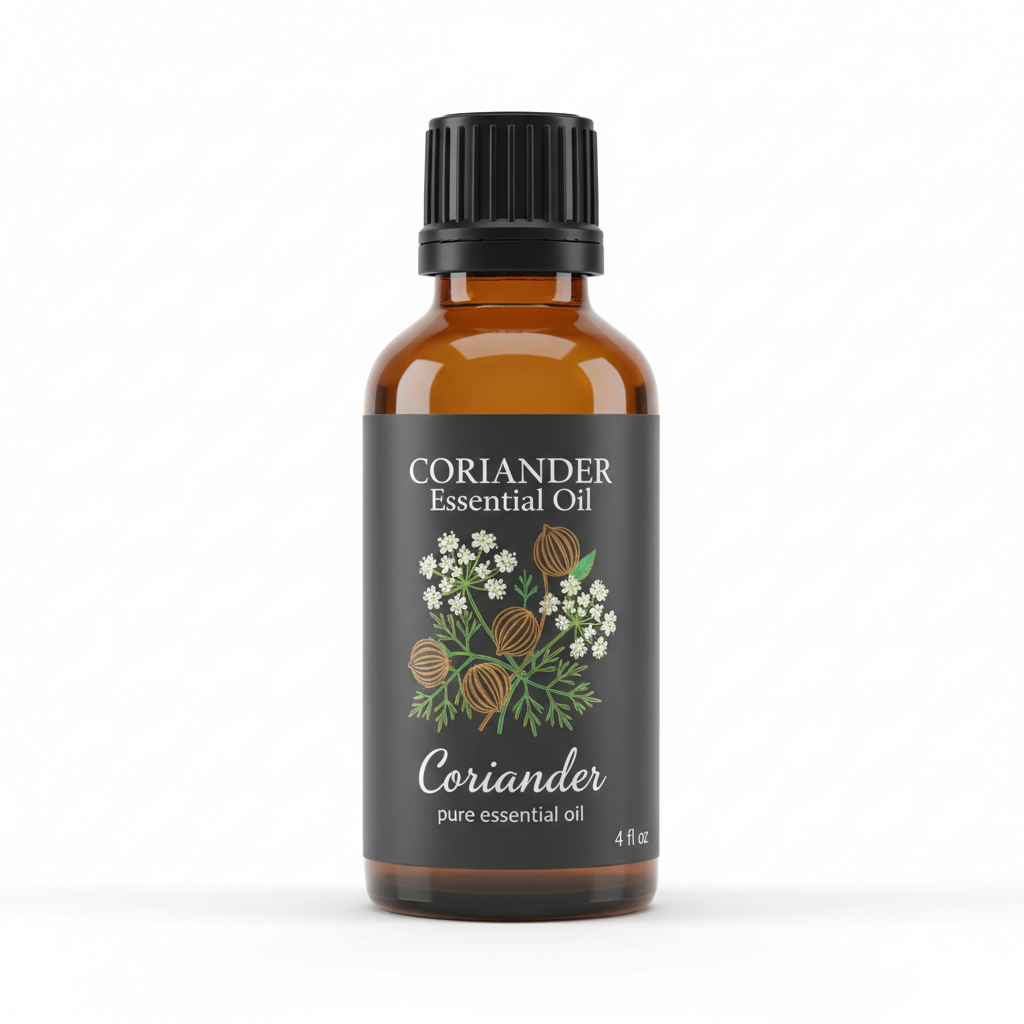
Coriander Essential Oil
Our own Coriander Essential Oil, in sizes from 0.5 oz to bulk.
From $12.99
Shop Now →What warm spice is made of
The European Food Safety Authority has assessed several spice oils with the same method, which makes a handy side-by-side. Coriander fruit oil is led by linalool, an alcohol with a smooth, lightly floral character, at a mean of about 72% across the batches reviewed (EFSA, 2023). Black pepper oil leans on a woody hydrocarbon, beta-caryophyllene (EFSA, 2022). Cardamom seed oil is built on terpineol acetate and 1,8-cineole, with a little linalool (EFSA, 2019). Sweet orange peel oil is almost entirely limonene (EFSA, 2021).
Put those side by side and a picture forms. Pepper brings a dry, woody edge. Orange brings bright citrus. Cardamom brings a cool, resinous sweetness. Coriander is the one that sits in the middle, with its warm, softly spicy, lightly floral aroma and a faint citrus peel note in the background. Reasoning from the chemistry, it is a blender's oil: it lifts and rounds the others instead of competing with them.
Lead with the right oil
That is why we would not pick coriander if what you want is punch. We describe ours as warm, woody and softly spicy with a rounded sweetness, and it is gentle enough that a light hand is all you need. For a fall diffuser blend, think of it as the supporting voice. Our blending guide goes through pairings, and our comparison with cardamom covers the nearest neighbour on the spice shelf.
A starting idea, worked out as arithmetic and not as a recipe we have tested: in a 5 ml amber bottle, combine 2 ml coriander, 2 ml sweet orange and 1 ml black pepper. At the rough convention of 20 drops per ml, that is about 40, 40 and 20 drops. Orange is nearly all limonene and speaks loudly, so if the blend leans too citrus, add coriander or pepper in small steps. We sell only the coriander; orange and pepper oils come from a supplier of essential oils, and each should be listed on the bottle's label.
Picture the season, then build the scent
The best blends start with a picture and not a formula. Maybe it is a kitchen with apples cooling on a rack, or a hallway with wet coats and a stack of firewood by the door. Hold that image and ask what it smells like: sweet, dry, woody, bright? Coriander is useful because it can nudge a blend in either direction. Add a touch more and the mix turns warmer and rounder, add less and the orange and pepper come forward.
Three moods to try on paper first
- Bright and sunny: more orange, a little coriander, a hint of pepper.
- Warm and rounded: coriander in the lead, orange in support.
- Dry and woody: pepper and cypress with coriander smoothing the corners.
Put a drop of each oil on separate paper strips, hold them together in a fan and sniff. It costs next to nothing and tells you more than any list of ratios, because the combination you like is the right one.
Little touches that make a season
Scent works best when the rest of the room agrees with it. A pot of tea, a lit lamp instead of the overhead light, a blanket on the arm of the sofa: these small things turn a diffuser blend from a smell into a mood. Start the diffuser a few minutes before guests arrive so that the room already feels warm when they step inside, and keep the amount light so the scent is a pleasant discovery and not the first thing they say.
Keeping a blend fresh
Linalool and limonene both react with air over time, and the oxidised forms are known contact allergens. In a Danish clinic series of 6,719 patch-tested patients, 3.1% reacted to oxidised linalool and 1.6% to oxidised limonene (Botvid et al., 2026). Those are dermatitis patients, so the numbers do not describe the general public, but they point to a simple habit: mix small stock amounts, cap the bottle tightly, keep it cool and dark, and let a half-empty blend go after a few months. Our storage article has the details.
When you diffuse, keep it light. The Tisserand Institute suggests that barely perceptible diffusion is fine for several hours, while stronger diffusion is better in intermittent sessions of 30 to 60 minutes, with the room aired afterward and other people and pets in mind (Tisserand Institute).
Let the blend rest
Once you have mixed a stock, give it a day before you judge it. Oils that seem to jostle for attention in the first minutes often settle into a single, softer scent overnight. Smell it fresh the next day, and change one thing at a time so you know which tweak made the difference. Label the bottle with the date and the ratio so a favourite can be made again.
Build the blend around what you love about the season, and let the coriander do its quiet work of tying it together.
Coriander Essential Oil
Coriander Essential Oil from our own shop, in sizes from 0.5 oz to bulk.
From $12.99
Shop Now →