Coriander vs Peppermint Oil: What Each Is Really For
Peppermint oil has a research record behind it for digestive comfort, and coriander seed oil does not, but the comparison is less one-sided than it sounds. What the peppermint studies looked at was a coated capsule swallowed by adults, and that is a very different thing from a bottle of aromatic oil. Ours is an external cosmetic and aroma oil, not labelled for internal use, so we cannot offer it as an answer for digestion, and we would rather say so up front.
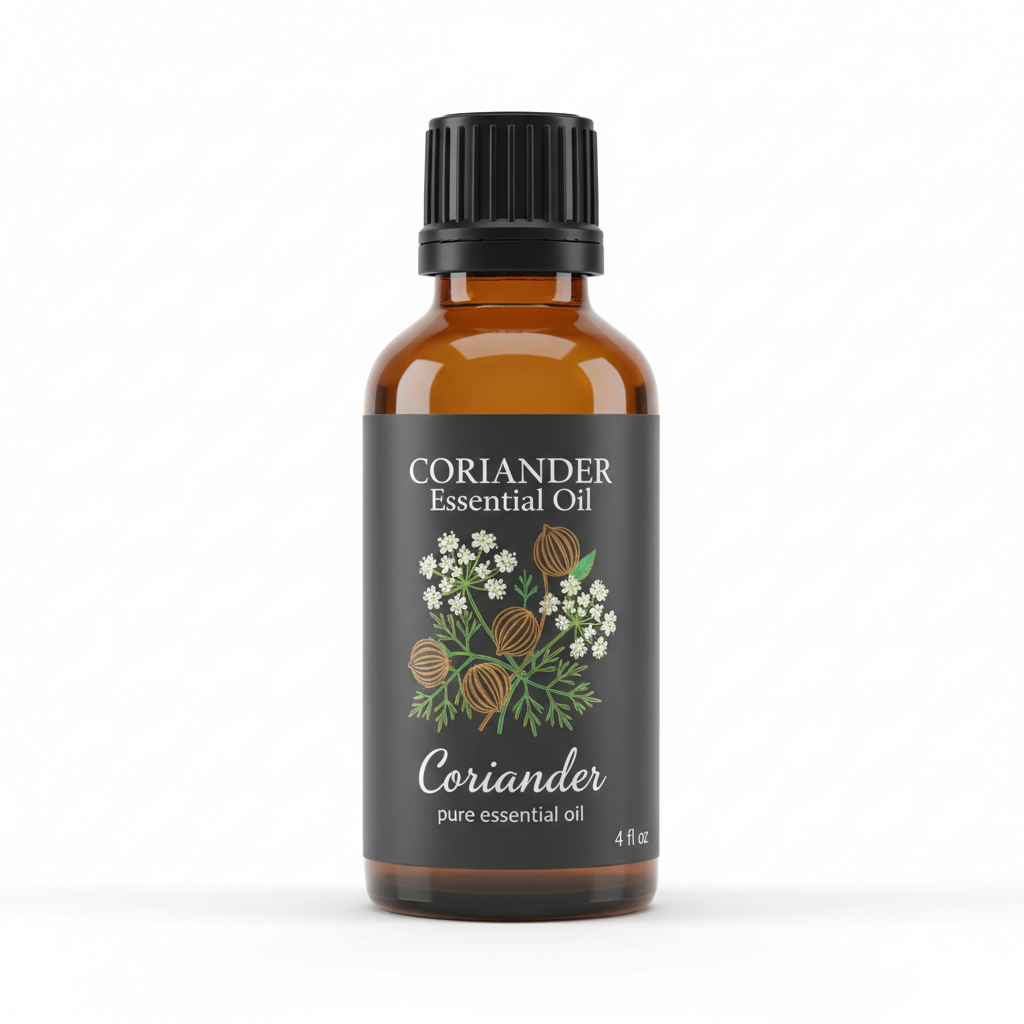
Coriander Essential Oil
Our own Coriander Essential Oil, in sizes from 0.5 oz to bulk.
From $12.99
Shop Now →What the peppermint research actually studied
A 2019 meta-analysis pooled 12 randomized trials with 835 adults who had irritable bowel syndrome. Enteric-coated peppermint oil capsules did better than placebo for global symptoms and abdominal pain, with no significant difference in side effects. A 2022 review of 10 trials and 1,030 people agreed on the benefit but found more side effects with peppermint and graded the overall evidence quality as very low. We would read both and not crown either.
The detail that matters most for a reader browsing aromatic oils is the format. The US National Center for Complementary and Integrative Health notes that these capsules are often enteric-coated to reduce heartburn, and that peppermint oil taken by mouth can cause heartburn, nausea, abdominal pain and dry mouth. It also advises against putting peppermint oil on the face of infants or young children because of the menthol. Someone who pours essential oil into a drink on the strength of a capsule trial is not using what was tested.
A different kind of bottle
It helps to picture what a capsule product is: a measured, labelled, coated dose made for swallowing, produced under a very different set of rules from a bottle of aromatic oil. An aroma oil is made to be smelled and diluted, and the cap, the dropper and the label all point toward that use. Taking a research finding about one and applying it to the other is a bit like reading about a medicine and then trying to use the box of spices from the kitchen shelf.
That is not a criticism of anyone who is curious. It is simply a reminder that the form of a product matters as much as the plant it comes from.
What there is for coriander
Coriander is the quieter case. We did not find trials of coriander seed essential oil, by inhalation, on skin or any other route, for digestive symptoms, and a reader should not assume a mechanism seen with a swallowed capsule carries over to a diffuser. A 2025 review of coriander's chemistry and pharmacology catalogs a long list of reported activities, but those are reports of laboratory and traditional findings, not a recommendation to use the oil.
Where our oil fits
Think about what you actually want from the bottle on your shelf. If the answer is fragrance, we are happy to help. Warm, softly spicy and lightly floral is how we would describe our oil, and it is at its best when you treat it as a scent and nothing more.
Here is what we are happy to talk about. Coriander seed oil is warm, woody and softly spicy, with a rounded sweetness and a light floral edge, and it is lovely in a diluted body oil or a scented blend. We recommend 0.5% to 2% in a carrier, roughly 3 to 12 drops per ounce, with a patch test first, and we keep it away from eyes, children and pets. It is not for internal use, and we suggest nobody swallows any essential oil. Our ingestion article explains why.
If you are curious about coriander's long history in kitchens and herbal traditions, our piece on coriander and digestion follows that story, and the benefits article shows what research on the plant covers. For persistent cramps, bloating or changes in bowel habits, a physician is the right first stop, and a pharmacist or gastroenterologist can talk you through peppermint capsules, age limits and interactions. We sell no peppermint, and aroma is not part of that conversation.
Enjoying each for its own character
Peppermint and coriander are almost opposites on the nose. Peppermint is cool, bright and immediate. Coriander is warm, rounded and slow. If you like having a few oils to choose from depending on the day, they make a charming pair of contrasts, and you can learn a lot about your own preferences by switching between them.
Whenever you open a bottle, make a habit of reading the label first. Check the plant, the part used, the intended use and any cautions. That habit protects you far more than any single piece of research, and it works on every bottle you will ever own. Keep the bottles out of reach of children and pets, close the caps, and enjoy the scent for what it is.
A good question to ask yourself
Before you buy any aromatic oil, finish this sentence: "I want it for the way it smells in..." and name the place. A diffuser, a body oil, a candle, a drawer of linens. If you can finish the sentence, you are shopping for the right reason. If you find yourself finishing it with a health outcome, that is the moment to pause and talk to a professional instead of a bottle.
So, peppermint has a research record for one oral product, coriander seed oil has a lovely scent, and each is best enjoyed for what it actually is.
Coriander Essential Oil
Coriander Essential Oil from our own shop, in sizes from 0.5 oz to bulk.
From $12.99
Shop Now →Sources & Further Reading
- Alammar N et al., 2019. The impact of peppermint oil on the irritable bowel syndrome: a meta-analysis of the pooled clinical data. BMC Complement Altern Med. pubmed/30654773
- Ingrosso MR et al., 2022. Systematic review and meta-analysis: efficacy of peppermint oil in irritable bowel syndrome. Aliment Pharmacol Ther. pubmed/35942669
- NCCIH, 2025. Peppermint oil. nccih.nih.gov/health/peppermint-oil
- Chaurasia PK, Bharati SL, 2025. Coriander: a holistic outlook on its chemistry and pharmacology. Food Chem. pubmed/39719783