Coriander Seed Oil vs Leaf Oil: Why They Smell Apart
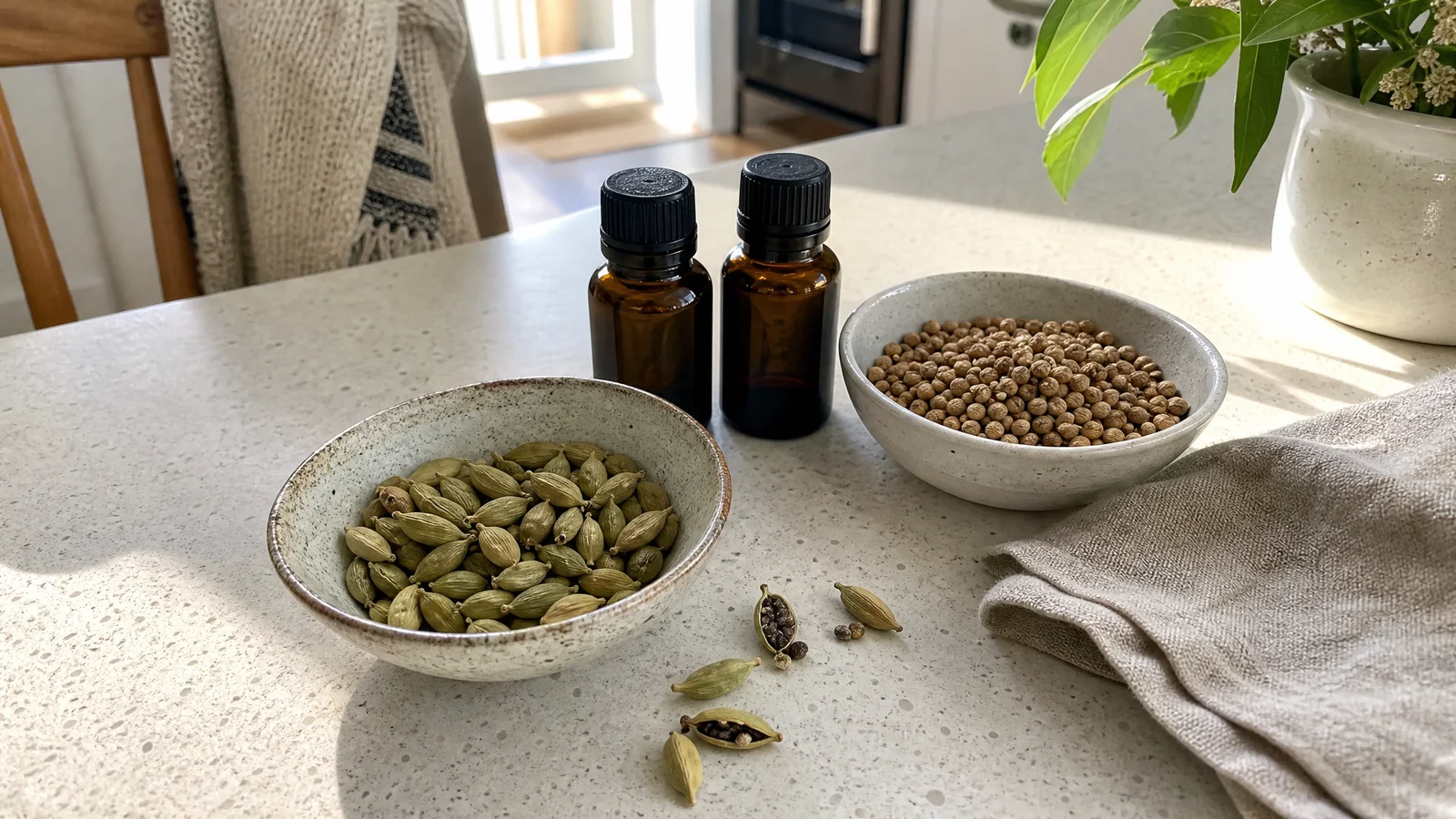
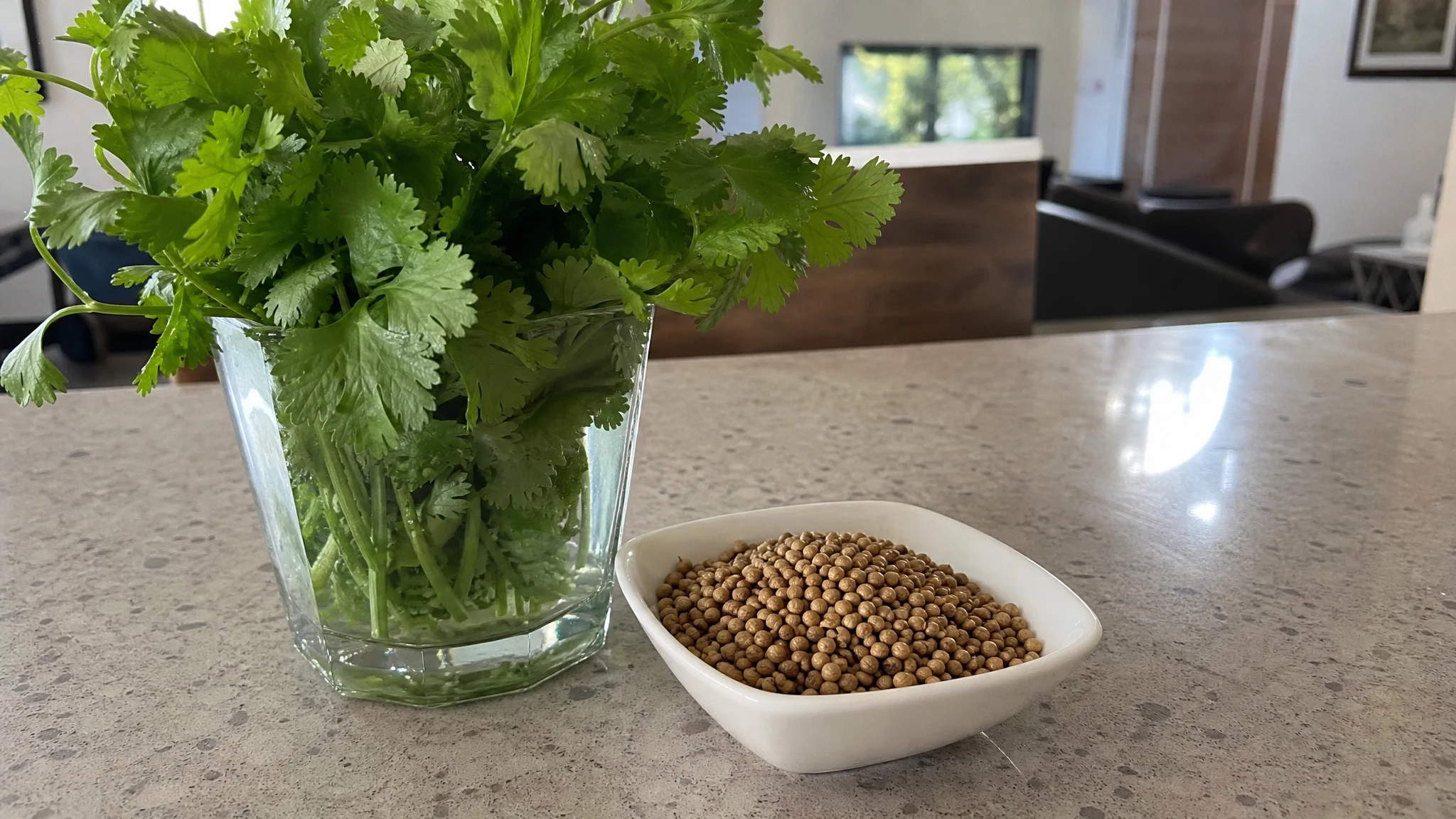
Anyone who has crushed a fresh cilantro leaf and then a coriander seed knows they hardly smell like they come from the same plant. The leaf is sharp, green and soapy to some noses. The seed is warm, rounded and a little sweet. The surprise is that it really is one plant, Coriandrum sativum, and the difference starts at the molecular level.
Coriander Essential Oil
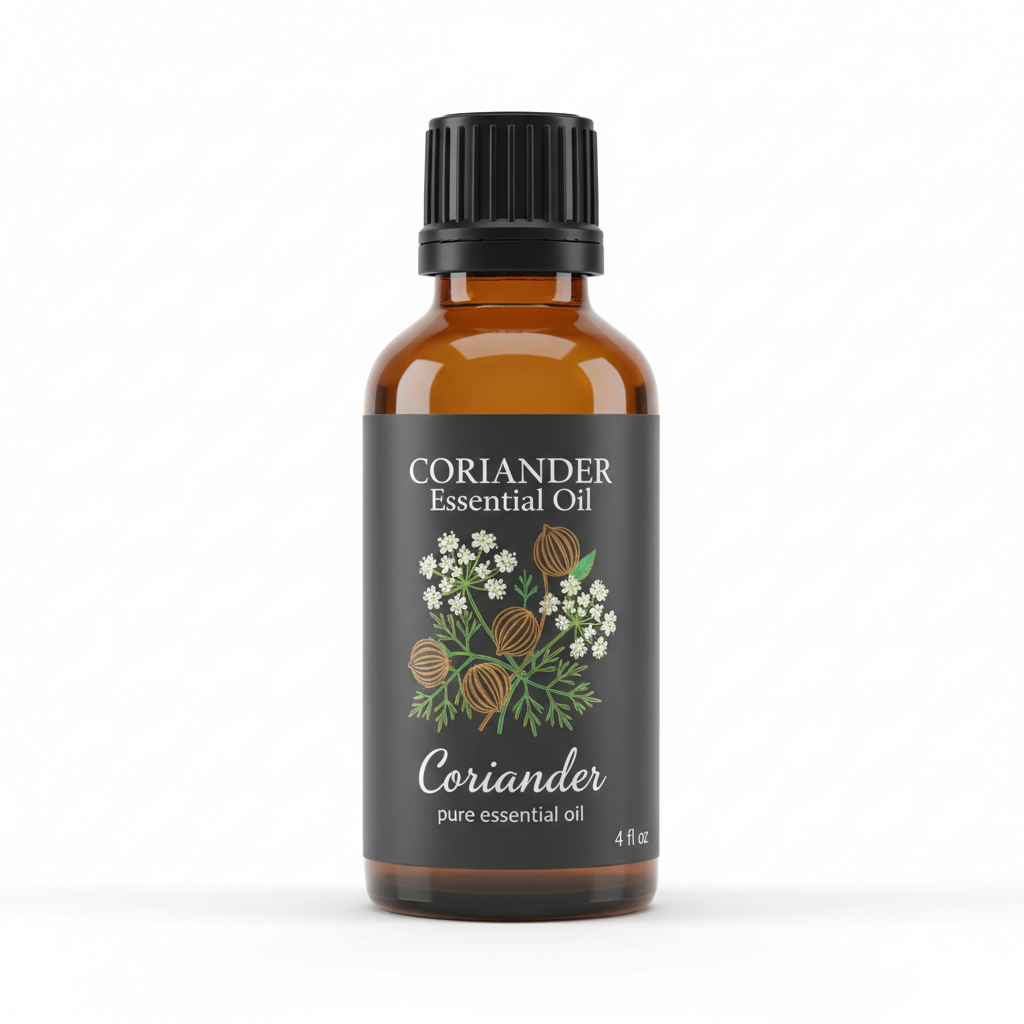
Our own Coriander Essential Oil, in sizes from 0.5 oz to bulk.
From $12.99
Shop Now →Same species, different chemistry
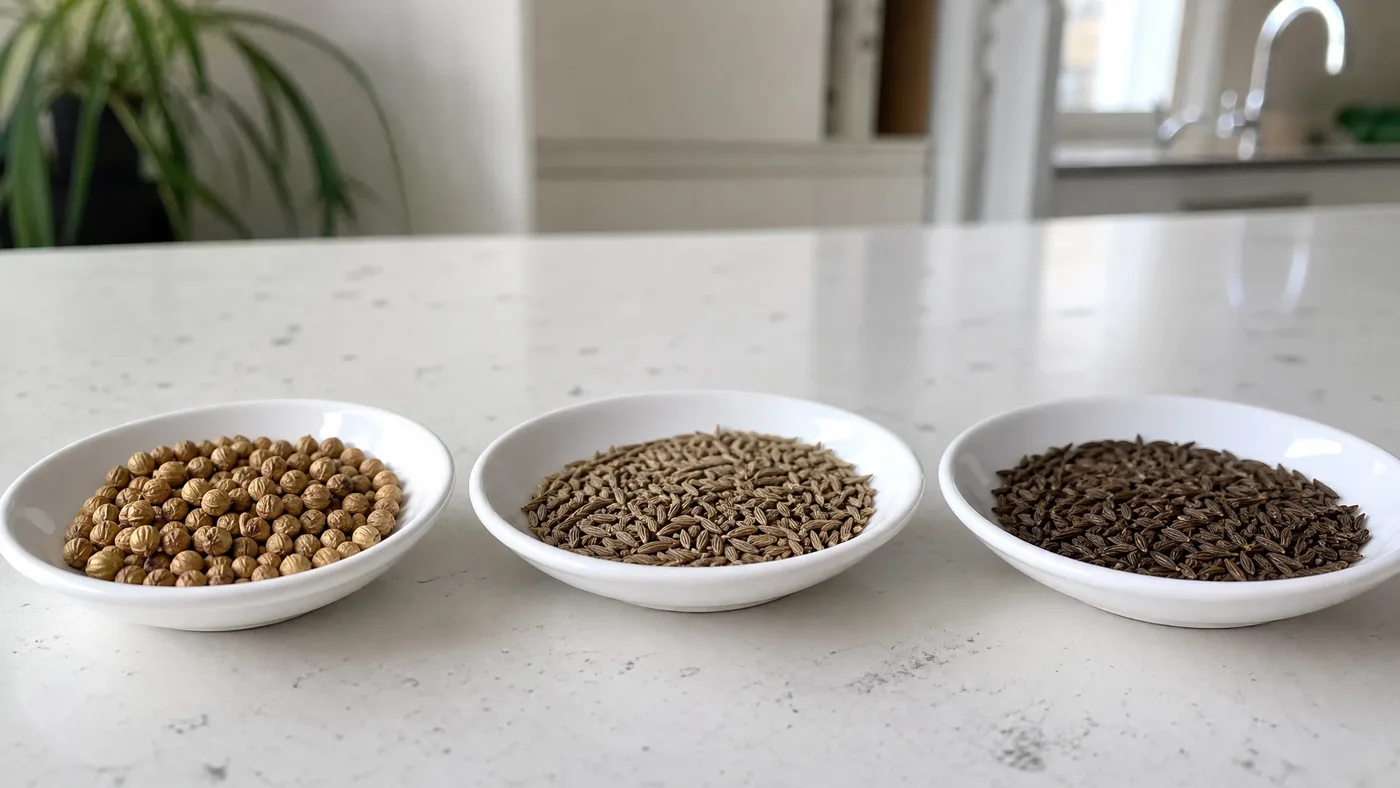
We like starting with this because you can try it at home for almost nothing. Next time you are at the grocery store, crush a coriander seed from the spice aisle and then rub a fresh cilantro leaf between your fingers. Close your eyes and notice how much further apart they are than you expected. One is sunny and a bit sweet, the other is bright, green and sharp.
When researchers in Portugal distilled the fruits and the green aerial parts of 11 coriander samples, the two oils barely overlapped. Fruit oils were led by linalool, at 60% to 73%, with gamma-terpinene and alpha-pinene behind it. Oils from the green parts were led by two long-chain aldehydes, 2-trans-decenal and n-decanal. A second Portuguese study found the same pattern, and showed the green-part profile shifting as the plant developed. Linalool is an alcohol, while decanal and decenal are ten-carbon aldehydes, different families of molecule, so it is no surprise the two oils do not smell alike.
Names add to the confusion. EFSA's opinion on coriander oil notes that, in the regulatory sense, "coriander" refers to the dried fruit we call the seed, while the leafy parts are called cilantro or Chinese parsley. In everyday trade, though, a bottle marked only "coriander oil" can mean either, so it helps to read for the plant part.
What our seed oil smells like
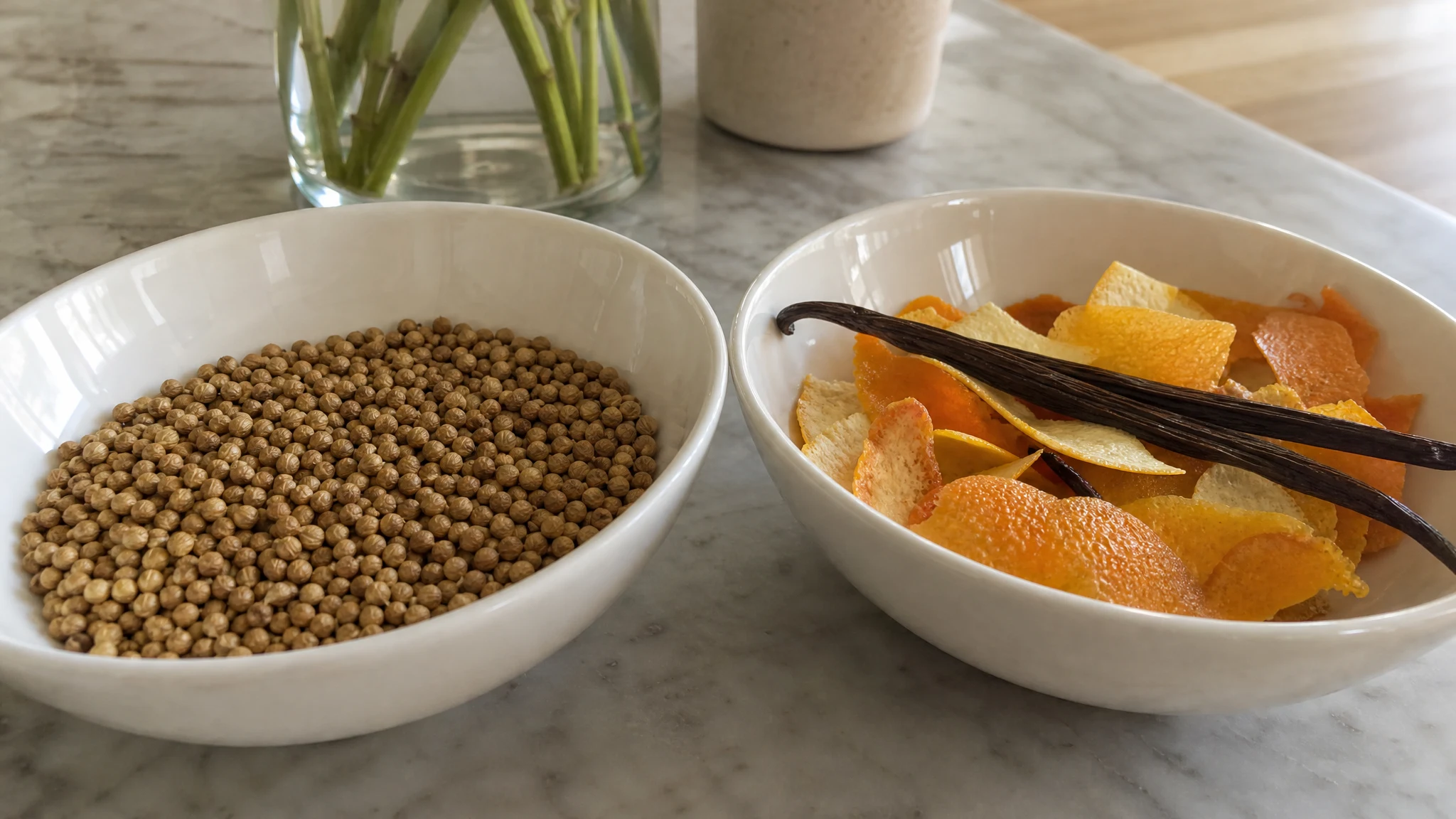
We describe ours as warm, woody and softly spicy, with a rounded sweetness, a light floral edge and a faint background of citrus peel and fresh bread spice. It is easy to tell apart from the leaf oil by nose. If you are hoping for the smell of fresh coriander leaf, this is not it, and we would rather you know that before you order. What you get instead is the quieter, more perfumery-friendly side of the plant: a middle note that sits comfortably with bergamot, black pepper, cypress, jasmine and lavender.
We sell only the seed oil. If the soapy side of fresh cilantro is why you are curious, our piece on why coriander tastes like soap explains the genetics behind it.
A third thing called coriander oil
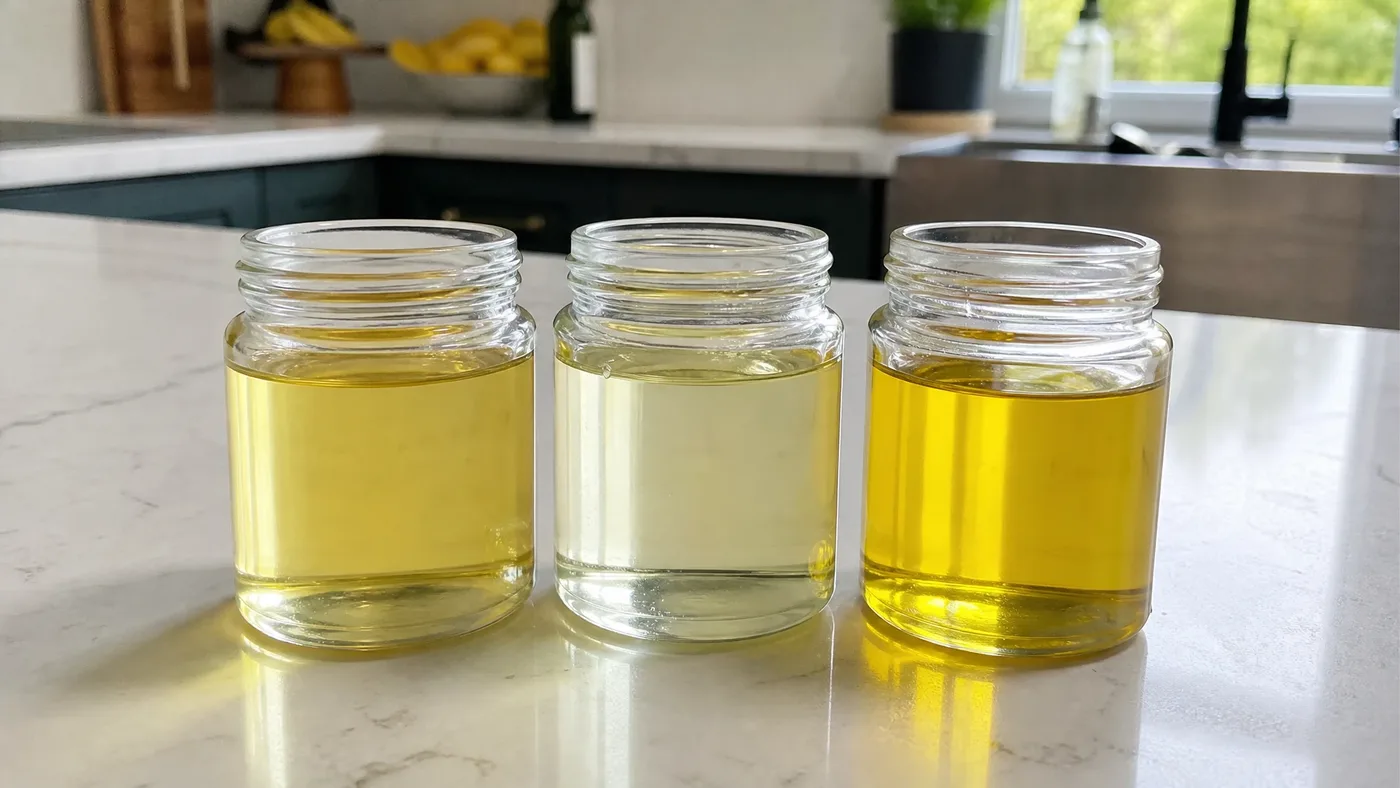
There is one more product to watch for. The seed also holds a fixed, fatty oil, and in a 119-genotype trial it outweighed the volatile oil many times over: 10% to 34% of the seed against 0.05% to 1.86%. Its main fatty acid is petroselinic acid. Steam distillation does not collect it, so it is a different material from the volatile oil we sell. When a listing says only "coriander seed oil," ask whether it is the aromatic oil or the fatty one.
Smelling the difference on a strip
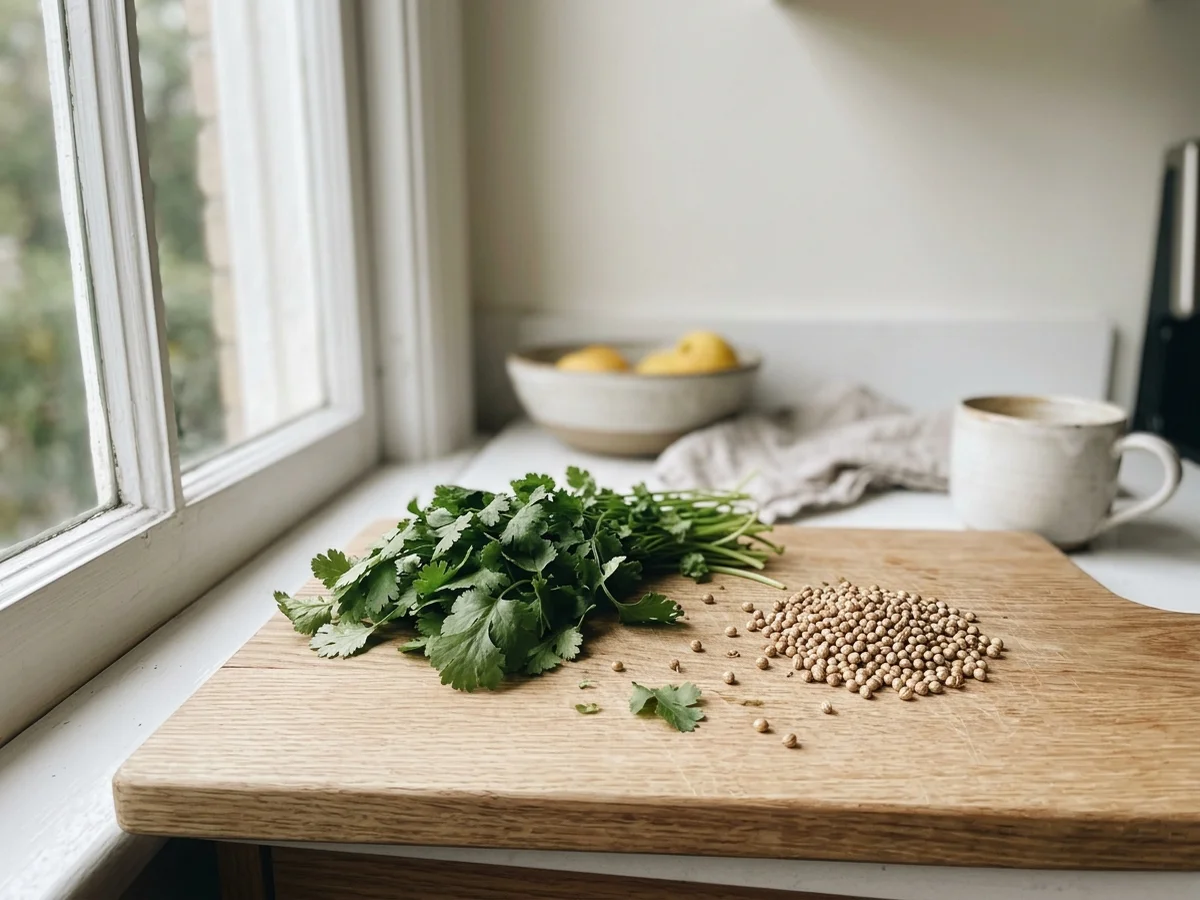
If you ever have the chance to sample both, use two separate paper strips and label each one. Hold the strip a little away from your nose, not right against it, and smell it once, then pause. Come back after a few minutes. The seed oil tends to settle into a rounded, warm note, and a green, herbal one tends to keep its sharpness. Write down a couple of words for each so you can recognise them again.
It also helps to clear your nose in between. Smelling your own sleeve or a cup of coffee beans is an old perfumers' trick, and it works for the rest of us as well.
How to tell what is in your bottle
- Read the plant part. "Seed" or "fruit" means seed oil, "herb," "leaf" or "cilantro" means the other, and plain "coriander" is a reason to ask.
- Smell it. Warm and spicy points to seed, sharp and fresh-green to leaf.
- Look at the top peaks on a GC report. Linalool leading is seed, decanal or decenal leading is leaf. The Tisserand Institute calls area percentages "a practical, commonly accepted approximation, but an approximation nonetheless," so read for the pattern rather than the decimals. Our GC/MS checklist walks through it.
Choosing by what you want to smell
The simplest way to decide is to ask what you want the room, the bottle or the blend to smell like. If the answer is "fresh herbs from the garden," the seed oil is not the one. If it is "a warm spice drawer with a floral note and a little citrus," then it is. We would never talk someone into the seed oil when what they are really after is the green side of the plant, and we would much rather you were happy with your purchase than surprised by it.
Why a swap changes the formula
A blend written around the leaf's aldehyde-led profile will not be reproduced by the seed oil's linalool-led one, and the reverse is just as true, so rebuild and re-smell rather than keeping the same percentage. The skin guidance differs too: our recommendation for the seed oil is 0.5% to 2% in a carrier with a patch test first, and EFSA classes the seed oil as a skin and respiratory sensitizer. We have no matching information for the leaf oil, so we would not assume it is milder.
If what you want is a cooking aroma, neither bottle is the answer, as our oil is not for internal use. The kitchen aroma article covers what carries over from the spice jar, and how the seed oil is made shows where our bottle comes from. If you need plant-part detail in writing for a product you are developing, write to us through the contact page before you order.
Same species, two very different oils, and the seed one is the warm, sweet-spiced side of the plant.
Coriander Essential Oil
Coriander Essential Oil from our own shop, in sizes from 0.5 oz to bulk.
From $12.99
Shop Now →Sources & Further Reading
- EFSA FEEDAP Panel, 2023. Essential oil obtained from the fruit of Coriandrum sativum L. pmc.ncbi.nlm.nih.gov/PMC10613936
- Machado AM et al., 2023. Chemical variability of the essential oils from two Portuguese Apiaceae. Plants. pubmed/37514362
- Póvoa O et al., 2024. Coriander from Alentejo (South Portugal): ethnobotany and potential industrial use. Foods. pubmed/38540919
- Basol A et al., 2024. Genetic diversity, agro-morphological and quality traits of coriander. Biology. pubmed/39596821
- St-Gelais A. The highs and lows of GC-MS in essential oil analysis. Tisserand Institute. tisserandinstitute.org/highs-lows-gc-ms