Coriander vs Cardamom Oil: How the Spices Differ
Coriander and cardamom both get filed under "warm spice," and on a perfumer's shelf they do sit close together. Open the chemistry, though, and they are built on different ideas: coriander on linalool, cardamom on an ester called terpineol acetate and a molecule called 1,8-cineole. Knowing that tells you which one a blend actually needs.
Coriander Essential Oil
Our own Coriander Essential Oil, in sizes from 0.5 oz to bulk.
From $12.99
Shop Now →Two spice oils, two lead molecules
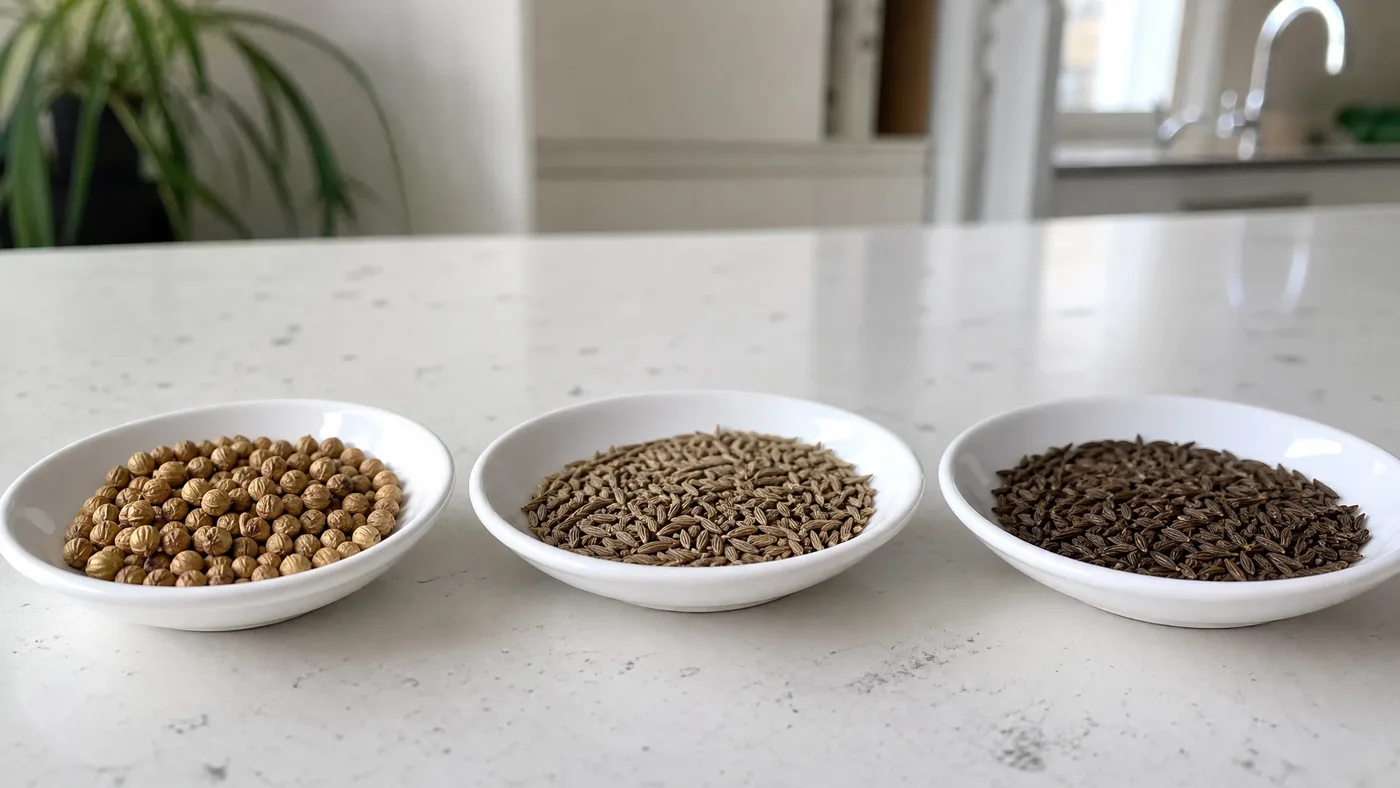
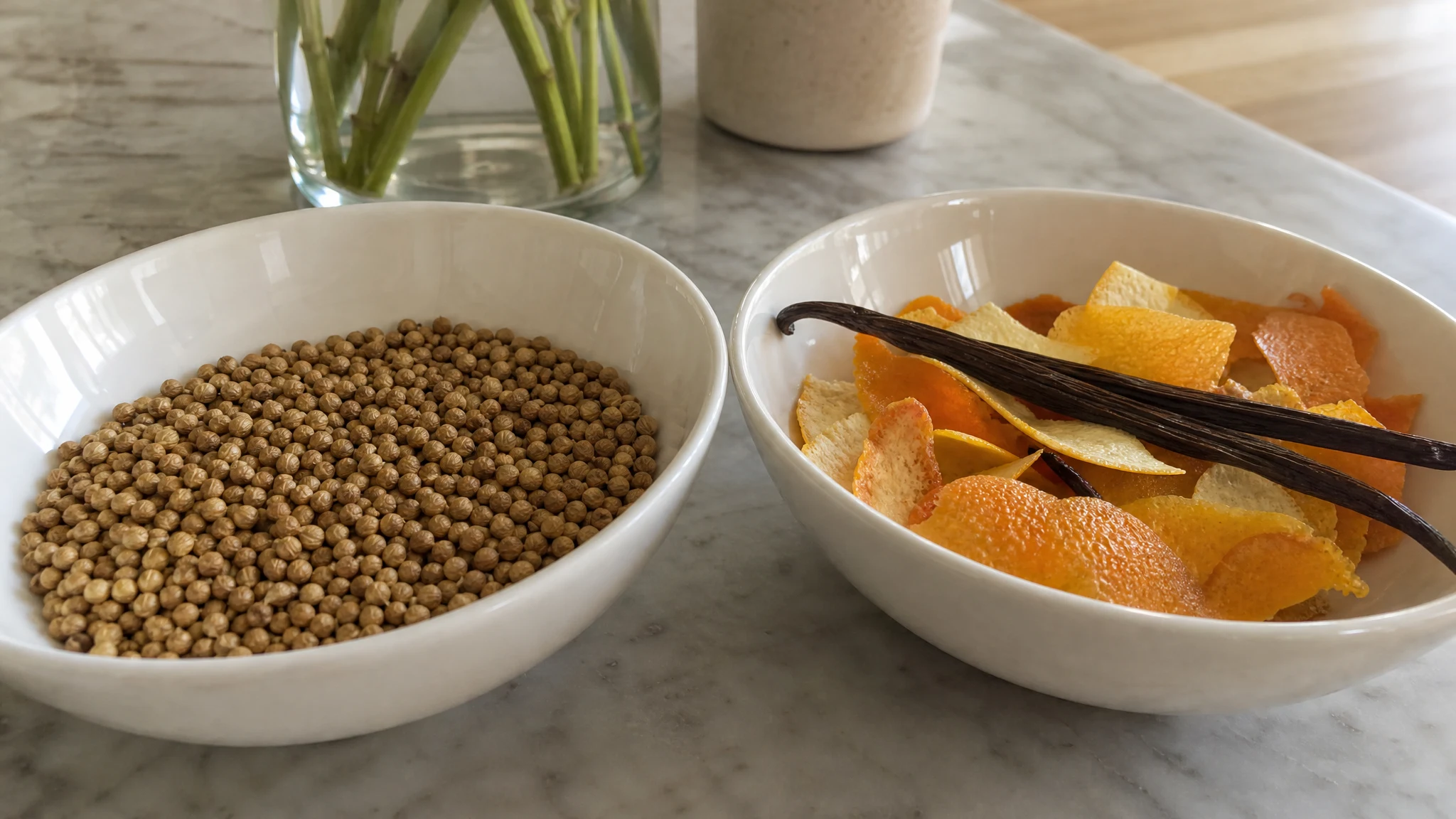
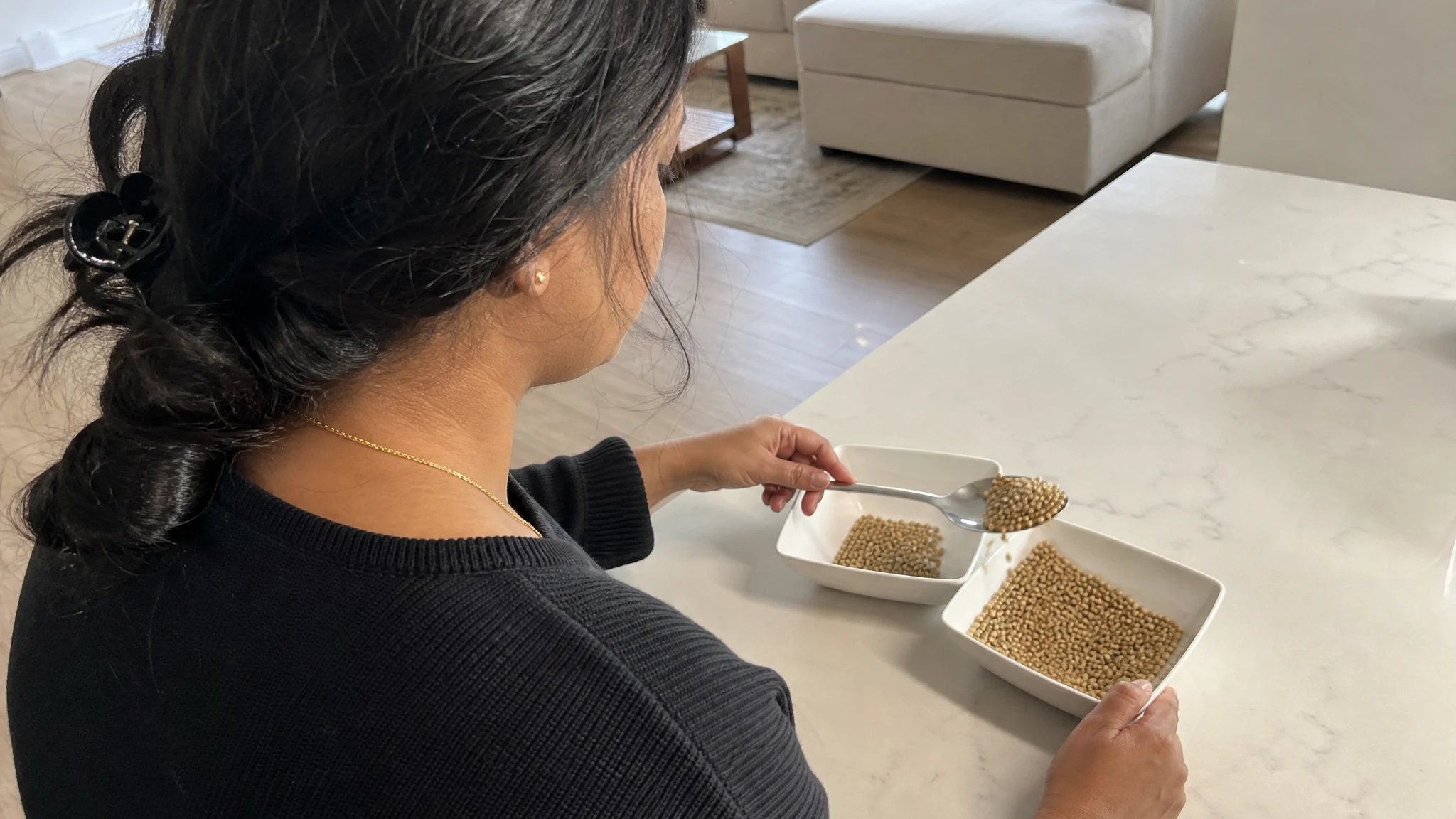
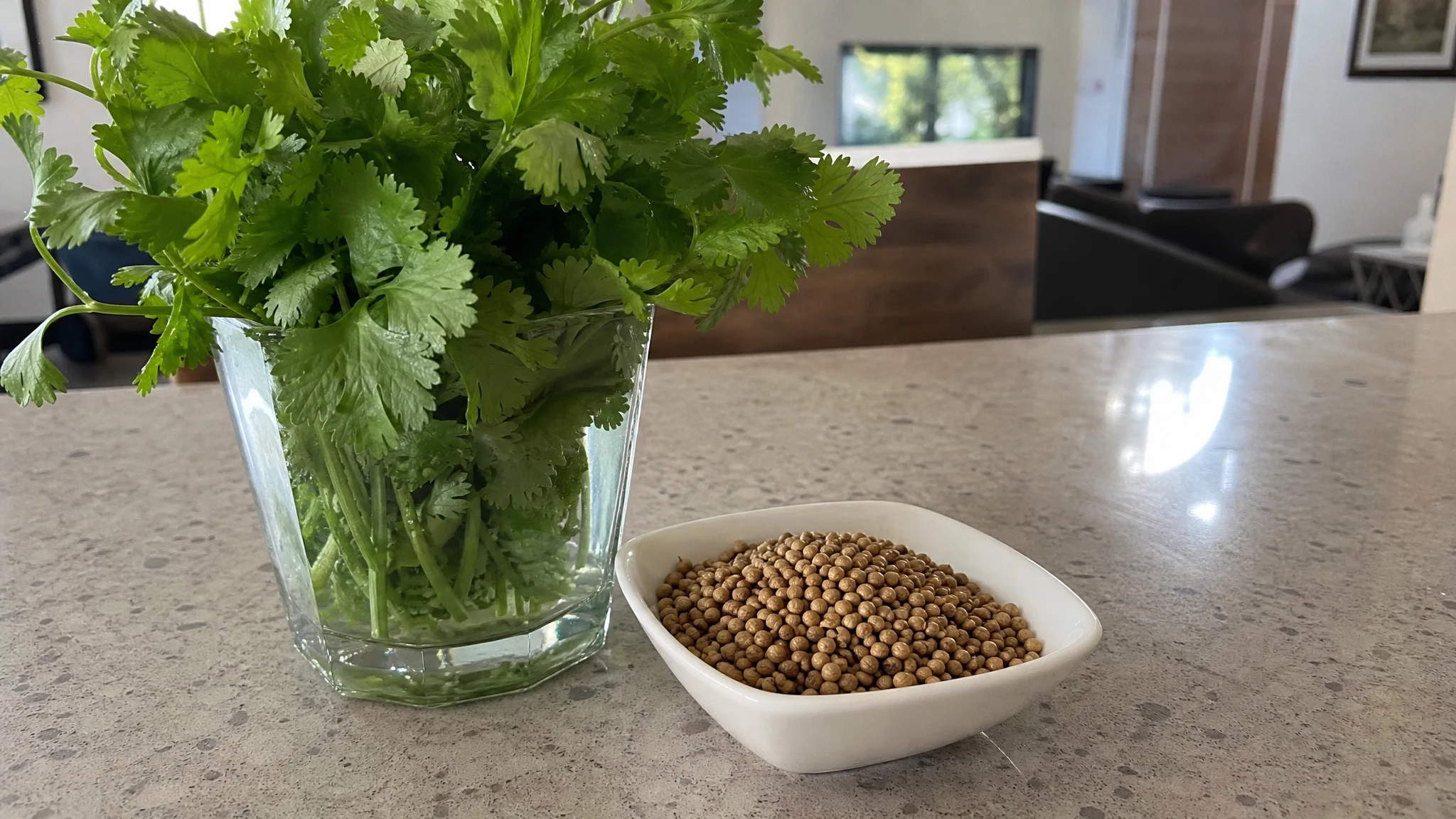
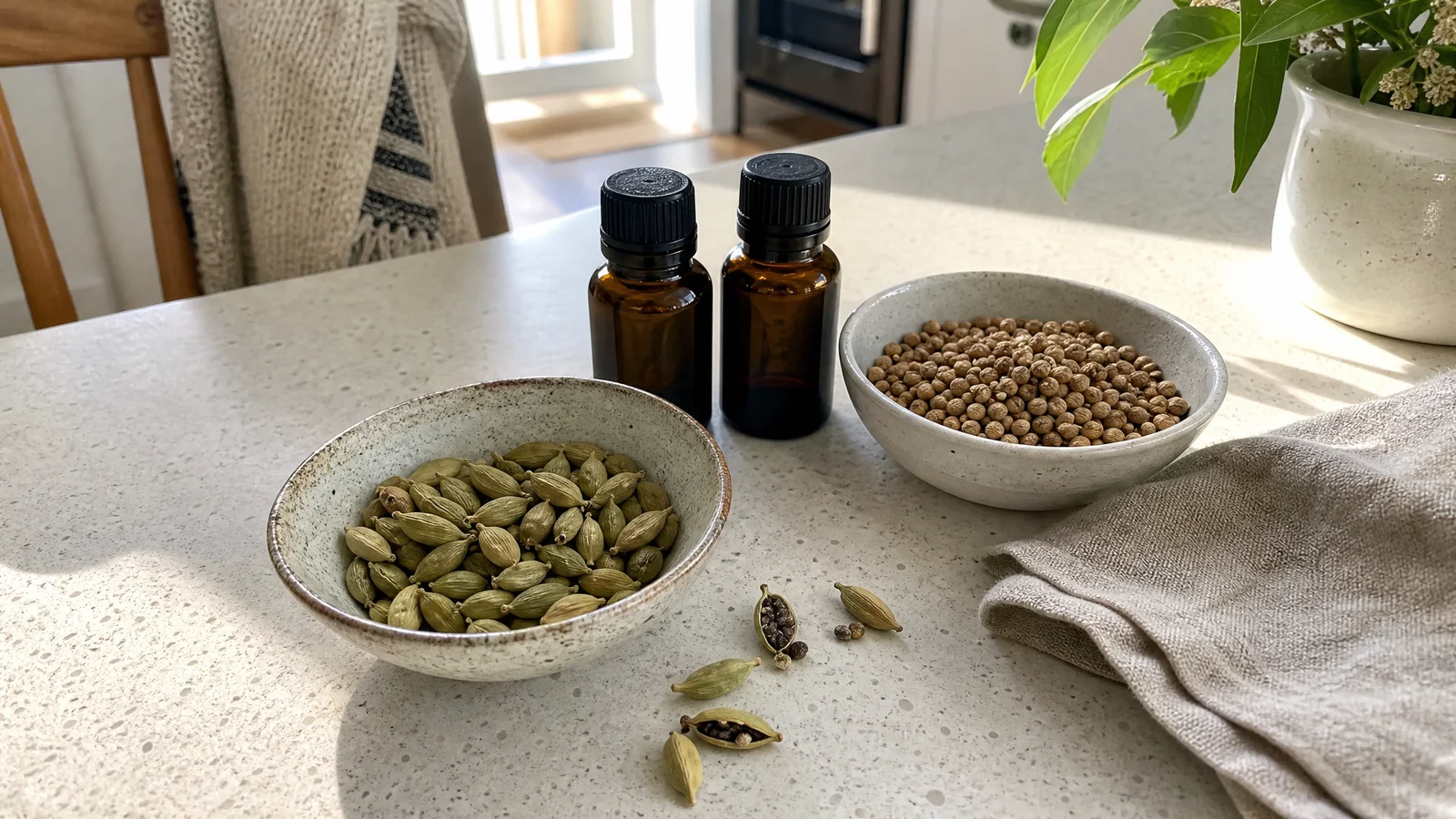
If you have both spices in your kitchen, try this before reading on. Crack a cardamom pod and crush a few coriander seeds, then smell them one after the other. Cardamom comes across cool and almost camphor-bright. Coriander is rounder, a little sweet, a little citrusy. You do not need a chemistry degree to feel the difference, and the oils follow the same pattern.
The coriander fruit oil assessed by European regulators in 2023 was specified at 65% to 78% linalool, with five batches averaging 71.7%. The same agency's cardamom opinion, covering steam-distilled Elettaria cardamomum seed oil, found terpineol acetate leading (about 35%), 1,8-cineole next (about 23%) and linalool at only about 4%. The agency's own odor wording tells the story: "characteristic and spicy" for coriander and "spicy (cineolic)" for cardamom.
The numbers are feed-additive submissions, meaning one producer's batches each, so treat them as a picture of the pattern rather than a retail spec. They also show how much real oils vary: a 2025 study of eight commercial cardamom samples found 1,8-cineole anywhere from 0.24% to 30.62%, and coriander seed oil from Iranian accessions ranged from roughly 41% to 80% linalool. A cardamom with almost no cineole and one with nearly a third will not smell alike, which is why a report for the exact lot beats the name on the label.
How each one behaves in a blend
We describe our coriander as warm, woody and softly spicy, with a rounded sweetness, a light floral edge and a hint of citrus peel. Linalool is also the lead molecule in lavender, so coriander tends to slip into florals and citrus without a sharp edge. That is our reasoning from the chemistry, and a perfumer's nose will be the real judge.

- You want spice that melts into florals and citrus: coriander seed oil. Our blending guide lists partners such as bergamot, black pepper, cypress, jasmine and sweet orange.
- You want a cooling, cineolic edge: that is cardamom's territory, and we do not carry it. Look for a seller whose report shows how much 1,8-cineole the lot holds.
- You want both: a perfumer's call, with the two used as distinct voices rather than as substitutes.
If you are tempted to swap one for the other because of stock or cost, the smell changes, so rebuild and re-smell rather than trading one for one. Our substitutes guide helps with that.
Picturing the two on a blotter
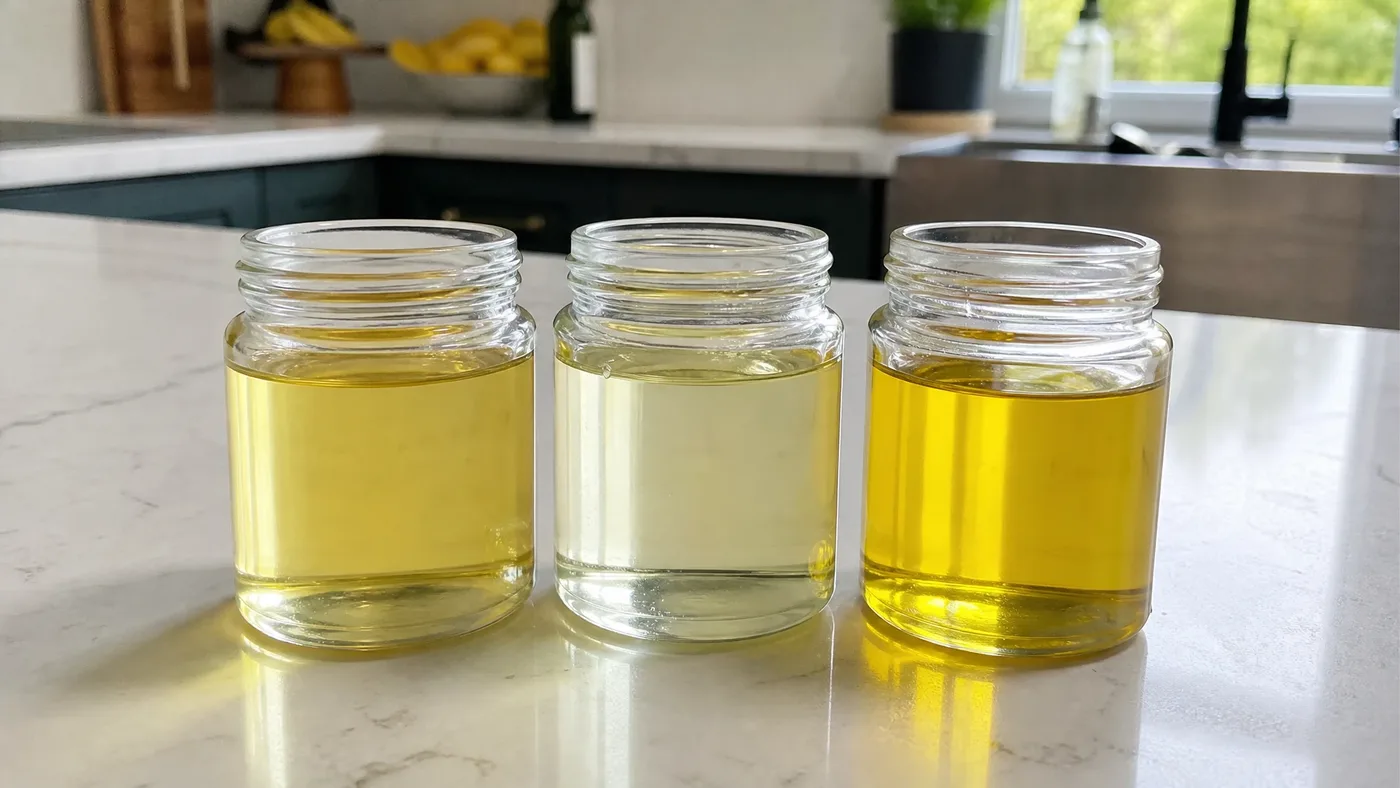
Imagine two paper strips, one dipped in each oil. Smell the coriander one and pay attention to how long it keeps its shape: it opens warm, then drifts toward a soft floral sweetness. A cineolic oil tends to announce itself up front and then fall away. This is not a measurement, only the kind of observation a nose can make in a few minutes, and your own impression is the one that matters.
If you have a favourite scent you are trying to rebuild, take that bottle along when you sample, so you have a fixed point of comparison. A third strip with your reference makes the other two much easier to judge.
Which would we pick for what
As a small business that sells one oil, we are happy to be plain about it. For a soft, sweet, spiced-citrus note that supports a floral heart, we would pick coriander. For a crisp opening with a cool edge, you will want to look elsewhere, and that is fine. A good blend usually wants a few different voices, and coriander is a very good supporting one.
Three questions for any seller
Percentages on a GC report depend on the detector. EFSA's coriander batches averaged 71.7% linalool by GC-FID but 58.72% by GC-MS, so a gap of 13 points can come from the method alone, and the Tisserand Institute notes that library matches can also be wrong. So ask which detector produced the numbers, whether the report is for the lot you will receive, and what plant part and species are on the label. Our GC/MS checklist shows how to read the answers.
Using them on skin
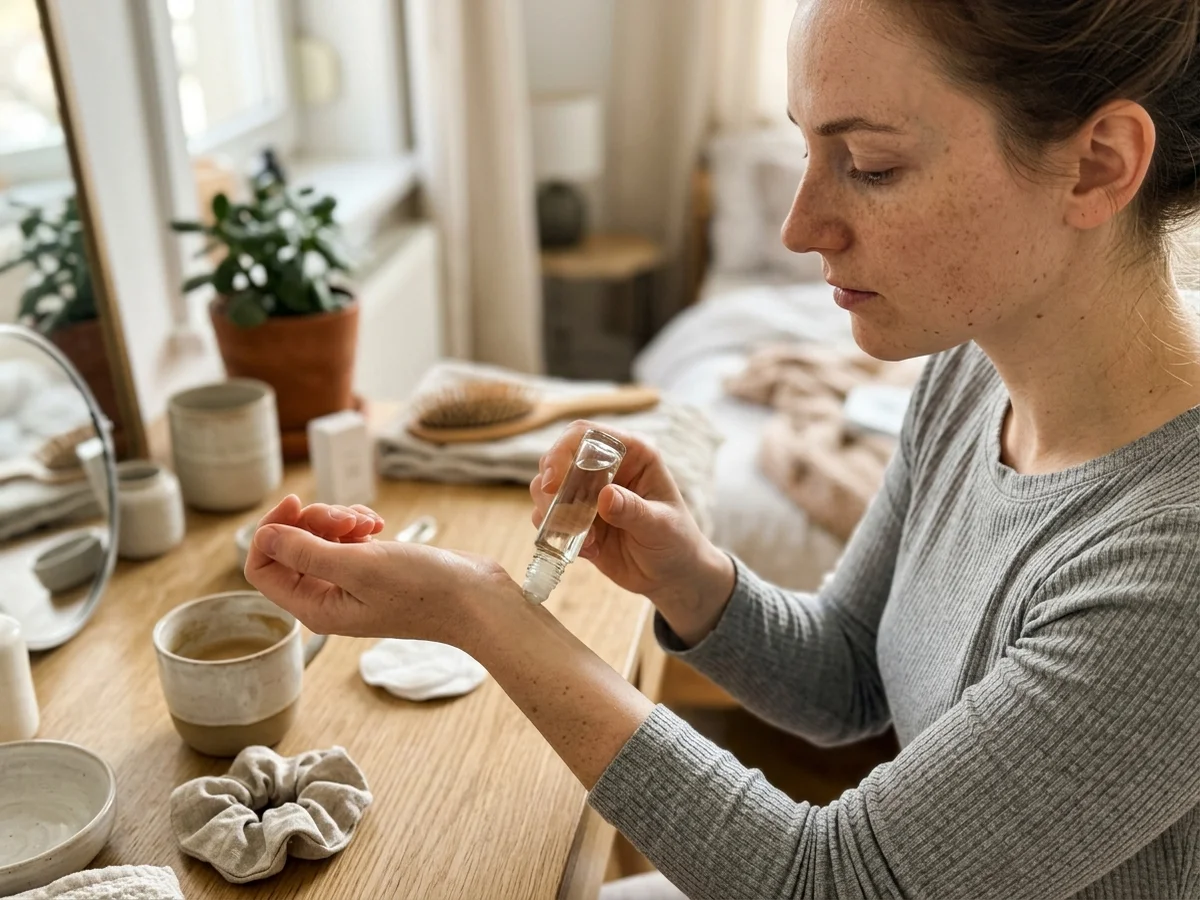
For coriander we recommend 0.5% to 2% in a carrier oil, about 3 to 12 drops per ounce, with a patch test first. If you blend two oils, count the total essential oil: 6 drops of each in an ounce of carrier is 12 drops, which uses the whole range. Cardamom has its own limits, and its safety assessment cited skin-irritation and allergic-reaction hazards on the supplier's data sheet and a methyleugenol cap of 0.0002% of the oil, so follow whatever your cardamom supplier gives you. Our pregnancy and kids articles say where a physician, midwife or pediatrician should take over.
Starting a blend with either one
Whichever oil you start with, build slowly. Use a clean strip for each addition, keep a notebook beside you, and change one thing at a time. Blends often smell different an hour later than they do right away, so leave your strips on the bench and come back to them after lunch. If something surprises you, write it down. Those small notes become your own reference library over time.
Both are lovely, and they are lovely for different reasons: if the spice you want is round, floral-edged and linalool-led, that is the oil we sell.
Coriander Essential Oil
Coriander Essential Oil from our own shop, in sizes from 0.5 oz to bulk.
From $12.99
Shop Now →Sources & Further Reading
- EFSA FEEDAP Panel, 2023. Essential oil obtained from the fruit of Coriandrum sativum L. pmc.ncbi.nlm.nih.gov/PMC10613936
- EFSA FEEDAP Panel, 2019. Essential oil from Elettaria cardamomum (L.) Maton as a sensory additive in feed. pmc.ncbi.nlm.nih.gov/PMC7009127
- Blažeković B et al., 2025. Content and chemical composition of essential oil from cardamom. Croat Chem Acta 98(3). hrcak.srce.hr/334813
- Nejad Ebrahimi S et al., 2010. Essential oil compositions of different accessions of Coriandrum sativum L. from Iran. Nat Prod Res. pubmed/20803372
- St-Gelais A. The highs and lows of GC-MS in essential oil analysis. Tisserand Institute. tisserandinstitute.org/highs-lows-gc-ms