Coriander vs Cumin vs Caraway Oil: What Sets Them Apart
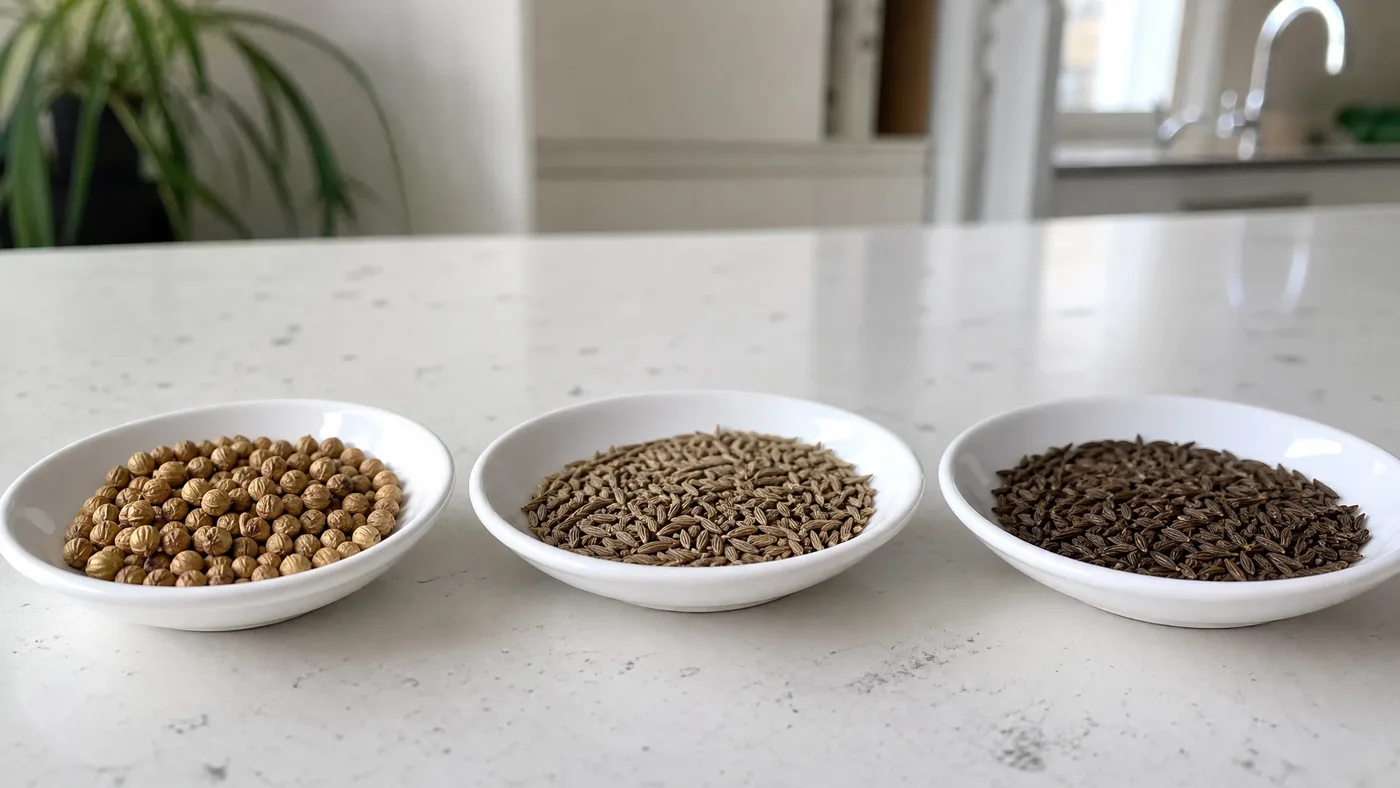
Coriander, cumin and caraway seeds live side by side in the spice drawer, all from the same plant family, so it is natural to assume their oils are close cousins. Put them under a gas chromatograph and each one turns out to be led by a different kind of molecule. We sell the coriander, so here is a friendly tour of the other two and why they are not stand-ins for each other.
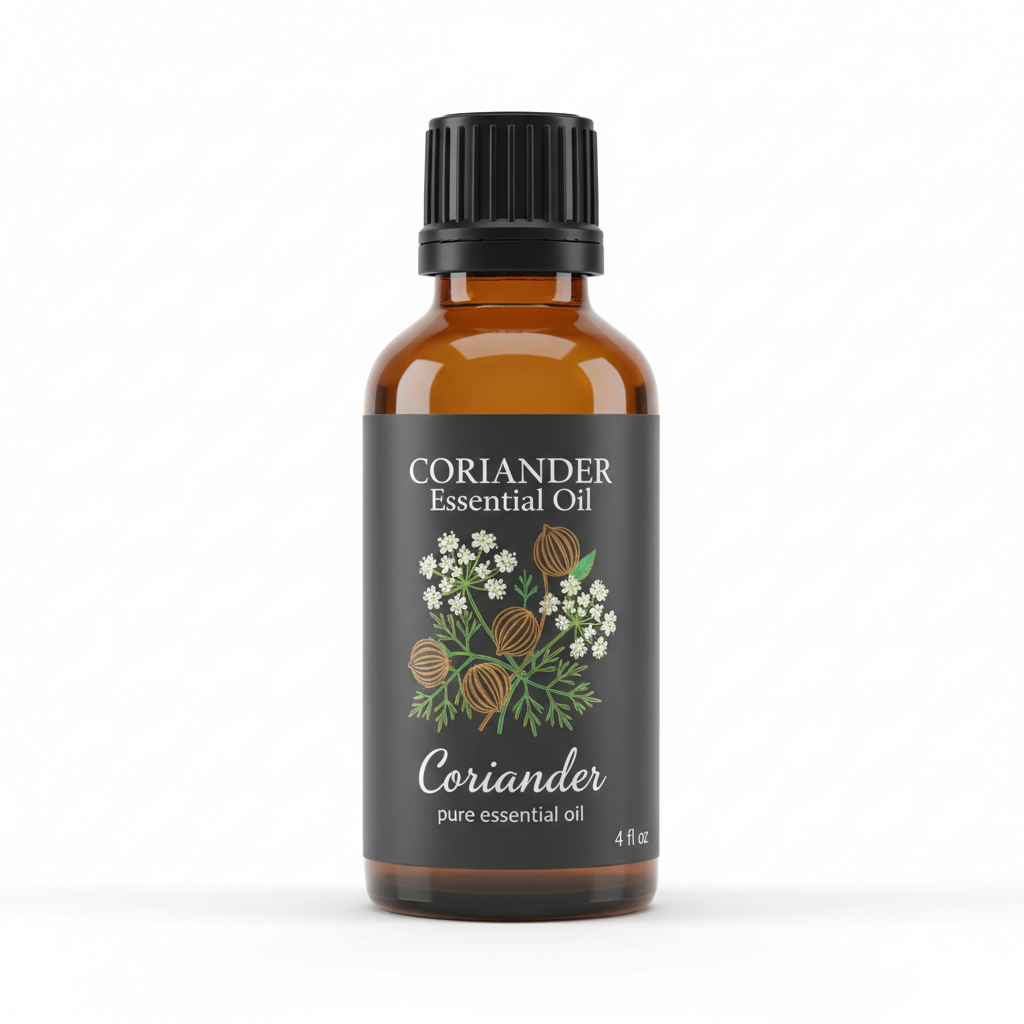
Coriander Essential Oil
Our own Coriander Essential Oil, in sizes from 0.5 oz to bulk.
From $12.99
Shop Now →Three seeds, three lead molecules
Coriander seed oil is built around linalool, an alcohol, and in dried Iranian seed accessions it made up anywhere from about 41% to 80% of the oil. Cumin fruit oil, in the European Food Safety Authority's 2022 assessment, was led by cuminaldehyde at an average of 32.3%, with gamma-terpinene, p-cymene and beta-pinene behind it. Caraway is led by two compounds at once, carvone and limonene, and the balance between them is anything but fixed. One Romanian oil had 48.5% carvone and 44.4% limonene.
That variability is the most interesting part. In a study that collected caraway oil in eight slices during a single distillation, limonene fell from 77% in the first fraction to 19% in the last while carvone climbed from 20% to 79%. Limonene comes over first and carvone later, so when a distiller stops the still changes what ends up in the bottle. Two bottles labelled "caraway" can be quite different oils. Coriander moves too, which is why we point you to a batch's paperwork rather than a generic profile.
Because coriander's lead is an alcohol, it keeps company with lavender more than with its spice-shelf cousins. Our lavender comparison takes that up, and our linalool article follows the molecule itself.
Smell them side by side
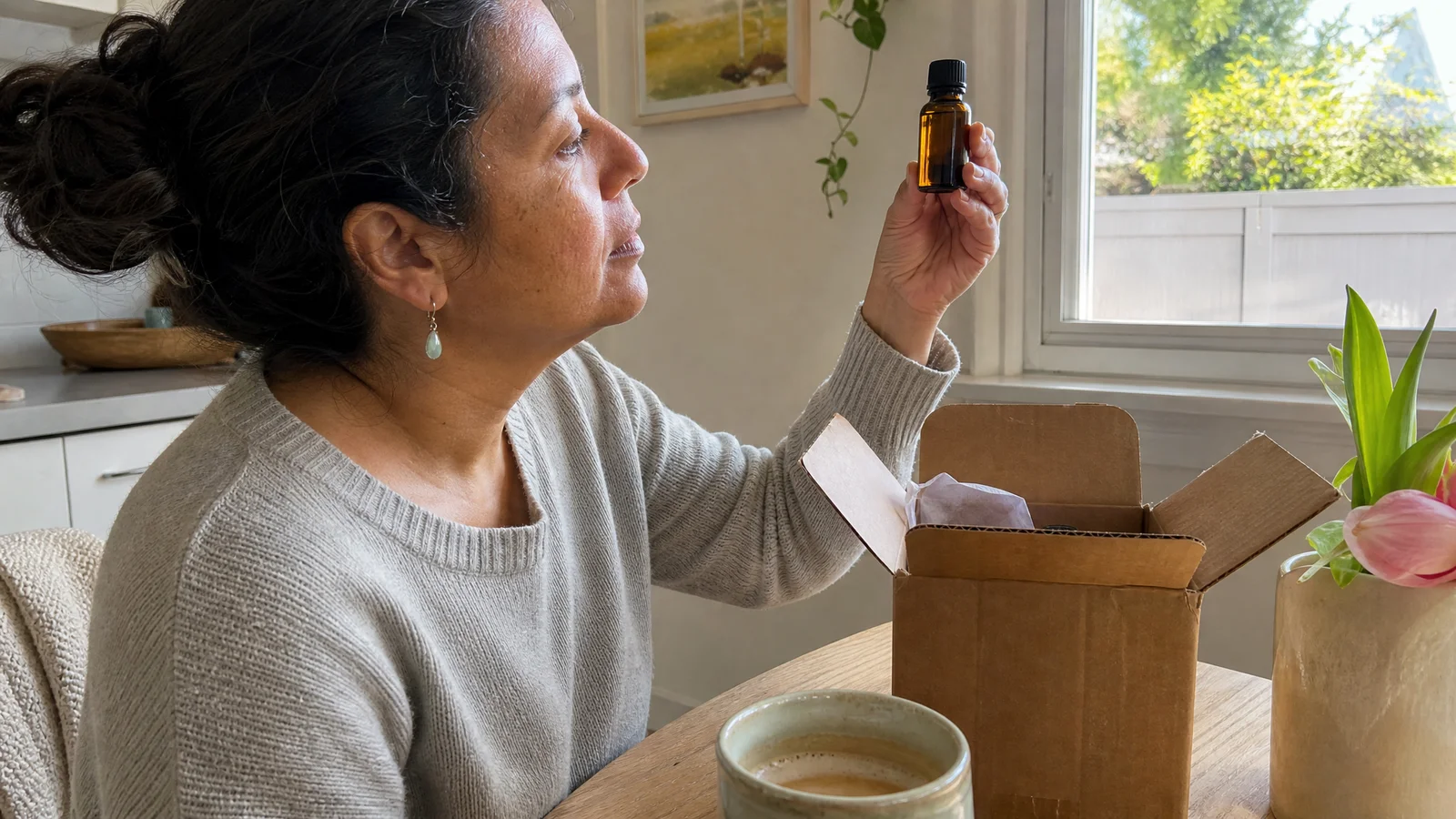
If you ever get to sniff the three together on paper strips, the difference is striking. Coriander is the rounded, sweet one with a floral edge. Cumin is earthy and savoury, the kind of smell that makes you think of a hot pan. Caraway is bright and minty-sweet, a little like the seeds on a loaf of rye. They live in the same drawer, yet each tells a different story when you open the bottle. Jot a word next to each strip and you will see your own preferences emerge.
Cumin and the sun
The one fact that should shape a purchase is about cumin. The EFSA panel concluded that cumin oil should be considered an irritant to skin and eyes and a skin and respiratory sensitizer, and it noted some evidence for dermal phototoxicity. The Tisserand Institute adds a useful mechanism: furanocoumarins are heavy molecules that mostly stay behind in the still, which is why distilled citrus oils are generally not phototoxic, but in angelica root and cumin seed they can carry over. If cumin oil is going anywhere near skin, ask the seller for its usage limit and plan around sun exposure.
We do not give a limit for cumin or caraway, since we do not sell them and have no guidance to pass on. For coriander, our recommendation is 0.5% to 2% in a carrier oil with a patch test first, and our dilution and sun guide goes through it. We also describe the oil honestly: it is among the gentler spice oils, which makes it easy to over-pour rather than risk-free.
A friendly rule of thumb
When you meet a new spice oil, ask three plain questions: what does it smell like when it is dry, what does it smell like in an hour, and what would I blend it with? Writing the answers down turns a bottle from a mystery into a friend, and it makes the choice between cousins far easier.
Sorting your own spice drawer
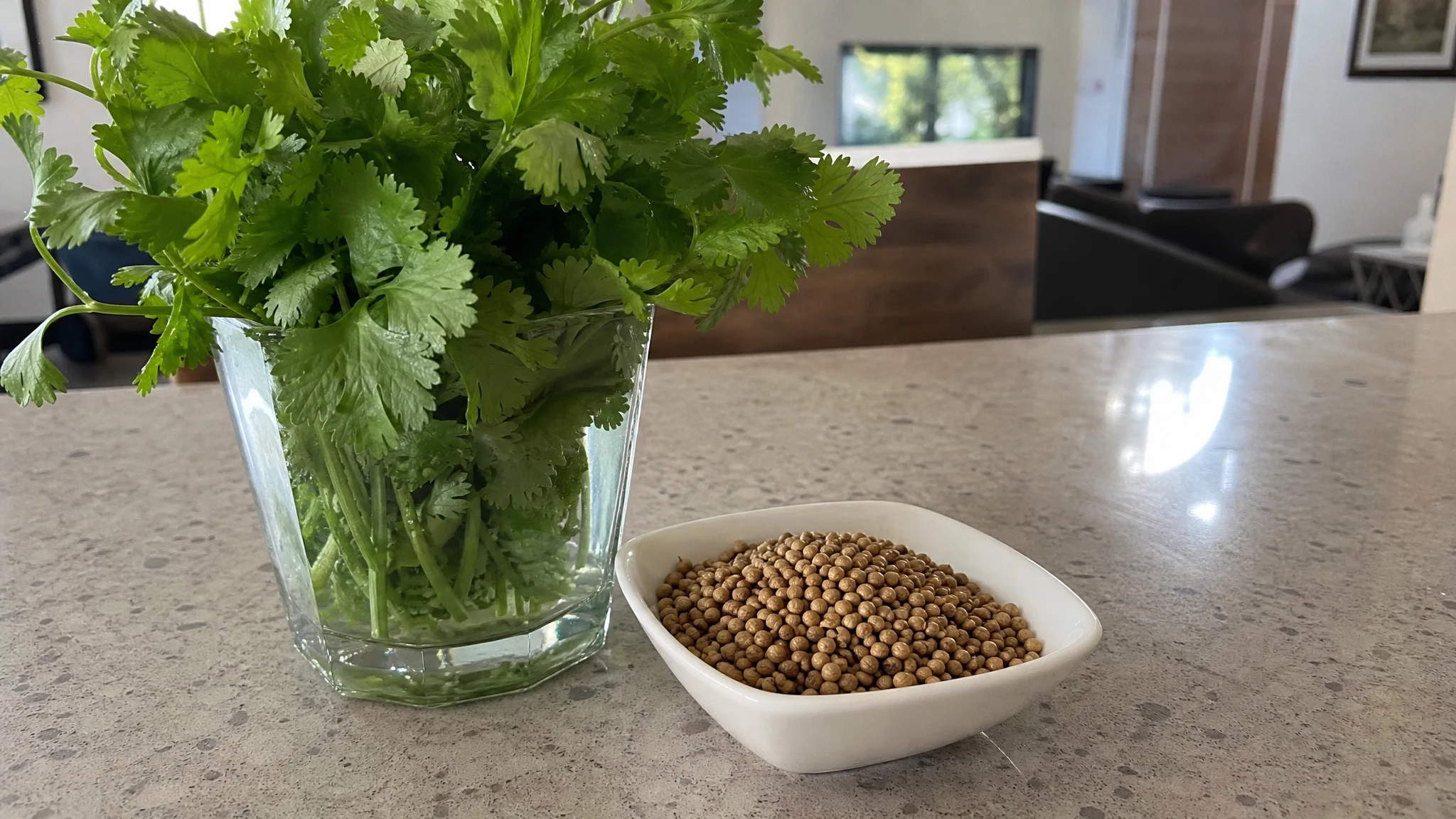
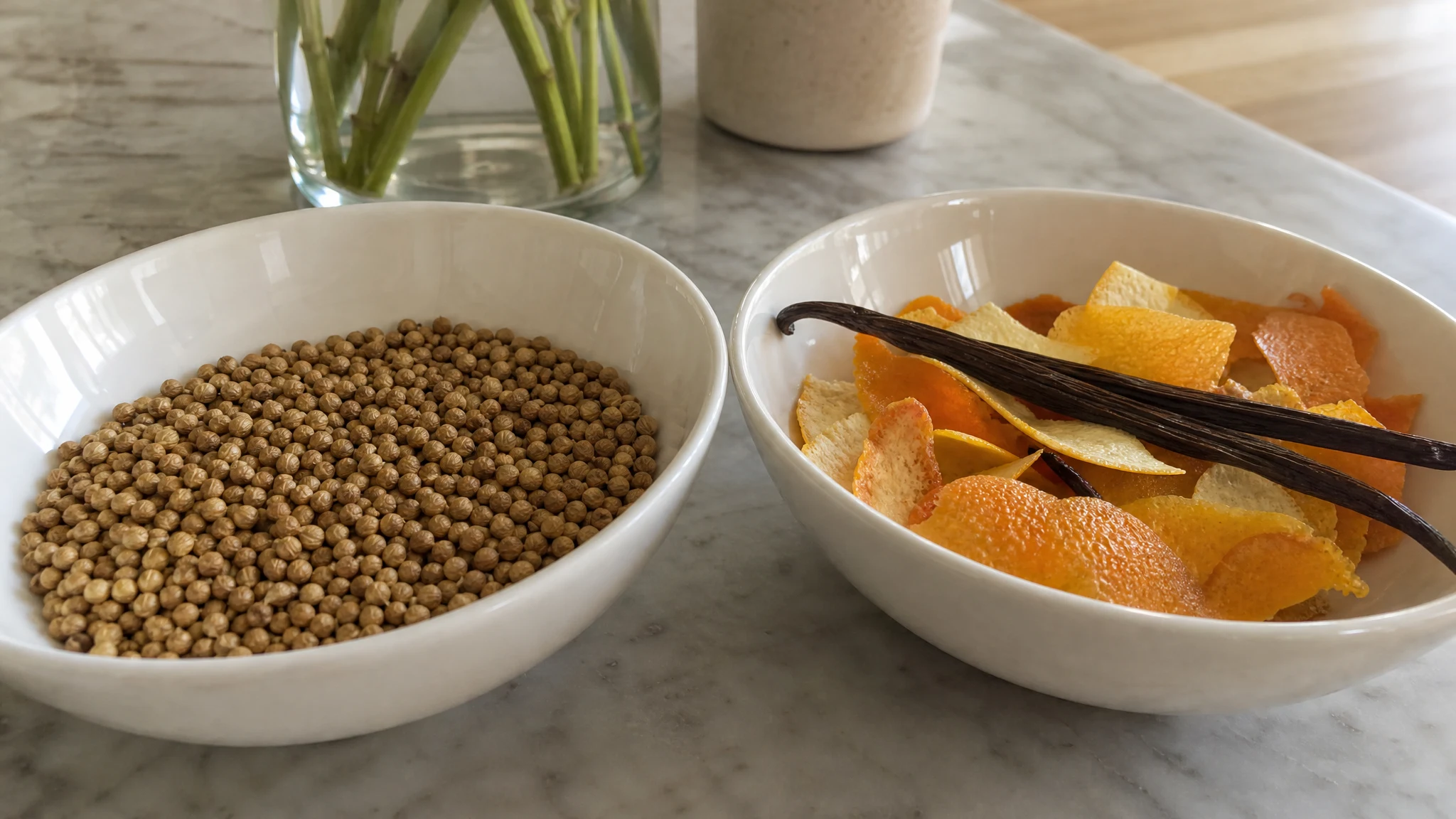
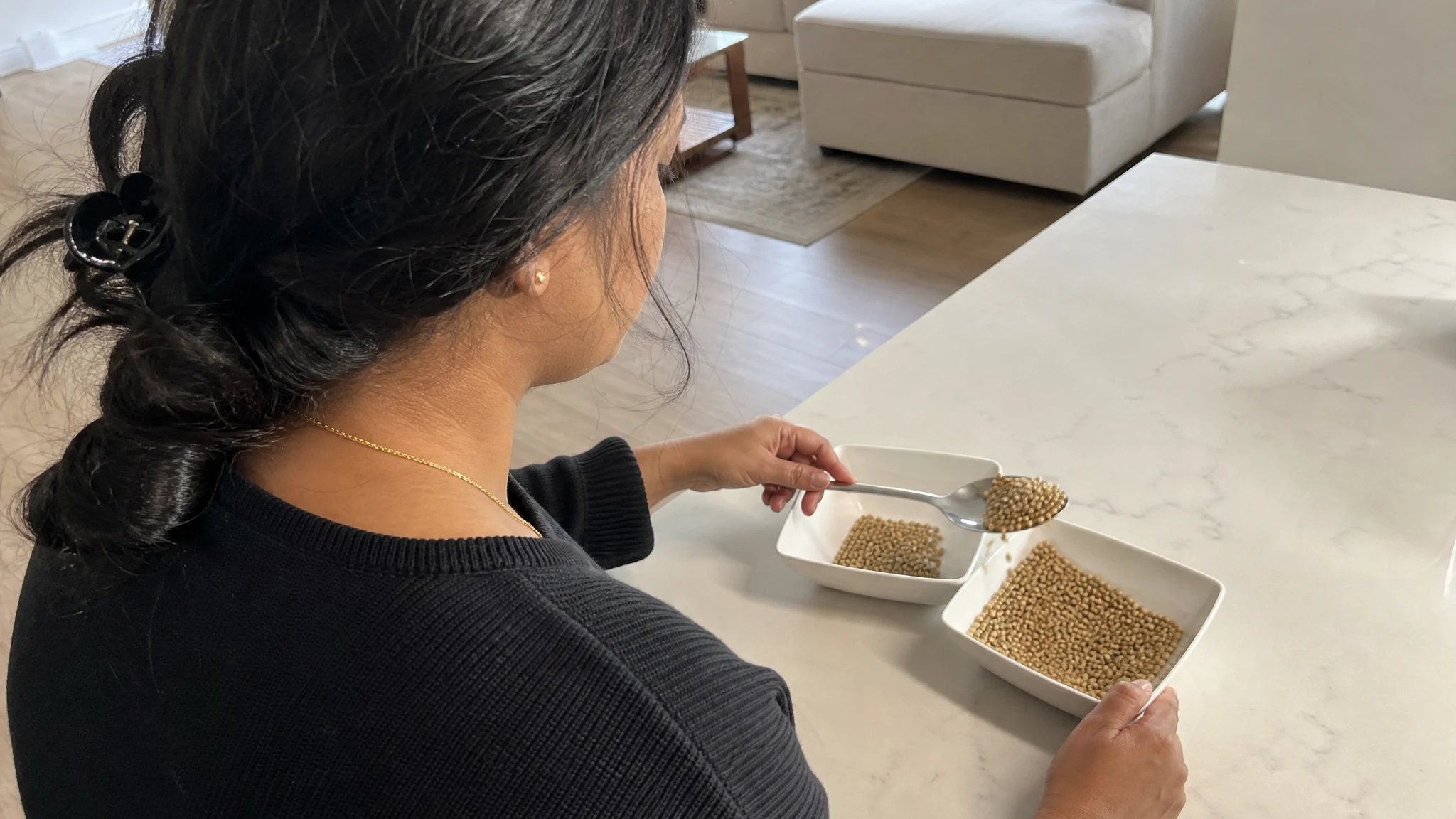
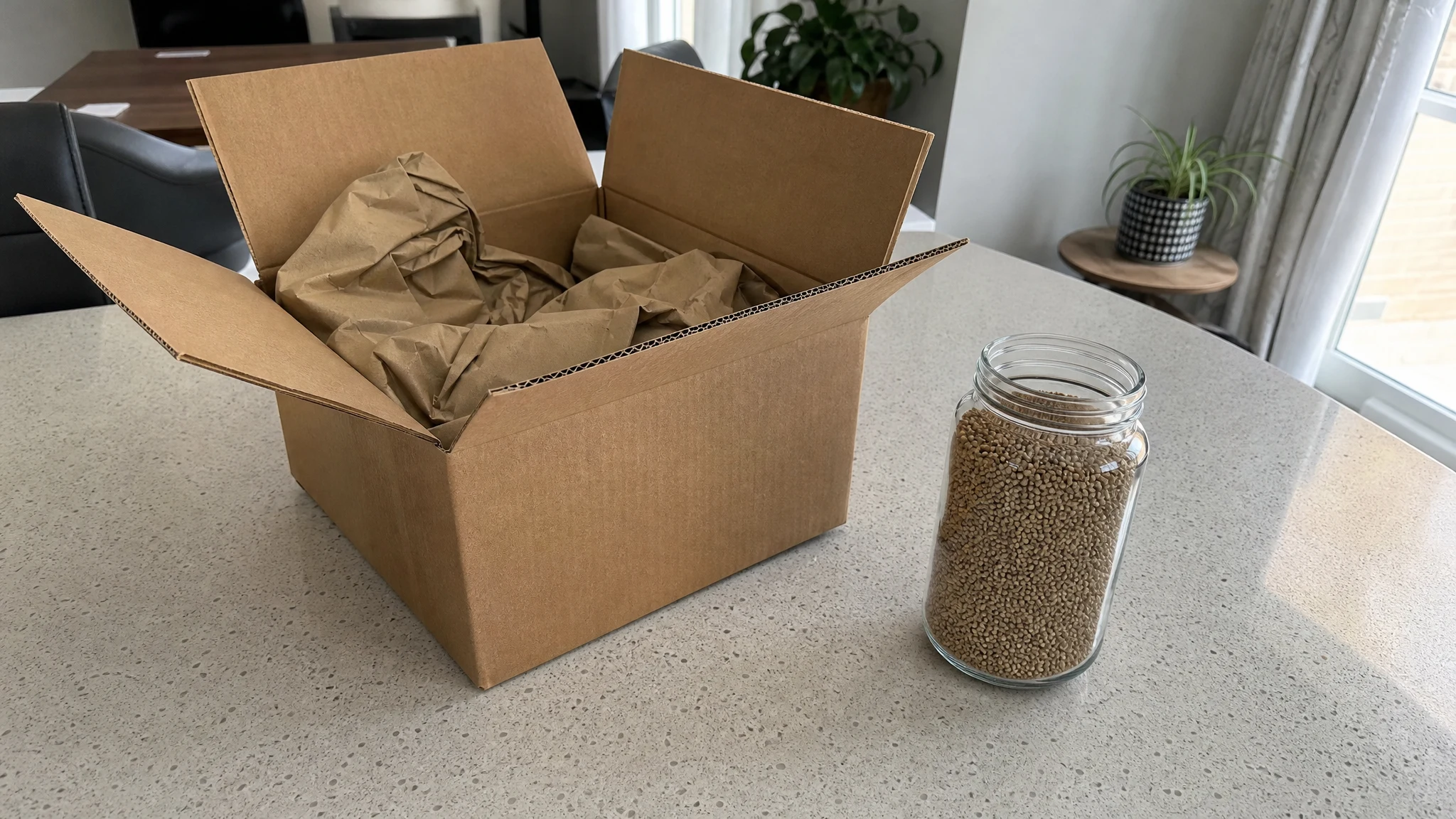
A fun way to get the feel of them is to start in the kitchen. Take a few whole seeds of each, crush them lightly between your fingers or in a mortar and breathe in. Coriander seeds smell lightly citrusy and sweet, cumin deeper and drier, caraway sharper. Then remember the oil keeps only part of what you are smelling, which is why the bottle never smells exactly like the jar. It is a pleasant five-minute exercise, and you can do it before spending anything.
The jar versus the bottle
A spice seed in the kitchen and a distilled oil are not the same material at different strengths. Cooking uses the whole seed; the oil is only the fraction that comes over in the still, and as caraway shows, the still decides which fraction that is. Our oil is not for internal use, and the kitchen aroma article explains what carries over from the spice drawer. If the warm, woody note is what you want and you do not want citrus, the closer comparison to coriander is cardamom, which has its own comparison.
Which seed oil for which job
- A rounded, linalool-led spice with a light floral edge: coriander. That is how we describe ours: warm, woody and softly spicy with a faint citrus peel in the background.
- An aldehyde-led spice oil: cumin, bought from a supplier who gives a batch analysis and a skin and sun limit.
- A carvone and limonene oil: caraway, with the carvone and limonene balance checked on the report for your lot.
Coriander oil is sold undiluted, so the dilution arithmetic is yours: at roughly 20 drops to a milliliter, an ounce of carrier holds about 600 drops, which makes 0.5% about 3 drops and 2% about 12. Start at the low end.
Three seeds from one plant family, three different oils, and you can see why the spice drawer is more fun than it looks.
Coriander Essential Oil
Coriander Essential Oil from our own shop, in sizes from 0.5 oz to bulk.
From $12.99
Shop Now →Sources & Further Reading
- Nejad Ebrahimi S et al., 2010. Essential oil compositions of different accessions of Coriandrum sativum L. from Iran. Nat Prod Res. pubmed/20803372
- EFSA FEEDAP Panel, 2022. Essential oil from the fruit of Cuminum cyminum L. (cumin oil). EFSA Journal 20(12):e07690. pmc.ncbi.nlm.nih.gov/PMC9762120
- Trifan A et al., 2016. Antioxidant activity of essential oil from Carum carvi L. cultivated in North-Eastern Romania. pubmed/30152663
- Shiwakoti S et al., 2016. Method for attaining caraway seed oil fractions with different composition. Chem Biodivers. pubmed/27119969
- Tisserand Institute. Phototoxicity: essential oils, sun and safety. tisserandinstitute.org/phototoxicity-essential-oils-sun-and-safety