Coriander Oil and Digestion: Separating Spice From Claim
Coriander and digestion go together in many kitchens, from spiced tea to curries. That reputation belongs to the seed as food and to oral herbal preparations, which is a different thing from a bottle of essential oil used for aroma. Ours is the latter: an external cosmetic and aroma oil, not labelled for internal use, and not something to swallow.
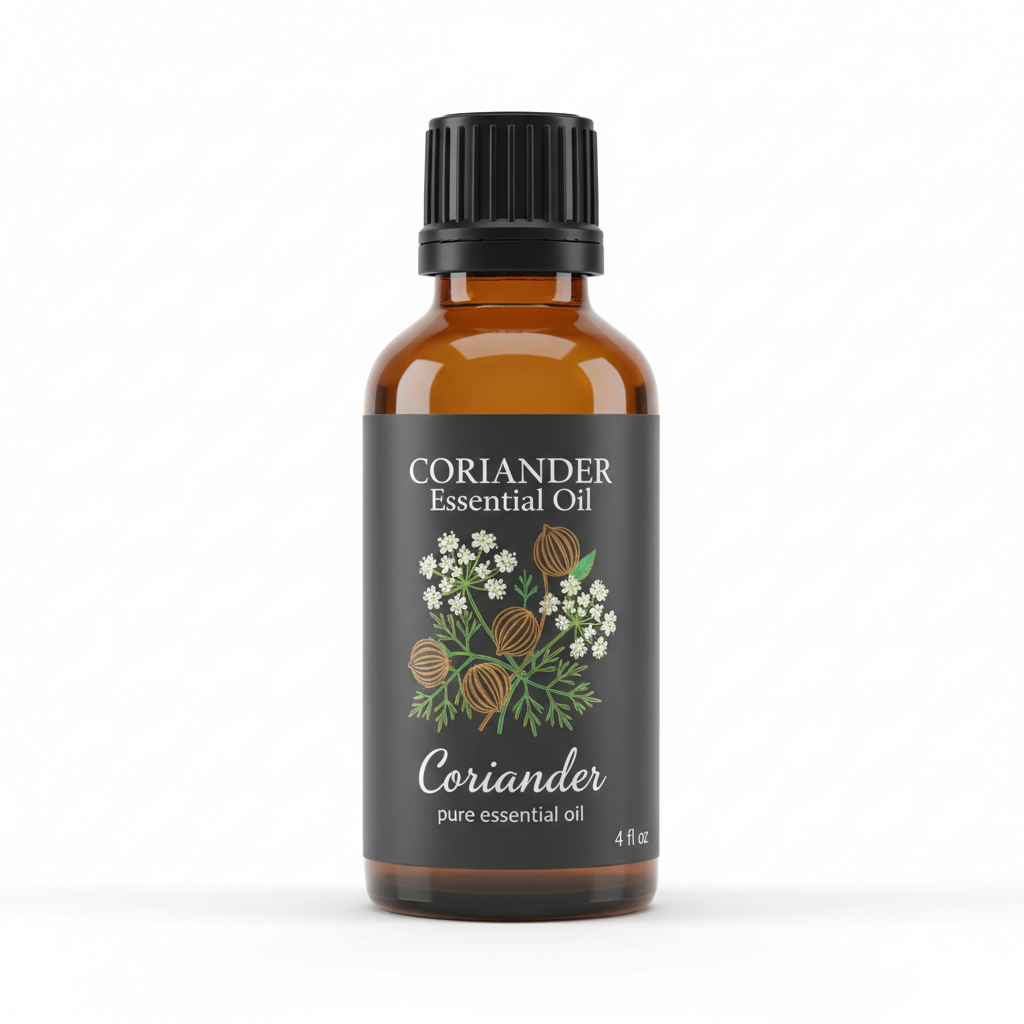
Coriander Essential Oil
Our own Coriander Essential Oil, in sizes from 0.5 oz to bulk.
From $12.99
Shop Now →One word, three different things
When a page says coriander helps digestion, it helps to ask which coriander it means. There is the seed, technically the fruit, as a spice or tea, which is a cooking question. There is an extract in a herbal product, which is a question for a pharmacist. And there is the essential oil, the volatile part distilled from the seed, a concentrate dominated by linalool. Our oil is that third one, and it is the one that has been studied least in this context.
Why the reputation feels so natural
It is easy to see how the idea took hold. Coriander seed has sat in spice mixes for generations, and in many kitchens it comes out at the end of a heavy meal in a warm tea or a pinch of seed to chew. When a flavour shows up where people are well fed and comfortable, it gathers a friendly reputation. That is a story about food and habit, and a nice one, but a story about food is not the same as a story about a bottle of aroma oil.
The one human trial worth knowing
The study people most often meet is a small pilot of Carmint, an herbal product combining extracts of lemon balm, spearmint and coriander. Thirty-two adults with irritable bowel syndrome were randomized to Carmint or placebo for eight weeks, while also taking loperamide or psyllium according to their usual bowel pattern. Abdominal pain and bloating scores were lower with Carmint at the end, and the authors called for larger trials (Vejdani et al., Digestive Diseases and Sciences, 2006).
It is worth reading closely, because three details limit how far it travels. It was an oral extract, nothing was inhaled or applied to skin. Coriander was one of three herbs, so the result cannot be credited to coriander alone. And everyone also received standard treatment. It is an intriguing pilot about an herbal blend and says little about an essential oil used for scent.
What to take from it
If the digestive reputation of coriander appeals to you, it lives most naturally in the kitchen, and our piece on coriander in gin and the kitchen is the place to explore that side. As an aroma, coriander seed oil is best enjoyed for its scent: warm, woody and softly spicy with a light floral edge. We do not suggest swallowing it, and our ingestion article covers the reasons. If you are curious how it stacks up against another oil people associate with the stomach, see our peppermint comparison.
A gentler way to share the scent
If you want others to enjoy the aroma, think small. A single paper strip on a bookshelf, a drop on a wooden bead, or a light session in a diffuser gives a hint of warm spice without filling the room. Share it the way you would share a candle: lightly, with the window open and everyone comfortable. If anyone in the house is sensitive to scent, skip it for that day.
Enjoy the seed where it belongs
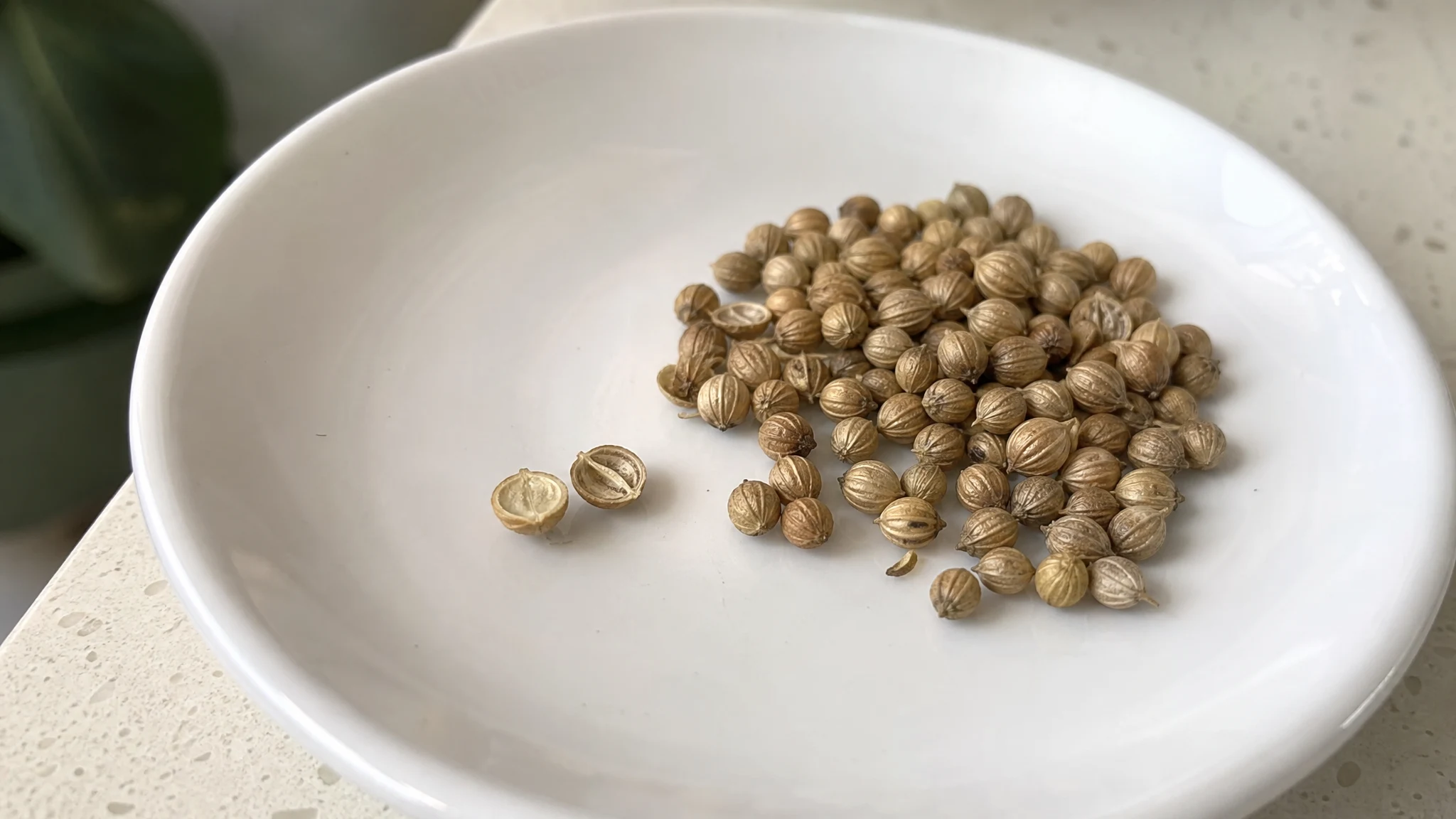
If you love the smell of coriander and want more of it in your life, there are lovely kitchen ways to do that. Crush a few seeds in a mortar and breathe in: you will notice a warm, sweetish, citrus-tinged smell that is the cousin of what our bottle holds. Toast whole seeds lightly in a dry pan until the kitchen smells nutty. Those are cooking pleasures, and you can do them with seeds from a grocer.
And when you want the aroma, not the meal, the bottle is there. A drop on a paper strip, or a light session in the diffuser, gives you the dry-down of the seed without the cooking. Our diffusing article keeps the touch light.
When to talk to a person
Digestive symptoms deserve a human answer. The NHS advises seeing a GP if you think you might have IBS and have had symptoms for more than four weeks, and asking for an urgent appointment if you have lost a lot of weight for no reason, are bleeding from the bottom or have bloody diarrhoea, have found a hard lump or swelling in your tummy, or have shortness of breath, palpitations and unusually pale skin (NHS, IBS symptoms). In the US, a primary care physician or gastroenterologist is the right start. No aromatic oil is a response to those signs. A pharmacist can say whether an herbal product might interact with your medicines.
The same goes for anyone who is pregnant or choosing for a baby with colic: check with a physician, midwife or pediatrician before trying any botanical. Meanwhile, coriander has plenty to offer a warm kitchen, and a bottle of the oil can simply be a pleasant spice-scented companion on the shelf.
Coriander Essential Oil
Coriander Essential Oil from our own shop, in sizes from 0.5 oz to bulk.
From $12.99
Shop Now →