Coriander Essential Oil vs Fragrance Oil: Which to Use?
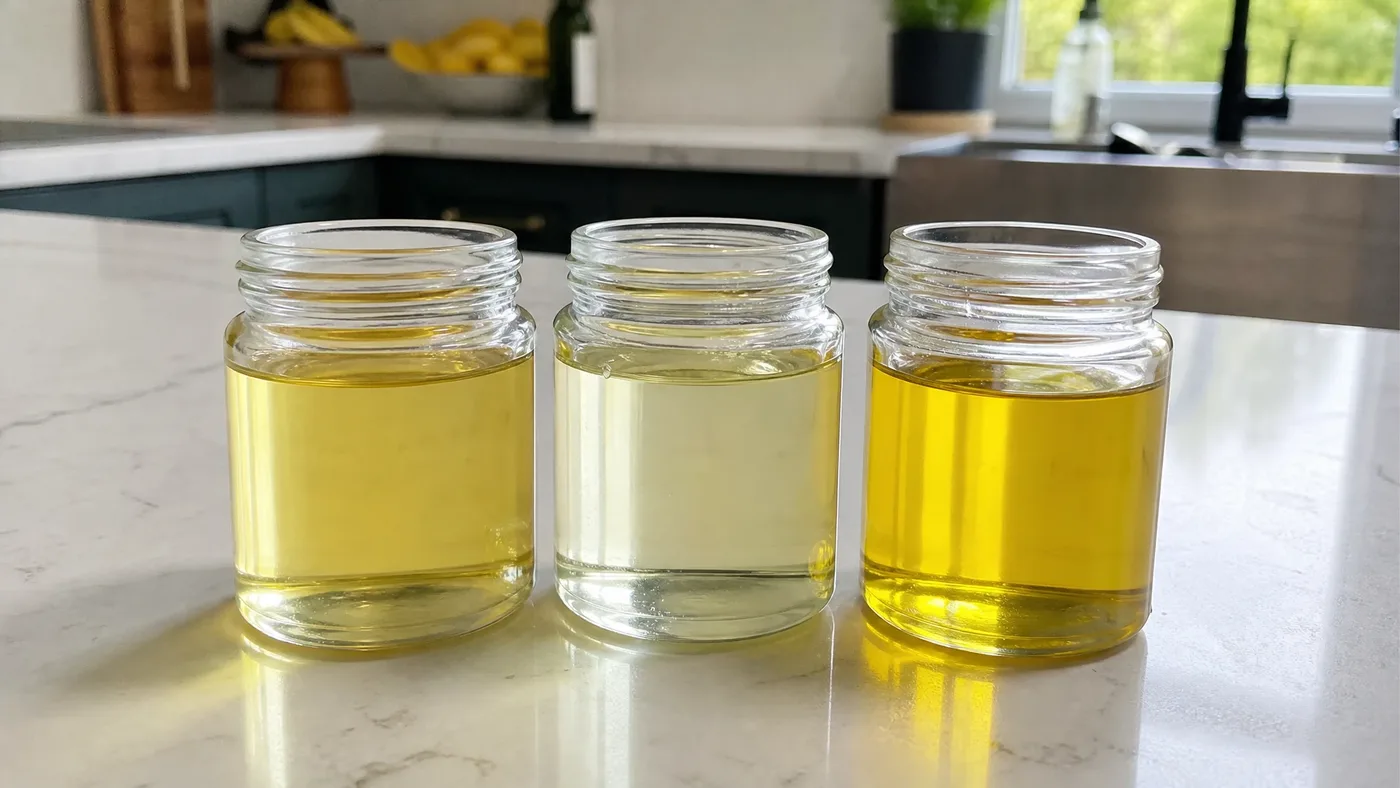
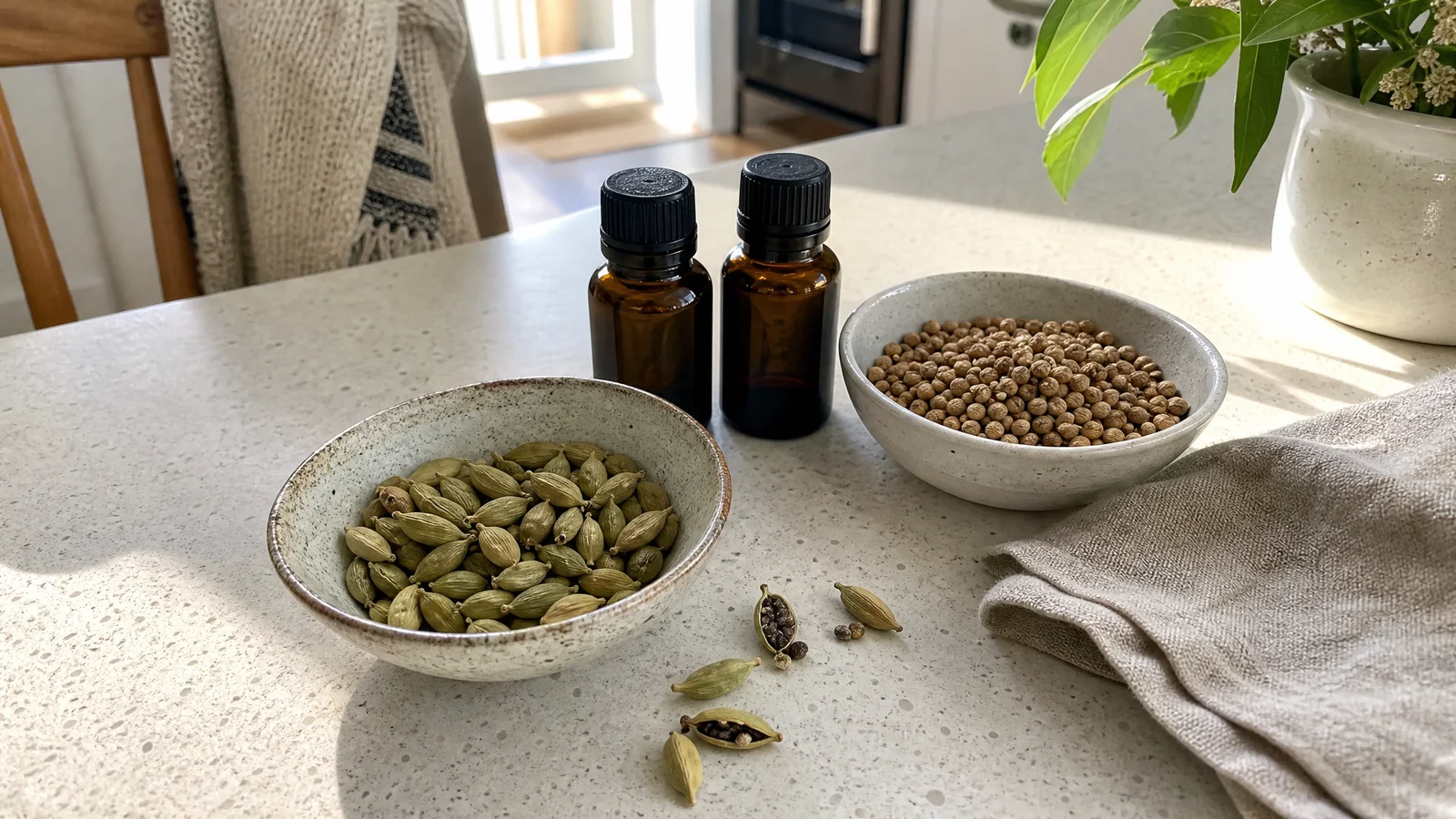
Pick up two bottles that both say "coriander" and you may be holding two completely different kinds of thing. One is an essential oil: a single plant material, steam-distilled from the seed. The other, a fragrance oil, is a recipe, and in most cases the recipe stays a secret. We sell the first kind, so we are happy to tell you how we think about choosing between them.
Coriander Essential Oil
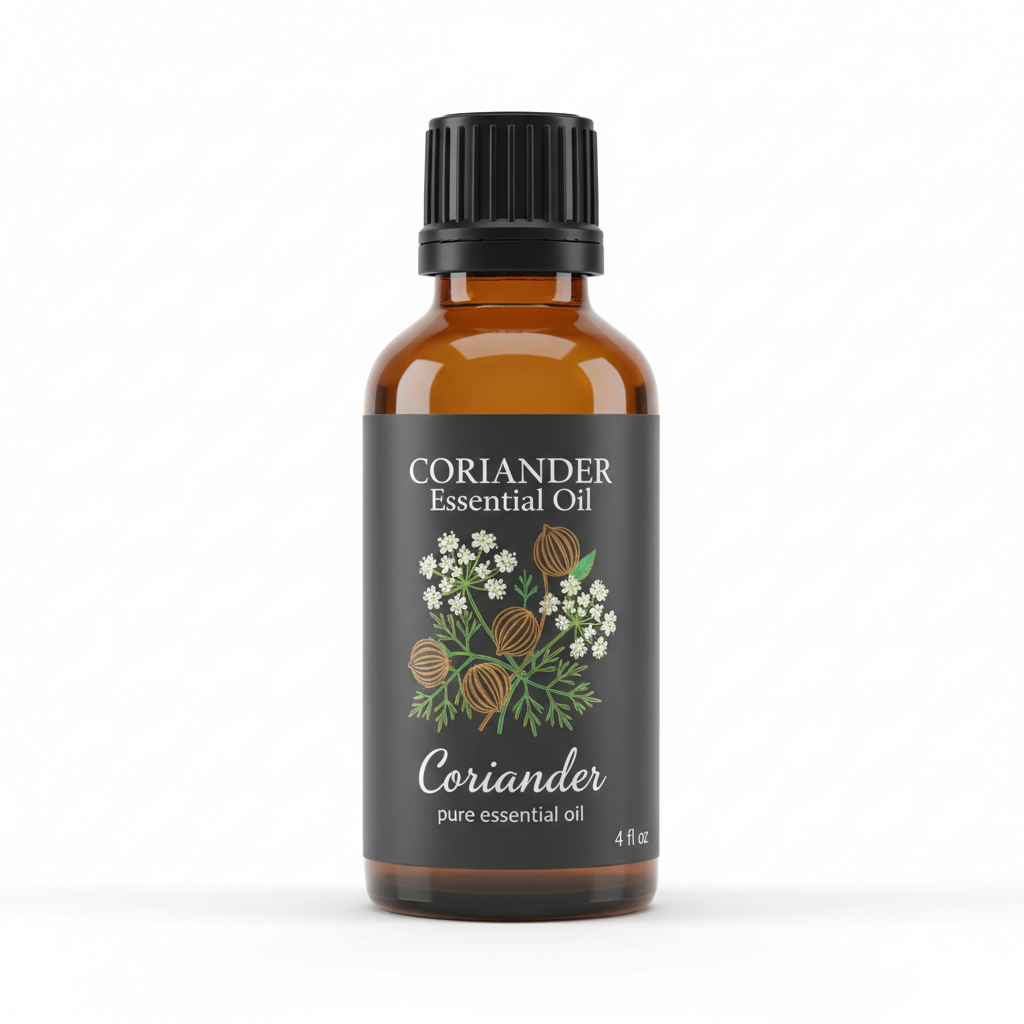
Our own Coriander Essential Oil, in sizes from 0.5 oz to bulk.
From $12.99
Shop Now →What the label can tell you
The US Food and Drug Administration describes fragrance formulas as "complex mixtures of many different natural and synthetic chemical ingredients" and says they are among the cosmetic components "most likely to be trade secrets," which is why a finished product may simply list "Fragrance." That is a statement about finished cosmetics, but it shows the default: unless a supplier chooses to tell you, you do not find out what is inside.
A fragrance oil named "coriander" can therefore be built from almost anything that gives a coriander impression. It might include real seed oil, isolated linalool, other aroma chemicals, a solvent, or none of the plant at all. The word on the front does not settle it.
A natural oil comes with a range, not a recipe
A natural oil is not a fixed formula either, but it has a documented envelope. The coriander fruit oil assessed by the European Food Safety Authority in 2023 had a linalool specification of 65% to 78%, with the five batches it measured averaging 71.7%, and smaller components such as alpha-pinene, gamma-terpinene and camphor in set ranges too. Across the wider literature the spread is wider still: dried seeds from Iranian accessions gave oils with anywhere from about 41% to 80% linalool. Seed oil, in other words, moves with the crop and the year.
That is the honest case for a fragrance oil: it can be built to smell the same every time. If perfect repeatability matters more to you than knowing what is in the bottle, we would not talk you out of one.
The smell, side by side
| Question | Coriander seed essential oil | "Coriander" fragrance oil |
|---|---|---|
| What is in it | One plant material, steam-distilled from the fruit | A formulated mixture, usually undisclosed |
| Consistency | Varies by crop and year | Designed to repeat |
| Fresh-herb smell | No, it is warm and spicy | Possible, since a recipe can be anything |
| What you can check | Batch paperwork, if the seller offers it | The supplier's own disclosure, if given |
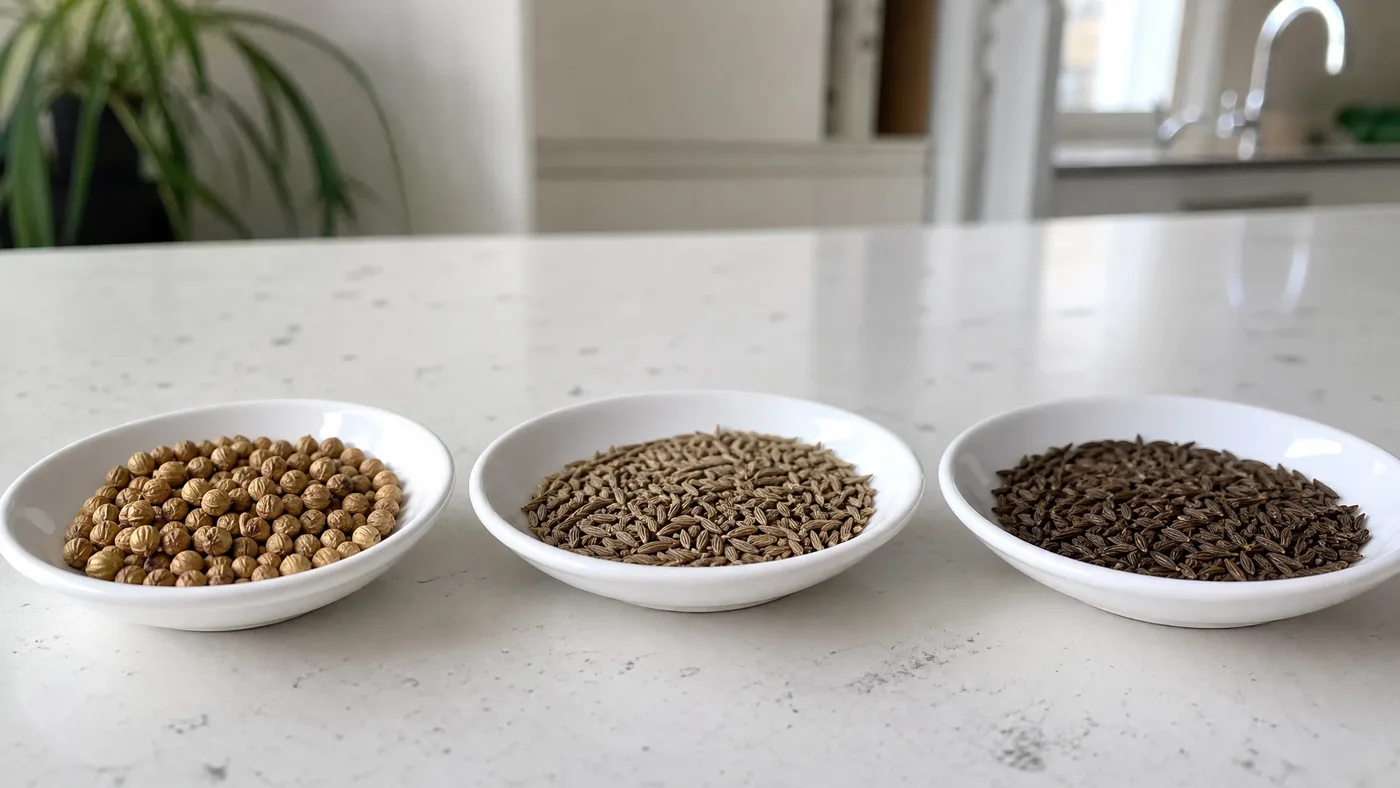
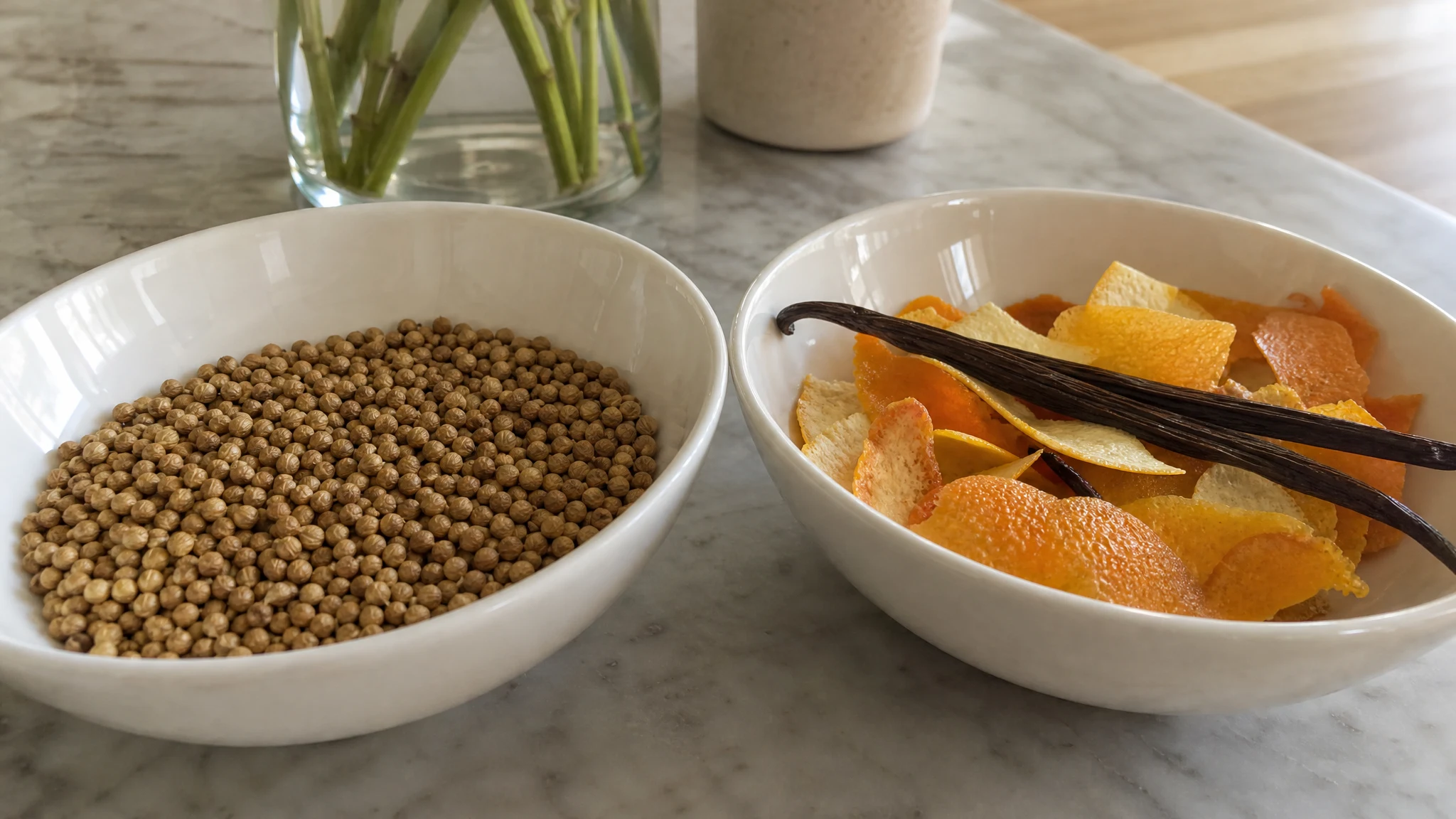
The seed and the leaf of coriander hold different molecules. In a study of 11 Portuguese samples, fruit oils were led by linalool (60% to 73%), while oils from the green parts were led by long-chain aldehydes, 2-trans-decenal and n-decanal. We describe our seed oil as warm, woody and softly spicy, with a rounded sweetness and a light floral edge, and it is not the smell of fresh cilantro. If the bright green herb is the scent you are after, a seed oil will not give it to you and a fragrance oil might. Our seed versus leaf article explains why.
Try them on paper, not on faith
The quickest way to understand the difference is with your nose. Put a drop of each on separate paper strips and smell them over an hour. A fragrance oil often smells the same at minute one and minute sixty, because it was designed to. A seed oil moves: bright and sweet at first, then rounder and woodier as it dries. Neither is wrong. They are different kinds of pleasure, and your preference will tell you where to go.
On the skin, natural is not automatically gentler
Neither type is a free pass. EFSA's panel considers the coriander fruit oil an irritant to skin and eyes and a skin and respiratory sensitizer, and linalool that has oxidized in air is a recognized contact allergen. With a fragrance oil the difference is mainly that you may not know which sensitizers it holds. In the EU, 26 named fragrance substances, linalool and limonene among them, must be listed individually on cosmetics above 0.001% in leave-on and 0.01% in rinse-off products. If you make cosmetics to sell, ask any fragrance supplier for its allergen declaration in writing.
For our oil on skin, we recommend 0.5% to 2% in a carrier with a patch test first, and a candle-grade fragrance oil is not made for skin unless its supplier says so. Our side effects article goes into the details.
One last practical thing
Check the bottle for a name and a date, whichever kind you choose. Both types age, and a note on the label of when you opened it tells you more than a guess ever will.
How we would pick
- A steady scent for a candle or room product: a fragrance oil from a candle supplier, used within its stated load.
- The seed oil's own aroma and a plant-only ingredient list: the essential oil. Our guide to checking for adulteration shows what to look for on a certificate.
- The fresh-leaf smell: a leaf-type oil or a fragrance oil from another supplier.
- Swapping one for the other to save money: they are not interchangeable in a formula. Our substitutes guide helps you rework a recipe.
Whichever you pick, label it. A fragrance oil and an essential oil can sit on the same shelf and look alike, and a small date-and-name label saves a lot of confusion later.
Our view is simple: choose the natural oil when you want to know and name what is in the bottle, and a fragrance oil when a consistent scent matters more than an open ingredient list.
Coriander Essential Oil
Coriander Essential Oil from our own shop, in sizes from 0.5 oz to bulk.
From $12.99
Shop Now →Sources & Further Reading
- US FDA. Fragrances in Cosmetics. fda.gov/cosmetics/fragrances-cosmetics
- EFSA FEEDAP Panel, 2023. Essential oil obtained from the fruit of Coriandrum sativum L. pmc.ncbi.nlm.nih.gov/PMC10613936
- Nejad Ebrahimi S et al., 2010. Essential oil compositions of different accessions of Coriandrum sativum L. from Iran. Nat Prod Res. pubmed/20803372
- Machado AM et al., 2023. Chemical variability of the essential oils from two Portuguese Apiaceae. Plants. pubmed/37514362
- European Commission. Perfume allergies (SCCS explainer). ec.europa.eu/perfume-allergies