What Is Coriander Seed Oil? A Plain Guide
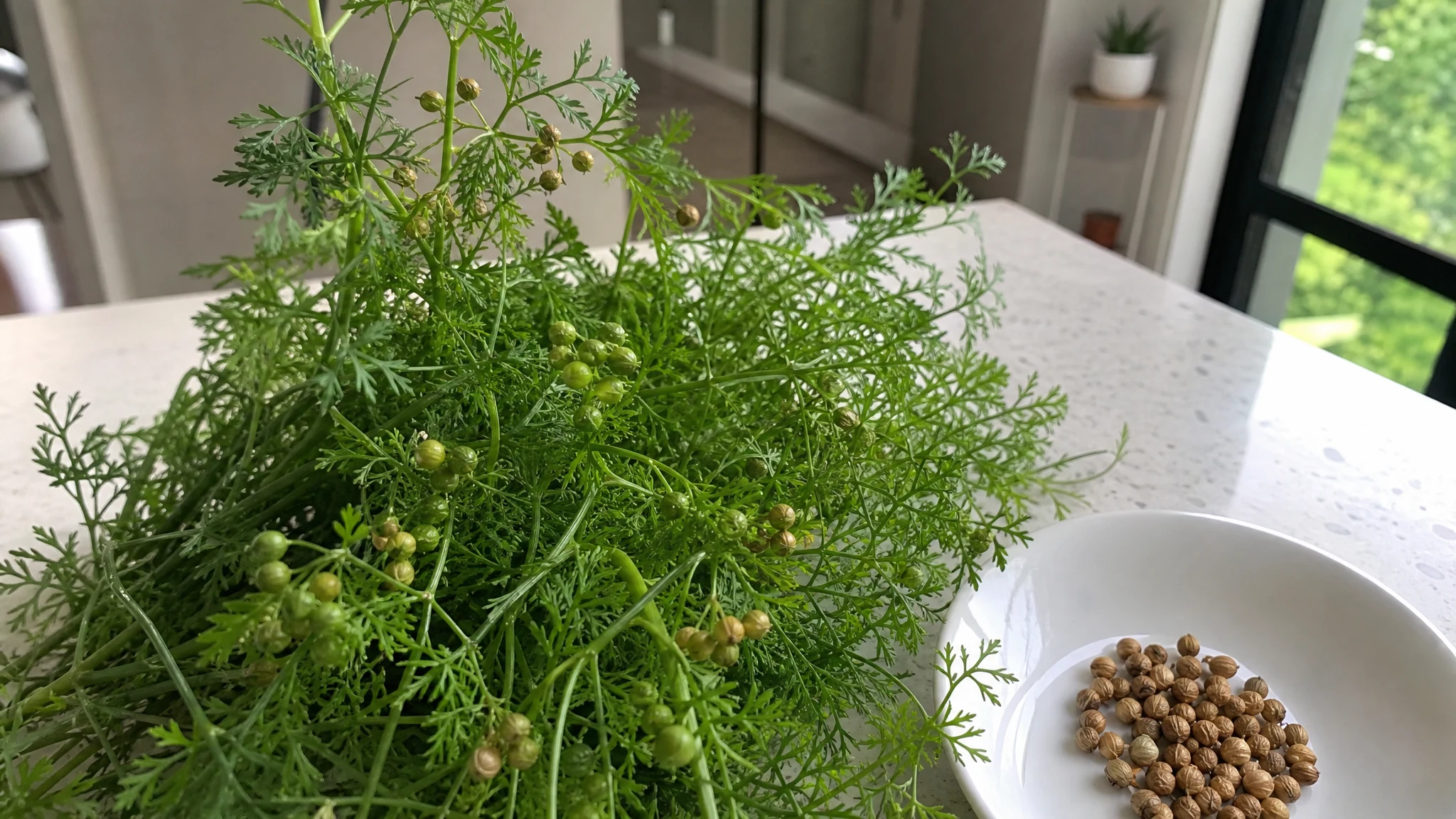
The "seed" in coriander seed oil is, botanically, a small dry fruit. European regulators say so plainly: the word coriander is restricted to the dried fruit, commonly described as coriander seed, while the leafy parts are called cilantro. That little correction clears up most of the confusion around this oil, including why it smells nothing like the herb.
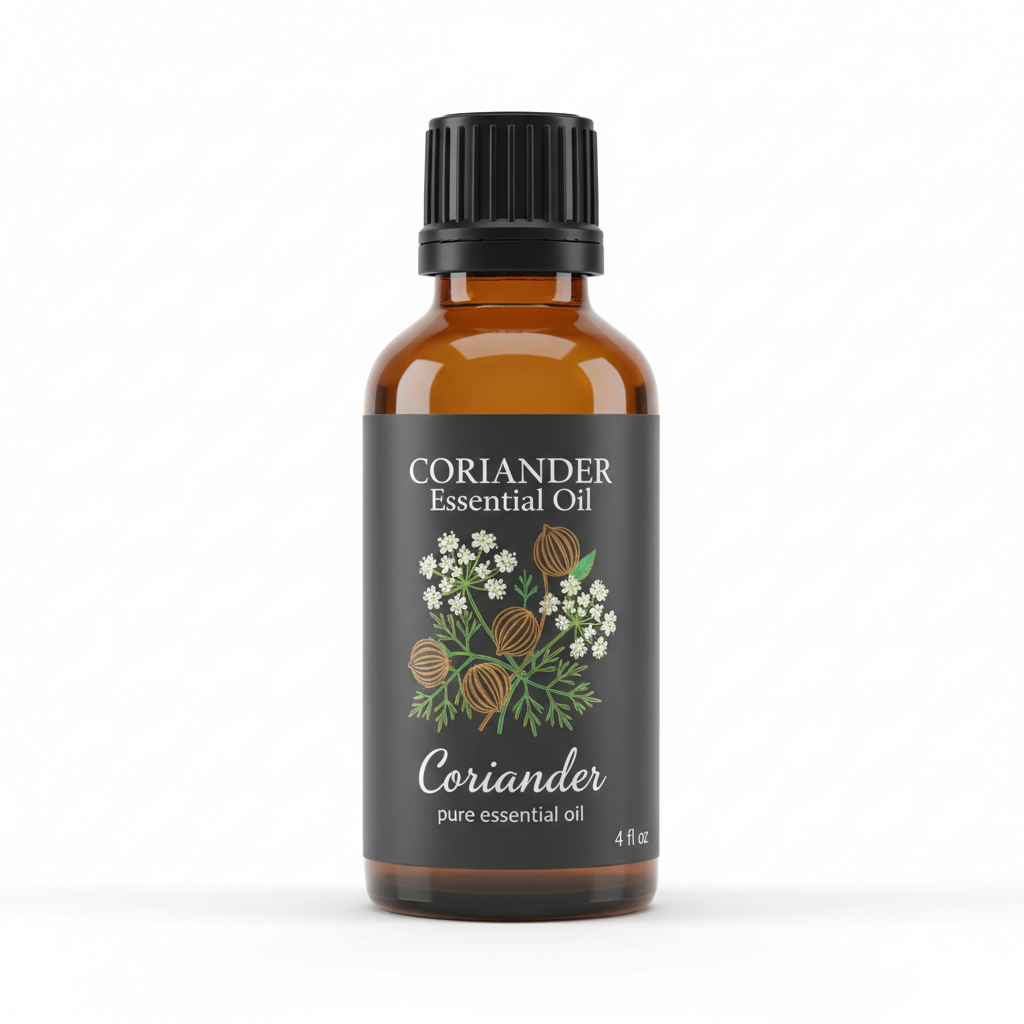
Coriander Essential Oil
Our own Coriander Essential Oil, in sizes from 0.5 oz to bulk.
From $12.99
Shop Now →If you only know coriander from the spice rack or the herb stall, a bottle of its essential oil can feel like a mystery. Here is the plain version, the way we would explain it across a table.
How the oil is made
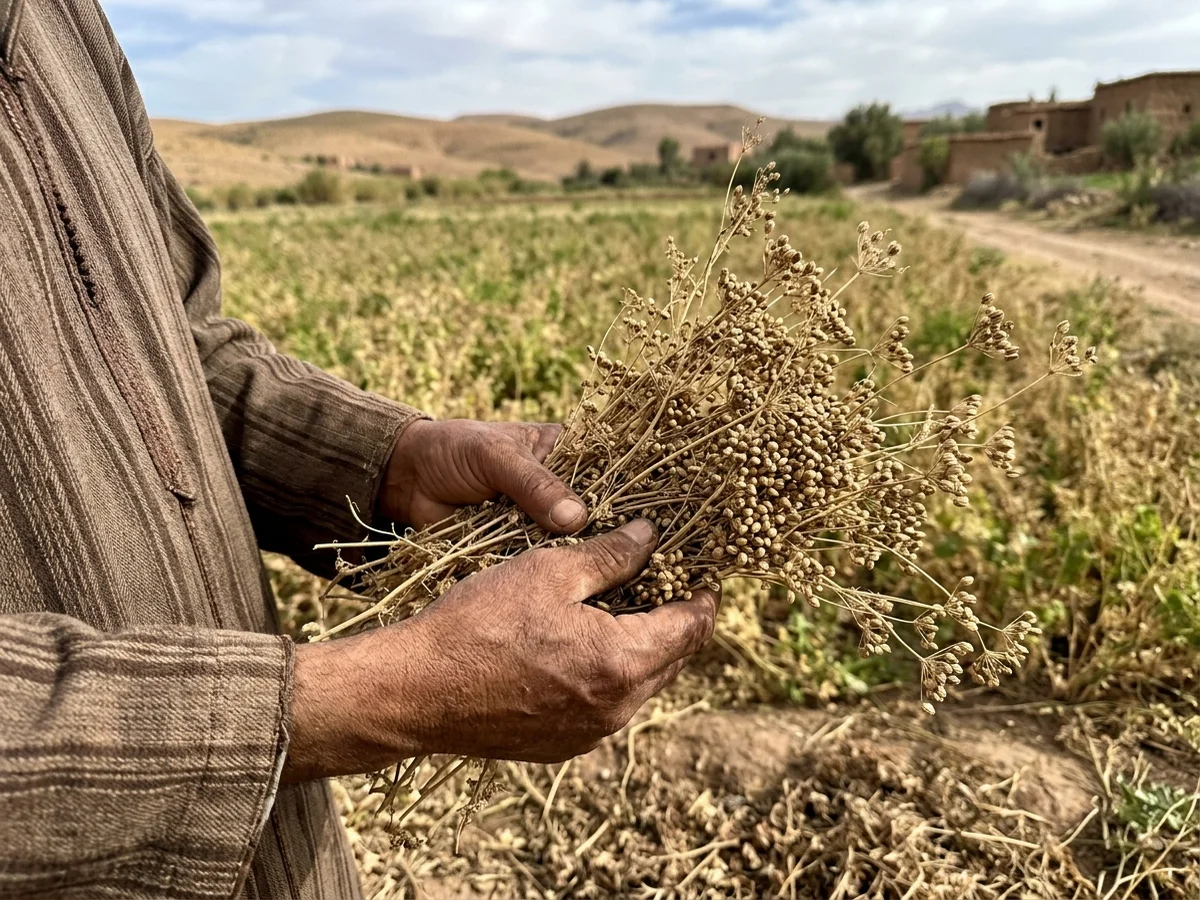
Coriander oil is made by steam distillation of the crushed ripe fruit: steam carries the aromatic molecules out of the seed, cools back into water and oil, and the oil is decanted off. Our oil comes from the ripe seed of Coriandrum sativum. There is not much of it to collect. In a study of dried seed from a range of Iranian accessions, the oil made up between 0.1 and 0.36 percent of the seed, so a kilogram of seed gives only one to a few grams of oil. That is part of what makes it a small-bottle oil worth appreciating.
What is inside
You do not need to remember any of these names. What matters is the overall impression: smooth, warm and lightly floral, with a little spice and a soft citrus edge. When you open the bottle for the first time, try to describe it in your own words before you read anyone else's description. You may be surprised by what you notice.
Linalool leads, a floral, softly woody molecule that is the reason coriander seed oil has such a rounded, smooth character. Supporting it are smaller amounts of alpha-pinene, gamma-terpinene, camphor and limonene, which add a touch of freshness, resin and citrus. The exact proportions vary with the variety, the growing conditions and the method of analysis, which is why published figures for linalool range widely. For the oil assessed by European regulators in 2023, the specification was 65 to 78 percent.
It is worth knowing that the seed also contains a fatty, non-volatile oil, mostly petroselinic acid. That one is not part of the essential oil, since steam distillation leaves it behind.
Why it does not smell like cilantro
The leaf's fresh, green aroma comes from aldehydes such as 2-trans-decenal and n-decanal, which dominated the leaf oils in a Portuguese comparison. The seed oil is built around linalool, so we describe its smell as warm, woody and softly spicy with a light floral edge. If you were expecting the herb, the surprise is a pleasant one for most people. We cover the difference in seed versus leaf and in our scent profile. Our production article follows the process from seed to still.
Opening a bottle for the first time
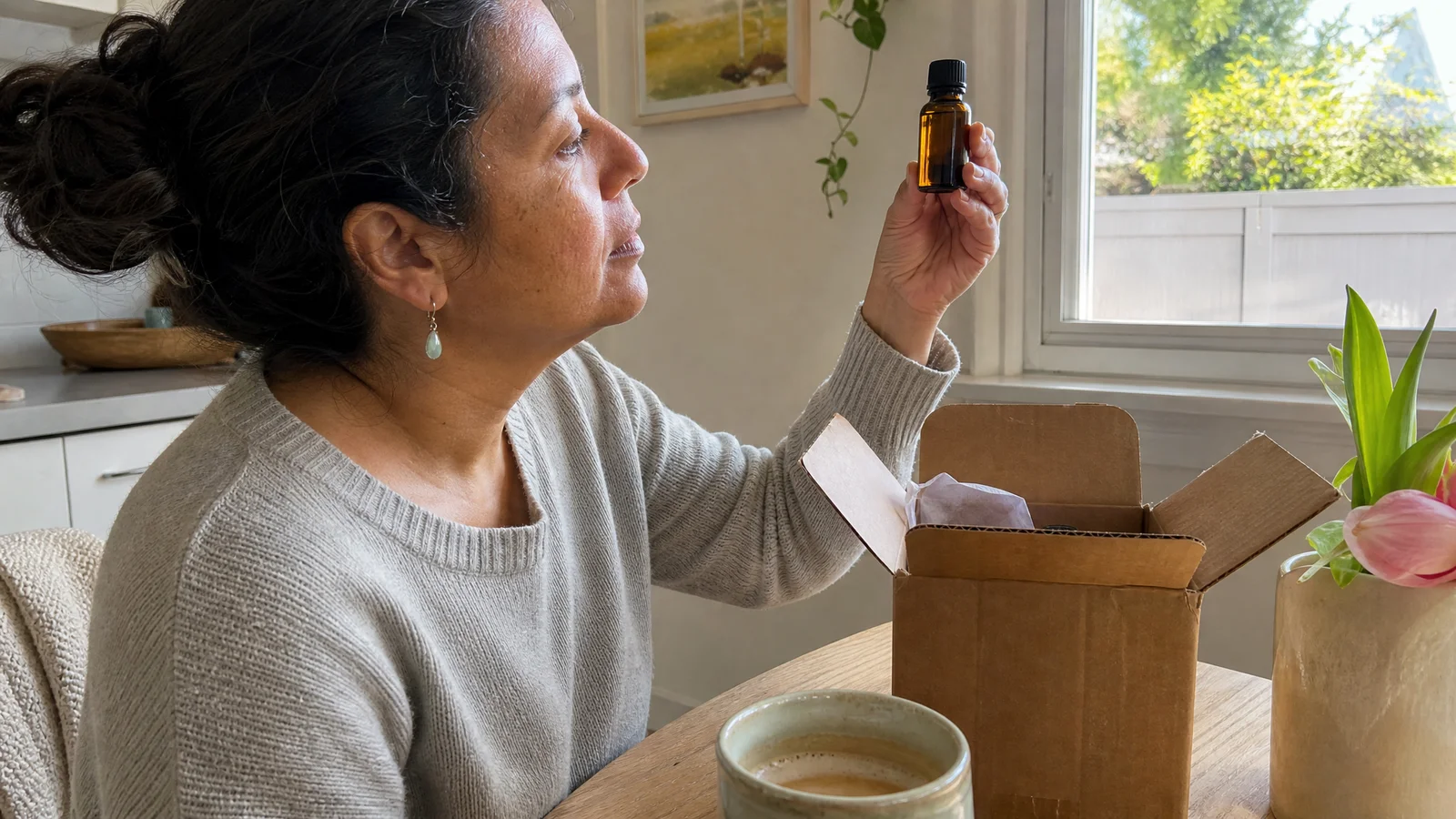
Take the cap off and hold the bottle a hand's width from your nose rather than right under it. Breathe in slowly. Then put a single drop on a paper strip, wave it gently in the air, and smell it again. Concentrated oils can smell sharper straight from the bottle than they do once they have had a moment to open, and the strip lets you meet the aroma at its best.

Come back to the strip after a few minutes, and again later in the day. You will notice the scent shifting: the brighter edge fades first, and the warm, woody centre is what remains. That slow change is one of the real pleasures of a middle-note oil.
Where to start
Our advice for someone brand new to it is to begin small. A strip, a tissue, a single drop in a diffuser. Get to know the scent before you make plans for it. Once you like it, the ideas come easily, and the articles linked on this page will help you take the next step.
What it is not
- Not a kitchen ingredient. Our oil is for external, aromatic use and is not for internal use.
- Not a fragrance oil, which is a laboratory blend. See fragrance oil versus essential oil.
- Not a leaf oil. We sell only the seed oil.
- Not a health product. Our benefits article explains how we approach the research.
Who it suits
Anyone who enjoys warm, spiced-citrus fragrance: diffuser blends, scented body oils at a gentle dilution (we recommend 0.5% to 2% in a carrier with a patch test first), soap and candle projects. The certificate of analysis we publish for one batch lists density and refractive index if you want to see the numbers, and you can write to us through the contact page for more detail.
A note for first-timers
Do not be discouraged if your first impression is not love at first sniff. Scents often grow on you after a second or third try, once your nose gets past the opening note. Give it a few sessions on different days, and notice whether it starts to feel like an old friend. For many people it does.
Once you know it is a fruit, the whole oil makes more sense, and it is easier to enjoy for what it is.
Coriander Essential Oil
Coriander Essential Oil from our own shop, in sizes from 0.5 oz to bulk.
From $12.99
Shop Now →