Does Coriander Detox Heavy Metals? What the Studies Say
Search for coriander and detox and you will find the same promise over and over: eat cilantro and it pulls heavy metals out of your body. It is a tidy story, and it is worth knowing where it actually comes from, because the research behind it is about a leafy herb, a water filter and a mouse experiment. None of it is about the seed essential oil we sell, which we offer for aroma and cosmetic use and which is not for internal use.
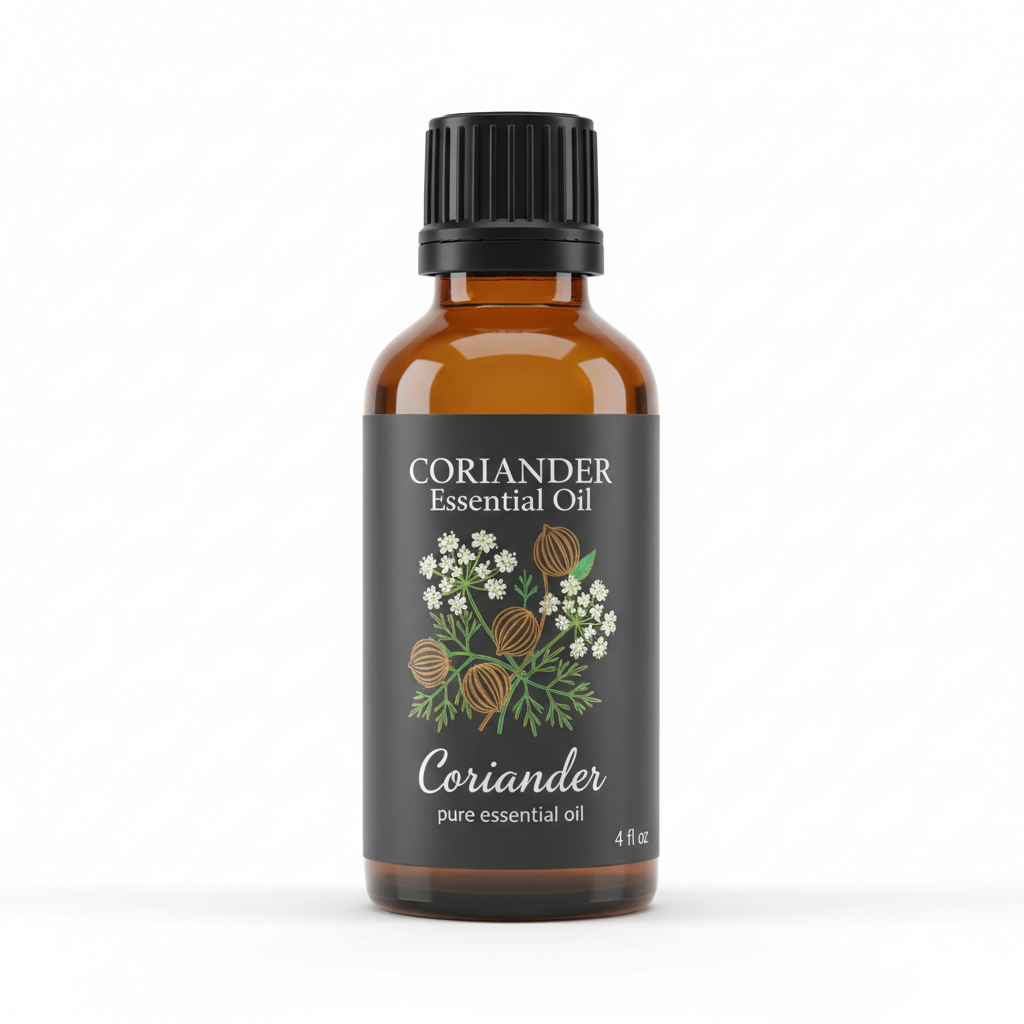
Coriander Essential Oil
Our own Coriander Essential Oil, in sizes from 0.5 oz to bulk.
From $12.99
Shop Now →A sorbent in a water sample
Researchers at India's Bhabha Atomic Research Centre made a sorbent from the coriander plant and tested it on water. It removed both inorganic mercury and methylmercury from spiked groundwater, including when the plant material was packed into columns on silica. The authors pointed to carboxylic acid groups as the main binding sites and framed the work as a way to clean contaminated water (Karunasagar et al., 2005). It is a clever piece of environmental chemistry. Nobody in that experiment ate anything.
Lead and mice
A Japanese group gave male mice lead acetate in their drinking water for 32 days and fed Chinese parsley (the herb) by gastric tube for 25 of those days. The herb group had less lead in the femur and less kidney injury, and the authors suggested chelation by something in the plant as the probable reason. A prescription chelating agent, DMSA, served as the comparison (Aga et al., 2001). That is an interesting animal finding about a plant preparation, and it is a long way from a person's morning routine.
Why the seed oil is a different material
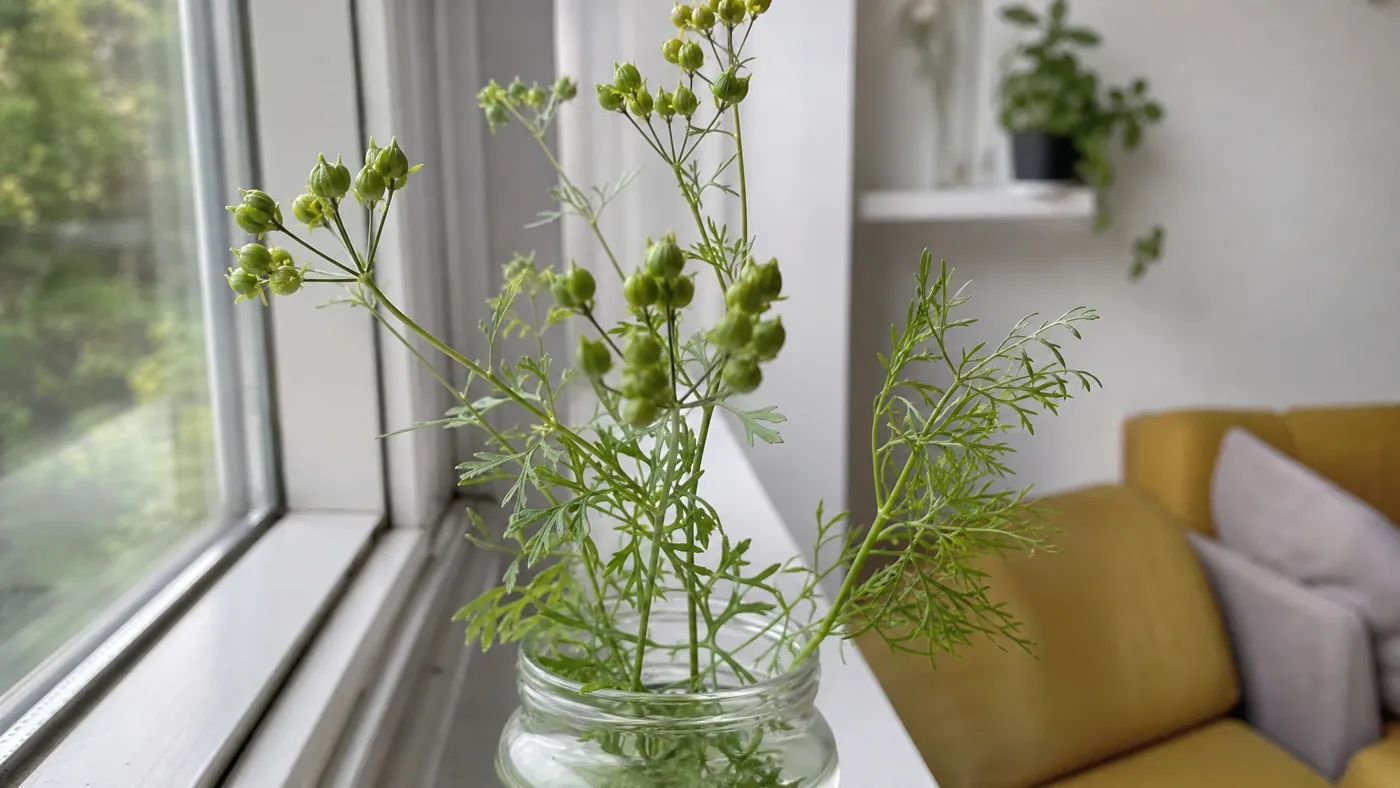
Two things set our oil apart from both studies. First, the plant part: our oil comes from the seed, the dried ripe fruit, while those studies used the herb or a sorbent made from the plant. EFSA's text even keeps the vocabulary separate, using "coriander" for the dried fruit and "cilantro" or Chinese parsley for the green parts (EFSA FEEDAP Panel, 2023). Our seed versus leaf article shows how differently the two smell.
Second, the form: steam distillation carries over the volatile aroma molecules, and the oil from coriander fruit is mostly linalool, about 60 to 73% in Portuguese fruit samples (Machado et al., 2023). The bulk plant solids that a water sorbent works with stay behind in the still. Reasoning from that, a result about the whole plant in water says very little about a few drops of distillate.
What regulators say about detox products
The US FDA advises consumers to avoid all products sold over the counter for chelation or detoxification, states that there are no FDA-approved over-the-counter chelation products, and says chelation procedures carry significant risks and should be done only under medical supervision (FDA, Captomer notice). Approved chelating drugs are prescription medicines for specific conditions such as lead poisoning.
That is a clear signpost, and it is why we do not make any detox statement about our oil. We are glad to talk about what it smells like and how to dilute it for skin, and we leave exposure questions to people qualified to answer them.
Why the detox story is so catchy
A good claim is simple, hopeful and easy to repeat. This one has all three: a familiar herb, a worry we all share, and a quick fix. Add a grain of truth from a laboratory paper and it travels fast. We love coriander too, and we would rather talk about what it actually does in a kitchen and in the air than lean on a promise a seller cannot back up.
Three quick questions for any detox claim
- Does the product match the plant part and preparation in the research? Herb studies do not carry over to a distilled seed oil.
- Was the finding in people, or in water and animals?
- Does the seller suggest you skip a clinician? A good one never will.
A quick bit of kitchen sense
When you read a headline about a food or herb doing something dramatic, it helps to pause and ask who is telling the story and what they are selling. A friendly recipe for cilantro chutney is a lovely thing. A promise that it will clear something out of your body is something else entirely, and the person making it should be able to show you a source that fits the claim.
What we do like to say about it
Here is a truthful list. Coriander seed oil smells warm, woody and softly spicy, with a light floral edge. It is a lovely oil to diffuse lightly or to blend into a scented body oil at a gentle dilution. It makes a room feel finished. That is the whole sales pitch, and it is enough.
If exposure is on your mind
If you have a real concern about lead, mercury or another exposure, a physician or a poison control or medical toxicology service is the right call, and testing comes before anything you might buy. Please never swallow essential oil in the meantime; our ingestion article explains why. If you want to see what we do say about the oil, our benefits article sticks to aroma and what studies actually tested.
Cilantro and coriander seed have plenty to enjoy, in the kitchen and in the air, without having to be a medicine. That is the version of the story we are happy to tell.
Coriander Essential Oil
Coriander Essential Oil from our own shop, in sizes from 0.5 oz to bulk.
From $12.99
Shop Now →Sources & Further Reading
- Karunasagar D, Krishna MV, Rao SV, Arunachalam J, 2005. Removal and preconcentration of inorganic and methyl mercury from aqueous media using a sorbent prepared from the plant Coriandrum sativum. J Hazard Mater 118:133-139. pubmed.ncbi.nlm.nih.gov/15721537
- Aga M, Iwaki K, Ueda Y, et al., 2001. Preventive effect of Coriandrum sativum (Chinese parsley) on localized lead deposition in ICR mice. J Ethnopharmacol 77:203-208. pubmed.ncbi.nlm.nih.gov/11535365
- EFSA FEEDAP Panel, 2023. Safety and efficacy of an essential oil from the fruit of Coriandrum sativum L. PMC10613936
- Machado AM et al., 2023. Chemical variability of the essential oils from two Portuguese Apiaceae. Plants 12(14):2749. pubmed.ncbi.nlm.nih.gov/37514362
- US FDA. FDA warns consumers about potential health risks from using Thorne Research's Captomer products. fda.gov