Coriander Oil and Calm: What Linalool Studies Show
It is easy to see why people connect coriander with calm. The main compound in the seed oil, linalool, is also the headline compound in lavender, and linalool has been studied for sedation in the lab. But a good story about a molecule is not the same as a result about the bottle in your hand, so this piece climbs the evidence one step at a time. Our oil is an aroma and cosmetic oil, and we make no claim about stress, anxiety or sleep.
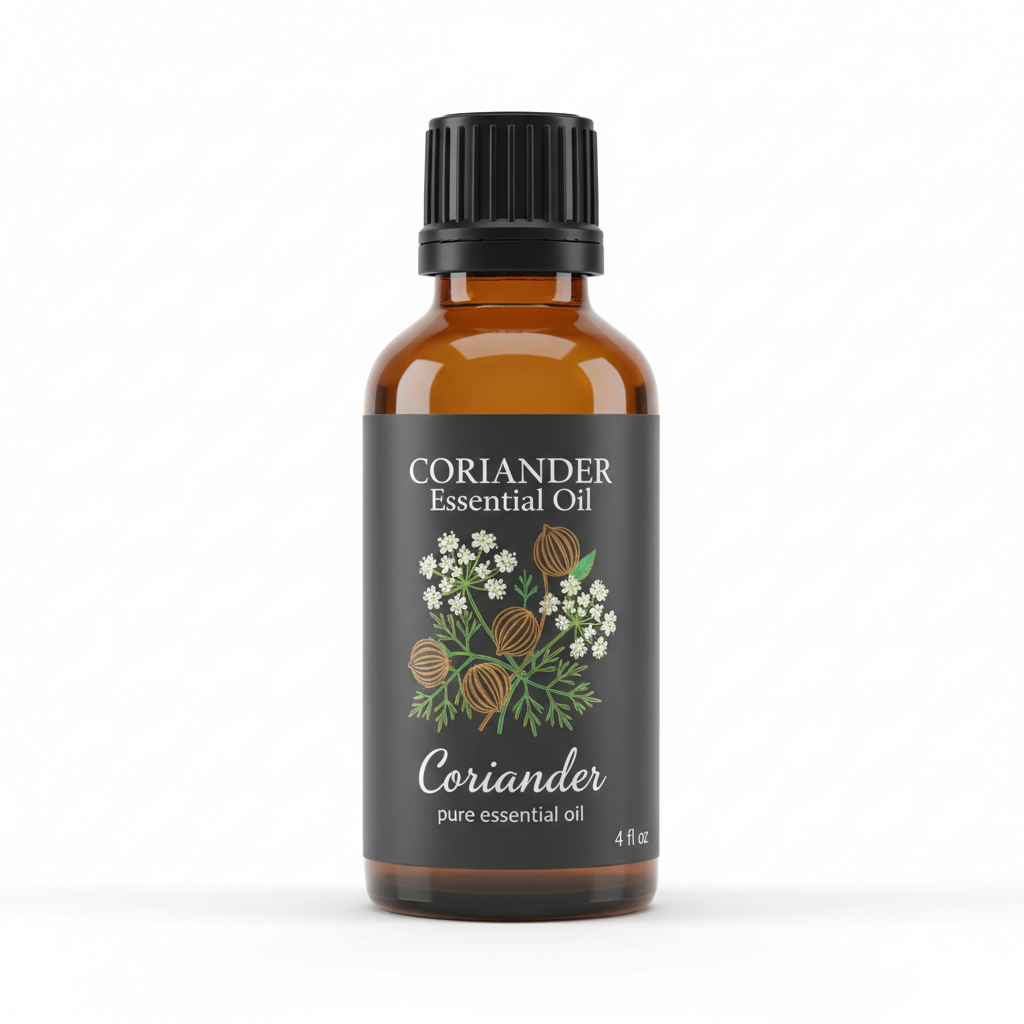
Coriander Essential Oil
Our own Coriander Essential Oil, in sizes from 0.5 oz to bulk.
From $12.99
Shop Now →Step one: a molecule in a dish
In isolated cells, linalool has been reported to enhance currents through GABA-A receptors, the target of the brain's main inhibitory messenger (Milanos et al., Frontiers in Chemistry, 2017). The same work noted that when linalool is inhaled or swallowed it is metabolised, and only some of the products showed this activity. It is a fine piece of mechanism, but it tells you what could happen, not what happens when a diffuser runs down the hall.
Step two: mice in a chamber
In one study, mice spent 60 minutes in air saturated with 1% or 3% linalool and then slept longer under a sedative and showed lower body temperature, while coordination was unaffected (Linck et al., Phytomedicine, 2009). A follow-up reported less anxiety-like behaviour in a light/dark test and more social interaction, with memory affected at the higher dose (Linck et al., Phytomedicine, 2010). These used linalool alone in saturated chamber air, which is a very different thing from a few drops of a whole seed oil in a room, so the findings are interesting but do not transfer neatly.
Step three: coriander seed extracts
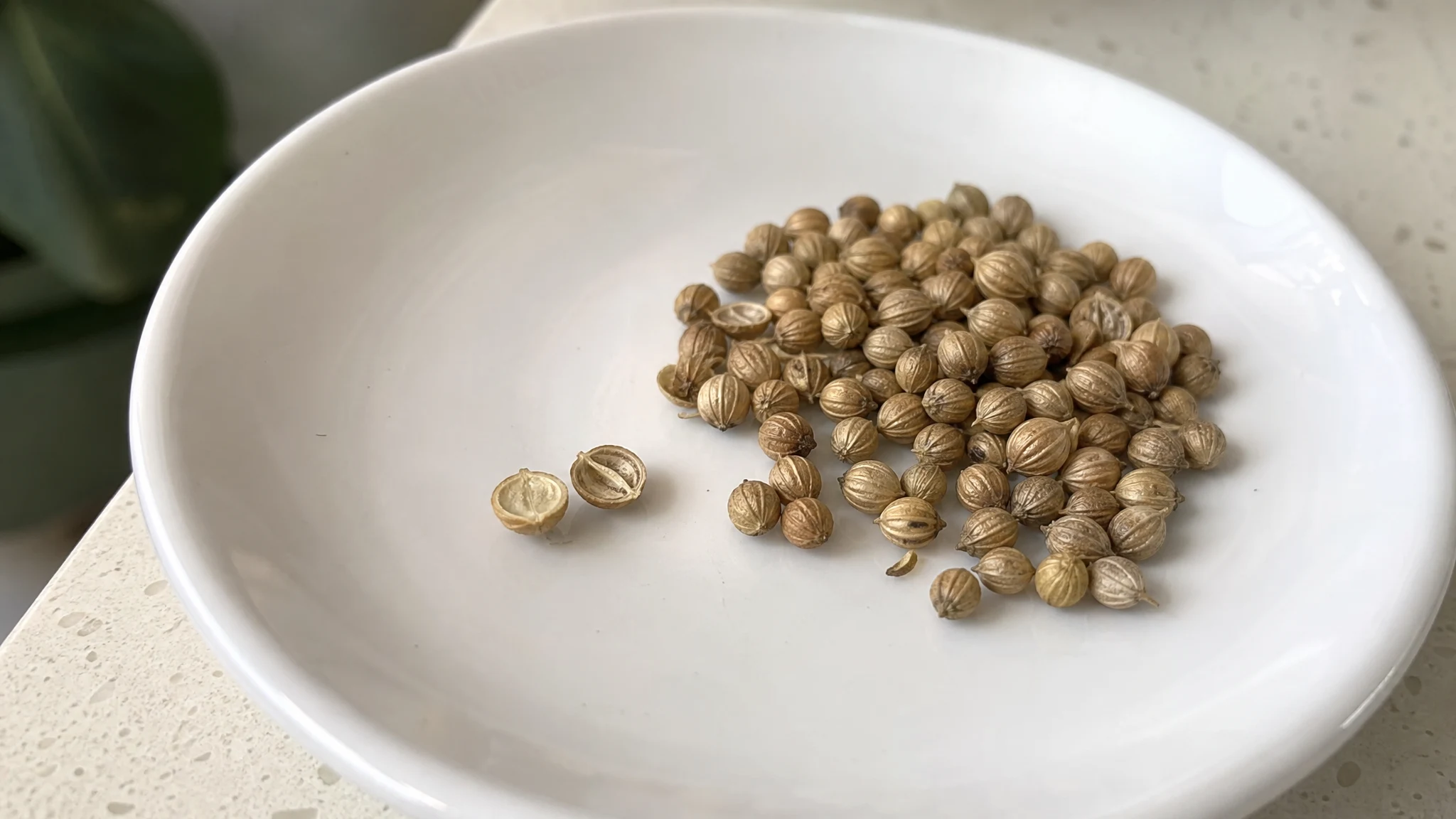
Two rodent studies used extracts from the seed, not the oil. A hydroalcoholic fruit extract given to mice at 100 and 200 mg/kg produced effects in four anxiety models comparable to diazepam, while 50 mg/kg did not (Mahendra and Bisht, 2011). In another, an aqueous seed extract injected at 100 mg/kg raised mice's time on the open arms of a plus-maze, while activity and coordination fell at higher doses (Emamghoreishi et al., 2005). Those are doses given by mouth or injection, of water or alcohol extracts, which are chemically unlike a distilled aromatic oil. A simple multiplication of 100 mg/kg for a 70 kg adult gives 7 grams, an illustration of how far the doses sit from a few drops of oil in the air, even allowing that animal-to-human scaling is not linear.
Step four: people breathing coriander oil
This is the step that would matter most for a shopper, and as far as we know it has not been taken: we are not aware of a human trial of inhaled coriander seed oil for anxiety, stress or sleep.
A close cousin with human data
Lavender is the linalool-rich aroma that has actually been trialled. A 2026 meta-analysis pooled 11 randomized trials with 628 adults and reported better sleep scores with lavender oil, while noting that the number and quality of studies limit the conclusion (Shen et al., 2026). That belongs to lavender. Two oils that share a main compound are not interchangeable, and they smell quite different too; our coriander versus lavender comparison goes through it. The NCCIH puts it plainly: aromatherapy is sometimes used for insomnia, but whether it helps is not known because little rigorous research has been done (NCCIH, Aromatherapy).
Why the story is so tempting
Anyone who has opened a bottle of lavender and then a bottle of coriander seed oil knows why the two get lumped together. Both have a soft, sweet, floral thread running through them, and a smooth scent like that feels gentle before you have thought about it at all. That feeling is a fact about your nose, and it is worth enjoying as such. What a pleasant smell cannot do is stand in for a trial, and a headline that borrows a result from one plant to describe another is borrowing something that was never lent.
When you read the next article that says an oil does something for the mind or body, a few habits help. Check which oil was actually used, and whether it was breathed, swallowed or injected. Look at who took part, mice or people. And notice whether the paper says what it found or what the writer hoped it meant.
So what is coriander oil for?
Ours is a distilled seed oil with a warm, woody, softly spicy scent and a light floral edge, and people choose scents they enjoy for their rooms. If you like it in a diffuser, we say a little goes a long way, and our pieces on blending and diffusing are good places to begin. Keep it away from children and pets.
A small ritual that asks nothing of the oil
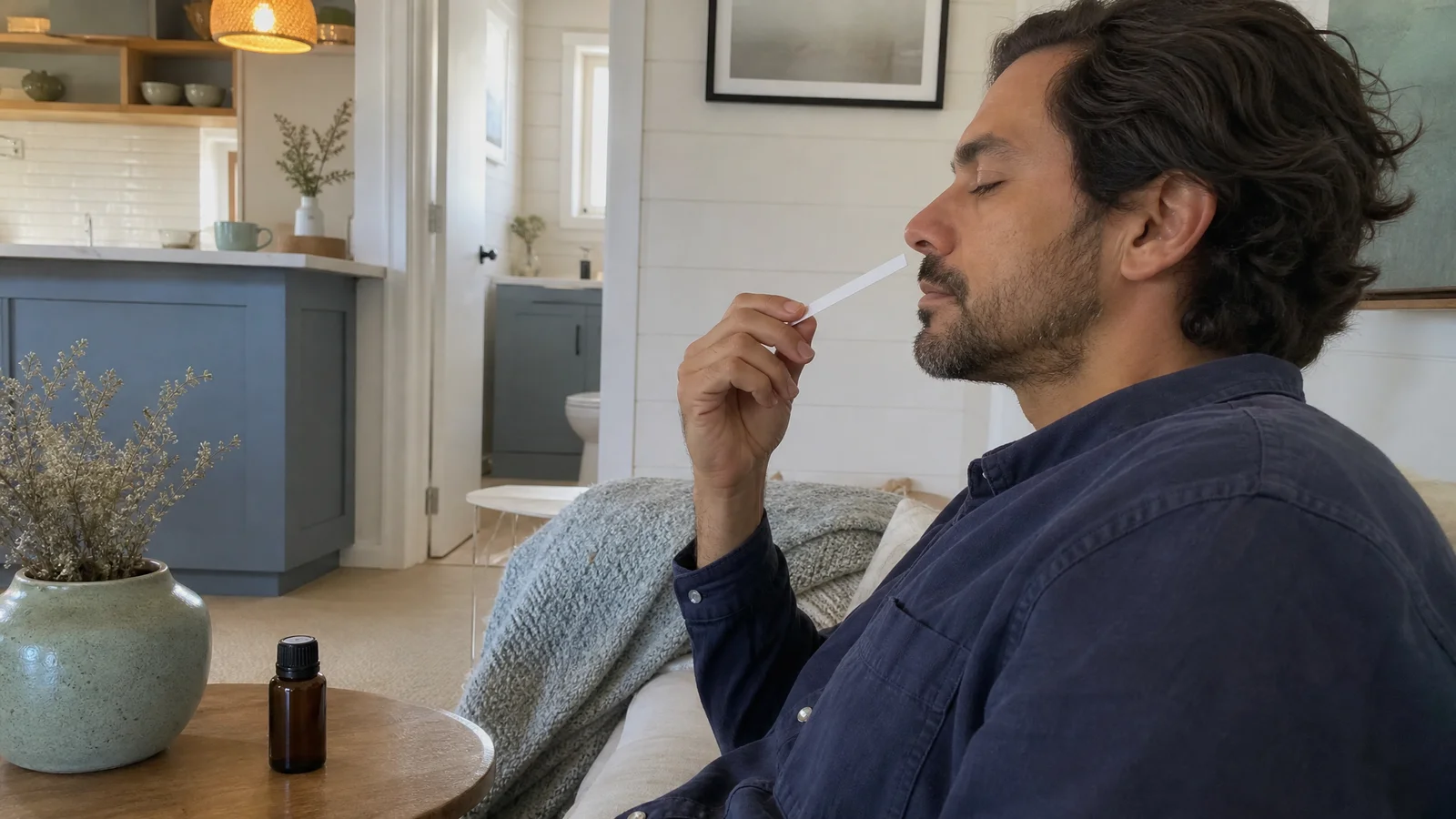
If you enjoy the scent, treat it as a pleasure and nothing more. Put a drop on a paper strip, hold it a little away from your face, and notice what you get first: the warm spice, the sweetness, the faint floral edge. Come back to it in ten minutes and notice what has changed. That is a perfectly good way to spend a quiet moment with a bottle, and it needs no promise from anyone.
Everyday stress is part of life, but if worry or poor sleep has been lingering, that is a conversation for a doctor, not a bottle. If you are pregnant or buying for a child, the same advice applies before trying any botanical product.
Coriander Essential Oil
Coriander Essential Oil from our own shop, in sizes from 0.5 oz to bulk.
From $12.99
Shop Now →Sources & Further Reading
- Milanos et al., 2017, linalool metabolites and GABA-A receptors
- Linck et al., 2009, inhaled linalool-induced sedation in mice
- Linck et al., 2010, inhaled linalool, anxiety and social interaction in mice
- Mahendra and Bisht, 2011, Coriandrum sativum extract in anxiety models
- Emamghoreishi et al., 2005, coriander seed extract in the elevated plus-maze
- Shen et al., 2026, lavender oil and sleep, meta-analysis
- NCCIH, Aromatherapy