What Does Therapeutic Mean on Coriander Oil Labels?
A "therapeutic" badge sounds like a rating, the way "Grade A" sounds on an egg. For essential oils it is not one: no regulator or standards body hands it out, so on a coriander bottle it is the seller's phrase and nothing a buyer can verify. The good news is that there are real things you can ask about instead, and they are more interesting than a badge.
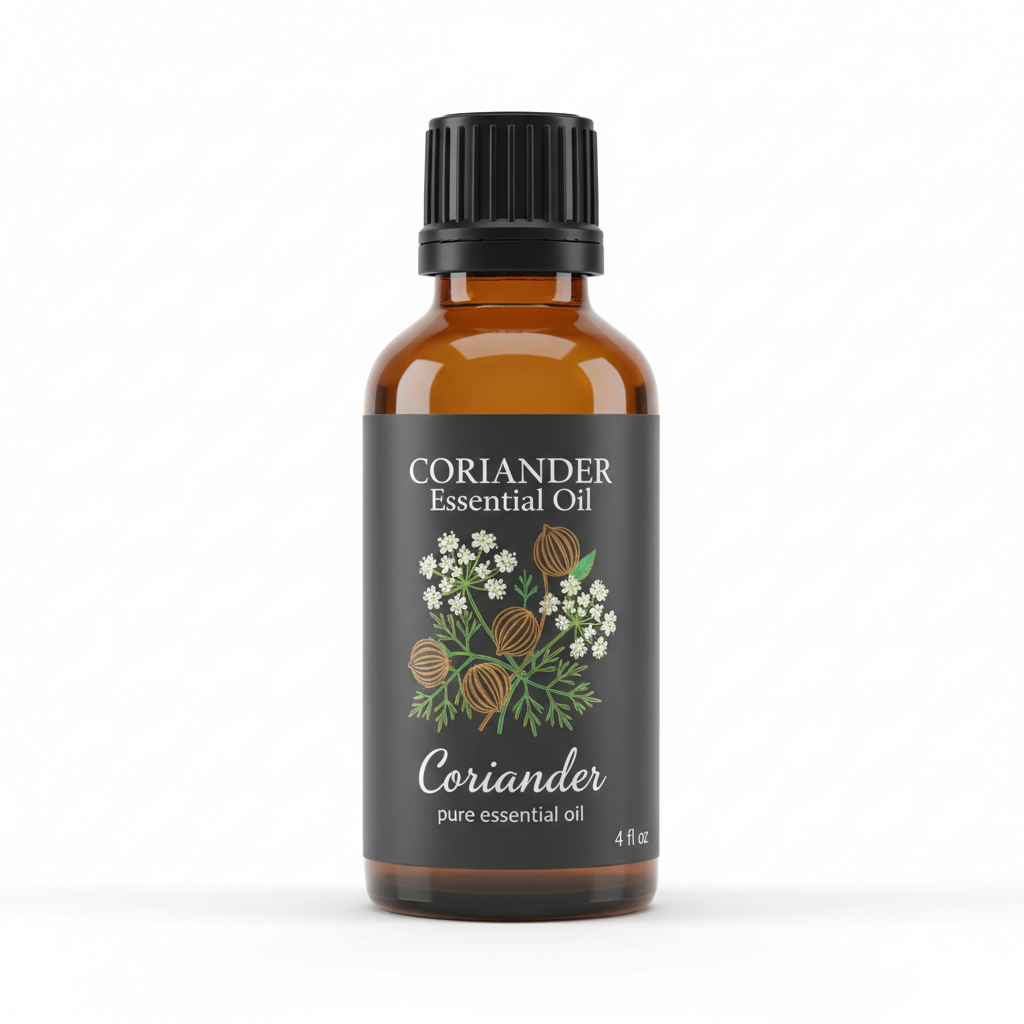
Coriander Essential Oil
Our own Coriander Essential Oil, in sizes from 0.5 oz to bulk.
From $12.99
Shop Now →What regulators actually look at
When we look at the oil world, we notice how many labels lean on a few reassuring words, and how few of them explain what is behind the words. We would rather talk about the things you can check yourself.
The FDA does not grade essential oils. Its aromatherapy page says how a product is regulated depends mainly on its intended use, judged from labeling, websites and advertising, and that products intended for a therapeutic use such as treating or preventing disease are drugs, even when they come from plants (FDA, aromatherapy). That is one reason we describe our coriander seed oil by its aroma and cosmetic use, and leave health language off the label.
What a real specification looks like
Coriander fruit oil does have a documented specification. EFSA's 2023 assessment lists linalool at 65 to 78%, camphor at 3 to 6%, plus refractive index, density and optical rotation, with the applicant's specifications based on ISO 3516:1997 (EFSA FEEDAP Panel, 2023). That standard covers the fruit, meaning the seed, and not the leaf oil.
The same assessment shows how much the measuring method matters. Five batches averaged 71.7% linalool by GC-FID and 58.72% by GC-MS. Same oil, about 13 points apart. A linalool percentage on a label without a method is therefore not a lot of information, and our GC-MS checklist shows how to read a report properly.
Honest oils vary
Nature adds its own spread. In a study of six coriander genotypes sown on four dates in Adana, linalool in the oil ranged from 47.44 to 74.96% (Ali Ali et al., 2026). So there is no single correct number, and a lot outside one range is a reason to ask a question, not proof of a problem.
Where the Certificate of Analysis fits
A certificate describes what was measured in one lot. The one we publish for a single batch reports appearance and smell as complying, a relative density of 0.857 against a standard range of 0.842 to 0.873, and a refractive index of 1.464 against 1.456 to 1.472. It does not include GC-MS. If you need a full constituent table before ordering, ask us in writing through our contact page.
Adulteration is the other reason a good report matters. A study of 21 commercial frankincense oils found that all were either adulterated or contaminated with other species, using GC-MS and chiral analysis (Ojha et al., 2022). That is a different oil, but it makes the same point: a label cannot tell you what a lab can, and isotopic and chiral methods can catch what a simple percentage cannot (Vargas Jentzsch, 2019).
What to ask any seller
- The Latin name and plant part: Coriandrum sativum, seed.
- A report for the lot that names the method and shows the whole constituent table, not just linalool.
- Which specification, if any, the oil was checked against.
- Chiral data if adulteration worries you.
- Storage advice, because linalool that has oxidised can sensitise skin: in a patch-test series of 6,719 patients, 3.1% reacted to linalool hydroperoxides (Botvid et al., 2026). Our storage article covers keeping a bottle fresh.
Words that sound like ratings
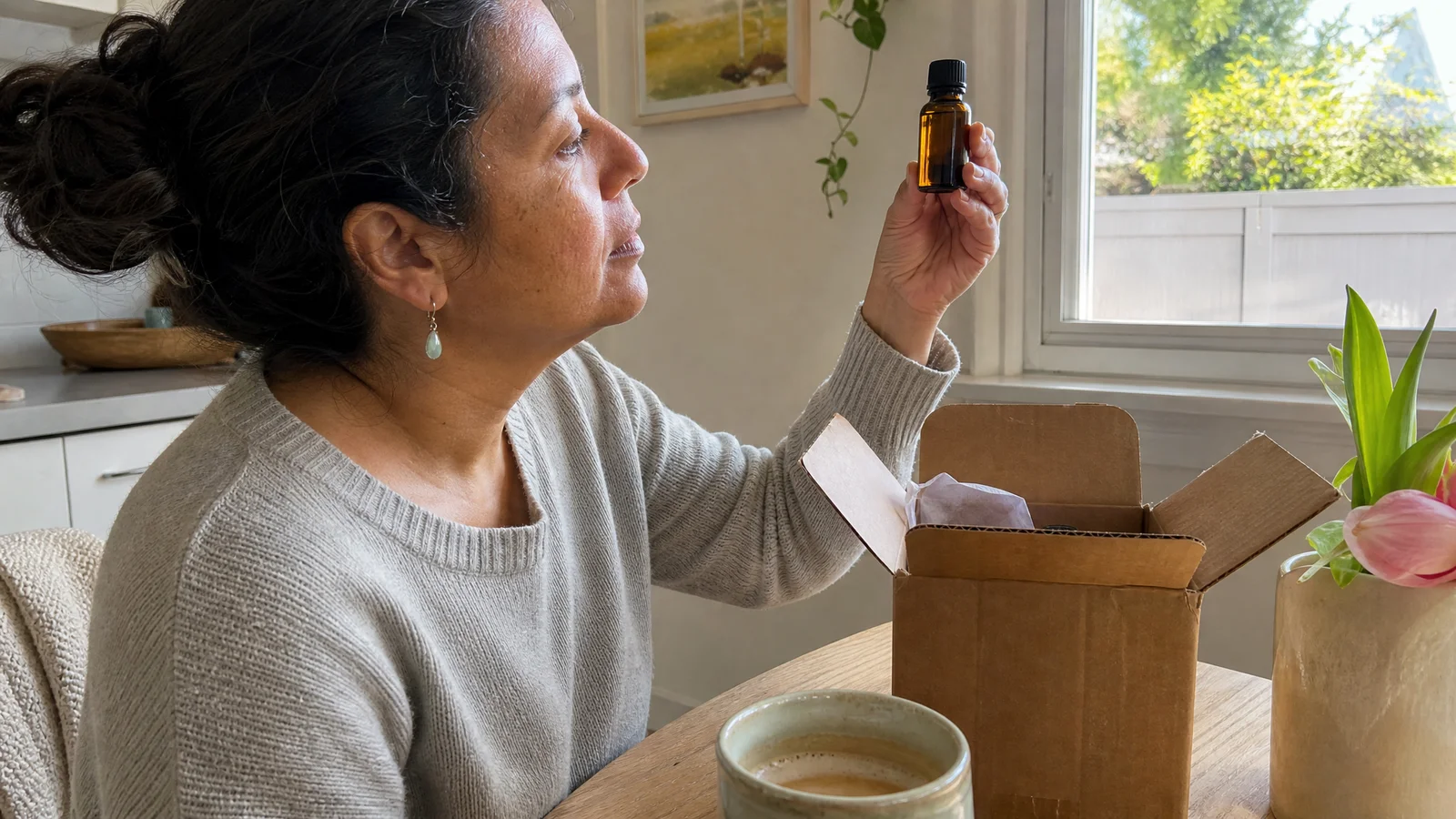
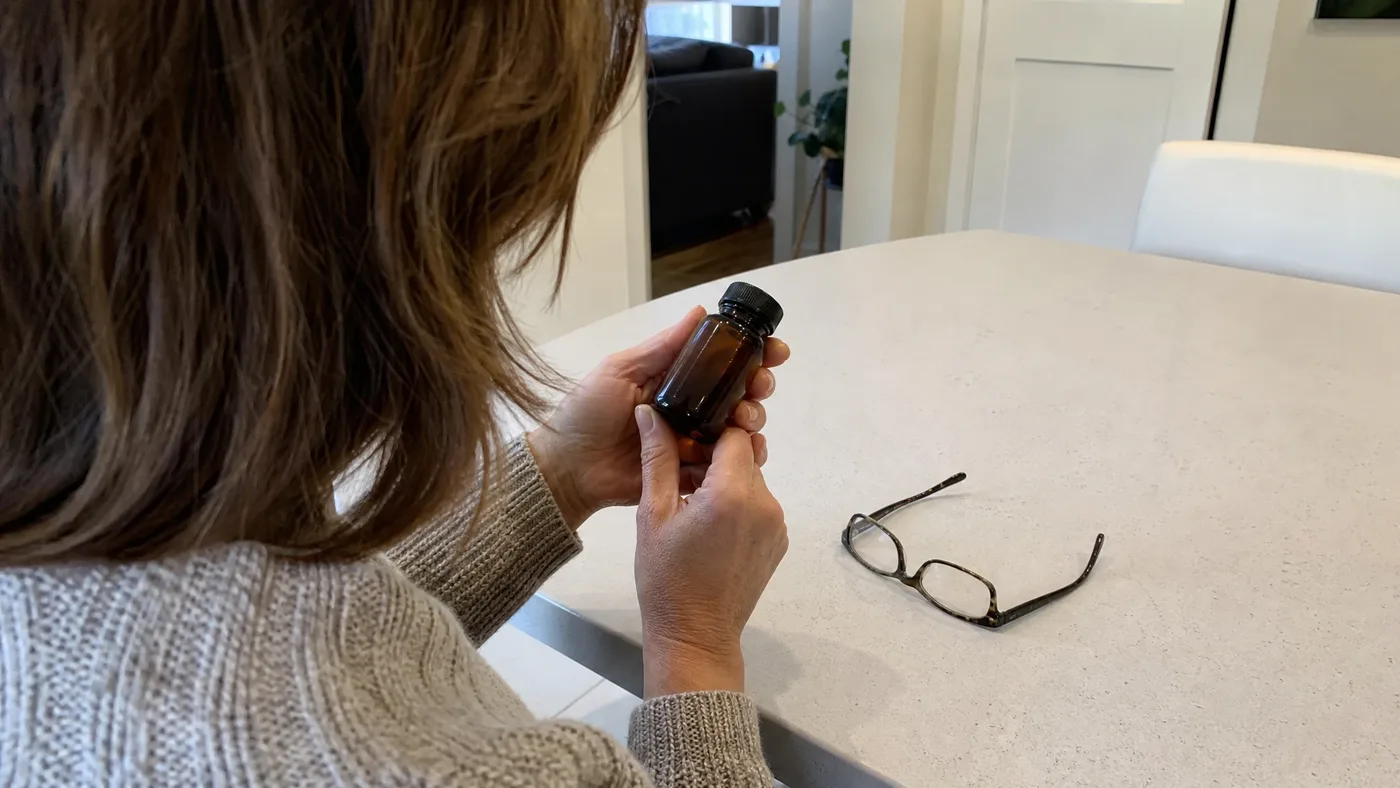
Labels are full of friendly phrases: "premium," "finest," "best quality," "therapeutic." They look like ratings, but unless someone can show you the standard behind them and the report that proves it, they are only words. A useful trick is to cover the front of the bottle and read only the back. Does it say the plant, the part, the batch and how to reach the seller? Those are the details that last.
What a thoughtful buyer does
The most reassuring buyers we can imagine are the curious ones. They read, they ask, they compare reports, and they keep their notes with the bottle. If you plan to use an oil in something you make for others, that habit becomes even more valuable, because you will be able to answer questions about it yourself.
You do not need to be an expert to do any of this. You need a pen, a few minutes and a willingness to ask politely. Most sellers respect that, and the ones who do not are telling you something too.
Our promise to you
We would rather describe our oil in plain words than dress it up. It is a single coriander seed oil, we describe its aroma as warm, woody and softly spicy, and if you want more detail we are glad to answer questions in writing. You should expect that kind of plain talk from any seller you deal with.
Our buyer's guide puts these steps in order. Questions about health belong with a physician or pharmacist, not with a grade on a bottle. What a good coriander oil gives you is a warm, sweet, spicy aroma, and a good seller will happily tell you how they know what is in it.
Coriander Essential Oil
Coriander Essential Oil from our own shop, in sizes from 0.5 oz to bulk.
From $12.99
Shop Now →Sources & Further Reading
- US FDA. Aromatherapy. fda.gov/cosmetics/cosmetic-products/aromatherapy
- EFSA FEEDAP Panel, 2023. Safety and efficacy of an essential oil from the fruit of Coriandrum sativum L. PMC10613936
- Ali Ali DA et al., 2026. Coriandrum sativum genotypes under different sowing dates. pubmed.ncbi.nlm.nih.gov/41939328
- Ojha S et al., 2022. Plants 11(16):2134. PMC9415502
- Vargas Jentzsch P et al., 2019. Detection of essential oils adulteration. AJBSR 4(1). biomedgrid.com
- Botvid S et al., 2026. Contact Dermatitis 94(5):504-514. pubmed.ncbi.nlm.nih.gov/41638887