Coriander in Gin: What the Seed Adds to Your Glass
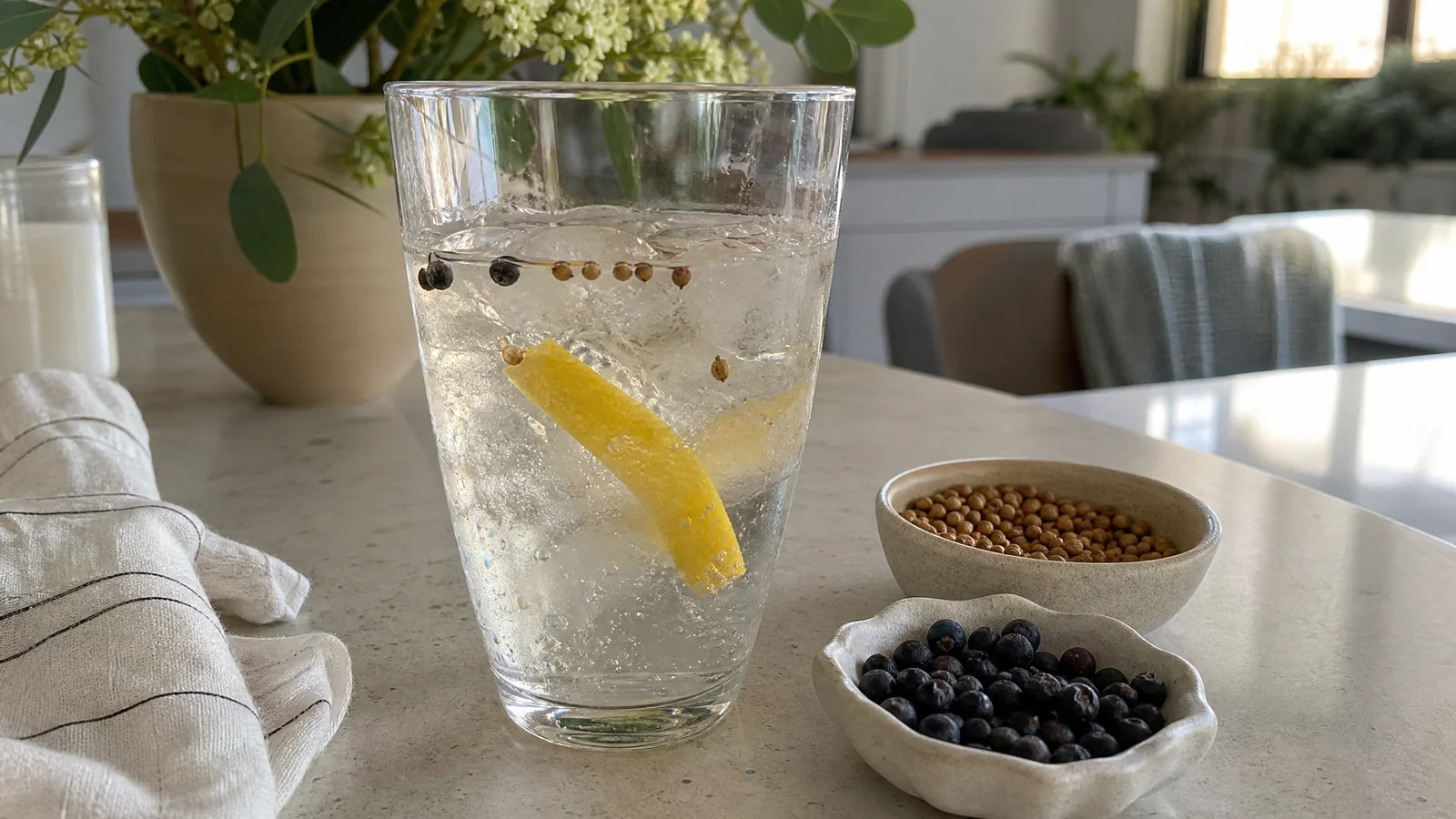
Pour a gin and tonic and you are probably smelling coriander, though no label will tell you so. The seed is one of the most common botanicals in gin, and it is also the plant part we distil into our coriander oil. The spice jar, the still and our bottle share a plant but not a purpose, and it helps to know which is which.
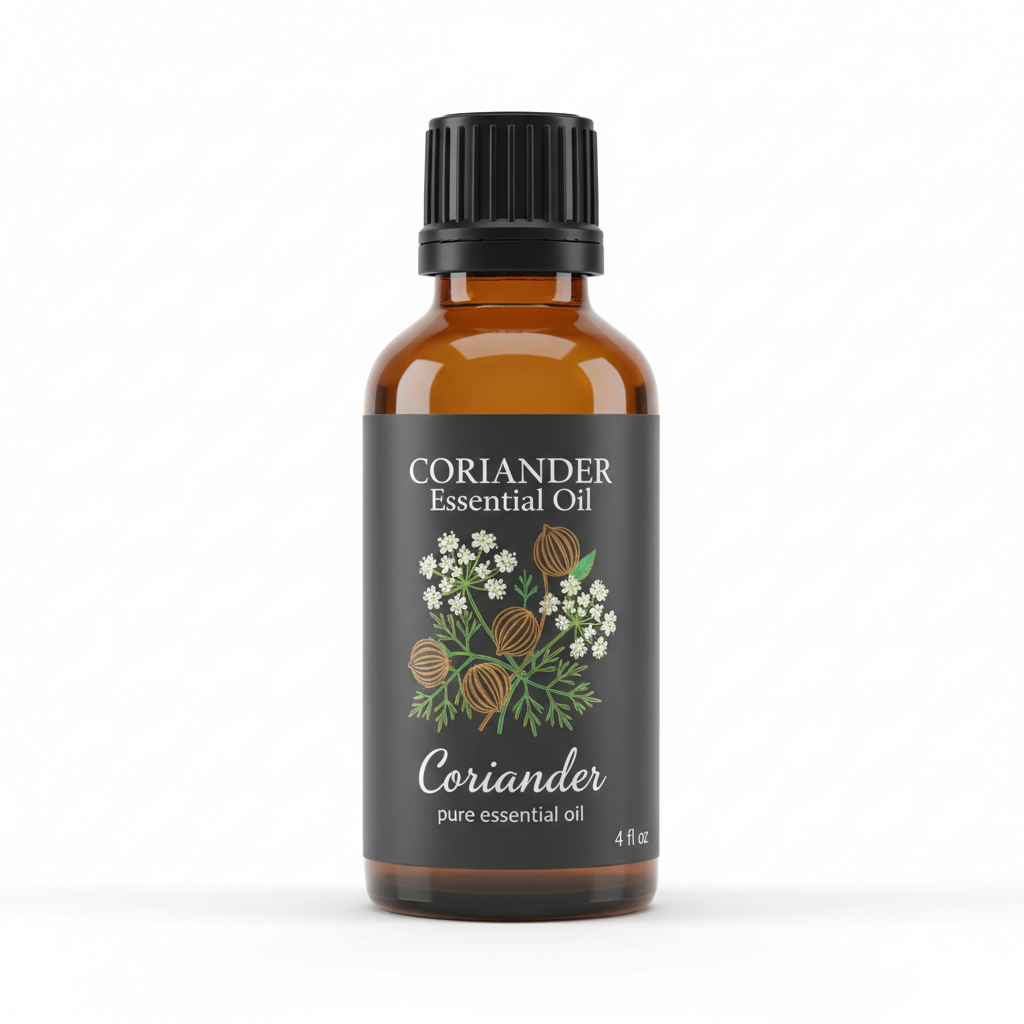
Coriander Essential Oil
Our own Coriander Essential Oil, in sizes from 0.5 oz to bulk.
From $12.99
Shop Now →Juniper leads, coriander supports
Gin is legally a juniper spirit. The EU definition of distilled gin says the juniper taste is predominant, with other flavourings allowed alongside it (Regulation (EU) 2019/787, Annex I, category 21). So coriander is a supporting player in any legally defined gin, even though many recipes lean on it.
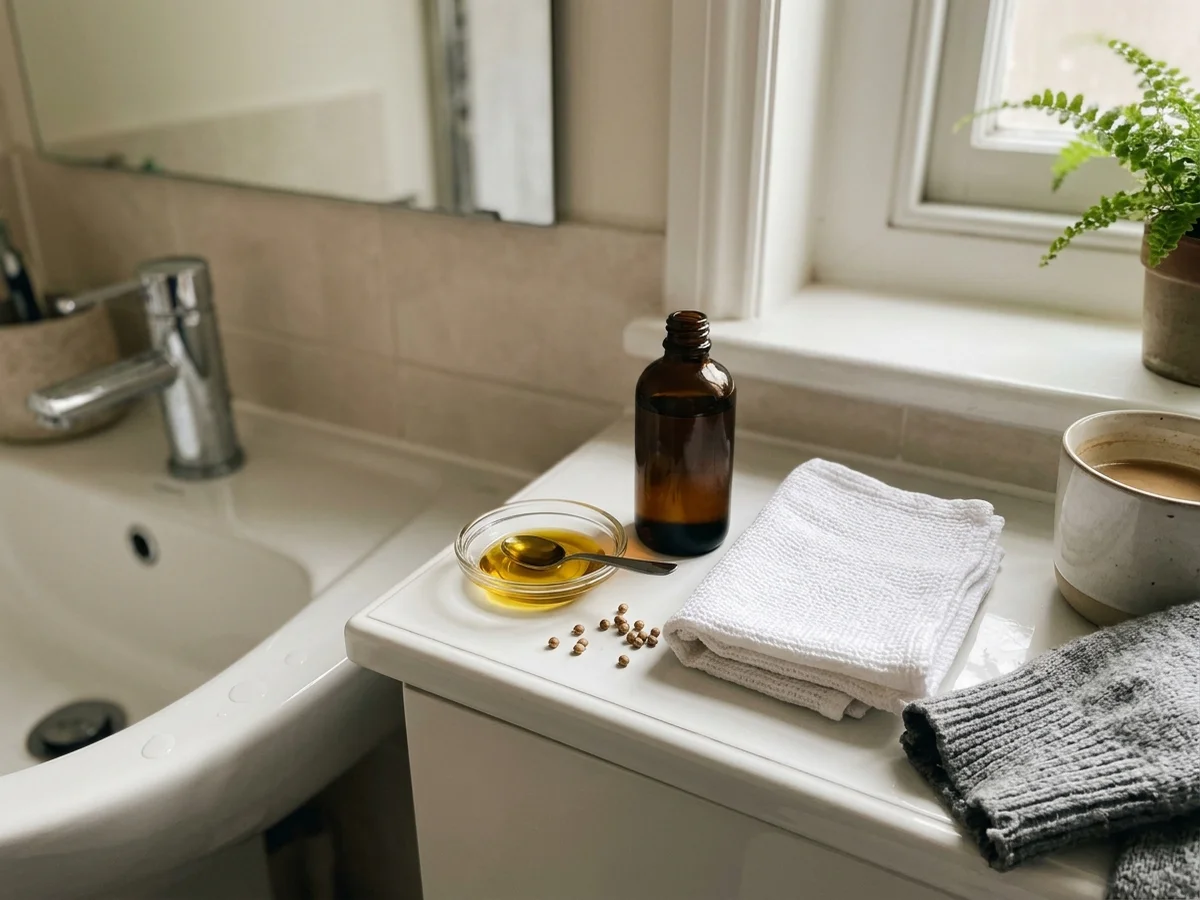
What does it add? A study of two Bavarian gins, one made with 50 botanicals and one with 15, named limonene, 1,8-cineole, linalool, estragole and trans-anethole as key aroma compounds, and linalool scored highest for odour impact in both (Buck et al., 2020). The paper does not trace linalool to a particular botanical. But coriander fruit oil is typically 60 to 73% linalool (Machado et al., 2023), so it is reasonable to think of it as a major linalool contributor wherever it appears. That is our inference, not a finding of the study.
Seed or leaf
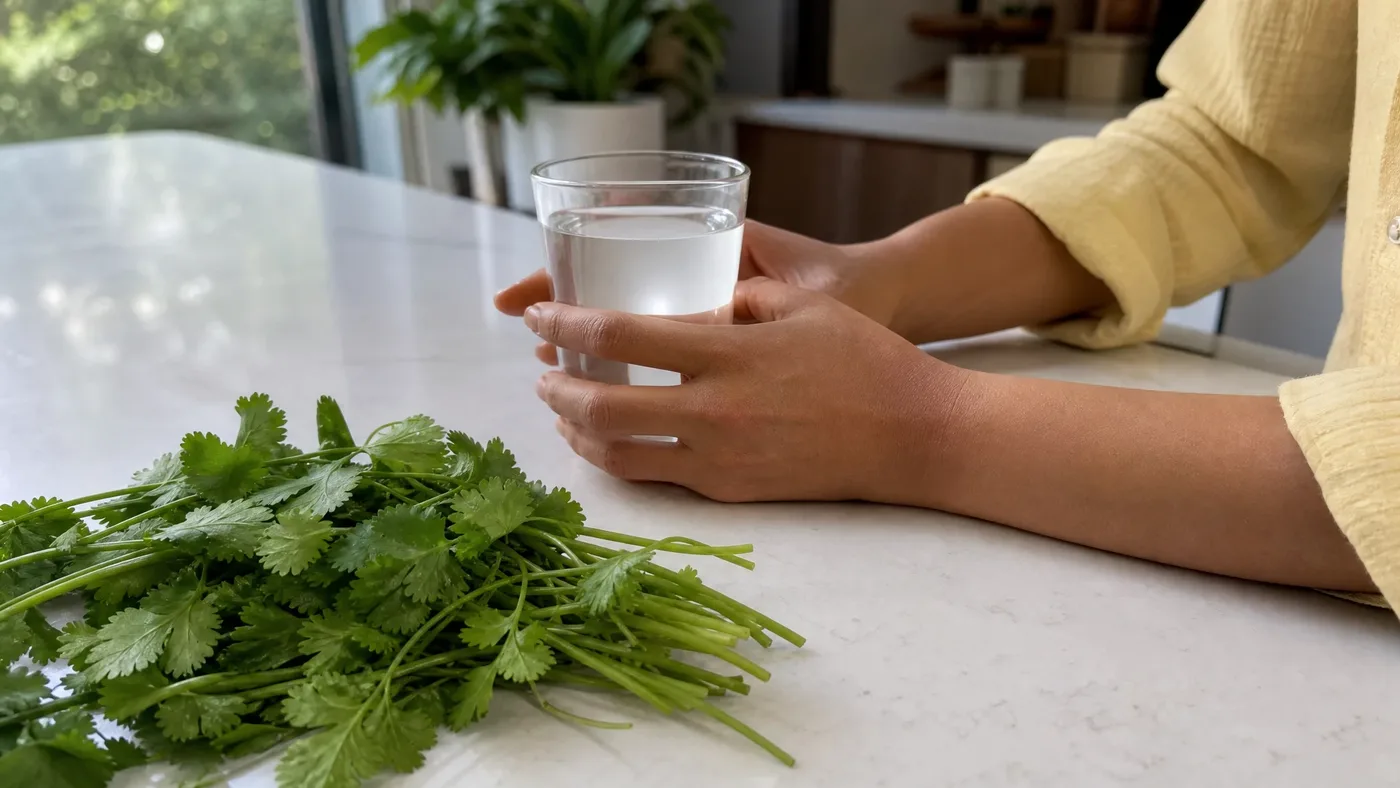
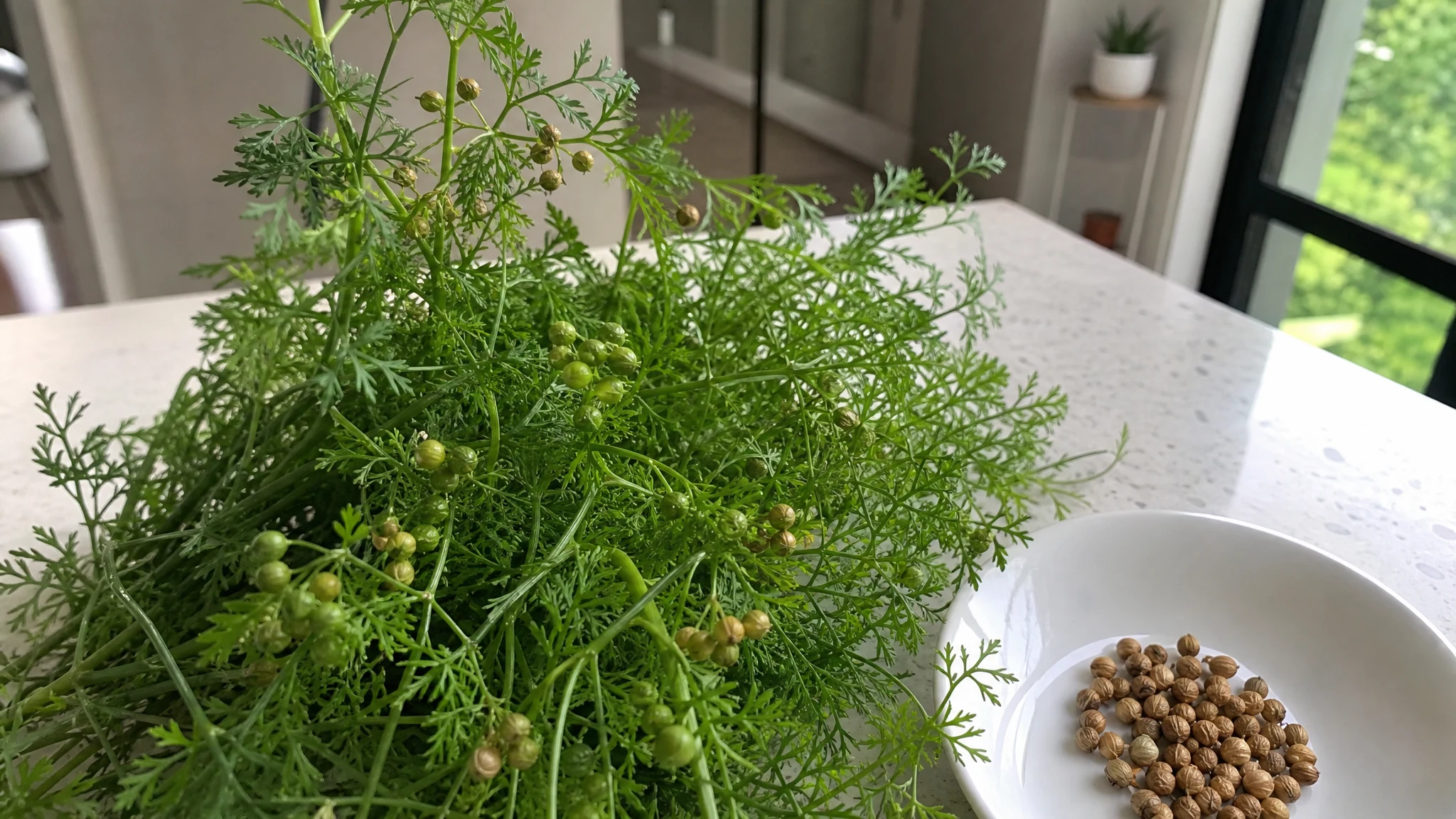
The same Portuguese study found the green parts carry a completely different oil, dominated by 2-trans-decenal (37 to 63%) and n-decanal (13 to 30%). That is why gin tastes of warm, citrusy spice and not of fresh cilantro, and why our oil, which is from the seed, reads as sweet and woody rather than leafy. Our seed versus leaf article goes into the chemistry, and if cilantro tastes like soap to you, our soap gene article explains why.
Three things called coriander oil
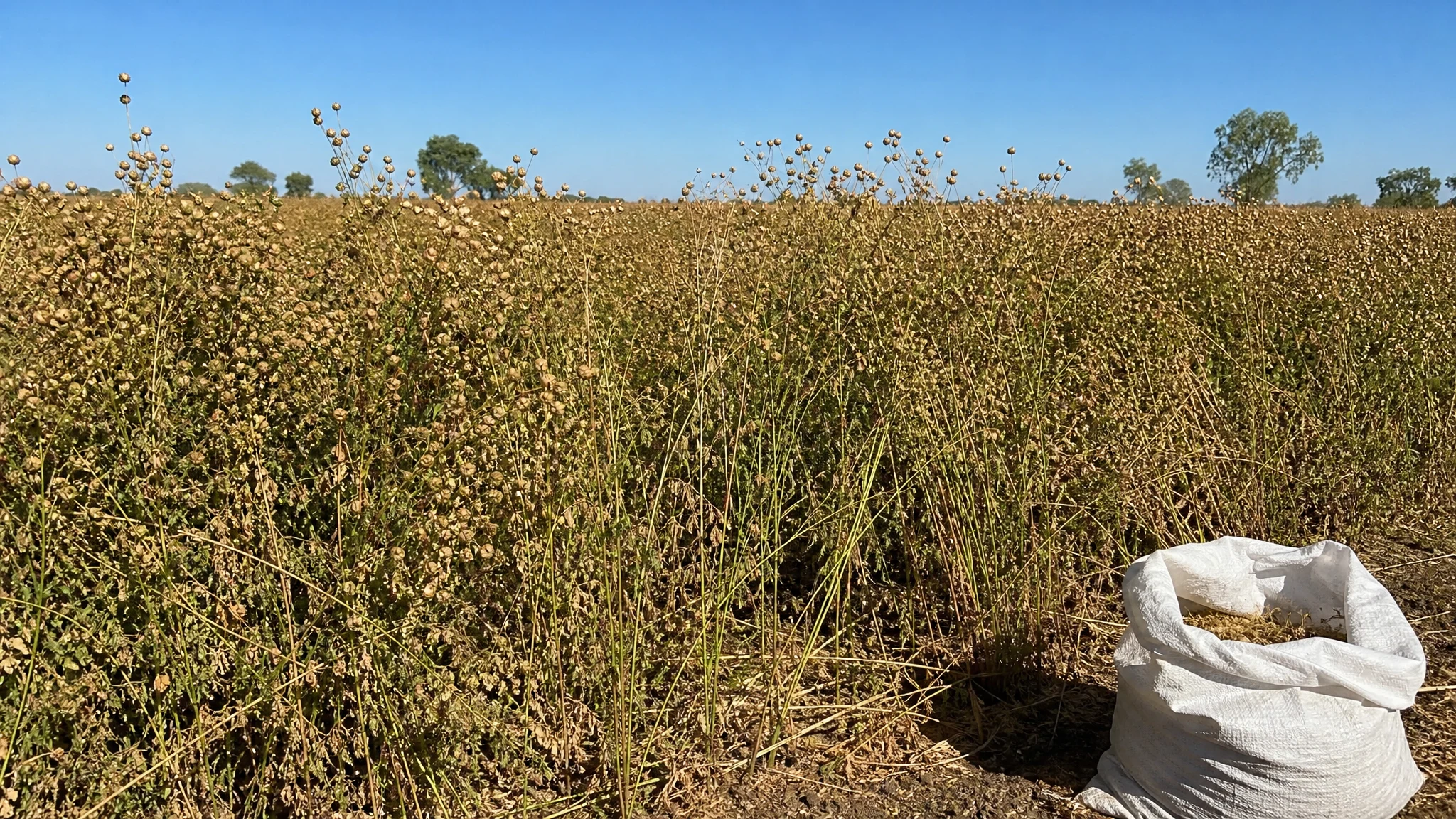
- Essential oil. Steam-distilled from the crushed seed, and only a sliver of it by weight: dried Iranian seed gave 0.1 to 0.36% (Nejad Ebrahimi et al., 2010), and a 119-genotype trial reported 0.05 to 1.86% (Basol et al., 2024). This is what we sell, and it is made for aroma and cosmetic use.
- Fixed oil. A much larger share of the seed, 10 to 34% in that same trial, and rich in petroselinic acid. It is a different material with a different job, and we do not sell it.
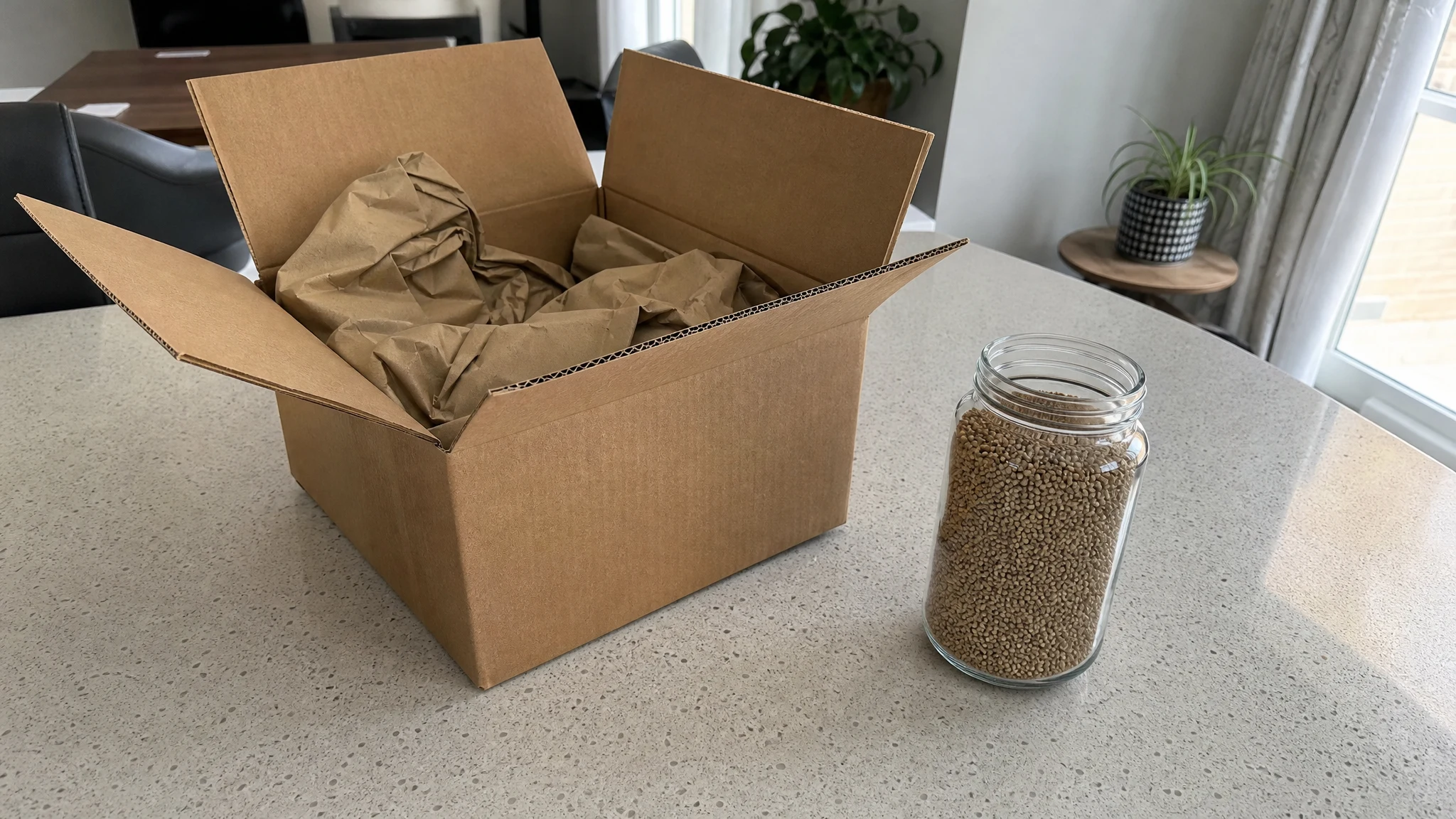
- The spice. Whole or ground seed from a grocer. We do not sell that either.
The yield figures explain why a distilled oil is not a cooking ingredient. At 0.1 to 0.36% by weight, a kilogram of seed gives roughly 1 to 3.6 g of oil, so one small bottle is a great deal of seed. A pinch of ground coriander and a drop of distillate are very different amounts of the same smell.
US food regulations do list coriander, Coriandrum sativum L., among substances generally recognised as safe for their intended use as a flavouring (21 CFR 182.20). That entry covers food-grade flavourings. Our oil is labelled not for internal use, so it does not take part in that conversation.
Smell your way through the spice drawer
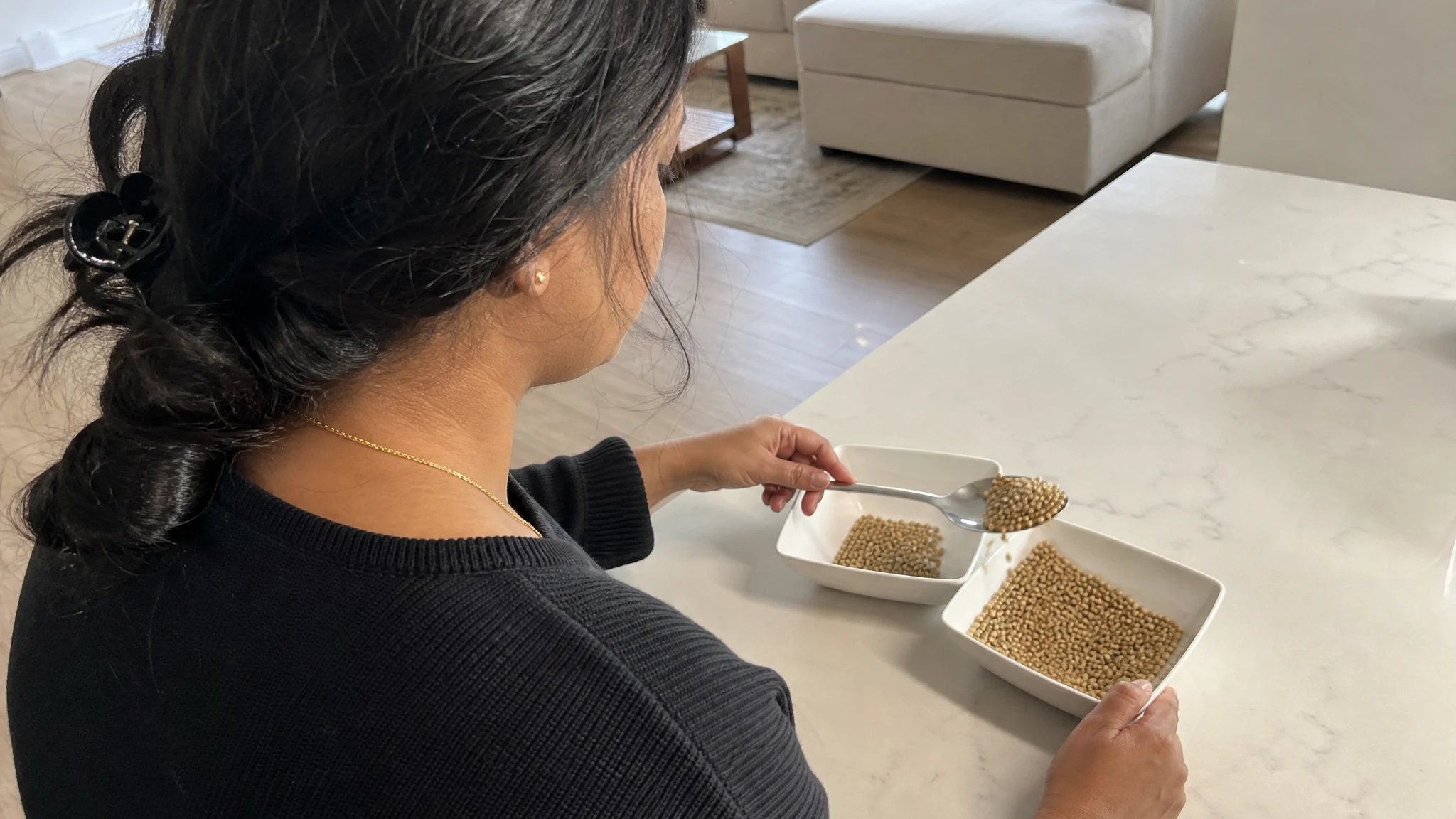
A pleasant way to understand coriander in a glass of gin is to smell it in your kitchen. Crush a few whole seeds, cup your hands over them and breathe in slowly. You'll notice a sweet, lightly citrus note, with a woody warmth underneath, and none of the green freshness of the leaf. Now think of juniper, the needle-like, piney smell of gin. Together, the two make a picture: pine and orange peel on a cold day.

That small exercise also shows why the spice and the oil are cousins and not twins. The jar gives you the whole seed, and the bottle gives you the part that steam carries out. Both are lovely, and each has its own job.
A tasting habit for the curious
If you enjoy gin, try this at your own table: pour a small measure, swirl it, and before you sip, breathe in slowly. Look for the pine of juniper first, then underneath it a sweeter, rounder warmth. That second layer is often where coriander sits. Go back and forth between a gin and a crushed seed in your palm, and you may find you can pick it out. It takes no equipment, only a little quiet.
Where each one belongs
For flavour in food or a drink, use seed or a flavouring made and labelled as a food ingredient. For the aroma of the seed in your home or in a skin blend, that is where our oil shines; our diffusing guide covers a light touch. If someone swallows essential oil by accident, call a poison control centre or a physician right away, and for a pet call a veterinarian; our ingestion article has more. And if you are allergic to coriander as a spice, check with an allergist before using the oil in any form.
If a gin recipe ever inspires you to try a scent at home, the simplest route is a drop of our oil on a paper strip, held beside a glass you are not drinking from. Enjoy the smell and keep the oil out of the drink.
Next time you raise a gin, you can enjoy the seed in the glass knowing exactly how far it has travelled from the one in our bottle.
Coriander Essential Oil
Coriander Essential Oil from our own shop, in sizes from 0.5 oz to bulk.
From $12.99
Shop Now →Sources & Further Reading
- Regulation (EU) 2019/787, Annex I, category 21, distilled gin (legislation.gov.uk). legislation.gov.uk
- Buck N et al., 2020. Key aroma compounds in two Bavarian gins. Appl Sci 10(20):7269. doi.org/10.3390/app10207269
- Machado AM et al., 2023. Plants 12(14):2749. pubmed.ncbi.nlm.nih.gov/37514362
- Nejad Ebrahimi S et al., 2010. Essential oil compositions of different accessions of Coriandrum sativum L. from Iran. pubmed.ncbi.nlm.nih.gov/20803372
- Basol A et al., 2024. Biology 13(11):866. pubmed.ncbi.nlm.nih.gov/39596821
- US eCFR. 21 CFR 182.20. ecfr.gov