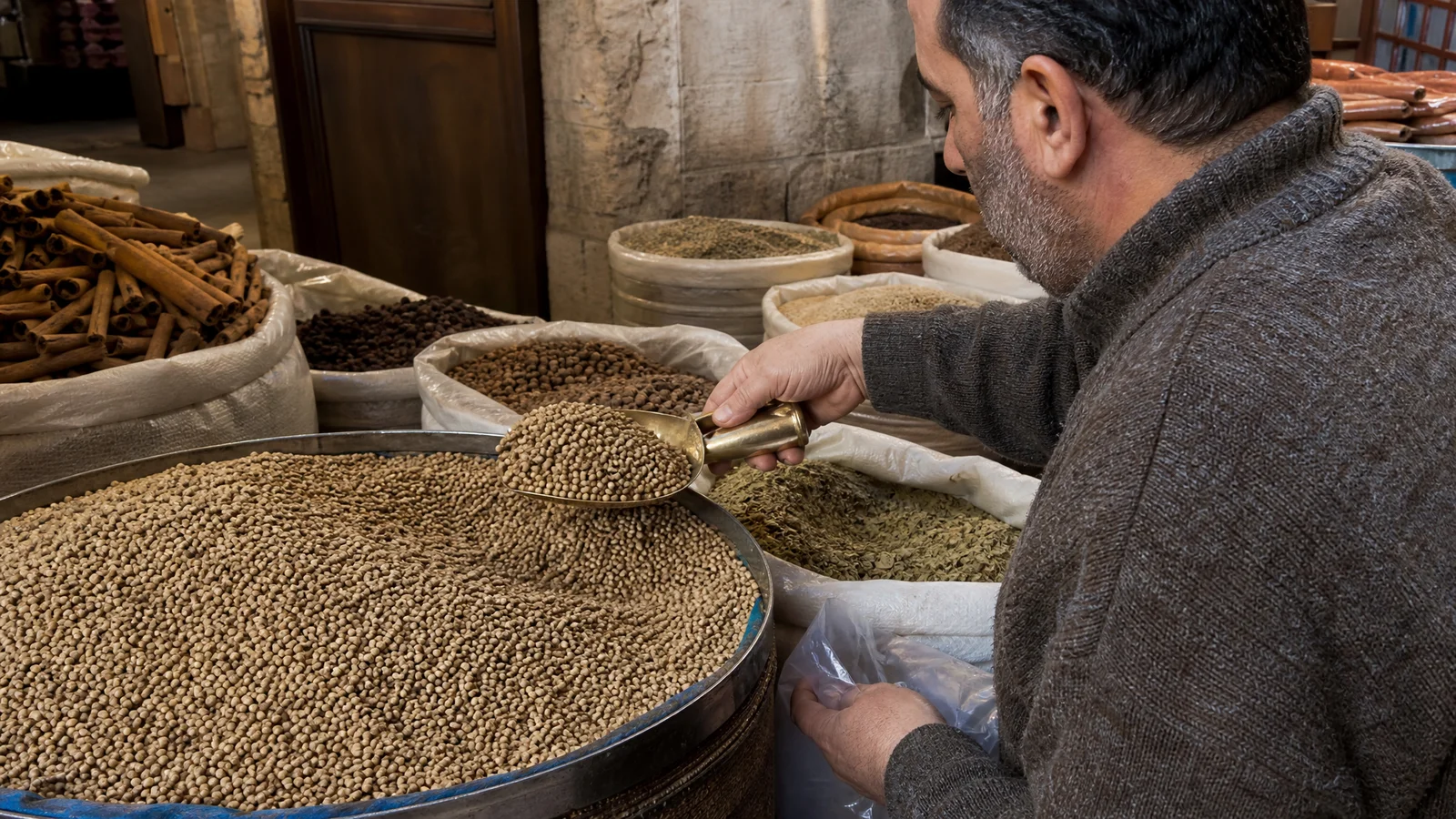
Coriander History: From Ancient Seeds to Modern Oil
Everyone knows coriander is ancient, but pin down exactly how ancient and the story gets pleasantly slippery. The seeds in your spice rack, and the oil distilled from them, have a past made of three kinds of evidence: what archaeologists dug up, what people wrote down, and what chemistry quietly records. Each has something worth telling.
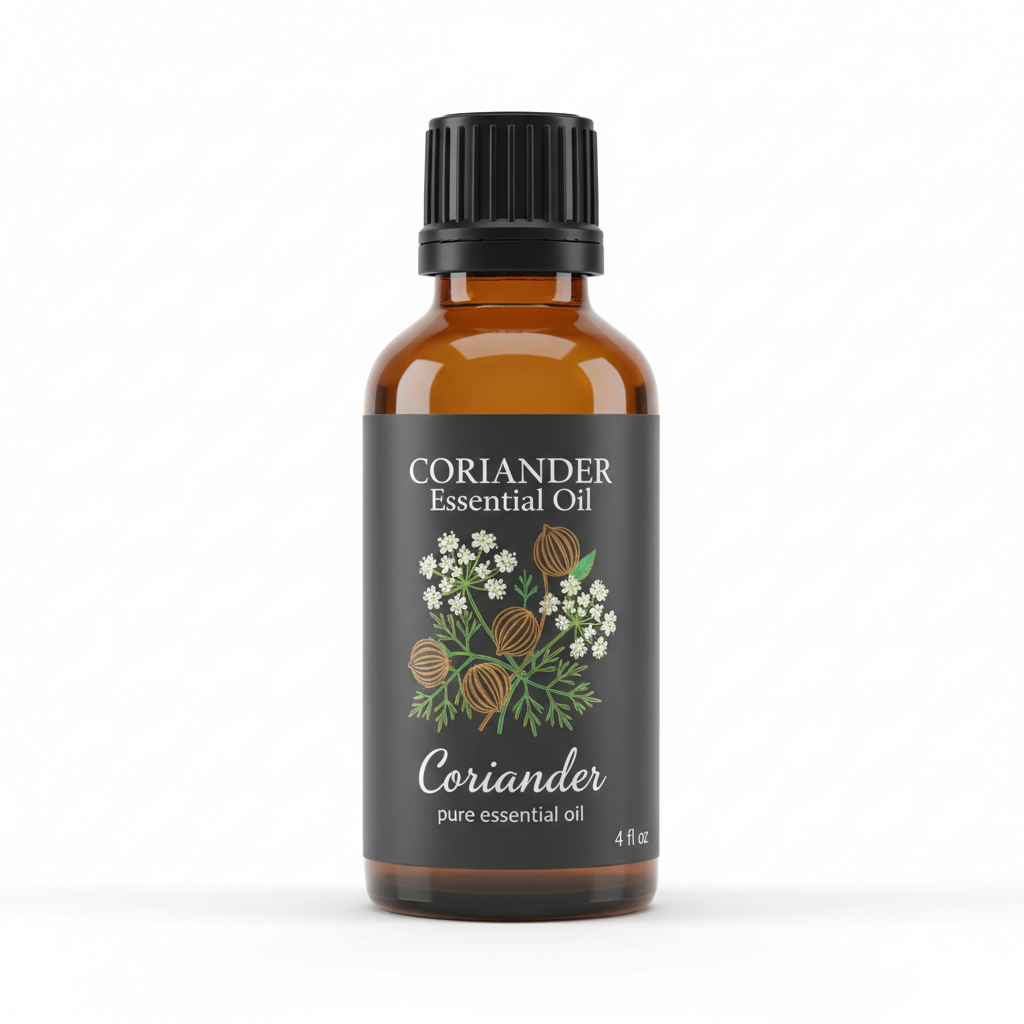
Coriander Essential Oil
Our own Coriander Essential Oil, in sizes from 0.5 oz to bulk.
From $12.99
Shop Now →What the soil remembers
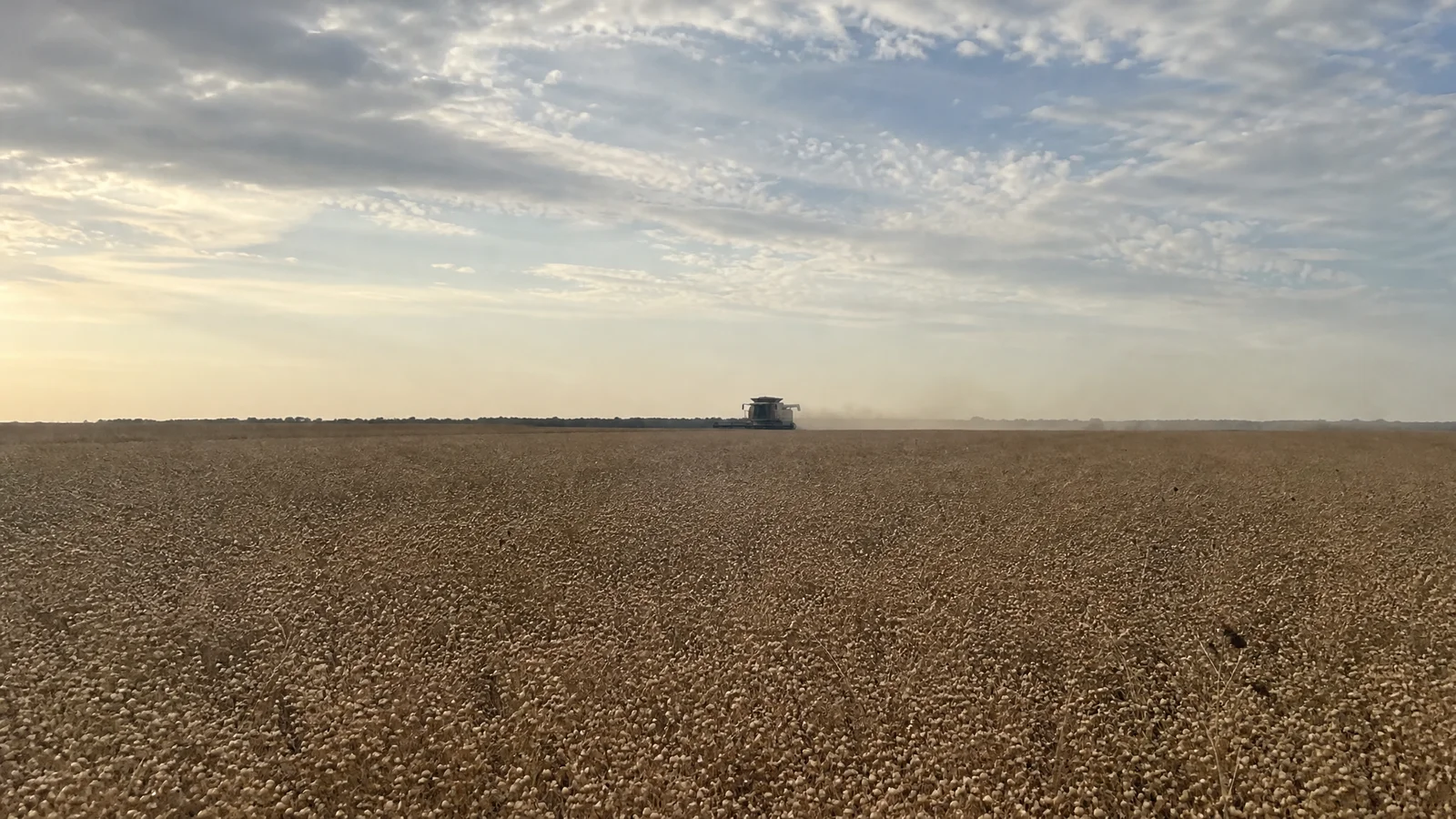
A recent survey of crop introductions in the southern Levant gathered the earliest dated evidence for 80 crops. For coriander it points to seeds at Iron Age Deir Alla, which the authors consider likely cultivated at or near the site (Hansen et al., Vegetation History and Archaeobotany, 2025). That is one region and one review, so it is a marker on the map, not the start of the story. Coriander may well have grown elsewhere earlier.
The same paper offers a lovely idea for why dates are hard to fix. It calls coriander "inno-native": a plant that grew wild in the region, then was gradually managed and farmed once agriculture was established. A seed in an old layer might be gathered wild, grown deliberately, or just slipped down from a later layer, and the seed alone cannot say which.
A garden plant, not a luxury
The written record is later, and homelier. The review's one coriander-specific text is the Geoponika, a 10th-century CE farming compendium that lists "leek, carrot, coriander" among vegetables. The authors also place coriander among native herbs widely available locally. So the plant belongs more in the kitchen garden than in the caravan of rare imports, which makes the common "spice route" tale a little too grand for a herb that grew almost everywhere.
Why ripe seed smells the way it does
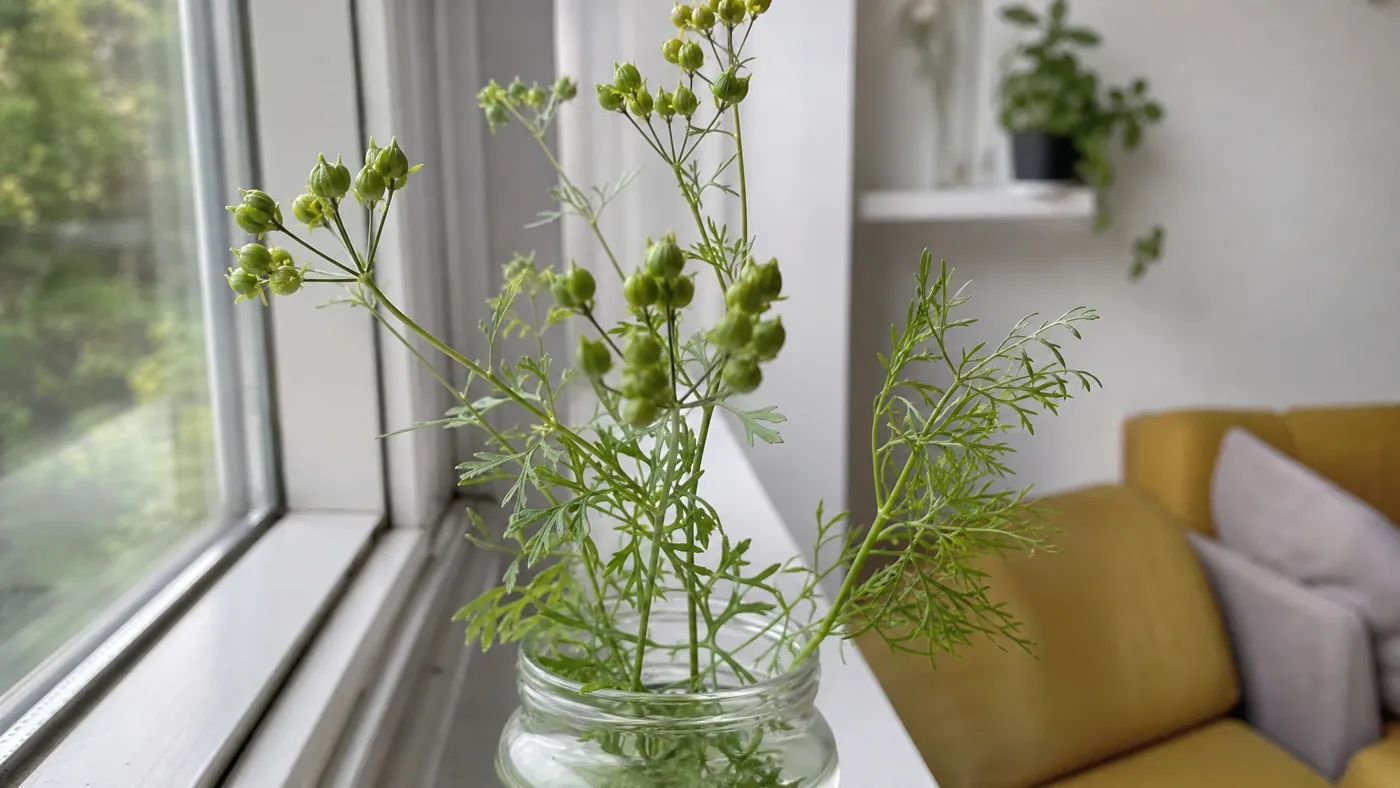
Chemistry explains why the oil comes from the seed and why it is made from ripe, dry ones. In a 2007 study of coriander fruits distilled at three stages of ripeness, unripe fruit gave an oil dominated by geranyl acetate (about 46%) with little linalool (11%), while fully mature fruit gave an oil that was nearly 88% linalool (Msaada et al., Food Chemistry, 2007). It is a single study from one place, so take the direction of the change, not the exact numbers. The scent moves from something sharp toward the warm, rounded, floral spice that ripe seed is known for.
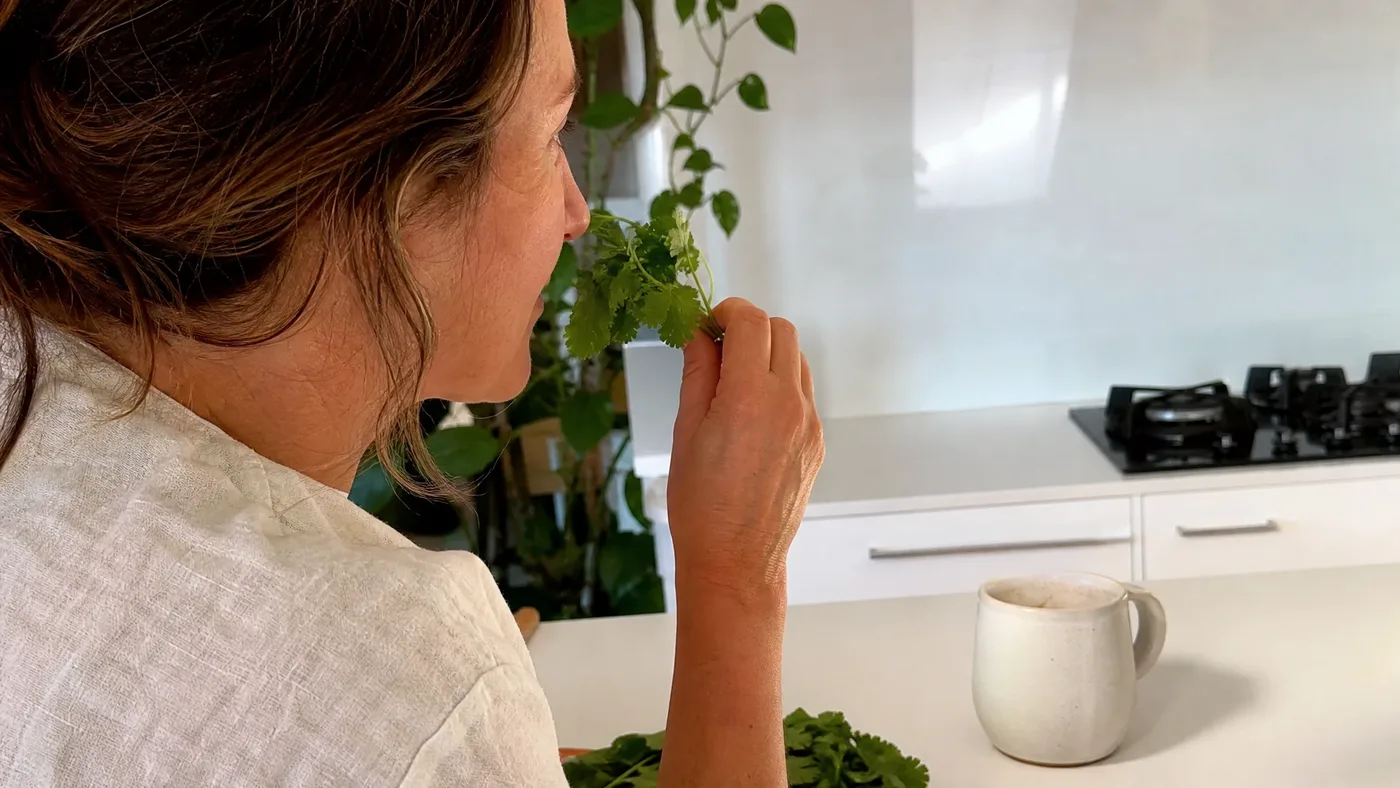
The leaf is a different matter altogether. In 11 Portuguese samples, seed oils were 60% to 73% linalool, while the oils of the leafy parts were led by decenal and decanal compounds (Machado et al., 2023). EFSA even reserves the word "coriander" for the dried fruit, commonly called the seed, with the leaves going by cilantro (EFSA FEEDAP Panel, 2023). Our seed versus leaf article explores what that means for your nose.
Chemistry has even preserved a bit of folklore in its vocabulary. One chemical review gives "coriandrol" as the name of the (S)-(+) form of linalool, which it describes as herbaceous, and "licareol" for the (R)-(-) form, which it calls lavender-like (Mohamed et al., Biomolecules, 2020). Our linalool article follows the thread.
A herb for the kitchen window
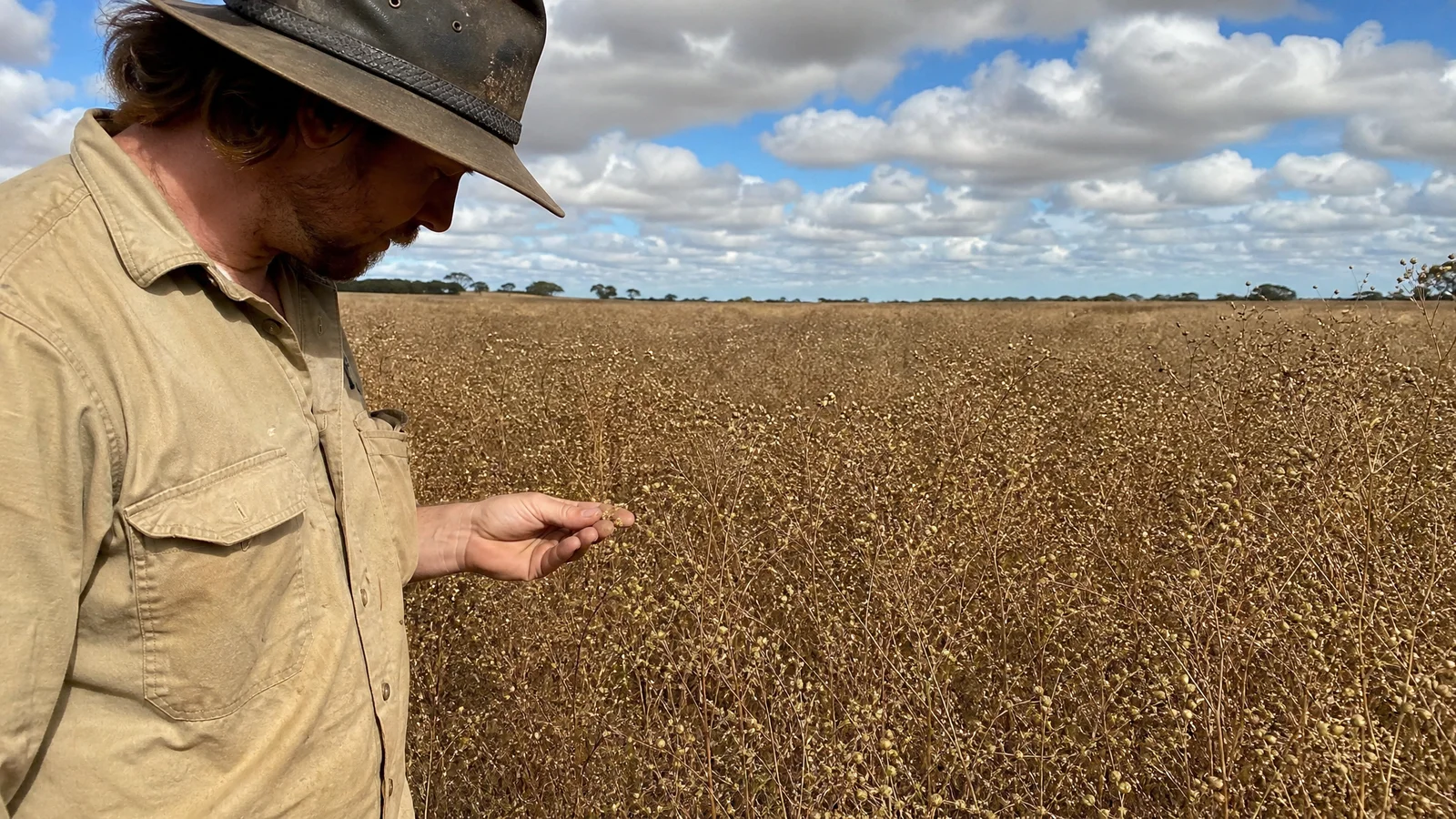
Try this next time you pass a jar of coriander seed. Tip a few into your palm and roll them with a fingertip. They are small, round and the colour of dry straw, and when you press one it gives off a sweet, lightly citrus smell. People have been doing exactly that for a very long time. Keep a little in a jar by the stove, and you are part of the same line of cooks and gardeners.
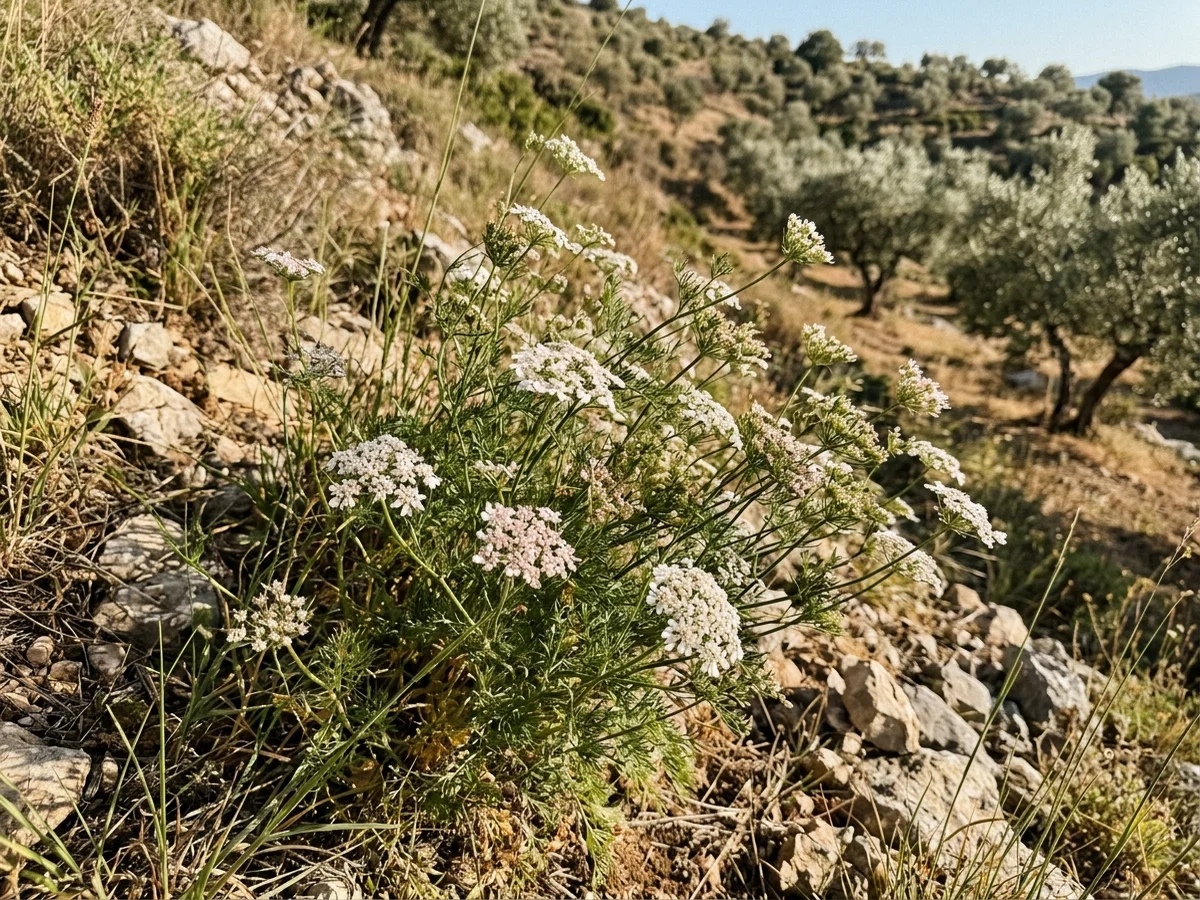
It is worth saying that the seed in your palm and the oil in our bottle are different things. The seed is a whole food and a spice. The oil is what steam carries out of it, a small and fragrant fraction, which we sell for aroma and cosmetic use.
Why the story keeps changing
Part of the fun is that the history is never finished. A new dig, a better way of dating a seed or a newly translated page can shift the date by centuries. That is a good reason to read old claims about coriander with a smile and a little caution. When someone declares that coriander has been used for exactly some number of thousands of years, you can happily nod and keep your own curiosity.
The paperwork era
Coriander oil's best-documented modern history is one of rulebooks. EFSA notes that the European Pharmacopoeia has a monograph for coriander oil and that it is widely used as a food flavouring. US food regulations list coriander as generally recognised as safe for its intended use (21 CFR 182.20). Those entries concern flavouring, and our oil is an external cosmetic and aroma product, not labelled for internal use.
On the perfume side, the compound that makes the oil so appealing has become one of the 26 fragrance substances that EU rules require to be named on labels (European Commission, perfume allergies explainer).
Hold on to that thought when you read old stories about coriander. Some are probably true, some are polished with time, and the pleasant thing is that you can smell the plant for yourself.
The next time you open a bottle of coriander oil, the scent carries a few thousand years of kitchens, gardens and stills behind it, even if the exact opening chapter is still being worked out.
Coriander Essential Oil
Coriander Essential Oil from our own shop, in sizes from 0.5 oz to bulk.
From $12.99
Shop Now →Sources & Further Reading
- Hansen et al., 2025, crop introductions in the southern Levant
- Msaada et al., 2007, coriander fruit oil by maturity
- Machado et al., 2023, coriander fruit and aerial part oils
- EFSA FEEDAP Panel, 2023, coriander oil opinion
- Mohamed et al., 2020, linalool enantiomers
- 21 CFR 182.20
- European Commission, perfume allergies explainer