Coriander Growing Regions: Why Oils From One Country Differ
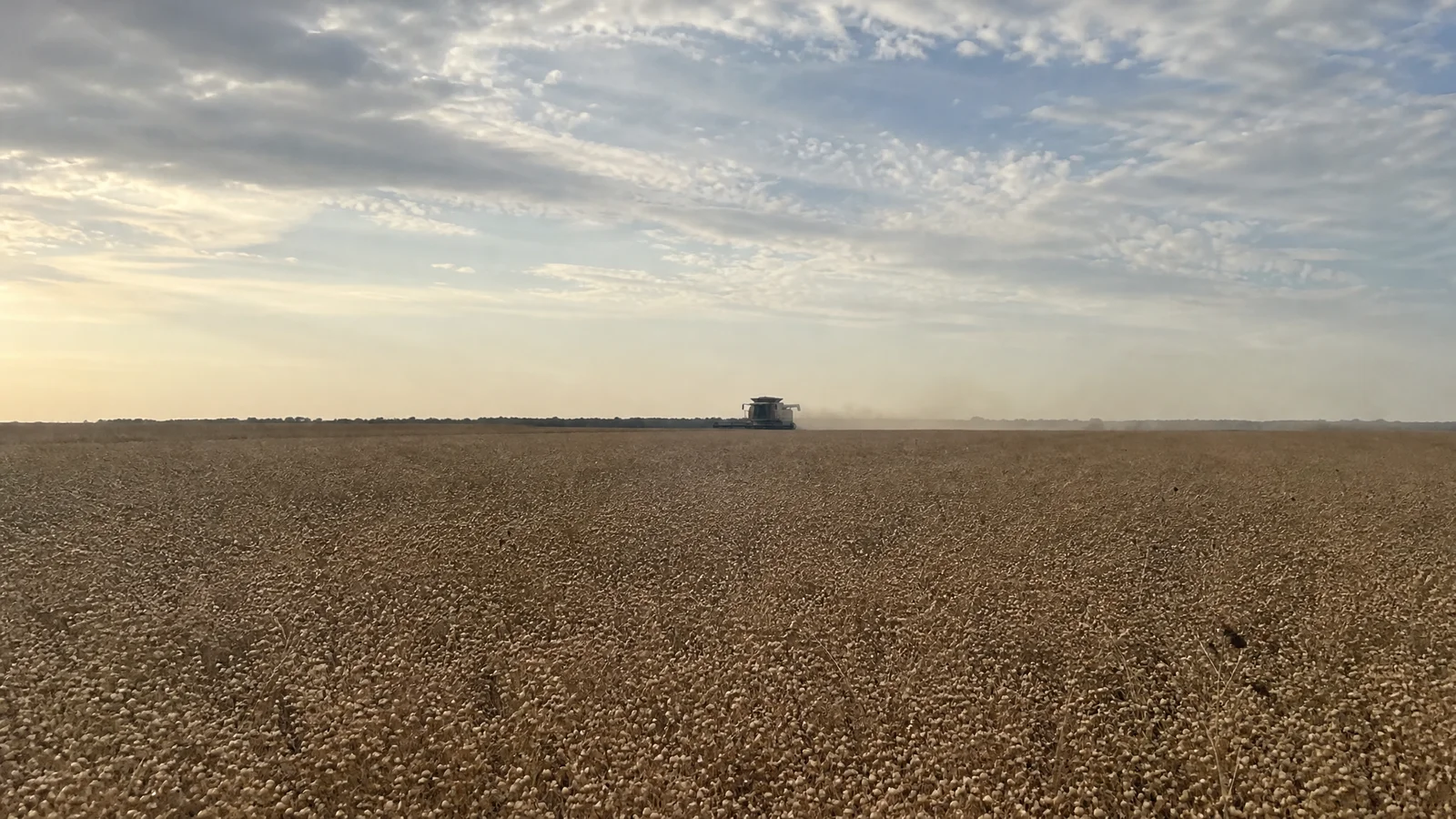
Ask ten people where the best coriander oil comes from and you will get a country, usually the same one twice. It is a tidy answer, and the research on the plant is a bit more interesting than that. A coriander field in one place can produce oils that smell and read very differently from each other, and the reasons have little to do with a border.
Coriander Essential Oil
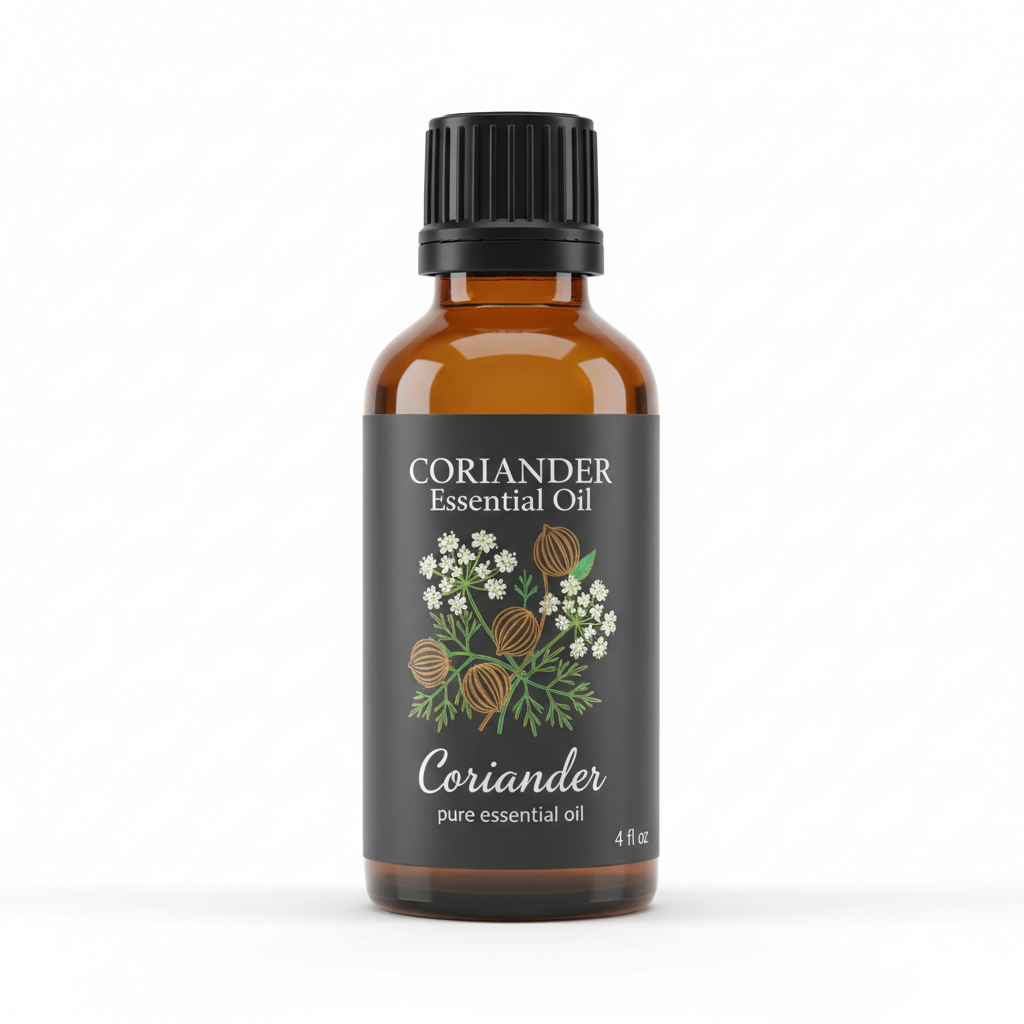
Our own Coriander Essential Oil, in sizes from 0.5 oz to bulk.
From $12.99
Shop Now →The same plant, a wide range of oils
Coriander seed oil is led by linalool, a smooth, lightly floral molecule that gives the oil its rounded sweetness. How much linalool a given seed delivers is where the variation lives. One large trial grew 119 coriander genotypes from 38 countries side by side in a single place, and the oil from those plants ranged from roughly 3% to nearly 46% linalool (Basol et al., 2024). Same soil, same weather, same season, and still a huge spread. The authors report differences even among genotypes that share a country of origin.
That is the useful insight: the plant's own genetics move the oil a long way before geography gets a vote. A country name can tell you where a seed lot was grown or traded. It cannot tell you which variety went into the field.
Sowing date and ripeness matter too
Even with the variety fixed, the calendar matters. In a Turkish trial that sowed six genotypes on four dates, the oil ranged from about 47% to 75% linalool, and a November sowing gave the strongest seed yield while a March sowing gave about 70% less (Ali Ali et al., 2026). A farmer's timing shows up in the bottle.
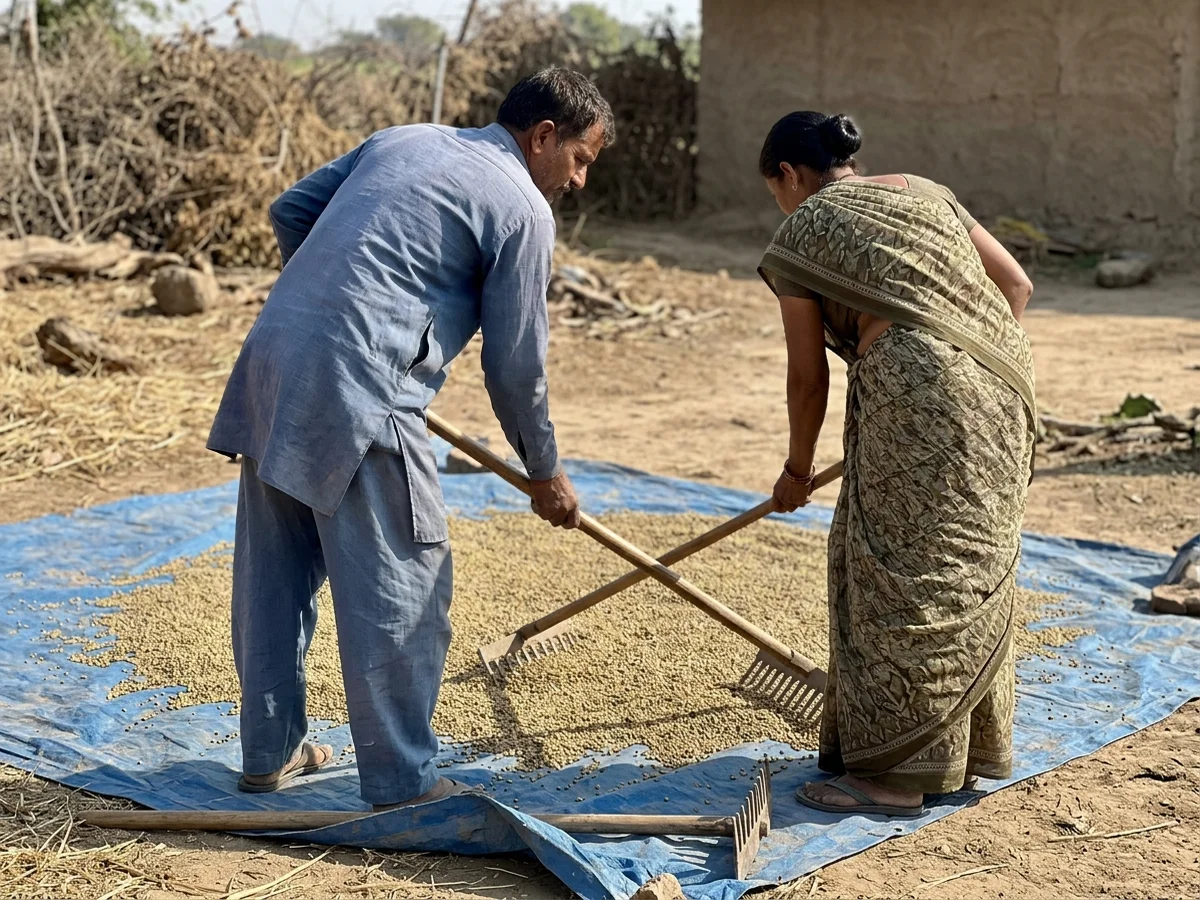
Ripeness may be the most striking factor. When researchers distilled fruits at three stages of maturity, the unripe fruit gave an oil built mostly on geranyl acetate with only about 11% linalool, while fully mature fruit gave an oil that was about 88% linalool (Msaada et al., 2007). Unripe coriander and ripe coriander are practically different raw materials. It is a good reason to care that seed is allowed to mature, dry and brown on the plant before it is harvested for distilling.
A farmer's year
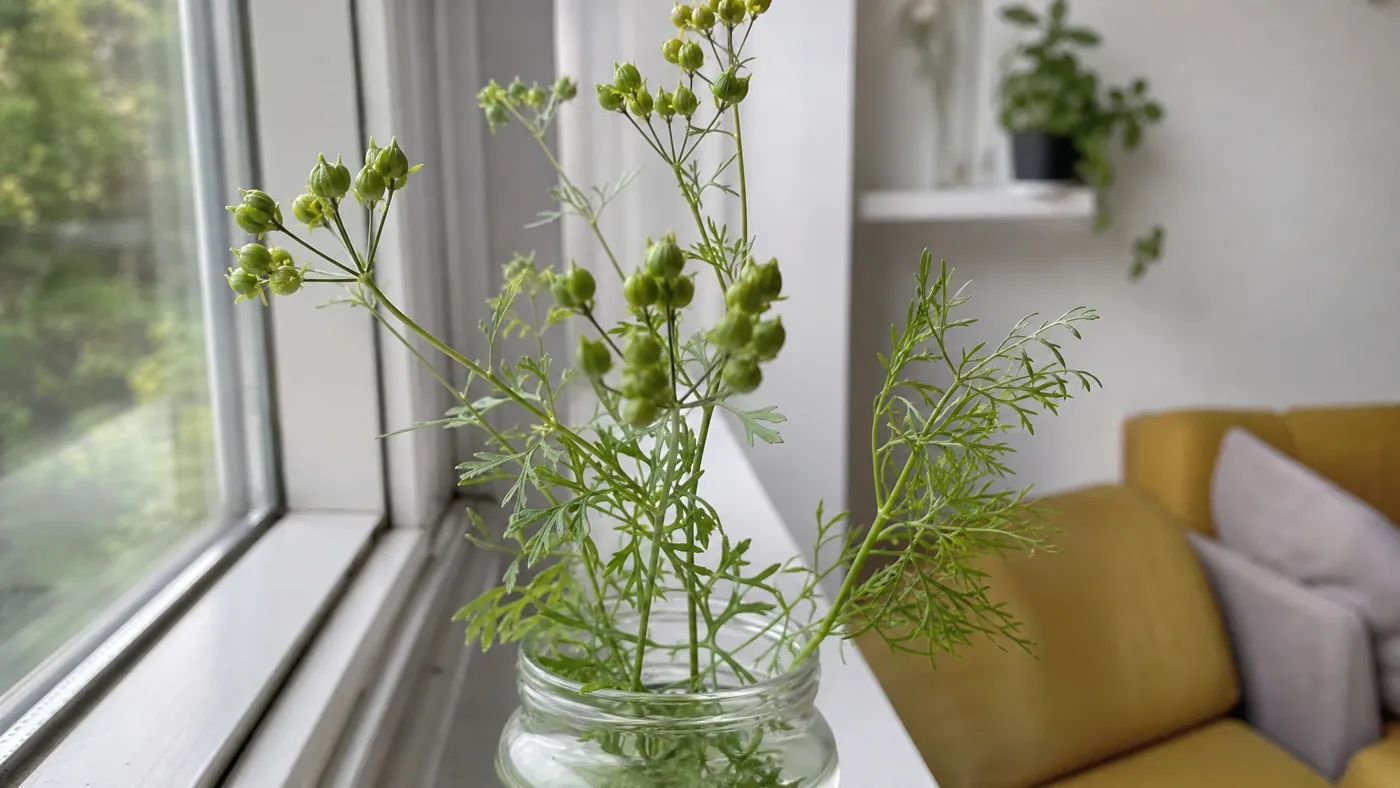
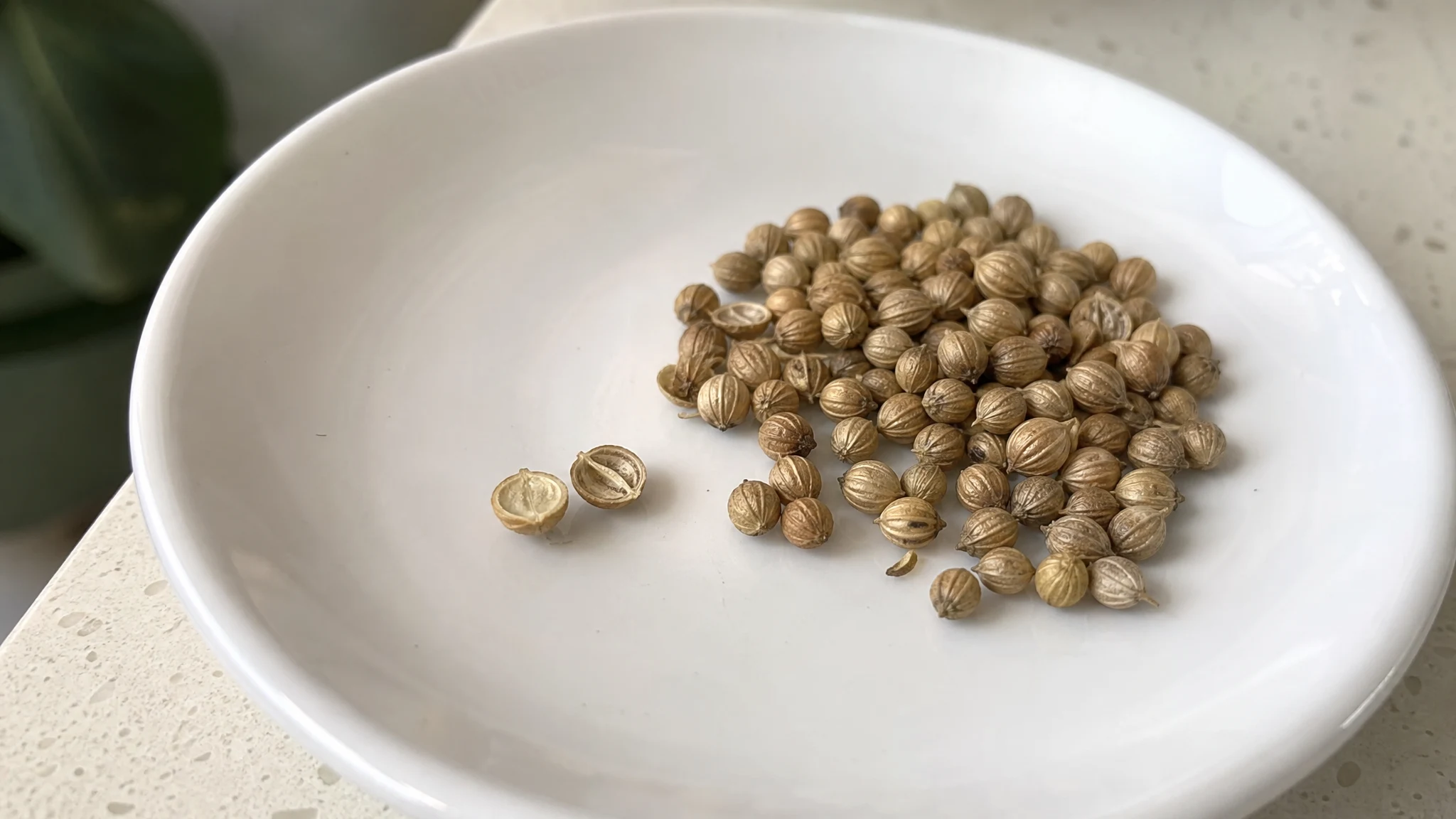
Picture the calendar of a coriander field. Seed is sown, the plants grow tall and flower, and then the little round fruits swell and slowly turn from green to a dry, pale brown. A farmer watches the weather and the colour of the fruits. A wet spell at the wrong time, or a late cut, changes what arrives at the still. None of that shows up on a map, yet it is part of the story in every bottle.
What your nose can tell you
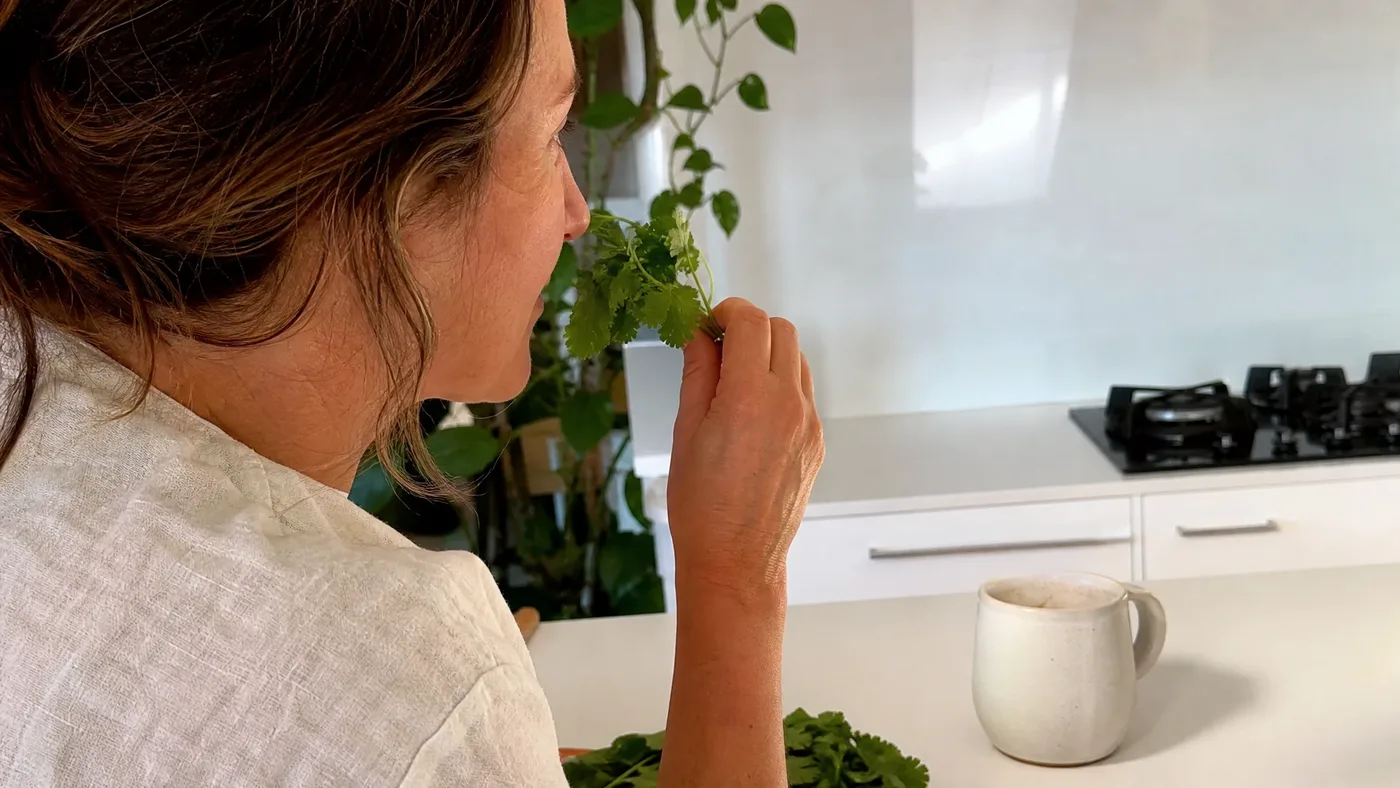
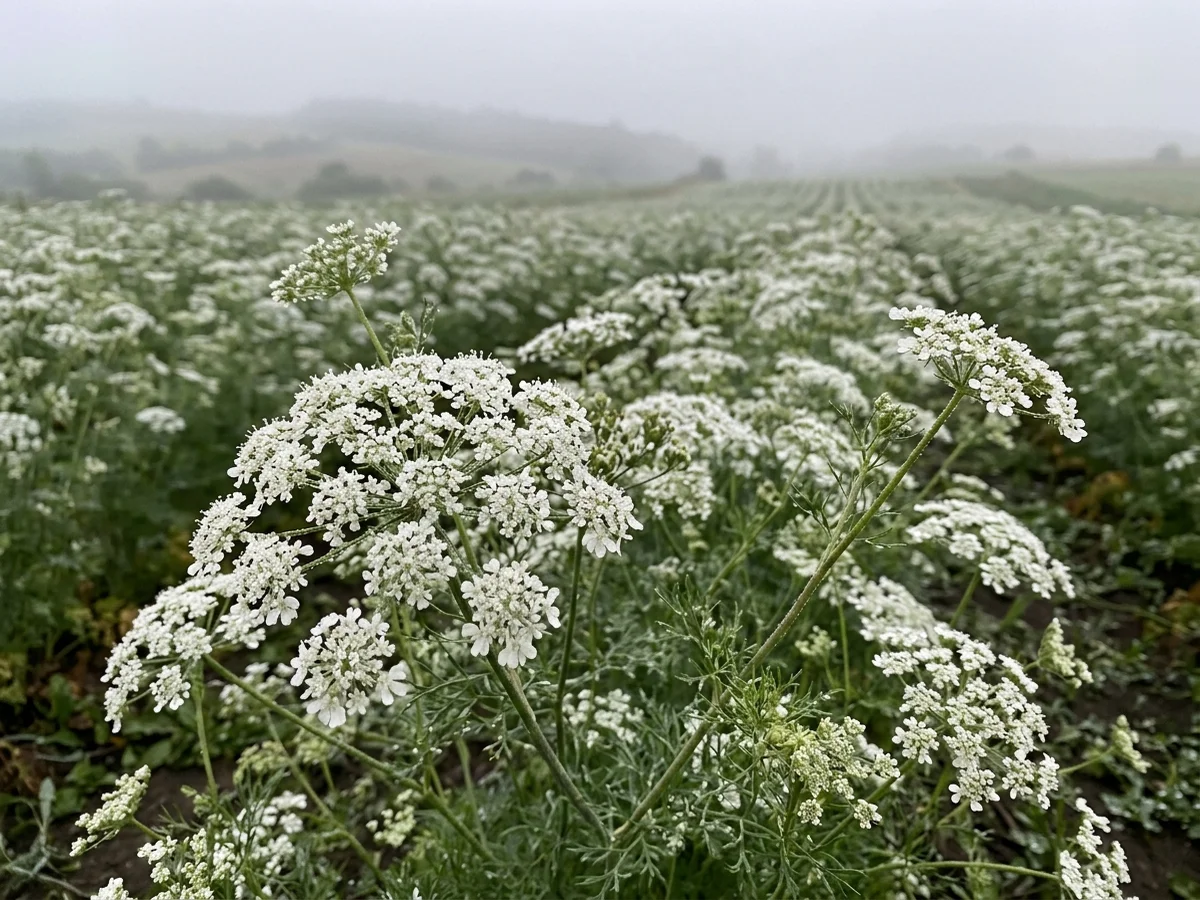
If you collect more than one coriander oil, you may enjoy a small side-by-side session. Put each on its own paper strip, label the strips with the lot and the date, and sniff them one after another with a glass of water between. Notice which is sweeter, which is woodier, which has the citrus peel in the background. Your preferences will form quickly, and you will find it easier to talk to a seller about what you want.
Keep the notes in the same notebook as your blend ideas. A year later you will have a little library of your own, and it will tell you more than a table of numbers can.
Why a number is not a flavour
Because the plant itself moves so much, a single figure for linalool cannot tell you how an oil will smell. Two oils with different numbers may still seem close to each other, and two with the same number may feel different. This is the delightful, frustrating thing about natural oils: they behave like crops. You'll notice it yourself when you compare lots side by side on a paper strip.
What to take from this when you shop
None of this makes origin meaningless. A country and a harvest year help a seller trace a lot and help you reorder something consistent. They just do not work as a quality shorthand, and we would be wary of any label that treats them that way.
The better questions are about the lot itself: which plant part, which year, and what a chromatography report says about the composition. If you want to learn to read one, our guide to reading a GC/MS report walks through it, and our piece on seed versus cilantro leaf oil explains why the plant part changes the smell so much. We sell a single coriander oil, made from the seed, and if you would like to know what we can tell you about a particular lot, ask us in writing through the contact page.
A little curiosity goes a long way. When you hold a bottle, think of the field, the weather and the season behind it, and you will appreciate why no two years ever smell exactly alike.
Next time someone tells you a coriander oil is great because of where it is from, you will know the more interesting answer lives in the seed.
Coriander Essential Oil
Coriander Essential Oil from our own shop, in sizes from 0.5 oz to bulk.
From $12.99
Shop Now →