Why Does Cilantro Taste Like Soap? And What About Seed Oil
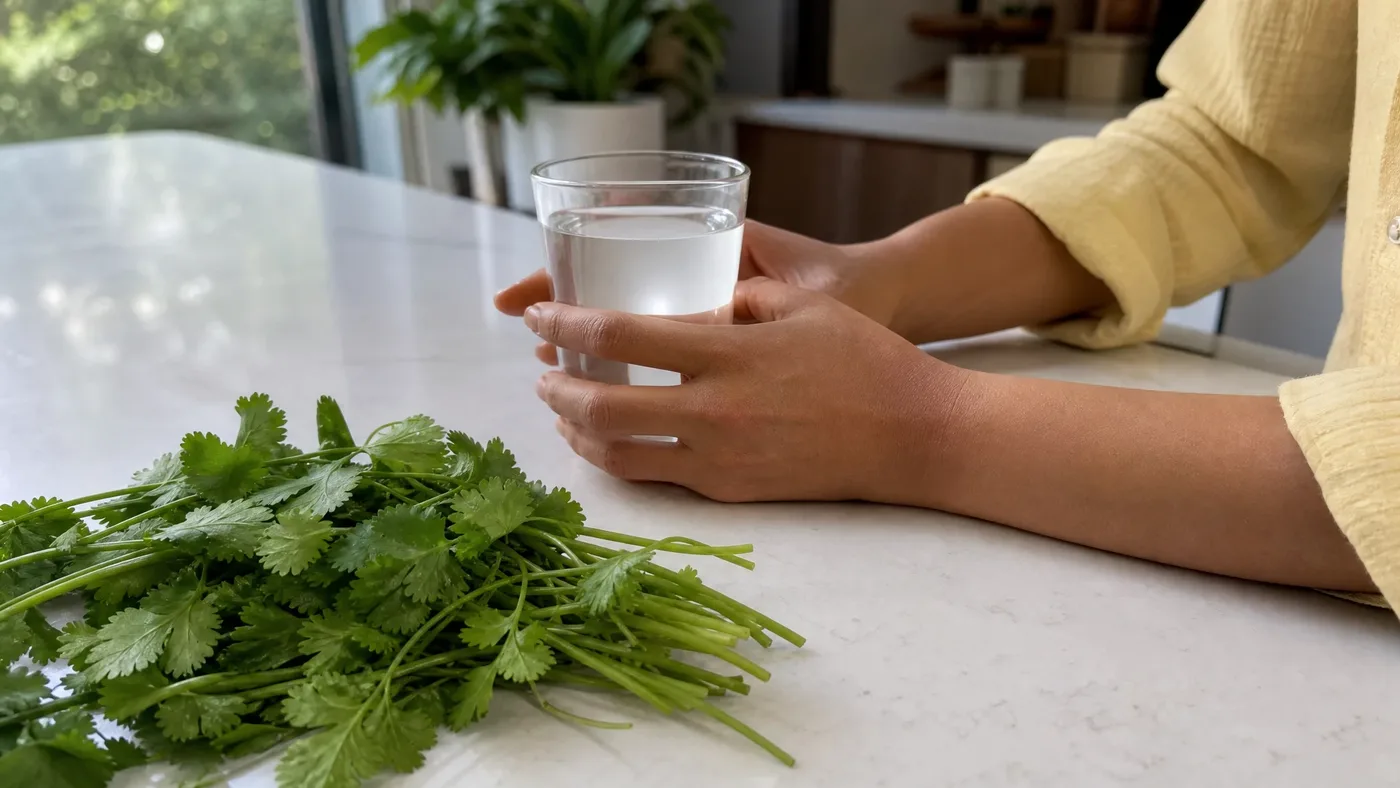
Ask a table of friends about cilantro and the room usually splits. Some love it, and a surprising few insist it tastes like dish soap. It is not pickiness, and it is not a bad bunch of herbs. It is a quirk of how some noses read certain molecules, and it is a fun way into understanding why coriander seed oil smells nothing like the fresh leaf.
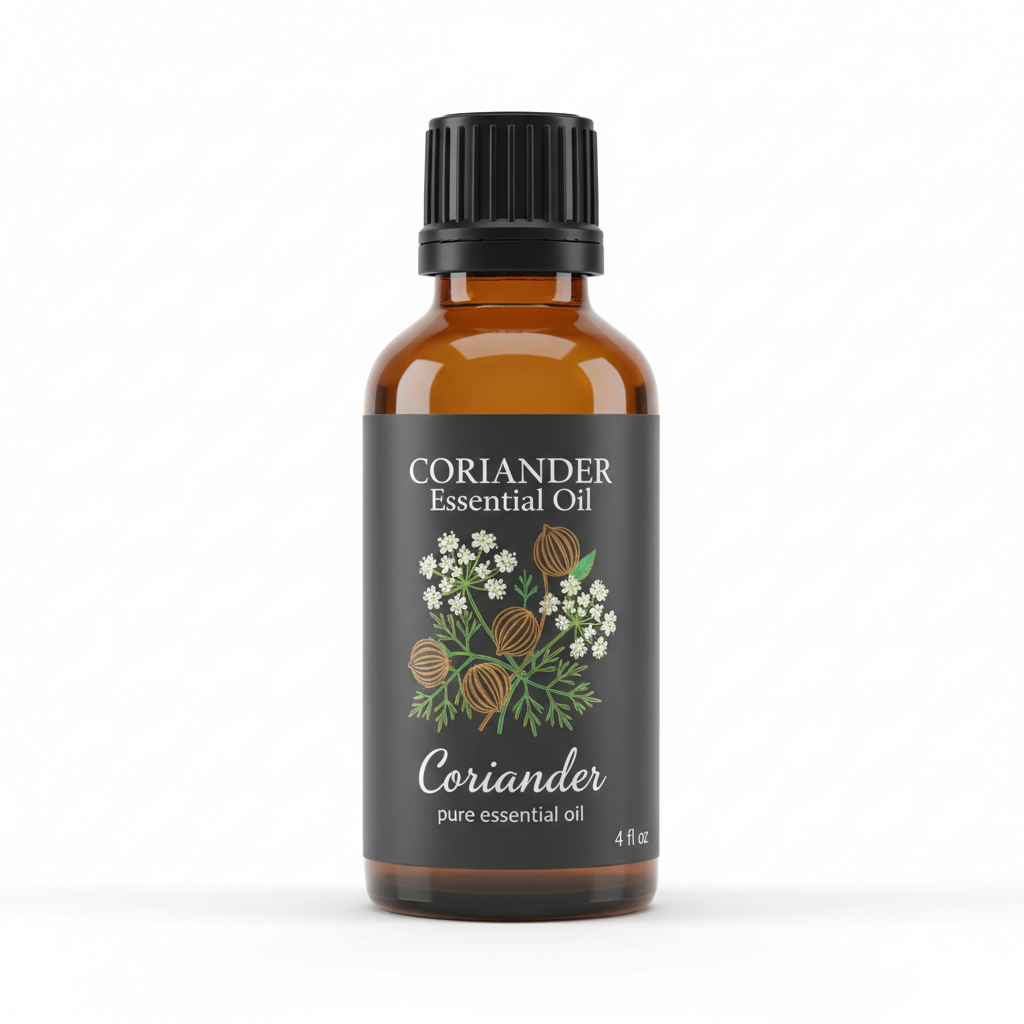
Coriander Essential Oil
Our own Coriander Essential Oil, in sizes from 0.5 oz to bulk.
From $12.99
Shop Now →A small genetic nudge
If you are one of the people who finds cilantro soapy, you have probably been teased about it at some point. It is worth knowing that you are in very good company, and that your nose is not broken. It is simply picking out something that other noses skip over.
The best-known study comes from 23andMe researchers, who asked about 14,600 people of mostly European ancestry whether fresh cilantro tastes like soap. They found one genetic variant, on chromosome 11 near a cluster of olfactory receptor genes, that was linked to the soapy answer. A second group of about 11,850 people, asked whether they simply like cilantro, showed the same direction of effect, though more weakly (Eriksson et al., 2012 preprint).
The size of the effect is what makes it interesting. The variant accounts for about half of one percent of the differences between people in soapy-taste perception. So genes are part of the story, but a small part. The authors point to a receptor called OR6A2, which responds to several of the aldehydes found in cilantro, as the likely candidate, and they note that their inference rests largely on receptor work in rats. The most honest reading is that a real signal exists and most of the explanation is still open, with upbringing and what you ate as a child among the possibilities.
It is a fun thing to ask around the table, too. Ask each person what they taste when they bite into a fresh leaf, and you will get answers ranging from lemony to grassy to soapy. None of them is wrong, and it is a nice reminder that a smell lives partly in the plant and partly in the person smelling it.
Leaf and seed are different chemistry
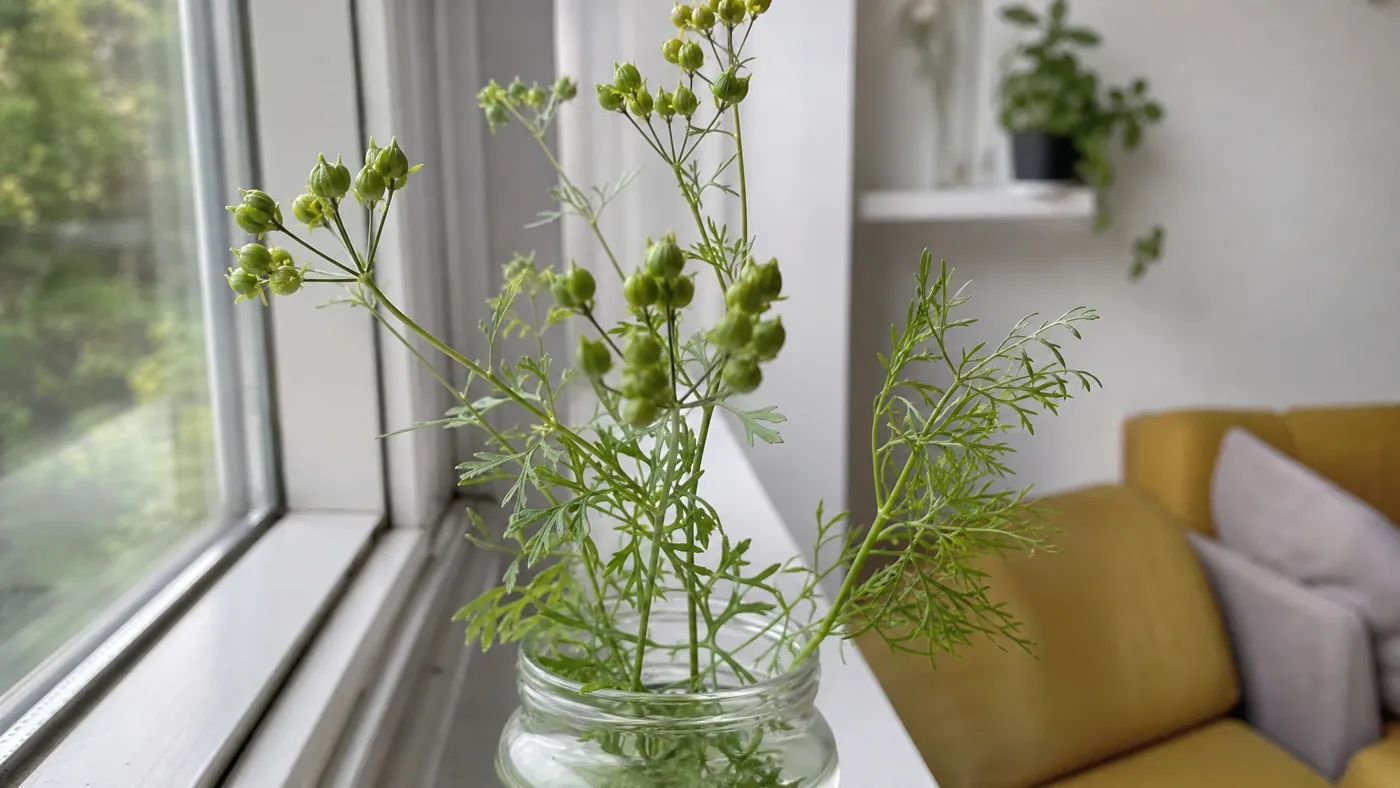
The soapy note is blamed on aldehydes, the molecules that dominate the fresh leaf. Analyses of Portuguese coriander found leafy plant oils led by 2-trans-decenal and n-decanal, both aldehydes, while the fruit (the seed) gave oils with roughly 60 to 78% linalool (Machado et al., 2023; Povoa et al., 2024). Linalool is an alcohol with a floral, slightly woody character, a different family altogether.
European regulators make the same cut in their wording: coriander is the dried fruit, commonly called the seed, while the leafy parts are cilantro (EFSA FEEDAP Panel, 2023). It is why we say plainly that we sell the seed oil. We describe its aroma as warm, woody and softly spicy, with a rounded sweetness, a light floral edge, and a faint background of citrus peel and fresh bread spice. If you were expecting fresh coriander leaf, this is not it.
It is a kitchen story, too
Plenty of families have a cilantro divide at the dinner table: one person scoops it onto everything while the person beside them picks it off. It is such a common scene that it has become a small joke in cooking circles. We find it charming that a single leaf can start the conversation, and that the seed of the same plant goes off in an entirely different direction.
If you are one of the people who avoids the leaf, you may well be happy with the seed spice in your cupboard, and some people are. It is a good reminder that the same plant offers more than one personality.
So will our oil smell soapy to you?
Nobody has run a study that puts soap-perceivers in front of coriander seed oil, so we cannot promise either way. Reasoning from the chemistry, the compounds linked to the soap perception are the leaf's, and a seed oil is built around something else. Most people who find cilantro soapy are reacting to the leaf.
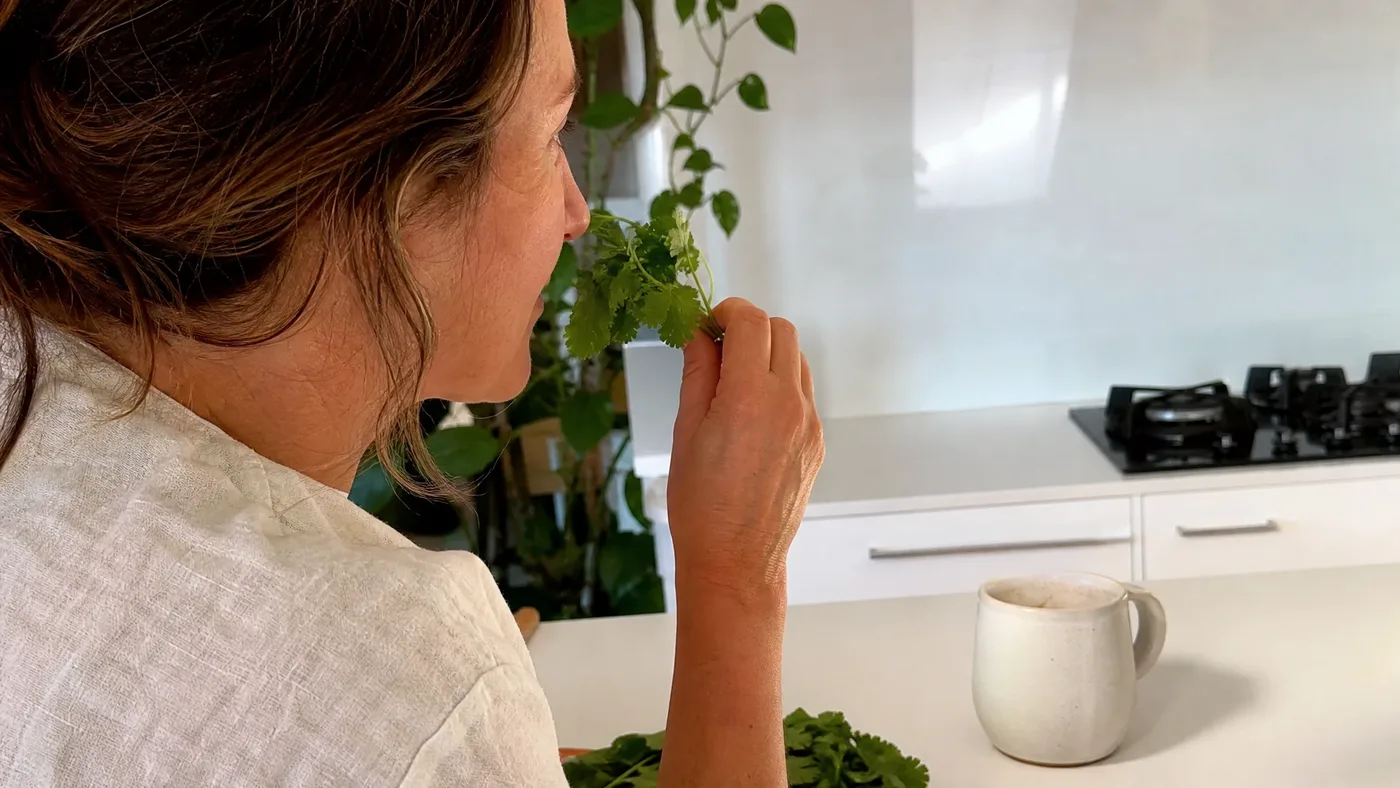
If you are curious, a smell test is easy. Put a single drop on a paper strip or tissue, hold it at arm's length rather than at the bottle neck, and come back to it after a few minutes. Concentrated oils smell sharper than they do once diluted, and the opening note softens as it settles. Our scent profile and the seed versus leaf comparison go further, and our linalool article covers the molecule. A smaller bottle is a low-stakes way to find out for yourself.
How to approach a first sniff
If you are wary, set yourself up for an easy first try. Do it in a well-aired room, when you are not hungry or stuffy, and with a fresh strip of paper. Hold the strip at arm's length, then bring it closer a little at a time. Stop whenever you like. There is no need to push through a smell you dislike.
It also helps to know what you are looking for. Think of a warm spice shelf, a little citrus peel, a soft floral edge. If you pick up something that reminds you of fresh herb or soap, that is useful information too, and you will know that this oil may not be for you. We would much rather you found that out with one drop than with a whole bottle.
Whatever your nose says about the herb, it is worth knowing that the plant makes two quite different smells, and we happen to love the warm one.
Coriander Essential Oil
Coriander Essential Oil from our own shop, in sizes from 0.5 oz to bulk.
From $12.99
Shop Now →Sources & Further Reading
- Eriksson N et al., 2012. A genetic variant near olfactory receptor genes influences cilantro preference. Flavour 1:22 (preprint). arxiv.org/abs/1209.2096
- Machado et al., 2023. Coriander (Coriandrum sativum) from Portugal: essential oil composition of fruits and aerial parts. Plants 12(14):2749. pubmed.ncbi.nlm.nih.gov/37514362
- Povoa et al., 2024. Coriander from Alentejo, Portugal. Foods 13(6). pubmed.ncbi.nlm.nih.gov/38540919
- EFSA FEEDAP Panel, 2023. Safety and efficacy of coriander oil as a feed flavouring. pmc.ncbi.nlm.nih.gov/PMC10613936