Coriander Oil in Candles: Fragrance Load Made Simple
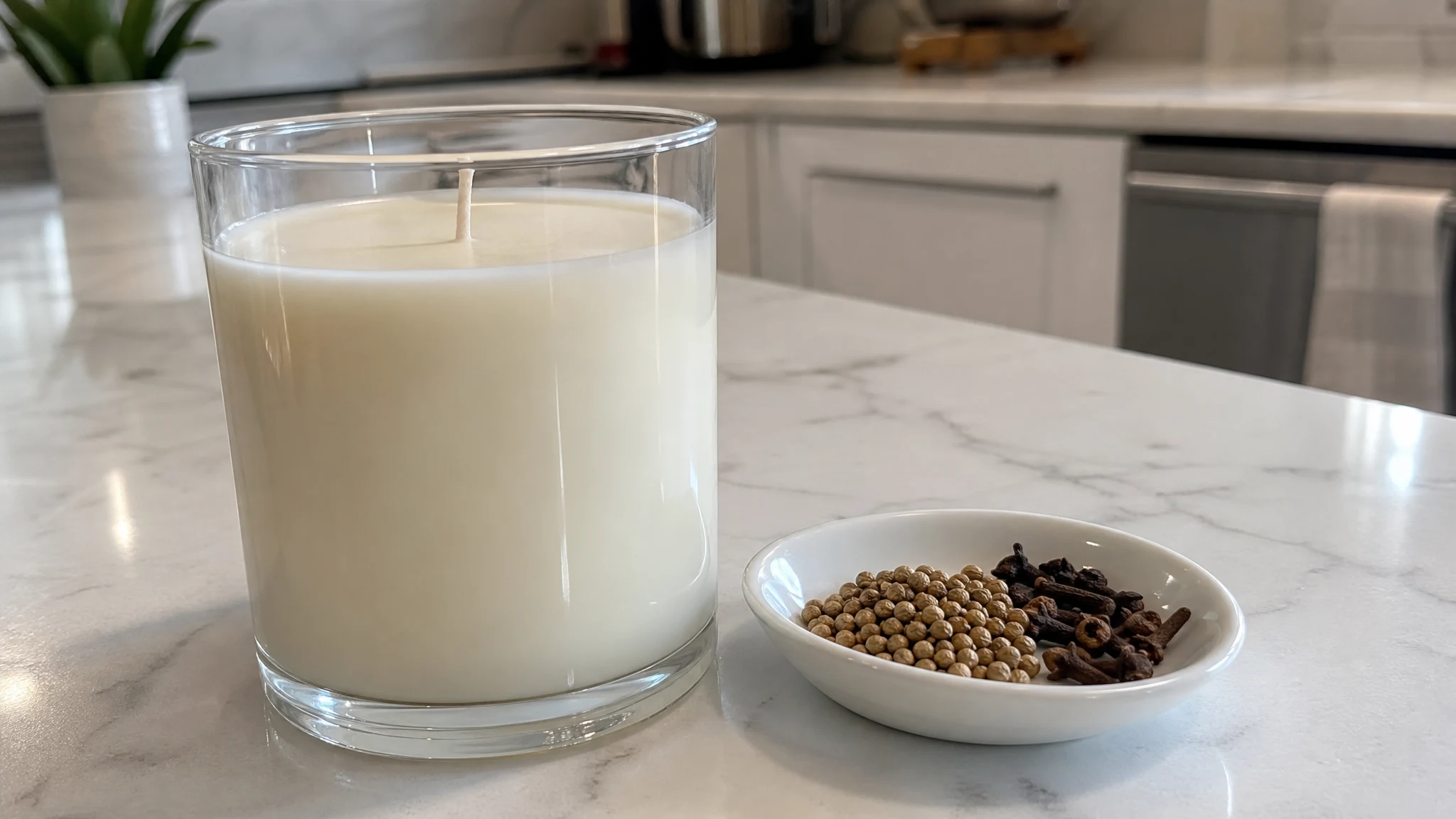
A good candle scent has to do two jobs: say hello from across the room when it is unlit, and stay pleasant once the flame is going. Coriander seed oil, with its warm, softly spicy, lightly floral character, is a lovely candidate for a cosy, kitchen-adjacent candle. Here is how to think about it before you pour.
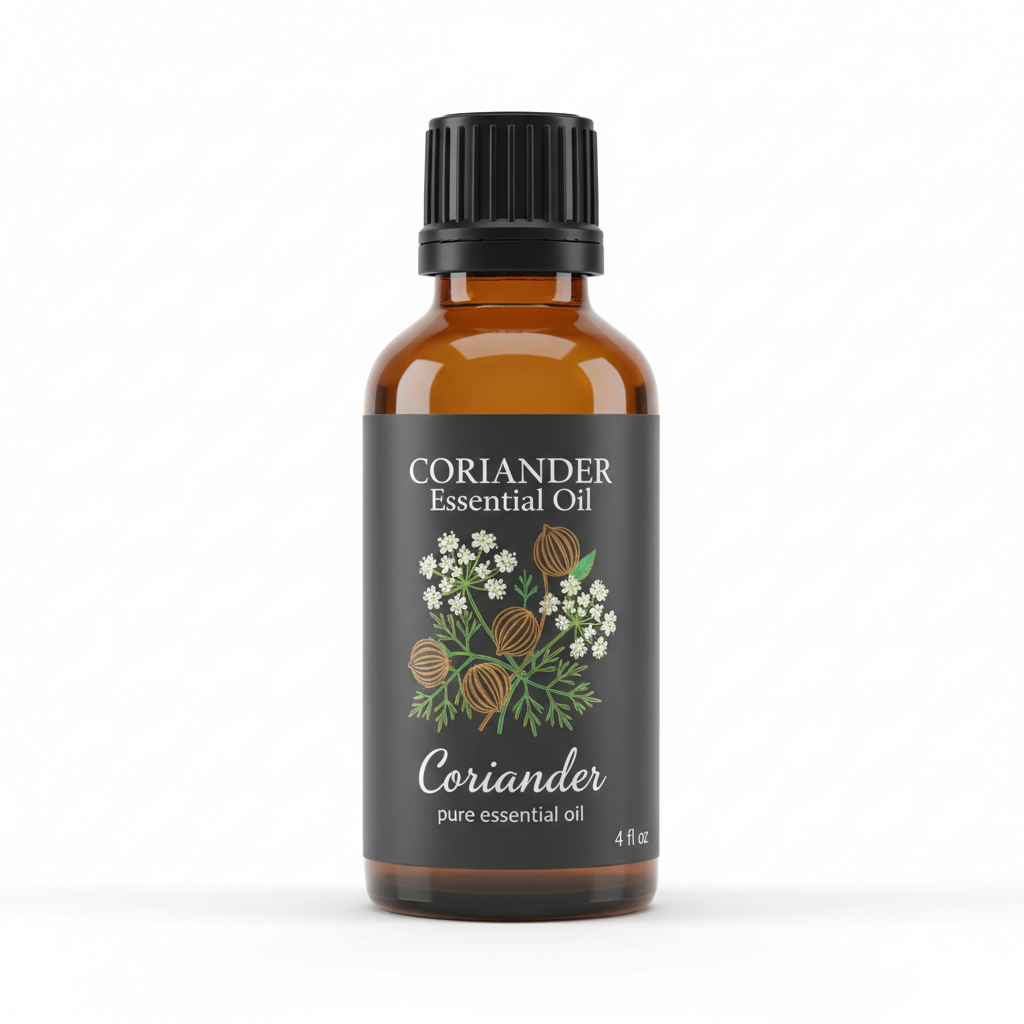
Coriander Essential Oil
Our own Coriander Essential Oil, in sizes from 0.5 oz to bulk.
From $12.99
Shop Now →Cold throw and hot throw
Makers use cold throw for the scent a candle gives off unlit and hot throw for the scent while it burns. Both are working terms without a standard method, so any judgment is relative to your own wax, vessel and room. Cold throw depends on an oil's lighter components drifting into the air at room temperature, while hot throw depends on what comes through the melt pool.
Coriander oil is a spread of compounds, not one. In a laboratory hydrodistillation study, lighter components such as alpha-pinene and limonene came off the still first, while heavier ones such as geraniol and geranyl acetate came later, and linalool grew from 51% to 68% of the oil as distillation time lengthened (Zheljazkov et al., 2014). That was a still, not a candle, but it suggests a useful habit: judge your candle more than once, because a scent made of lighter and heavier notes can shift as it cures.
What goes into the pot
Published coriander seed oils are mostly linalool, from about 40% to 80%, and EFSA's specification for the oil also lists alpha-pinene, gamma-terpinene, camphor, geranyl acetate and limonene, with a "characteristic and spicy" odour (EFSA FEEDAP Panel, 2023). We describe our own oil as warm, woody and softly spicy with a light floral edge. The Certificate of Analysis we publish covers one batch and lists density and refractive index. If your candle line depends on an exact composition, ask us in writing through the contact page for lot detail such as GC/MS before you order.
Coriander seed oil also smells nothing like the green, sharp leaf. If a customer of yours expects cilantro, our seed versus leaf article explains the difference.
What you'll notice when you open the bottle
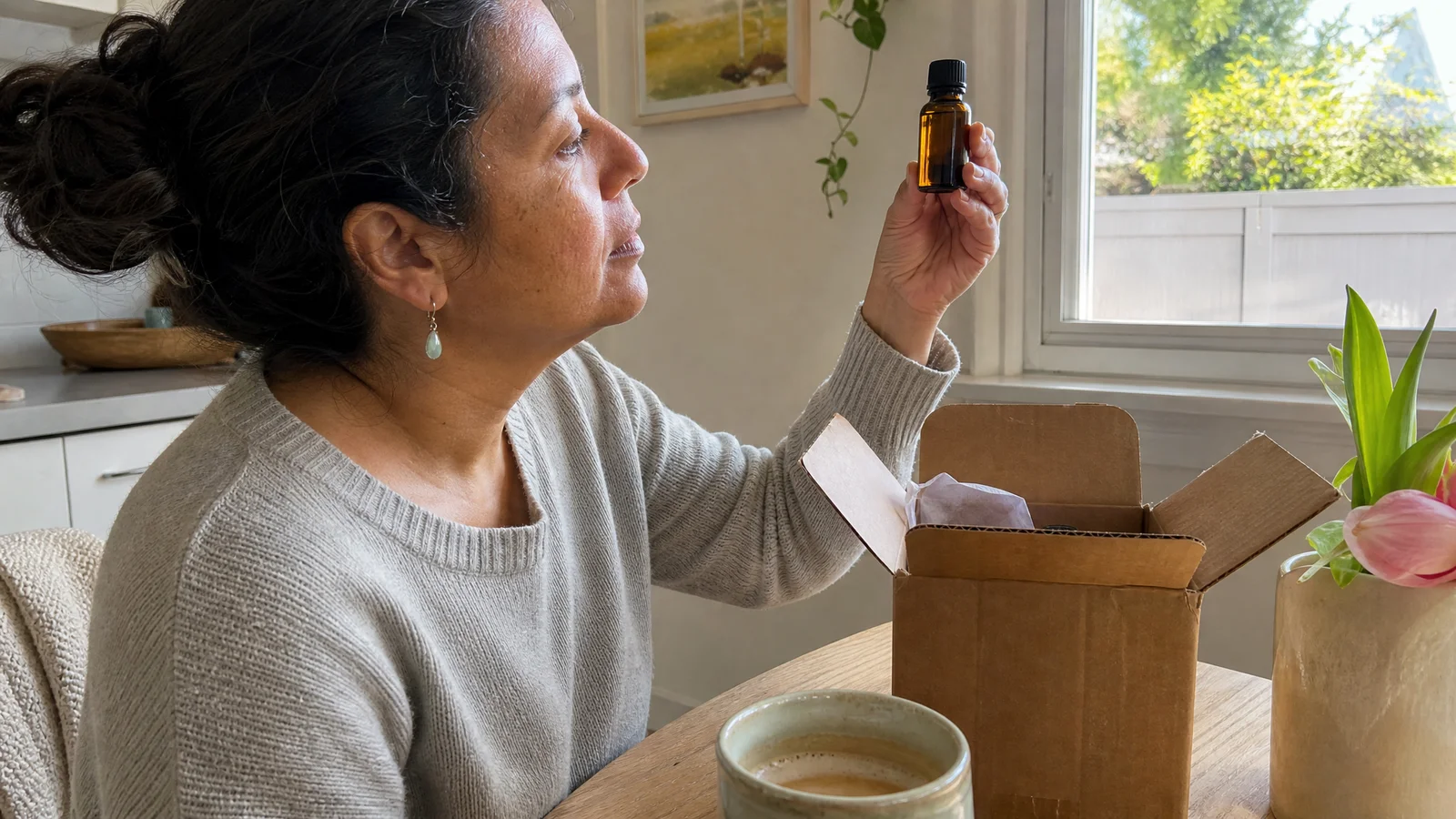
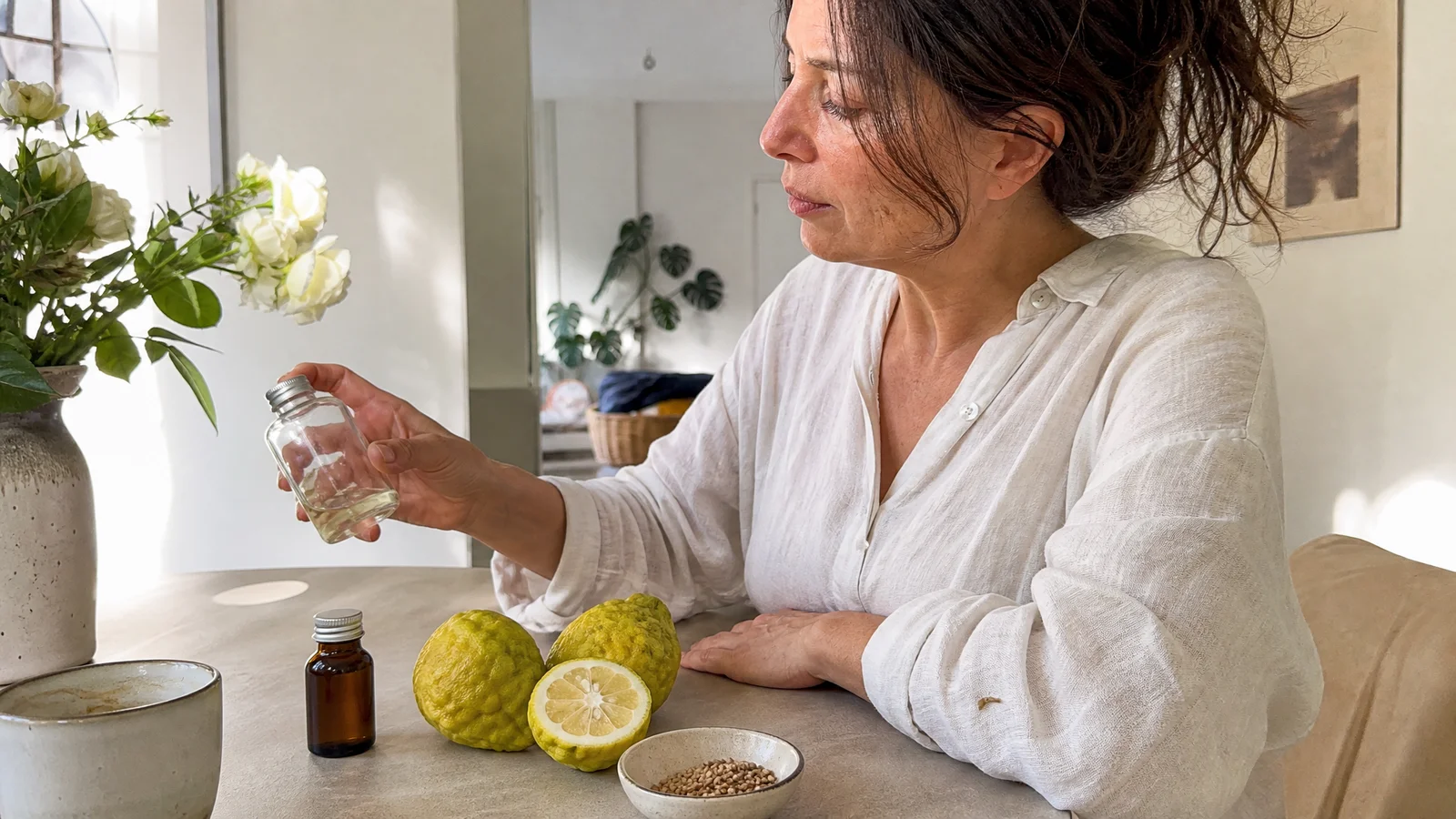
Before any wax is melted, open the bottle and smell it on its own. Coriander seed oil is warm and softly spicy with a rounded sweetness, a world away from the green bite of the leaf. In a candle that translates well to cosy settings: think autumn kitchens, baked goods and wooden tables, not freshly cut grass. If the rest of your candle line is bright and sparkling, this one will sit warmer than its neighbours, and that contrast can be a nice thing to build on.
Working out the fragrance load
Fragrance load is the weight of the oil as a percentage of the wax. The right ceiling belongs to your wax, so take it from your wax supplier's data sheet and use the table to turn it into grams. It uses our published batch density, 0.857, so 1 ml weighs about 0.857 g.
| Wax weight | 3% load | 6% load | 9% load |
|---|---|---|---|
| 200 g | 6 g (7.0 ml) | 12 g (14.0 ml) | 18 g (21.0 ml) |
| 500 g | 15 g (17.5 ml) | 30 g (35.0 ml) | 45 g (52.5 ml) |
More is not automatically better. Essential oils are volatile, and a candle loaded past what its wax can hold can sweat or burn poorly. That makes one test pour the cheapest insurance before a full batch.
A simple way to find your sweet spot
- Pour two or three small candles from the same wax and wick, changing only the load: a low, a middle and a top amount within your wax maker's stated maximum.
- Add the oil at the temperature your supplier names, and stir for as long as they say. Excess heat sends the lightest notes up and away.
- Cure for your supplier's stated time before judging.
- Smell each one unlit, then lit after an hour, once the melt pool is full, in the same room at the same time of day.
- Note the date, load and room, then smell again after a week.
Change one thing at a time, because a new wax or wick makes it a different experiment. Follow your wax and wick suppliers' burning instructions, and keep a lit candle where nobody can knock it over.
Keeping records and giving candles a proper burn
A notebook pays for itself here. For every test pour, write down the wax, the wick, the oil amount in grams, the pouring temperature and the date, then add your notes after the cure. Stick a small label on the bottom of each test candle with a number that matches the notebook. After three or four rounds you will have a clear picture, and you will also have a recipe you can repeat without guessing.
Give your trial candles a proper burn, too. Follow your supplier's wick-trimming advice, burn for long enough that the wax melts across the whole top, and let the candle cool fully before the next light. A candle that smells wonderful in the first ten minutes and sulks after an hour is exactly what the test pours are there to catch.
Candle-making supplies, including wax, wicks and vessels, come from a craft or candle-supply shop. If you want a partner scent, our blending guide is a good start, and fresh oil (see our storage article) keeps the scent true. Bring a little patience, and coriander gives you a spiced, sunlit scent that is quite different from the usual candle aisle.
Coriander Essential Oil
Coriander Essential Oil from our own shop, in sizes from 0.5 oz to bulk.
From $12.99
Shop Now →