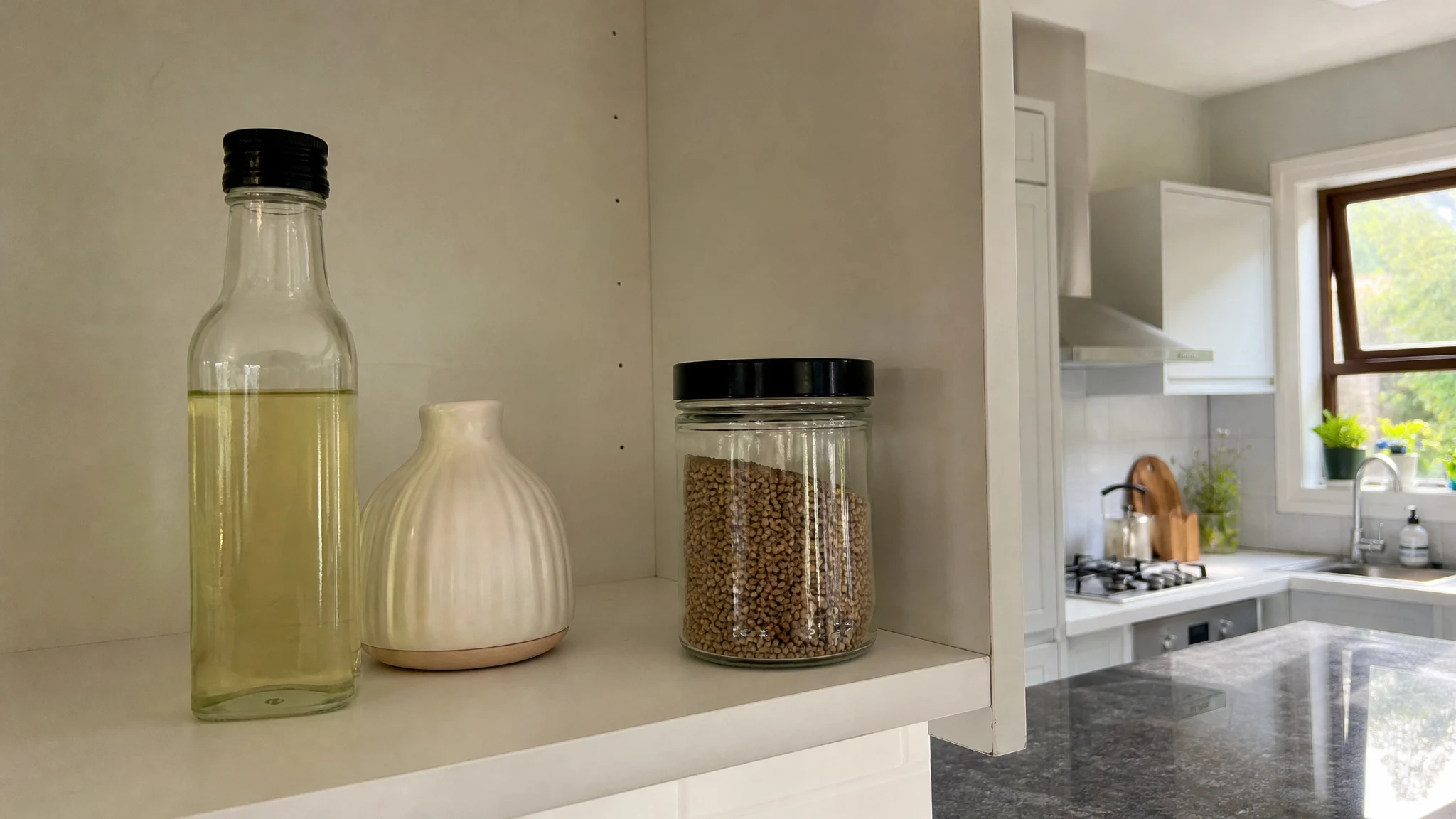
Coriander Oil Uses: Diffuser, Skin or Perfume Checks
The same bottle can end up in three very different places: a diffuser on the counter, a body oil on your arms, or a fragrance you wear out the door. What matters is where it lands. Start with how the oil will be used, and the right checks fall into place.
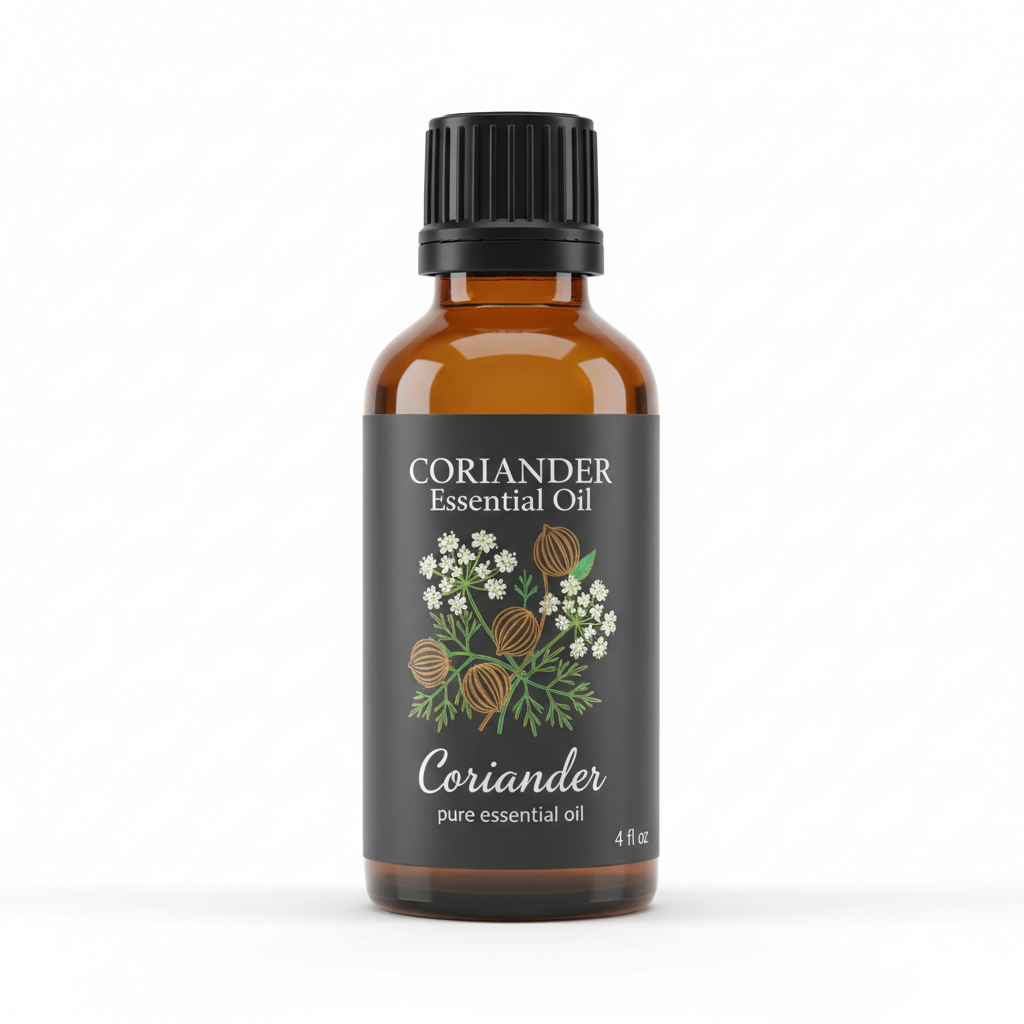
Coriander Essential Oil
Our own Coriander Essential Oil, in sizes from 0.5 oz to bulk.
From $12.99
Shop Now →In the air: the simplest case
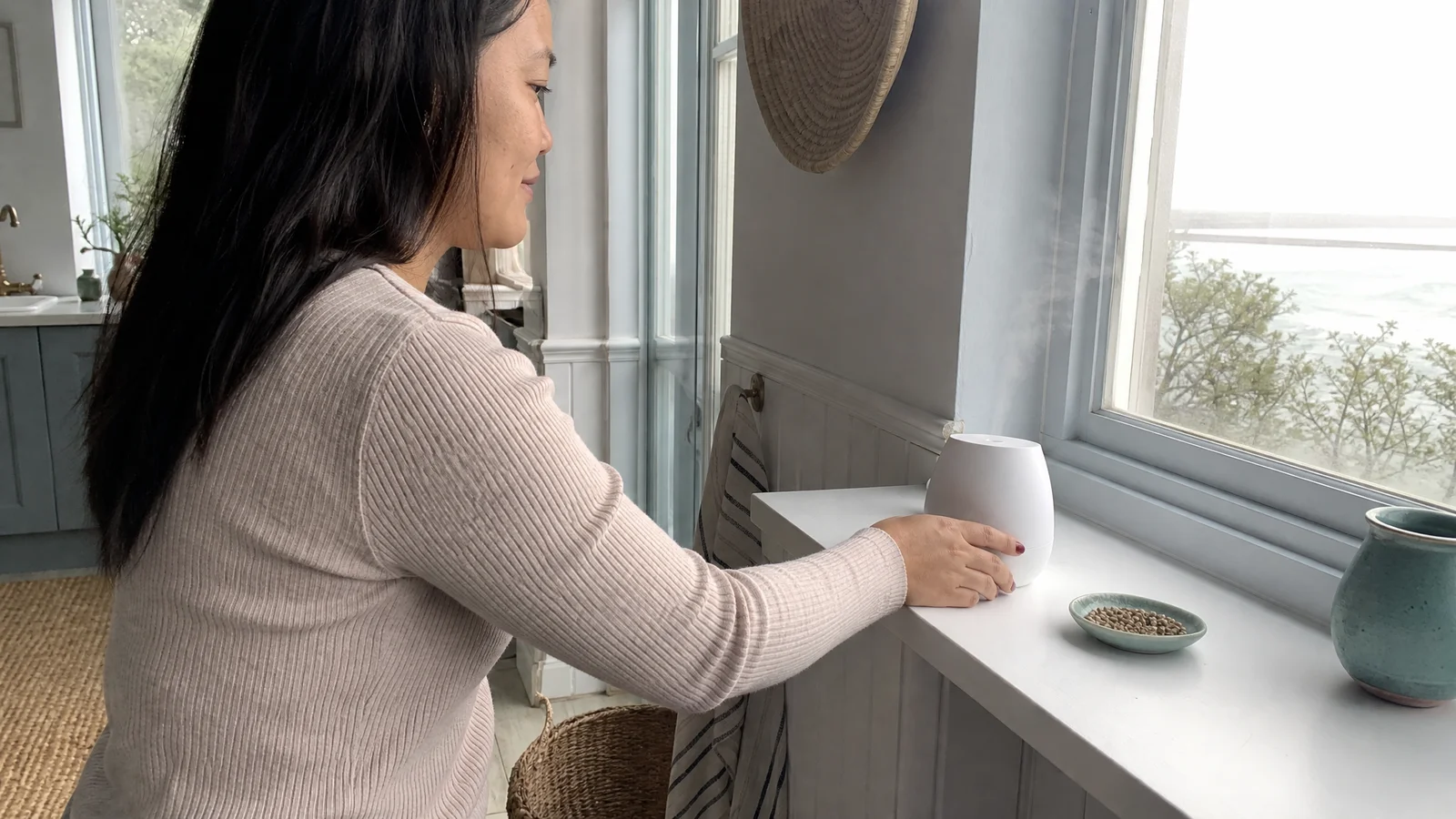
A diffuser or room spray is the easiest home for our oil. Its warm, woody, softly spicy character, with a light floral edge, is easy to enjoy at low levels, and a little goes a long way. The Tisserand Institute describes low-level diffusion, barely perceptible, as fine for several hours, with stronger diffusion best run intermittently and the room aired easily (Tisserand Institute, inhalation). Our diffusing article turns that into drops. For this use, what matters is that you choose seed oil, not leaf, and that you like the scent.
On the skin: dilution comes first
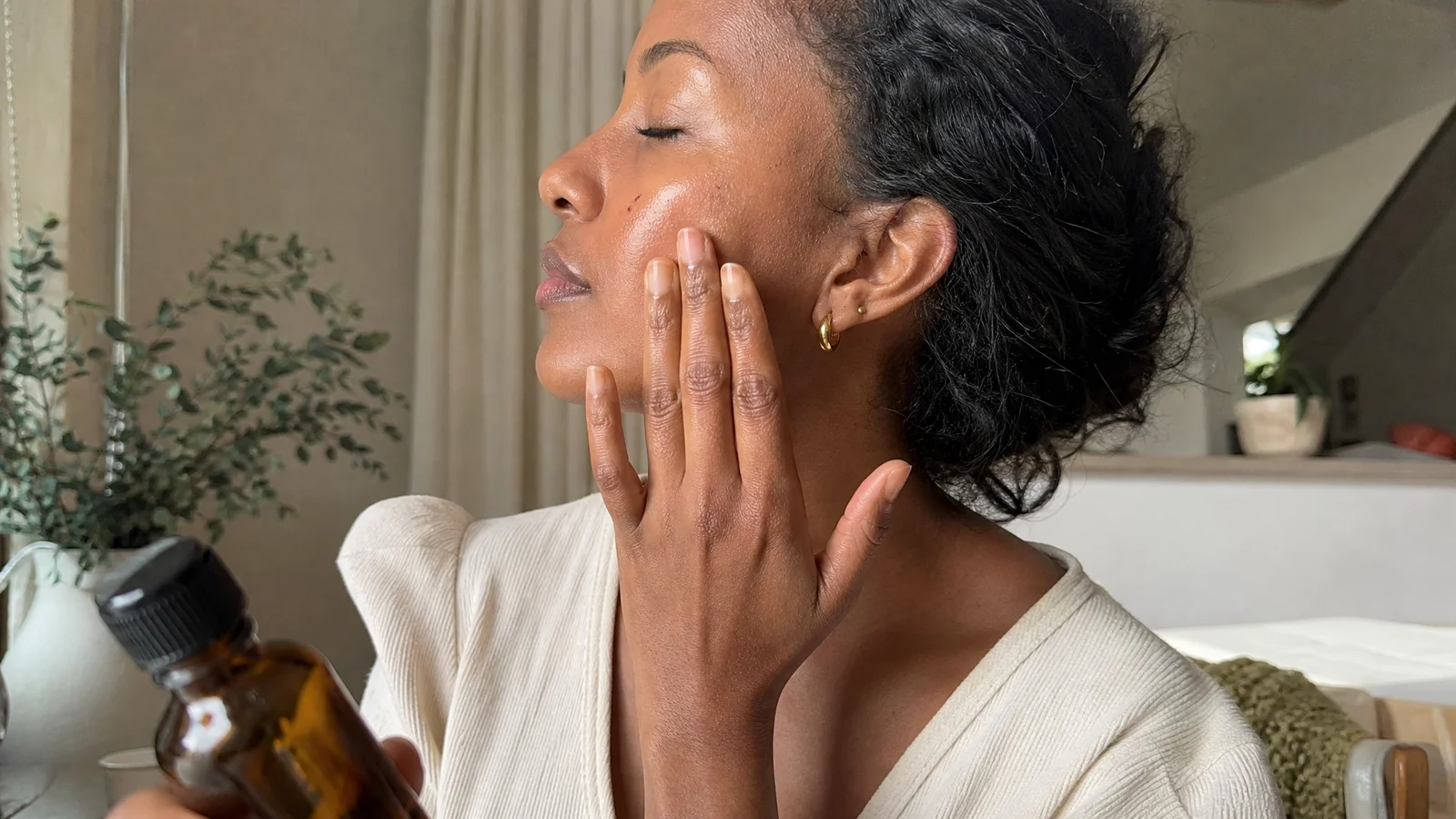
Our oil is sold undiluted, and we recommend 0.5% to 2% in a carrier oil with a patch test first, about 3 to 12 drops per fluid ounce. Checking the arithmetic: an ounce is 29.57 ml, so 0.5% is 0.148 ml and 2% is 0.59 ml, which at roughly 20 drops per ml is about 3 and 12 drops. The Tisserand Institute lists 0.2 to 1% for sensitive skin, 0.5 to 1.2% for the face, 1 to 3% for the body, and 2 to 4% for wash-off products, as guidelines (Tisserand Institute, dilution). So our upper end fits the body range and sits above the face and sensitive-skin ranges. Reasoning from that, we would keep to 1% or less, about 6 drops per ounce, on the face or reactive skin.
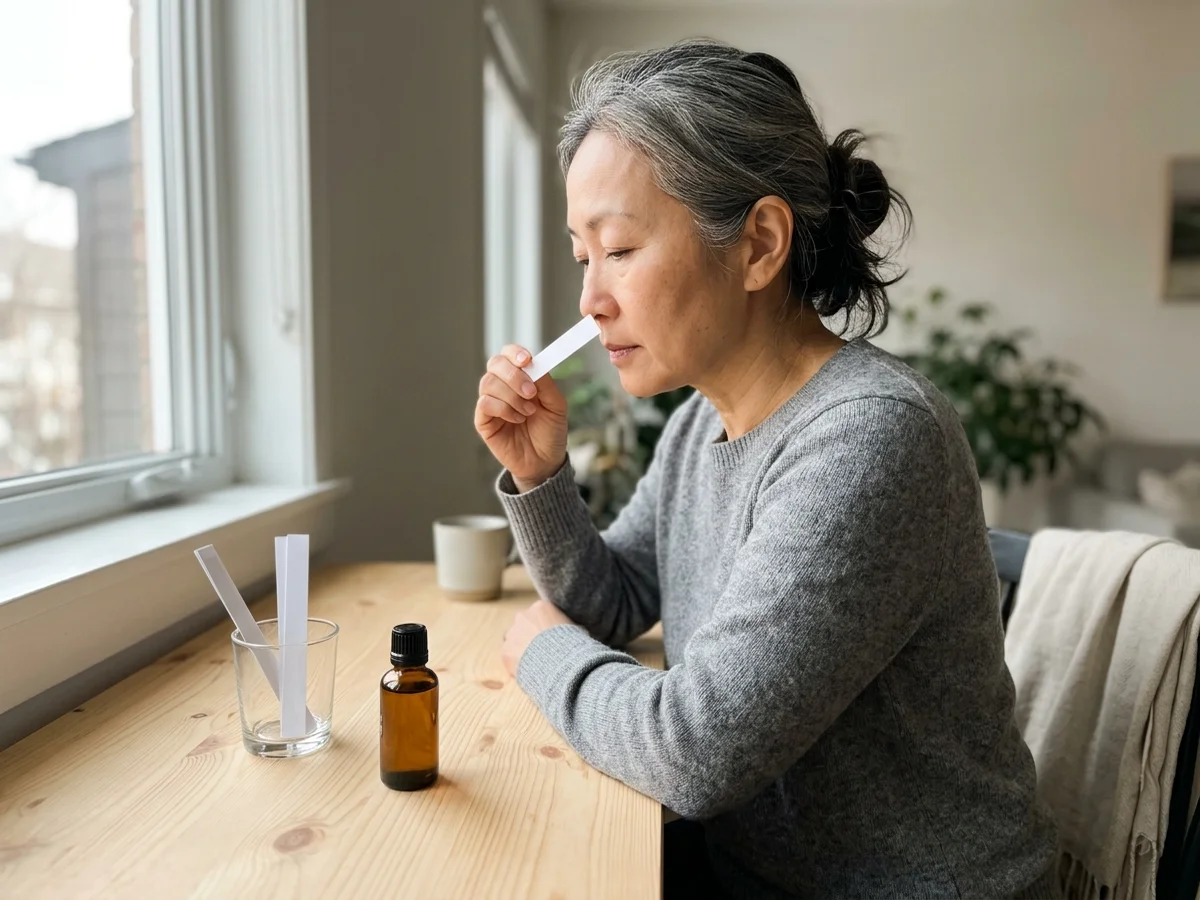
Age and storage matter next. EFSA classes the neat oil as a skin and eye irritant and a skin and respiratory sensitiser (EFSA FEEDAP Panel, 2023), and air-oxidised linalool is a documented contact allergen, with positive patch tests from 0.83% to 7.2% of dermatitis patients depending on test strength (Bared Christensson et al., 2010). Those were patients tested with deliberately oxidised linalool, so they show a mechanism and not your odds. The good habit is a tight cap, a cool dark spot, and not keeping an old half-empty bottle for skin use.
If you have fragrance allergies, eczema on the area, are pregnant, or are buying for a child, talk to your doctor or a pediatrician first; our pregnancy page sets out what guidance says. We sell an external cosmetic oil and make no health claims for it.
In a fragrance: concentration and labels
A retailer's guide, which is not a standard, puts typical concentrations at 1 to 3% for a fraiche, 2 to 5% for cologne, 6 to 12% for eau de toilette, 10 to 20% for eau de parfum and 20 to 35% for extrait (Perfume Lounge). A perfume is a blend of many materials, so coriander is only a share of that total, and finished products have their own limits under fragrance standards that you should confirm for anything you plan to sell.
Labels are the other half. In the EU, 26 fragrance substances must be listed individually, linalool among them, at 0.01% in rinse-off and 0.001% in leave-on products (European Commission). In the US, the FDA says fragrance formulas are among the components most likely to be trade secrets and may be listed simply as "Fragrance" (FDA). So a linalool-led oil in a leave-on product has labelling consequences in one market that it may not have in the other. Our perfume formulation page works through the numbers.
Start with the room, not the bottle
If you are still unsure, picture the end result. A scented room asks for the lightest touch and the least work: a few drops, an open window, and you are done. A body oil asks for a measuring syringe, a carrier and a bit of patience. A fragrance asks for the most, since you will be balancing several materials and waiting while they settle.
Many people begin with the diffuser because mistakes cost almost nothing, then move to a small body oil once they know they enjoy the scent. That order also lets you learn how the oil smells fresh from the bottle, which makes every later decision easier. Whichever you choose, label what you make with the date, and write down how much oil went in.
What to ask any bottle to show you
Whatever the use, a few questions repay themselves. Is it seed, and is the species named? Seed and leaf oils are different mixtures. Our certificate names Coriandrum sativum and seed. If a GC report is quoted, which method made it? The same five batches read 71.7% linalool by GC-FID and 58.72% by GC-MS. Is the paperwork for a lot or for a brand? Ours covers one batch, so if you need a GC-MS report or lot paperwork, write to us through the contact page. We do not publish an IFRA certificate or a safety data sheet, so those are worth requesting from us in writing if your product needs them.
The same oil can be a lovely addition to a room, a gently scented body oil or a fragrance middle note, and picking the use first keeps the whole decision simple. Our pre-purchase checks are a good next read.
Coriander Essential Oil
Coriander Essential Oil from our own shop, in sizes from 0.5 oz to bulk.
From $12.99
Shop Now →Sources & Further Reading
- Tisserand Institute. The ultimate guide to essential oil inhalation. tisserandinstitute.org/essential-oil-inhalation
- Tisserand Institute. Dilution of essential oils. tisserandinstitute.org/dilution-essential-oils
- EFSA FEEDAP Panel, 2023. Safety and efficacy of coriander oil as a feed flavouring. pmc.ncbi.nlm.nih.gov/PMC10613936
- Bared Christensson et al., 2010. Linalool, a significant contact sensitizer after air exposure. Contact Dermatitis. pubmed.ncbi.nlm.nih.gov/20136877
- Perfume Lounge (retailer guide, not a standard). Perfume concentrations explained. perfumelounge.eu
- European Commission. Perfume allergies. ec.europa.eu/perfume-allergies
- US FDA. Fragrances in cosmetics. fda.gov/fragrances-cosmetics